



Sourcing Code Compliant Fire Sprinkler Parts: The 2026 Procurement Guide
A single missing escutcheon or an unverified SIN number can now trigger a full system failure during your 2026 fire marshal inspection. You likely understand the stress of distinguishing between NFPA 13 installation rules and NFPA 25 maintenance requirements while trying to keep your facility safe. It's frustrating when you can't find a specific replacement head for an aging system, especially with the new 2026 mandate requiring the replacement of sprinklers in service for 50 years or more. Finding code compliant fire sprinkler parts shouldn't feel like a gamble with your building's safety or your budget.
We're here to eliminate that doubt. This guide ensures your facility meets every NFPA and IBC standard by helping you source verified, code-compliant hardware and the professional-grade PPE required for safe installation. We'll break down the latest 2026 updates to NFPA 25, clarify SIN numbers and temperature ratings, and list the essential gear your maintenance staff needs to stay protected on the job. From essential piping and fittings to specialized seismic bracing, you'll gain a clear path to total compliance and long-term performance.
Key Takeaways
- Identify the critical 2026 updates to NFPA 25 that impact your inspection readiness and component replacement schedules.
- Learn the exact steps to source code compliant fire sprinkler parts by verifying SIN numbers and matching environmental temperature ratings.
- Evaluate specialized hardware like Viking CPVC and seismic bracing to ensure your system meets specific hazard and geographic requirements.
- Equip your maintenance team with professional LIFT Safety gear to maintain compliance with OSHA and NFPA 70E safety standards during repairs.
- Implement a digital procurement strategy to consolidate your inventory and maintain a verified paper trail for every facility component.
Understanding Code Compliant Fire Sprinkler Parts and Standards
Compliance is the backbone of facility safety. It isn't a suggestion; it's a legal mandate that protects lives and assets. True code compliance exists at the intersection of NFPA standards, International Building Code (IBC) requirements, and the specific rules set by your local Authority Having Jurisdiction (AHJ). Using code compliant fire sprinkler parts ensures that every component in your system functions exactly as engineered during a thermal event. In 2026, the non-negotiable benchmarks for safety remain UL Listing and FM Approval. These certifications prove the hardware has undergone rigorous testing to survive extreme pressures and temperatures without failing.
The risks of using non-certified hardware are severe. Beyond the immediate threat of system failure, the legal liability for a facility manager is immense. If a fire occurs and the suppression system fails due to unverified parts, insurance claims can be denied and local fines can reach staggering amounts. Gaining a deep level of Understanding Fire Sprinkler Systems helps you recognize why every valve, pipe, and head must be verified. Before you order, use our Sprinkler System Components Online guide to cross-reference specifications and ensure your hardware is built for the task.
NFPA 13 vs. NFPA 25: Installation vs. Maintenance
NFPA 13 and NFPA 25 are often confused, but they serve different phases of a building's life. NFPA 13 governs the initial installation, focusing on component compatibility and hydraulic calculations for new systems. In contrast, NFPA 25 dictates the ongoing inspection, testing, and maintenance of those systems. A critical requirement for 2026 involves the "Spare Head Box." Every facility must maintain an on-site stock of code compliant fire sprinkler parts that match every sprinkler type currently installed. If an inspector finds an empty box or mismatched heads, your facility will fail its annual certification immediately.
Occupancy Hazards and Material Selection
Your building’s occupancy hazard level-Light, Ordinary, or Extra Hazard-dictates your part selection. Hardware that works for a small office won't suffice for a high-pile storage warehouse. You must match your hardware to the specific fire load and storage height of your environment. While national codes provide the framework, your local AHJ has the final word on part approval. They may have stricter local amendments that require specific materials, such as seismic bracing or specialized coatings. Always verify local requirements before finalizing your procurement list to avoid costly replacement errors later.
Identifying and Sourcing Compliant Sprinkler Heads
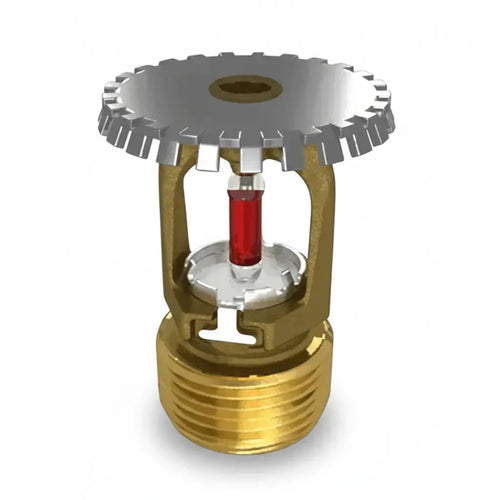
Replacing a sprinkler head requires more than finding a part that fits the thread. It is a process of forensic verification. To ensure you are installing code compliant fire sprinkler parts, you must first locate the Sprinkler Identification Number (SIN). This alphanumeric code is usually stamped directly onto the head's deflector. The SIN is the only way to guarantee a perfect match for the manufacturer, orifice size, and response characteristics. Without this number, you risk installing a component that looks correct but fails to meet the hydraulic requirements of your specific system design.
Once you have the SIN, your next step is to verify the fire sprinkler head temperature ratings to ensure they match the environmental heat of the room. A head rated for a warehouse ceiling will not work in a commercial kitchen or near a heater. You must also align the K-factor and thread size perfectly with the original engineering. These specifications are foundational to the NFPA 13 installation standard. Finally, always check for a current UL listing or FM approval on the specific SKU before you finalize your purchase. If the certification isn't there, the part isn't compliant.
Temperature Ratings and Response Types
Response types are a critical safety trigger. Quick Response (QR) heads feature a 3mm glass bulb designed to activate faster in life-safety applications like hotels or offices. Standard Response (SR) heads use a thicker 5mm bulb and are common in industrial settings. You must never mix these response types in the same compartment. Doing so confuses the system's hydraulic timing and violates basic fire codes. Use the color-coding on the glass bulbs or fusible links as a visual guide. For example, a red bulb indicates an ordinary temperature rating of 155°F, while a green bulb signifies a high rating of 200°F.
Specialized Heads: Dry Pendents and Sidewalls
Standard heads won't work in every environment. When you're dealing with unheated areas or commercial freezers, code requires dry pendent heads to prevent water from freezing in the pipes. Structural constraints might also force you to use horizontal or vertical sidewall applications instead of traditional upright or pendent styles. Sourcing specialized heads from trusted brands like Viking ensures system integrity. When you're up on a ladder identifying these heads, ensure you're wearing professional head protection to stay safe and maintain compliance during your inspection.
Critical System Hardware: Piping, Valves, and Bracing
While the sprinkler head is the most visible component, the network behind the ceiling tiles determines whether that head ever receives water. Sourcing code compliant fire sprinkler parts for your piping and bracing is a matter of structural survival. In 2026, the shift toward corrosion-resistant materials has made Viking CPVC fire sprinkler pipe a standard choice for residential and light hazard commercial environments. Unlike traditional black steel, CPVC doesn't suffer from internal scaling or microbiologically influenced corrosion (MIC), which can clog heads and reduce flow over time. It's a reliable solution that simplifies long-term maintenance.
System reliability also hinges on the gatekeepers: control valves and backflow preventers. These components must be easily accessible, clearly labeled, and verified for compatibility with your specific system pressure. For dry systems, the role of the air compressor is equally vital. You must ensure air compressors for dry sprinkler systems are sized correctly to meet code-mandated fill times, typically 30 minutes for the entire system. If your compressor is underpowered, the system may trip prematurely or fail to reset after testing, leading to costly downtime and potential safety gaps.
Piping Integrity and Corrosion Resistance
Choosing between CPVC and steel involves balancing longevity with installation speed. CPVC is lightweight and easier to install in tight spaces, but it requires specific, listed hangers and accessories to remain compliant. NFPA 13 and NFPA 25 for system maintenance require that all piping supports be inspected for signs of stress or failure. If you use CPVC, ensure you're using compatible solvents and fittings to avoid chemical stress cracking, which is a leading cause of leaks in unverified systems. Regular visual inspections of the pipe's exterior are essential to spot discoloration or physical damage early.
Seismic and Environmental Protection
If your facility is located in a high-risk geographic zone, seismic bracing for sprinkler systems isn't optional. Using ASC Seismic Bracing ensures your system meets the rigorous ASCE 7 and NFPA 13 standards, preventing pipe rupture during ground movement. Beyond seismic safety, environmental protection is key. Sourcing factory-mixed, UL-listed anti-freeze is now the only way to meet current codes for wet systems in cold climates. Finally, integrate monitoring devices like pressure gauges and water flow switches to provide real-time alerts. These code compliant fire sprinkler parts act as your first line of defense, signaling a problem before a leak becomes a flood.
The LIFT Safety Guide: PPE for Fire Protection Maintenance
Safety compliance doesn't end at the ceiling line. While sourcing code compliant fire sprinkler parts is vital for the building, protecting the hands that install them is a legal and ethical requirement. Maintenance in a riser room often involves working near electrical components or handling heavy, pressurized valves. This is where NFPA 70E and OSHA requirements become central to your operations. If your technicians aren't equipped with professional-grade gear, your facility remains at risk for workplace injuries and safety violations. A comprehensive procurement strategy must include both the hardware for the system and the protection for the staff.
Head protection is critical during overhead sprinkler inspections and repairs. Riser rooms are notoriously cramped, and the risk of impact from falling tools or low-hanging pipes is constant. Hand protection is equally important. Technicians frequently handle oily steel pipes, sharp metal edges, and caustic anti-freeze solutions that can cause skin irritation or chemical burns. Equipping your team with the right gear from the LIFT Safety collection ensures that every maintenance task is performed with the highest level of professional assurance.
Essential PPE for Fire System Technicians
- DAX Hard Hats ($110.00): These fiber-reinforced resin hats provide superior impact protection during riser room work. They're built for longevity and withstand the rigors of industrial environments.
- L-Flex 15 Mil Latex Gloves ($12.71): These gloves offer extra-thick protection. They're specifically designed for handling caustic anti-freeze solutions and other chemicals found in wet-pipe systems.
- LIFT FiberWire A5 Impact Gloves ($24.20): For heavy valve work, these gloves provide high-level cut and impact resistance. They protect against the crushing forces often encountered during major system repairs.
Job Site Accessories for Compliance and Efficiency
Efficiency on the job site often comes down to the smallest details. Replacing code compliant fire sprinkler parts requires tactile sensitivity, especially when handling delicate glass bulbs. The LIFT StarYarn A4 Smooth PU Gloves ($9.90) provide the grip needed for precise head replacements without sacrificing protection. In tight, abrasive ceiling spaces, LIFT FiberWire A5 Cut Sleeves ($22.00) offer essential arm protection against scrapes and cuts. Even simple tools like LIFT Carpenter Pencils ($0.72) contribute to a professional workflow, integrating seamlessly with LIFT branded hats for easy access. You can browse the full LIFT Safety collection to find the exact gear your maintenance team requires for 2026 compliance.
Procurement Strategy: Building a Safe and Compliant Inventory
A reactive approach to maintenance leads to inspection failures and system downtime. To maintain absolute safety, you must move from emergency repairs to strategic inventory management. Consolidating your sourcing for fire protection parts online to a single, verified partner reduces the risk of receiving unlisted or mismatched components. This centralized strategy allows you to maintain a precise digital log of SIN numbers, K-factors, and certification dates for every facility in your portfolio. When an inspector asks for proof of compliance, you'll have a verified paper trail ready.
True compliance also requires a "Safety-First" audit that looks beyond the pipes. Every quarter, your team should evaluate both the system hardware and the status of your maintenance PPE. If a technician is missing a hard hat or using worn-out gloves, your safety chain is broken. Integrating LIFT Safety gear into your Standard Operating Procedures (SOPs) ensures that protection is a requirement, not an afterthought. This holistic view of procurement provides peace of mind by protecting both the building and the people who keep it safe.
Bulk Sourcing and Spare Part Management
Standardizing your code compliant fire sprinkler parts across multiple properties is the most efficient way to reduce inventory complexity. If you manage several buildings, try to use the same sprinkler head models where the hydraulic design allows. This reduces the variety of heads you need to keep in your spare head cabinets. Per 2026 updates to NFPA 25, these cabinets must be fully stocked with the correct wrenches and at least six spare heads for each type used. Proactive replacement is also key. Don't wait for a head to show signs of heavy corrosion or loading. If a component looks questionable, swap it out before your annual inspection to avoid a formal violation.
Final Compliance Checklist
Before closing out a procurement cycle or starting a repair, run through this final verification list to ensure you're installing code compliant fire sprinkler parts correctly:
- Verify the SIN: Match the alphanumeric code on the deflector to your system's original design documents.
- Cross-check Ratings: Ensure the temperature rating and K-factor align with the occupancy hazard level.
- Confirm Listings: Double-check that every part carries a current UL or FM approval mark.
- Equip the Team: Verify that technicians have DAX Hard Hats and FiberWire gloves before they enter the riser room.
Compliance is a continuous process of verification and preparation. You can shop the LIFT Safety collection for dependable PPE and everyday safety essentials to ensure your team is as ready as your system. By combining verified hardware with professional-grade protection, you eliminate the doubt that leads to failure.
Secure Your Facility for 2026 and Beyond
Maintaining a safe facility requires more than just meeting a checklist. It demands a commitment to using code compliant fire sprinkler parts that are verified through SIN numbers and current UL/FM listings. By standardizing your inventory and staying ahead of 2026 NFPA 25 updates, you eliminate the confusion that often leads to failed inspections. Whether you're upgrading to Viking CPVC or installing ASC seismic bracing, your choices today define the protection your building provides tomorrow.
Safety is a dual responsibility. You must secure the ceiling with verified hardware and protect your technicians with the right gear. Our expert support is here to guide facility managers and contractors through every procurement hurdle. Equip your maintenance team with the LIFT Safety collection for professional protection to ensure every repair is performed safely and correctly. Beyond industrial systems, property owners looking to enhance their outdoor aquatic spaces can find pool fire bowls for sale from USA Fire Bowls to ensure safety and quality in every environment. Similarly, those who apply this same standard of mechanical excellence to their personal equipment can discover Suspension Store for specialized performance components. With verified fire suppression hardware and professional-grade PPE, you can manage your facility with unwavering confidence. You've built a foundation of safety; now ensure it stays strong for years to come.
Frequently Asked Questions
How do I know if a fire sprinkler part is code-compliant?
A fire sprinkler part is code-compliant if it carries a UL Listing or FM Approval mark. These marks certify that the hardware has passed rigorous safety and performance tests under extreme conditions. It's also vital to verify that the part matches the original system's specifications, including the K-factor and temperature rating. Always cross-reference the manufacturer's data sheets to ensure the component is listed for your building's specific hazard classification.
What is a SIN number and why does it matter for safety?
The Sprinkler Identification Number (SIN) is a unique alphanumeric code stamped onto the deflector of every head. It matters because it identifies the manufacturer, orifice size, and response characteristics. Using the SIN is the only way to guarantee you are sourcing code compliant fire sprinkler parts that match your system's hydraulic design. Without a verified SIN, you risk installing a head that won't activate or flow correctly during a fire.
Can I use any brand of sprinkler head as a replacement?
No, you can't use any brand as a replacement. Replacement heads must be listed for the application and match the physical and thermal properties of the original design. Many local authorities (AHJs) require an exact manufacturer match to maintain the system's certification. Swapping brands without professional verification can disrupt the hydraulic balance and lead to inspection failures or system malfunctions when they're needed most.
What PPE is required for fire sprinkler system maintenance in 2026?
In 2026, maintenance PPE must include head protection, hand protection, and eye protection that meets OSHA and ANSI standards. Technicians should use impact-resistant gloves for valve work and chemical-resistant gloves when handling anti-freeze. Fiber-reinforced hard hats are essential for riser room work to prevent injuries from low-hanging pipes. It's about protecting the technician as much as the building, ensuring every repair is performed with expert confidence.
Why is seismic bracing required for fire sprinkler systems?
Seismic bracing is required to prevent pipes from rupturing during ground movement. These supports are mandated by ASCE 7 and NFPA 13 for facilities in high-risk geographic zones. Bracing secures the system's structural integrity, ensuring it remains operational after an earthquake. It's a critical component for long-term safety, especially for code compliant fire sprinkler parts like ASC Seismic Bracing that are specifically engineered for these high-stress environments.
How often should I replace my fire sprinkler heads for compliance?
Standard response sprinklers generally require testing or replacement after 50 years. Fast-response heads often require testing after 20 or 25 years. However, the 2026 NFPA 25 update is specific about dwelling units. Any sprinkler in an apartment, hotel, or dormitory that's been in service for 50 years or more must now be replaced or sample-tested. Don't let aging hardware compromise your facility's safety or your inspection results.
What is the difference between UL listed and FM approved?
UL Listed parts have been tested by Underwriters Laboratories for general safety and performance. FM Approved parts are tested by Factory Mutual, an insurance-owned lab that focuses on property loss prevention in industrial settings. Both are valid benchmarks, but some insurance providers or local codes may specifically require FM Approval for certain high-hazard environments. Both certifications ensure you aren't compromising on quality when sourcing your fire protection hardware.
Are LIFT Safety hard hats compliant with job site safety standards?
Yes, LIFT Safety hard hats are fully compliant with ANSI Z89.1 job site safety standards. Models like the DAX use fiber-reinforced resin to provide superior impact protection during riser room work. They're designed for seasoned professionals who value durability and strength. These hard hats ensure your maintenance staff meets OSHA requirements while providing the peace of mind that comes from using professional-grade safety equipment on every call.

