



Which Sprinkler Head Temperature Rating Fits?
A sprinkler that opens too early can create unnecessary water damage. One that opens too late can let heat build past the point where the system is meant to control the fire. That is why the question of which sprinkler head temperature rating to use is not a small detail - it directly affects how the system responds when conditions change.
Temperature rating is not chosen by guesswork or by matching what is already in the building without verification. It is selected based on the expected maximum ambient ceiling temperature around the sprinkler, the occupancy conditions, and the applicable installation standard. In most commercial work, that means looking closely at NFPA 13 requirements, manufacturer listings, and the actual heat conditions in the space.
Which sprinkler head temperature rating means in practice
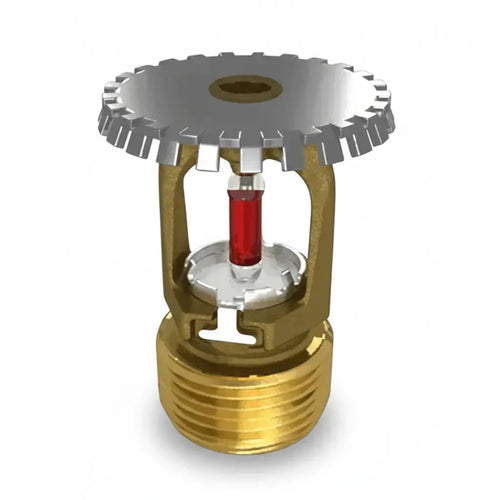
A sprinkler head temperature rating refers to the temperature at which the thermal element operates. Depending on the sprinkler design, that thermal element may be a glass bulb or a fusible link. Once the surrounding heat reaches the rated activation point, the element releases and water discharges.
That rating is not the same as the fire temperature in the room. The sprinkler responds to heat at the ceiling level, where hot gases collect first. Because of that, local conditions matter more than many buyers expect. A warehouse ceiling under a gas-fired heater, a mechanical room with elevated operating temperatures, and an office with standard HVAC loads may all require different temperature classifications even within the same building.
The common classifications are ordinary, intermediate, high, extra high, very extra high, and ultra high. For many standard light hazard and ordinary hazard spaces, ordinary temperature sprinklers are typical. But where the ceiling temperature is elevated by equipment, process heat, skylights, or roof conditions, the required rating can move up quickly.
How to choose which sprinkler head temperature rating
The right starting point is not the sprinkler catalog. It is the environment where the sprinkler will be installed.
NFPA 13 generally ties sprinkler temperature selection to the maximum expected ambient ceiling temperature. The basic rule is straightforward: the sprinkler temperature rating must be above the maximum ambient temperature that sprinkler will experience in normal service. At the same time, it should not be so high that activation is unnecessarily delayed during a fire event.
For many conditioned interior spaces, ordinary temperature sprinklers are appropriate because ambient ceiling temperatures stay well below the operating threshold. In hotter areas, intermediate temperature sprinklers are often used. Mechanical spaces, attics, loading canopies, near-roof installations in warm climates, and areas near unit heaters frequently require closer review.
This is where field conditions matter. If a sprinkler sits near a heat source, directly below a roof deck with solar gain, or above equipment that throws off constant heat, the expected ambient condition may be significantly different from the rest of the room. Using a standard ordinary temperature sprinkler in that spot can lead to nuisance operation or a system that does not align with code intent.
Typical temperature ratings and where they are used
Ordinary temperature sprinklers commonly fall in the lower activation range and are widely used in offices, schools, retail spaces, and other conditioned interiors. Intermediate temperature sprinklers are often selected where ceiling temperatures are moderately elevated, such as boiler rooms, some mechanical areas, and spaces under warmer roof conditions.
As ambient temperatures rise further, high and extra high temperature sprinklers may come into play. These are more specialized and usually tied to industrial processes, hot service areas, or locations with sustained elevated heat. The decision at that level should be based on the listing data, the project design documents, and the actual temperature profile of the installation area.
Color coding can help identify ratings in the field, especially on glass bulb sprinklers, but it should not be the only basis for replacement. Field identification is useful for inspection and verification, not for bypassing the approved design. If a head needs replacement, the exact type, temperature rating, orientation, K-factor, finish, and listing must all be confirmed.
Why matching the existing head is not always enough
Contractors and maintenance teams often need a like-for-like replacement, and in many cases that is the correct path. But when someone asks which sprinkler head temperature rating is needed, simply matching the old head is only safe if the existing installation was correct to begin with and if conditions have not changed.
Buildings evolve. A storage room becomes an IT room. Process equipment is added. Ceiling heaters are installed. Lighting loads increase. A roof replacement changes thermal behavior. Any of those shifts can affect the ambient conditions around the sprinkler and may justify a different temperature classification as part of a larger system review.
There is also the issue of legacy systems. Older sprinklers may have been installed under prior layouts, previous code cycles, or different occupancy assumptions. Replacing a damaged head with the wrong temperature rating because it "looks close" can create compliance and performance problems that show up later, usually at the worst time.
Conditions that often push the temperature rating higher
Some spaces deserve extra scrutiny before a replacement or new install is ordered. Areas near unit heaters are a common example. So are sprinkler locations beneath skylights or under dark roof assemblies that hold heat. Boiler rooms, generator rooms, commercial laundry areas, attics, and manufacturing spaces with process heat also tend to require more than a default selection.
Even in standard commercial buildings, localized heat pockets can be enough to change the answer. A single sprinkler placed near a heating diffuser or tucked into a hot ceiling cavity may require a different rating than the rest of the branch line. That does not automatically mean the whole area changes, but it does mean the selection should be deliberate.
Outdoor canopies and semi-conditioned spaces add another layer. Ambient temperature swings can be wider, and direct sun or trapped heat near the structure can push ceiling temperatures above what a standard conditioned-space assumption would suggest. Manufacturer guidance and the listing of the sprinkler become especially important in those applications.
Which sprinkler head temperature rating should you avoid guessing on
The short answer is all of them. But the risk is highest when the application is not a plain, conditioned interior.
Guessing low can cause premature operation under non-fire conditions. Guessing high can delay activation and reduce system effectiveness. Either mistake can lead to property loss, failed inspections, or replacement work that should not have happened in the first place.
This is also why sprinkler temperature rating should never be separated from the rest of the head specification. A proper replacement requires confirming sprinkler type, response characteristic, thread size, K-factor, orientation, coverage pattern, finish, and listing. Temperature rating is one piece of a larger compliance picture.
For example, swapping in a higher temperature head just because the room "runs warm" is not a fix unless the listing, design criteria, and installation conditions support that change. The reverse is also true. Dropping to a lower rating because it is easier to source can create a nuisance trip problem and expose the buyer to avoidable risk.
Best way to verify the correct rating before ordering
Start with the approved plans and the sprinkler schedule if they are available. Those documents usually identify the intended temperature classification and the specific sprinkler model. If the project documents are not available, inspect the installed head carefully and compare all marked data against the manufacturer information.
Next, assess the actual ambient conditions at the ceiling. Not the floor temperature, and not a rough assumption based on the building use. The temperature that matters is what the sprinkler sees in normal service. If the space includes heaters, process equipment, unconditioned roof zones, or recent occupancy changes, account for those before placing the order.
If there is any doubt, bring the system designer, AHJ, or qualified fire protection professional into the decision. For replacement parts and hard-to-find models, working with a supplier that understands listed fire protection components can save time and prevent an expensive mismatch. That is especially true when you need to confirm a legacy head or source an equivalent approved replacement from a trusted manufacturer.
A sprinkler head is a small component with a very specific job. Choosing which sprinkler head temperature rating fits the application comes down to one practical standard: select for real ambient conditions, not assumptions, and verify every detail before it goes into the system.

