



Fire Sprinkler Pipe Leak Repair Parts: A Professional Sourcing Guide
A temporary patch on a fire line isn't a repair; it's a liability waiting for a fire marshal's clipboard. You likely know the frustration of spotting a pinhole leak and wanting to reach for the nearest sealant just to stop the immediate drip. However, the 2026 edition of NFPA 25 makes it clear that temporary fixes don't satisfy the rigorous standards for life safety systems. Finding the right fire sprinkler pipe leak repair parts is about more than just stopping water. It's about restoring the integrity of a system that must perform perfectly under pressure. Using non-compliant hardware can render your entire suppression network ineffective and create significant legal exposure.
We understand the pressure to minimize system downtime while ensuring every component meets current code requirements. This guide identifies the exact, code-compliant hardware you need to move from a risky temporary seal to a permanent, reliable suppression repair. We'll walk through sourcing professional-grade components like Viking Plastics CPVC pipe and ASC seismic bracing. You'll also learn how to verify that your replacement parts align with the latest 2026 safety standards, helping you pass your next inspection with total confidence.
Key Takeaways
- Differentiate between pinhole leaks and catastrophic failures to choose the right hardware for a permanent fix.
- Identify the specific fire sprinkler pipe leak repair parts required for CPVC and steel systems, including Viking Plastics pipe sections and mechanical tees.
- Learn why UL Listing and FM Global approvals are non-negotiable for passing fire marshal inspections and maintaining system integrity.
- Discover how to source professional-grade components online effectively to reduce downtime and restore your suppression system quickly.
- Transition from risky temporary sealants to reliable, code-compliant hardware that ensures your sprinklers function exactly when needed.
Identifying the Source of Fire Sprinkler Pipe Leaks
A leak in a fire suppression line is more than a maintenance headache. It's a breach in your building's primary life safety shield. You must distinguish between a pinhole leak and a catastrophic pipe wall failure before you start your repair. Pinhole leaks are often the first sign of internal decay. They occur when oxygen or microbes eat through the pipe wall from the inside out. These small drips are warning signs that the entire run may be thinning.
Catastrophic failures are different. These involve split seams or shattered sections caused by high pressure, physical impact, or structural shifts. Threaded joints and mechanical tees are the most frequent culprits for localized failures. Gaskets inside these fittings can dry out or shift over time, leading to steady leaks that bypass the pipe wall entirely. Before you buy fire sprinkler pipe leak repair parts, you must know exactly what failed and why.
Freeze damage is especially destructive for wet pipe systems. When water turns to ice, it expands with enough force to split steel or shatter plastic. This damage rarely stays confined to one spot. It often compromises the structural integrity of the entire run, requiring full section replacements. If you're managing a residential CPVC system, watch for chemical incompatibility. Certain non-approved caulks, lubricants, or fire-stopping strings can cause the plastic to crack through environmental stress. Identifying these root causes ensures that your new fire sprinkler pipe leak repair parts don't suffer the same fate as the old ones.
Leak Diagnosis by System Type
Wet systems typically fail due to external corrosion or gasket fatigue. Look for rust blooms or mineral deposits around fittings. Dry systems have a different weakness: the low point. Condensation collects in these dips and creates a prime environment for corrosion. You should also check for Microbiologically Influenced Corrosion (MIC). MIC is identified by a distinct sulfur smell or black, slimy deposits inside the fire sprinkler system components. If MIC is present, the repair scope will likely expand beyond a simple patch.
Assessing the Scope of Hardware Replacement
NFPA guidelines are strict about pipe integrity. If a section shows significant thinning or multiple pinholes, a single patch won't cut it. You'll need to replace the entire segment with compliant hardware like Viking Plastics CPVC pipe. Check the surrounding area for signs of stress. If you see bent ASC seismic bracing or loose hangers, the vibration or movement that caused the leak may have damaged nearby hardware as well. Always buy enough components to restore the system to its original, engineered specification rather than just stopping the visible drip.
Essential Repair Parts for CPVC and Steel Systems
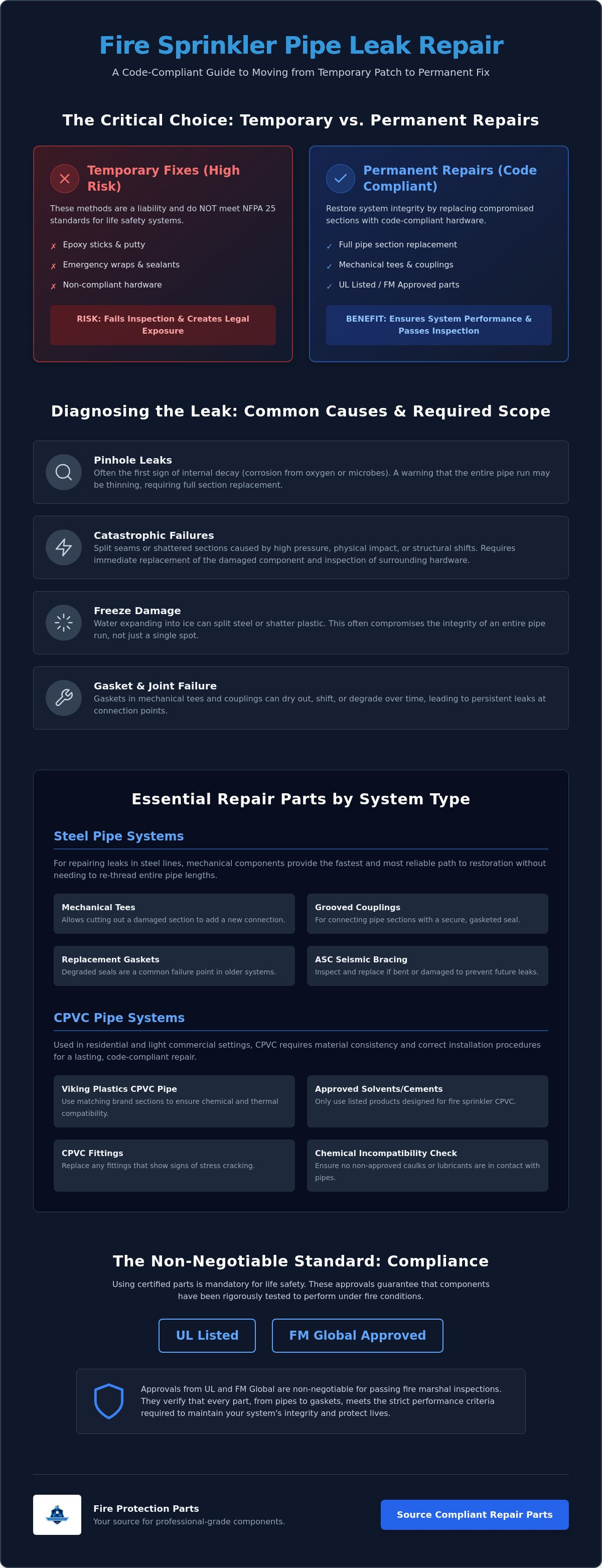
Stop looking for epoxy sticks or emergency wraps. These temporary fixes don't meet NFPA 25 code compliance for permanent system restoration. Real safety requires mechanical integrity. When you source fire sprinkler pipe leak repair parts, you're buying a verified pressure rating and long-term peace of mind. A permanent fix means replacing the compromised section with hardware that matches the original system's engineering. This ensures the suppression network performs exactly as designed when heat is detected.
For mid-run leaks in steel lines, mechanical tees and couplings provide the fastest path to restoration. You don't always need to re-thread entire lengths of pipe. A mechanical tee allows you to cut out a damaged section and install a new outlet or connection point with a secure, gasketed seal. If your system uses grooved piping, keep a stock of replacement gaskets and couplings. These seals can degrade over decades or fail prematurely if the system experiences significant water hammer. Having the right fire sprinkler pipe leak repair parts on hand minimizes the time your building remains unprotected.
CPVC Repair Hardware Requirements
Residential and light commercial systems often rely on the corrosion resistance of CPVC. Sourcing Viking CPVC fire sprinkler pipe is the best way to maintain material consistency. You shouldn't mix different plastic brands, as thermal expansion rates and chemical compositions can vary. Use only the specific CPVC cements and primers approved by the manufacturer. Generic plumbing glue will compromise the joint and lead to catastrophic failure under pressure. For connections to metal risers, always use transition fittings with brass inserts to prevent cross-threading and ensure a leak-free seal.
Steel Pipe Repair Components
Commercial branch lines typically utilize Schedule 10 or Schedule 40 steel. Schedule 10 is thinner and usually grooved, while Schedule 40 is thicker and often threaded. Grooved couplings, frequently called Victaulic-style fittings, allow for rapid mechanical assembly without on-site welding. This is a massive advantage when working in occupied buildings where hot work is restricted. For older systems with unique configurations, finding sprinkler system components online is often the only way to locate legacy thread patterns or specific reducers. If you're ready to secure your system, you can find all the professional-grade fittings you need to complete a code-compliant repair today.
Critical Valves and Heads Involved in System Restoration
Restoring a fire suppression system involves more than just swapping out a length of pipe. When you depressurize the lines to install fire sprinkler pipe leak repair parts, you often expose weaknesses in the surrounding hardware. Control valves that have remained stationary for years frequently develop stem leaks the moment they're turned. These secondary failures can keep your system "yellow-tagged" even after the pipe leak is gone. Addressing every compromised component at once is the professional way to minimize system downtime.
A professional repair isn't finished until the system looks as good as it performs. New escutcheons are more than just cosmetic; they're essential for proper head operation in recessed or concealed installations. Missing or painted-over escutcheons are common inspection failures. Additionally, if the leak caused a drop in system pressure, your backflow preventer may have been subjected to unnecessary stress. Keeping backflow preventer repair kits on hand allows you to fix internal seal issues without replacing the entire expensive valve body.
Sprinkler Head Replacement Selection
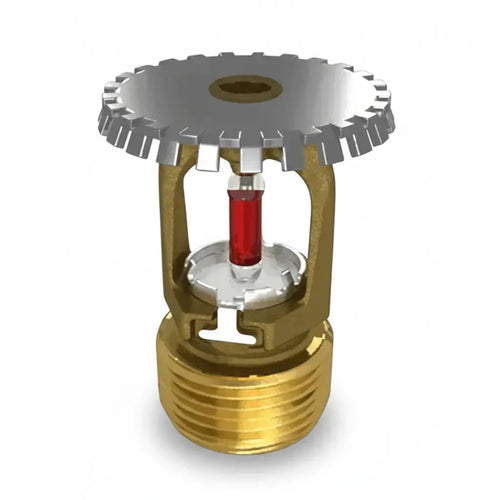
If your pipe repair is due to corrosion, the sprinkler heads in that run are likely compromised too. You must match fire sprinkler head temperature ratings exactly to the existing design. Installing a head with the wrong rating can lead to a delayed response or an accidental discharge. Pay close attention to K-factors and response types, such as standard vs. quick response. In areas where pipes are prone to freezing, consider upgrading to dry pendent heads. These specialized fire sprinkler pipe leak repair parts keep water out of the drop nipple until the head activates, providing an extra layer of protection against future bursts.
Valve and Riser Components
The riser room is the heart of your system. It's also where small leaks can lead to big equipment failures. For localized isolation, high-quality ball valves and butterfly valves are essential. If a slow leak in a dry system caused the compressor to run continuously, you might be facing a burnout. Replacing air compressors for dry sprinkler systems is a common follow-up to a major pipe repair. Don't overlook the small stuff either. Pressure gauges and sensing lines often fail first due to vibration or sediment buildup. Replacing these inexpensive parts during your main repair ensures your system monitoring remains accurate and compliant.
Code Compliance: Why 'DIY' Sealants Often Fail Inspection
A fire marshal doesn't just look for a stopped leak. They look for a repair that matches the system's original listing. If you've used a chemical sealant or an epoxy wrap, you've modified the system with non-approved materials. In the eyes of the NFPA, this isn't a repair. It's a violation. Professional fire sprinkler pipe leak repair parts carry UL Listing or FM Global approval. These certifications mean the hardware has been tested to withstand the exact pressures and temperatures your system faces during an emergency. Safety isn't a suggestion; it's a measurable standard.
Epoxy 'band-aids' are particularly dangerous in high-pressure environments. These adhesives can break down over time, sending chunks of hardened resin into the piping network. When the system activates, these fragments can lodge in the small orifices of your sprinkler heads, rendering them useless during a fire. Beyond the physical risk, non-compliant repairs can lead to the denial of insurance claims or a significant hike in premiums. The 2026 edition of NFPA 25 has introduced more rigorous annual internal inspections for dry pipe and deluge valves. This means your temporary fix will be discovered, and the resulting downtime for a forced replacement will be far more costly than doing it right the first time.
Mechanical Repairs vs. Chemical Sealants
Structural integrity is the primary reason mechanical fittings outperform adhesives. A grooved coupling or a threaded tee creates a physical bond that can last for the 50-year expected life of the system. Adhesives rely on surface tension and chemical bonds that degrade under the constant vibration and pressure fluctuations of a live fire line. The ultimate proof of a professional repair is the hydrostatic test. A mechanical repair using proper fire sprinkler pipe leak repair parts will hold steady at 200 psi. A chemical patch will often weep or fail entirely under that level of stress.
Documentation and Compliance
Compliance is built on a paper trail. You must keep detailed records of all fire protection parts and hardware for system repairs purchased for your facility. Fire marshals now expect digital or physical documentation that proves every replacement part matches the manufacturer's specifications. If you've replaced a significant section of pipe, you must also ensure your seismic bracing remains compliant with current standards. Any shift in pipe weight or location requires a re-evaluation of your support hardware to prevent future leaks. You can browse our full inventory of UL-listed hardware to ensure your next repair meets every legal and safety requirement.
Sourcing Fire Sprinkler Pipe Leak Repair Parts Online
When a leak occurs, time is your greatest enemy. Every hour your system remains depressurized is an hour your facility sits vulnerable to fire and legal liability. Traditional supply houses often involve lengthy lead times or limited local stock that can delay your restoration for days. Direct e-commerce has changed the landscape of fire protection. It allows you to find fire sprinkler pipe leak repair parts instantly without waiting for a sales representative to return your call. You gain immediate access to a nationwide inventory, ensuring that your system is back online as fast as possible.
Speed shouldn't come at the cost of accuracy. Before you click "buy," verify every technical specification against your system's original design. Check the pressure ratings, material types, and connection methods. If you're repairing a high-pressure riser, a standard-rated fitting will fail the mandatory hydrostatic test. Professional online sourcing gives you the time to review spec sheets and ensure every component carries the UL or FM certifications discussed earlier. This precision eliminates the risk of ordering the wrong hardware and further extending your system's downtime.
What to Look for in an Online Fire Protection Store
A reliable supplier must offer more than just a few pipe lengths. You need a partner with a broad inventory that covers both CPVC and metal system types. Look for a store that stocks specialized trim, accessory hardware, and professional-grade components from trusted brands like Viking and PTR. Reliability is built on these names. A professional-grade store will provide clear technical data for every item, from PTR Electric Deluge VXD components to Viking Plastics CPVC. This transparency helps you make a safe, code-compliant choice every time.
Ordering for Emergency vs. Maintenance
Reactive repairs are always more stressful and expensive than planned maintenance. Smart facility managers move beyond one-off orders and begin stocking essential emergency kits. This involves bulk ordering common failure points like gaskets, sprinkler heads, and mechanical fittings. Having these fire sprinkler pipe leak repair parts on-site can turn a potential disaster into a minor maintenance task. Online sourcing is also the most effective way to identify hard-to-find legacy parts for older systems that local distributors may no longer carry. If you're ready to secure your facility's safety, you can browse our full inventory of code-compliant repair parts and find exactly what you need for a permanent, reliable fix today.
Restoring Total System Integrity
A single leak shouldn't compromise your building's safety or your professional reputation. By moving beyond temporary sealants and sourcing the exact hardware your system requires, you ensure long-term reliability and total code compliance. Whether you're replacing a corroded section of CPVC or a failed mechanical tee on a steel line, the quality of your components determines the success of your repair. Every part you install must meet the rigorous standards of the latest NFPA codes to protect your facility and your investment.
Finding the right fire sprinkler pipe leak repair parts is the first step toward a permanent solution. Our inventory features UL Listed and FM Approved hardware designed to withstand extreme pressures. We maintain a comprehensive, in-stock selection to ensure rapid shipping when you need it most. This commitment to quality and speed is why we're trusted by contractors and facility managers nationwide.
Don't let a minor drip become a major liability. Restore your system to its full engineered capacity today. Shop Code-Compliant Fire Sprinkler Repair Parts Now and move forward with the confidence that your protection is uncompromised.
Frequently Asked Questions
Can I use standard PVC pipe to repair a fire sprinkler system?
No, you cannot use standard PVC for fire suppression repairs. Fire protection requires specialized materials like Viking Plastics CPVC that are specifically rated for high heat and pressure. Standard plumbing PVC will melt or shatter during a fire, rendering your sprinklers useless. Always verify that your fire sprinkler pipe leak repair parts are UL listed for fire protection use to ensure system integrity.
What is the best way to fix a pinhole leak in a fire sprinkler pipe?
The only professional way to fix a pinhole leak is to cut out the affected section and install a mechanical fitting. Adhesives and wraps are temporary and often fail hydrostatic testing. By using a mechanical tee or a new coupling, you restore the pipe's structural integrity. This approach ensures it meets NFPA 25 standards for a permanent repair rather than just delaying a larger failure.
Are fire sprinkler pipe repair clamps code-compliant?
Most pipe repair clamps are intended for temporary use only and won't pass a permanent fire marshal inspection. NFPA codes generally require a mechanical replacement of the damaged pipe section to maintain the system's listing. If you use a clamp, it must be specifically UL listed for fire sprinkler service. These are rare and usually more expensive than performing a proper mechanical fix with compliant hardware.
Do I need to drain the entire system to replace a leaking pipe section?
You must drain the specific isolated zone where the leak is located before starting any repair. Working on a live, pressurized fire line is extremely hazardous and will cause massive water damage. Once the zone is isolated and drained, you can safely remove the damaged hardware and install your new fire sprinkler pipe leak repair parts. Always follow proper lockout-tagout procedures during this process.
How do I identify the manufacturer of my existing fire sprinkler pipe?
You can identify the manufacturer by reading the specification stencil printed directly on the pipe wall. This marking includes the brand name, such as Viking, along with the pipe size and pressure rating. If the stencil is unreadable due to paint or age, you should consult the original system blueprints or the most recent inspection report. Knowing the manufacturer helps ensure you source compatible replacement fittings.
What is the difference between schedule 10 and schedule 40 pipe for repairs?
Schedule 40 pipe has a thicker wall designed for threading, while Schedule 10 is a thinner-walled pipe typically used with grooved couplings. You cannot easily mix these two types without the correct transition fittings. Using the wrong schedule for your repair will lead to mismatched joints and potential leaks under high-pressure conditions. Always check the existing pipe wall thickness before ordering replacement sections.
Can I replace a fire sprinkler head myself?
You should avoid replacing sprinkler heads yourself unless you have the specific training and tools required for fire suppression systems. Heads are precision instruments that require exact torque to prevent leaks or damage to the internal seal. An improperly installed head might look functional but could fail to activate during a fire. This creates a massive liability and compromises the life safety of the building's occupants.
What happens if I use non-UL listed parts for a sprinkler repair?
Using non-UL listed parts renders your system non-compliant and can lead to the denial of insurance claims after a fire. These parts haven't been tested to withstand the extreme heat and pressure of a suppression event. To protect your facility and maintain your legal standing, you must only use verified, code-compliant hardware for every aspect of your suppression network maintenance.

