



How to Choose a Fire Extinguisher for a Business: A 2026 Professional Buying Guide
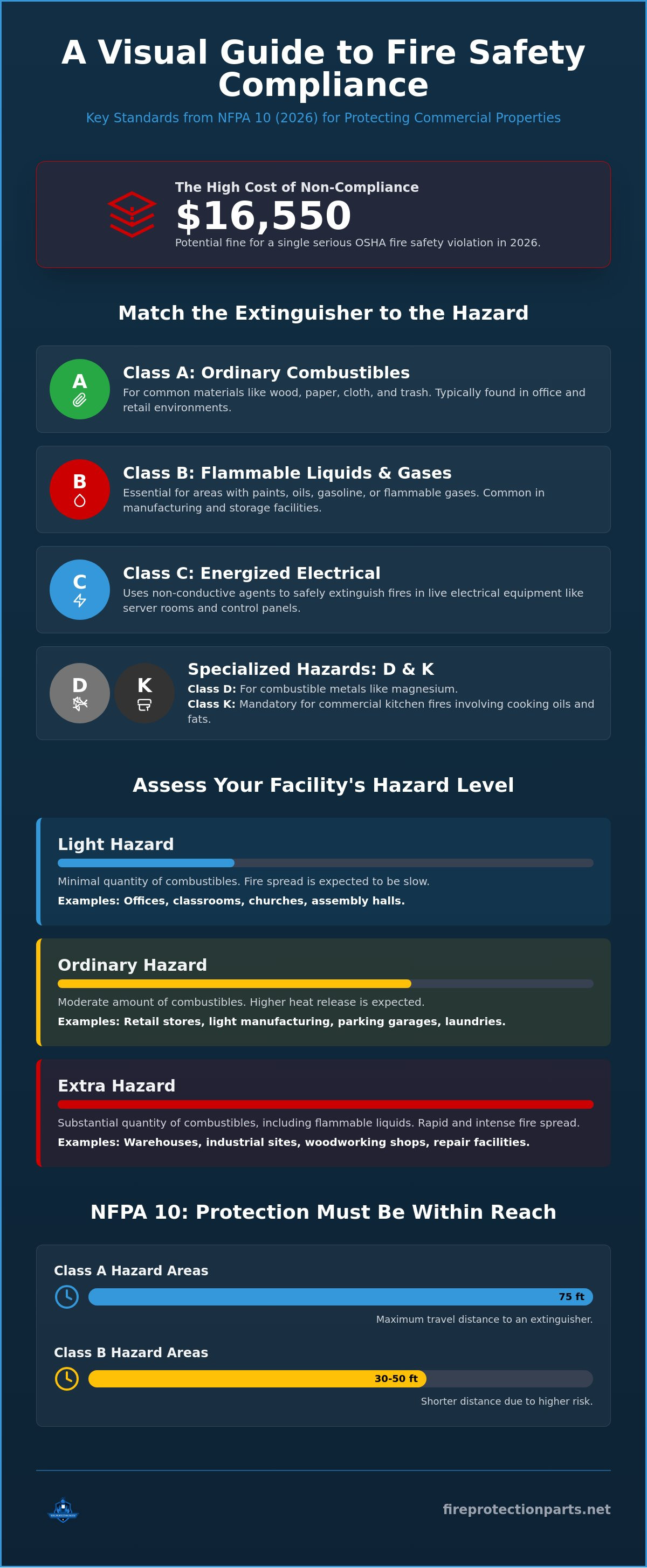
A single serious OSHA fire safety violation in 2026 can result in a fine of up to $16,550. This isn't just a regulatory hurdle; it's a reflection of the high stakes involved in commercial property protection. Learning how to choose a fire extinguisher for a business requires a precise understanding of the 2026 NFPA 10 standards and the specific hazards within your facility. You can't afford to guess when it comes to matching the right suppression agent to a high-voltage server room or a commercial kitchen.
We understand that facility managers often face confusion over evolving codes and the technical demands of maintaining dry-pipe system pressure. It's a complex balancing act between portable hardware and fixed suppression infrastructure. This guide promises to simplify your procurement process by providing a clear list of code-compliant hardware. You'll learn how to master extinguisher classes and discover how critical components like air compressors and deluge valves form the backbone of a reliable safety system. We'll walk you through everything needed to pass your next fire marshal inspection with absolute confidence.
Key Takeaways
- Identify the specific Class A and Class B hazards in your facility to meet 2026 NFPA 10 compliance standards for portable extinguishers.
- Learn how to choose a fire extinguisher for a business by matching hardware to Light or Ordinary hazard classifications based on your combustible load.
- Understand the critical role of air compressors in dry-pipe systems, where maintaining supervisory pressure is essential to holding back the water supply.
- Evaluate the maintenance requirements and space constraints of your riser room when selecting between oil-less, lubricated, riser-mounted, or tank-mounted compressors.
- Secure code-compliant hardware from a specialized inventory of over 139 air compressors designed for professional fire protection systems.
Understanding Fire Extinguisher Classes for Business Compliance
Selecting the correct hardware begins with a precise assessment of your building's fuel sources. If you are learning how to choose a fire extinguisher for a business, you must first categorize the risks present in each zone. A mismatch between the extinguishing agent and the fire type can lead to catastrophic failure or permanent equipment damage. You aren't just buying a canister; you're investing in a specific chemical response designed to neutralize a particular hazard.
- Class A: These units handle ordinary combustibles like wood, paper, and trash. They are prevalent in standard office environments and retail stockrooms.
- Class B: These are essential for manufacturing and storage facilities where flammable liquids, paints, or gases are handled.
- Class C: These units use non-conductive agents to safely address energized electrical equipment without risking operator shock.
- Class D and K: These address specialized hazards. Class D is for combustible metals like magnesium, while Class K is mandatory for commercial kitchen oils and fats.
It's helpful to review the technical breakdown of Fire Extinguisher Classes to understand why a water-based unit would be disastrous on a grease or electrical fire. Matching the agent to the hazard is the first step in ensuring your facility remains safe and compliant.
The NFPA 10 Standard: Minimum Requirements
The National Fire Protection Association (NFPA) 10 standard dictates exactly where and how extinguishers must be mounted. These codes ensure that protection is always within reach during an emergency. Travel distance rules are non-negotiable. For Class A hazards, an employee must be able to reach an extinguisher within 75 feet. For Class B risks, this distance often drops to 30 or 50 feet depending on the potential spill size. Your building's layout directly determines your total hardware count. The 2026 edition of NFPA 10 now allows for performance-based inspection programs, which can adjust how often you manually check your units. Maintaining these units requires high-quality components. Many facility managers source fire protection parts online to ensure they have the specific valves, gauges, and brackets needed for certified repairs.
Choosing Between Multipurpose and Specialized Units
An ABC dry chemical unit is often the most efficient choice for retail and general office spaces. It provides a versatile solution for the three most common fire types in one package. However, high-value assets require a more surgical approach. Clean agent extinguishers are necessary for server rooms or laboratories because they leave no corrosive residue. This prevents the "secondary damage" that often ruins electronics even if the fire is small. When deciding how to choose a fire extinguisher for a business with sensitive technology, focus on agents like Halotron or CO2. As of the 2026 standard, electrical fire safety mandates that any extinguisher protecting critical power distribution zones must be integrated into a documented electronic monitoring program.
Hazard Classification: Matching Extinguishers to Your Facility
Determining your facility's hazard level is the most critical step in procurement. You can't effectively learn how to choose a fire extinguisher for a business without first auditing the volume and type of fuel present. Fire codes divide commercial spaces into three distinct categories based on the combustible load. Reviewing the official Hazard Classification helps you align your hardware with federal safety expectations and local fire marshal requirements.
- Light Hazard: These environments include offices, classrooms, and churches. Combustibles are minimal, and fire spread is expected to be slow.
- Ordinary Hazard: This applies to retail stores, laundries, and light manufacturing. These spaces contain moderate amounts of combustibles that can create higher heat release rates.
- Extra Hazard: High-density warehouses and industrial sites fall here. These locations house significant quantities of flammable liquids or high-piled combustibles that require aggressive suppression.
While portable units provide immediate response, they must work in tandem with your building's permanent infrastructure. In many commercial builds, integrating portable units with fixed systems like CPVC fire sprinkler pipe ensures a multi-layered defense. This combination protects both the occupants and the structural integrity of the property.
Protecting High-Risk Industrial Zones
Industrial environments demand specialized hardware. Class B extinguishers are mandatory where chemical storage is present, while metal fabrication shops require Class D units for combustible metals. In these extra-hazard areas, matching your extinguishers with the correct fire sprinkler head temperature ratings prevents premature activation or system failure. Consistency across your suppression network eliminates gaps in protection. If you're managing a dry-pipe system in these high-stakes environments, you'll need to maintain constant pressure with reliable air compressors.
Data Centers and Sensitive Environments
Data centers present a unique challenge. You need Class C protection that neutralizes electrical fires without destroying delicate circuitry. Standard dry chemical agents leave a corrosive dust that can brick a server rack instantly. For 2026 safety protocols, professionals favor CO2 units or Halotron alternatives. CO2 is effective but requires careful placement in server corridors to ensure operator safety in confined spaces. Halotron offers a "clean" discharge that evaporates quickly, making it the gold standard for high-value electronics. Understanding these technical nuances is essential when deciding how to choose a fire extinguisher for a business with a heavy technological footprint.
Beyond Handheld Units: Air Compressors for Dry-Pipe Systems
Handheld units are vital, but they represent only the first line of defense. In larger commercial facilities, especially those with unheated loading docks or warehouses, a dry-pipe sprinkler system provides the secondary, automated layer of protection. When you evaluate how to choose a fire extinguisher for a business, you've got to look at the mechanical systems that support these portable tools. Dry-pipe and pre-action systems are the industry standard for environments where water-filled pipes would freeze and burst.
In these systems, the air compressor acts as the mechanical heart. It maintains supervisory air pressure that physically holds back the water supply at the dry-pipe valve. If this pressure drops due to a leak or a sprinkler head activation, the valve opens and allows water to enter the piping. A reliable air supply is the only thing preventing accidental system trips. These trips don't just cause a mess; they lead to thousands of dollars in water damage and operational downtime. Adhering to Professional Fire Protection standards means ensuring your system is equipped with an AMD-1 Air Maintenance Device for consistent pressure regulation.
Maintaining Supervisory Air Pressure
Current 2026 safety standards prioritize automatic pressure maintenance over manual checks. Manual monitoring is prone to human error and leaves your facility vulnerable during off-hours. Integrating a high-quality compressor with other sprinkler system components online ensures a seamless, fail-safe operation. The AMD-1 works silently to regulate air flow, compensating for minor temperature fluctuations or small leaks that might otherwise trigger a false alarm and a full system discharge.
System Readiness and the 30-Minute Rule
NFPA codes are clear about recovery times. After a system trip or maintenance event, you must be able to restore the required supervisory pressure within a specific 30-minute window. This timeframe is non-negotiable for commercial compliance. Undersized compressors often fail this test, leading to immediate fire marshal citations during annual inspections. Choosing a dedicated air compressor for dry sprinkler systems is non-negotiable because it's engineered to meet these high-volume demands quickly. When considering how to choose a fire extinguisher for a business, remember that your portable units and your pressurized suppression infrastructure must work as a unified, code-compliant network.
Technical Buying Guide: Selecting Fire Protection Hardware
Procuring the right hardware requires a move from high-level safety concepts to granular technical specifications. While knowing how to choose a fire extinguisher for a business is the first step in compliance, your suppression system's reliability depends on the mechanical components in your riser room. Matching your hardware to your facility's specific infrastructure prevents costly installation errors and ensures your system remains UL/FM compliant through 2026 and beyond.
One of the primary decisions involves choosing between oil-less and lubricated compressors. Oil-less models are the standard for modern commercial builds because they eliminate the risk of oil entering the air stream and damaging the sprinkler piping. Lubricated models offer robust performance for heavy industrial demands but require a more rigorous maintenance schedule to prevent carbon buildup. Your choice should balance your facility's maintenance capacity with its operational load.
- Tank-Mounted vs. Riser-Mounted: Tank-mounted units provide a pressurized air reserve that reduces compressor cycling. Riser-mounted units are the preferred solution for tight fire riser rooms where floor space is at a premium.
- Pressure Switch Selection: The Viking Gen AC 14HP is a vital component for OL Plus Series reliability. It ensures the compressor activates and deactivates at precise intervals to maintain supervisory pressure.
- Voltage and Phase: You must match your hardware to your building's electrical infrastructure. Verify whether your riser room provides 115V single-phase or 230V three-phase power before finalizing your procurement list.
Comparing the OL Plus and LT Plus Series
The OL Plus Series represents the pinnacle of maintenance-free, oil-less operation for commercial properties. These units are engineered for longevity and quiet operation, making them ideal for office buildings and retail centers. Conversely, the LT Plus Series provides oil-lubricated performance designed for the high-frequency demands of heavy industrial sites. In 2026, insurance compliance hinges on using UL/FM approved hardware. Choosing between these series depends on your specific hazard classification and the expected frequency of system cycles. You can explore a comprehensive selection of these code-compliant air compressors to find the exact match for your system capacity.
Essential Accessories for System Integrity
A reliable system requires more than just the primary compressor unit. Pressure switches, such as the Hubbell 30-40 PSI or General Air Products models, must be calibrated to your system's specific requirements to prevent accidental trips. Best practices for 2026 facility management include keeping a Gast Fire Protection Compressor Repair Kit on-site. These kits allow for immediate repairs, minimizing system downtime. If you utilize lubricated models, always use specialized air compressor oil to maintain UL/FM reliability and protect the internal components from premature wear. These niche parts are the difference between a system that passes inspection and one that fails when it's needed most.
Sourcing Professional Fire Protection Parts in 2026
Professional contractors don't gamble with safety. They require hardware that meets the 2026 fire marshal inspection standards on the first try. Sourcing these components requires a partner that understands the mechanical relationship between your portable units and your fixed suppression systems. While learning how to choose a fire extinguisher for a business is foundational, your procurement strategy must also account for the specialized hardware that keeps those systems operational year after year. Reliability isn't just a goal; it's a requirement for code compliance and property protection.
Fire Protection Parts serves as a premier e-commerce source for this critical hardware. We offer a specialized collection of over 139 air compressors, ensuring you find the exact capacity for your system. We provide the full stack of suppression hardware, from seismic bracing for sprinkler systems to PTR electric deluge valves. By sourcing brand-name components from industry leaders like Viking, General Air Products, and Gast, you ensure long-term performance and eliminate the doubt associated with generic alternatives.
Streamlining Procurement for Large Facilities
Managing fire safety for multi-family properties or high-density warehouses requires a streamlined procurement process. Bulk sourcing allows you to standardize your hardware across multiple zones, making maintenance and inspections more efficient. We carry specialized items that general hardware stores simply don't stock, such as Explosion Proof Supervisory Pressure Switches for hazardous environments. For those seeking a turnkey solution, the FM Approved Dry Air Pac provides a complete, pre-engineered package that simplifies installation in dry-pipe and pre-action systems. This level of technical specificity is what separates a professional facility from one that is merely "getting by."
Take the Next Step in Facility Safety
Maintaining a compliant facility is a multi-year commitment, not a one-time purchase. Now is the time to audit your current extinguisher classes and evaluate the status of your air supply. If your compressors are aging or your hazard classification has changed due to new inventory, your safety protocols must evolve accordingly. Don't wait for a failed inspection to address these gaps. Consult with experts who can help you match your system capacity to the right hardware. You can browse our complete collection of 130+ professional fire protection air compressors here to find the mechanical heart of your suppression network. Understanding how to choose a fire extinguisher for a business is only the beginning; securing the right parts is how you finish the job.
Securing Your Facility with Code-Compliant Hardware
Effective fire protection is a multi-layered discipline. You've learned that matching extinguisher classes to specific hazard zones is non-negotiable for 2026 compliance. You also understand that handheld units are only as effective as the pressurized infrastructure supporting them. A reliable dry-pipe system requires high-performance air compressors to maintain supervisory pressure and prevent costly accidental trips. Mastering how to choose a fire extinguisher for a business is just the beginning of your procurement journey; to see how these rules fit into a broader safety strategy, you can read more about 2026 compliance guides for industrial workplaces.
We provide the specialized components needed to bridge the gap between portable hardware and fixed suppression systems. As an authorized retailer for Viking and General Air Products, we stock only UL/FM approved hardware designed for long-term reliability. Our specialized inventory features over 139 models to meet any system capacity or riser room constraint. Don't leave your facility's safety to chance when professional-grade solutions are readily available. Take control of your property's protection today and ensure every component meets the highest industry standards.
Shop 130+ Professional Air Compressors for Fire Sprinkler Systems
Frequently Asked Questions
What are the main fire extinguisher classes required for a commercial office?
Most commercial offices require Class A and Class C protection. Class A units address ordinary combustibles like paper and wood, while Class C is necessary for energized electrical equipment. Many facility managers choose multipurpose ABC dry chemical units to cover all three common risks in a single canister. This versatility is a key factor when learning how to choose a fire extinguisher for a business with standard administrative hazards.
How often does a business need to inspect its fire extinguishers?
NFPA 10 mandates a three-tier inspection schedule for commercial properties. You must conduct a visual check every 30 days to ensure the unit is visible and pressurized. A certified professional must perform a thorough maintenance inspection annually. Additionally, stored-pressure extinguishers require internal examination every six years and hydrostatic testing every 12 years to verify the cylinder's structural integrity and safety.
Can I use a standard air compressor for my fire sprinkler system?
No, you cannot use a standard shop compressor for fire protection. Sprinkler systems require UL/FM approved air compressors specifically engineered for fire safety applications. These units are designed to maintain precise supervisory pressure and must meet NFPA 13 requirements for system fill times. Using unapproved hardware can lead to system failure, accidental water damage, and immediate citations during a fire marshal inspection.
What is the purpose of an Air Maintenance Device (AMD-1) in fire protection?
An Air Maintenance Device, such as the AMD-1, regulates the air supply from a high-pressure source to the dry-pipe system. It ensures that the supervisory pressure remains at a constant, safe level. This device is critical because it prevents a sudden surge of high-pressure air from entering the system, which could damage the dry-pipe valve or other sensitive sprinkler components during a trip.
What fire extinguisher class is necessary for a commercial kitchen or restaurant?
Class K extinguishers are mandatory for any commercial kitchen or restaurant using deep fryers or griddles. These units use a specialized wet chemical agent designed to extinguish high-temperature fires fueled by vegetable oils and animal fats. Standard ABC extinguishers are often ineffective against these intense grease fires. Understanding these niche requirements is essential when determining how to choose a fire extinguisher for a business in the food service industry.
What is the difference between oil-less and lubricated fire system compressors?
Oil-less compressors are maintenance-free and prevent oil from contaminating the sprinkler piping, making them the standard for modern commercial buildings. Lubricated compressors are robust and designed for heavy industrial demand but require regular oil changes and monitoring. Your choice depends on the facility's maintenance capacity. Oil-less models eliminate the risk of carbon buildup, which can eventually clog small orifices in the suppression system.
How do I determine the right air compressor size for my dry-pipe system?
You must calculate the total internal volume of your dry-pipe system piping. NFPA 13 standards require the compressor to restore the total system pressure within a 30-minute window. If the compressor is undersized for the system volume, it will fail to meet this restoration time, leaving the facility vulnerable. Always consult the manufacturer's capacity charts to match the compressor's CFM output to your specific system size.
Are there specific 2026 regulations for fire safety hardware in industrial warehouses?
The 2026 edition of NFPA 10 introduces performance-based inspection programs that allow for electronic monitoring of fire extinguishers. In high-density warehouses, there is an increased emphasis on matching extinguisher classes to the specific hazard load of stored materials. Furthermore, industrial sites in seismic zones must ensure that suppression hardware is secured with code-compliant seismic bracing to maintain system integrity during a tectonic event.

