

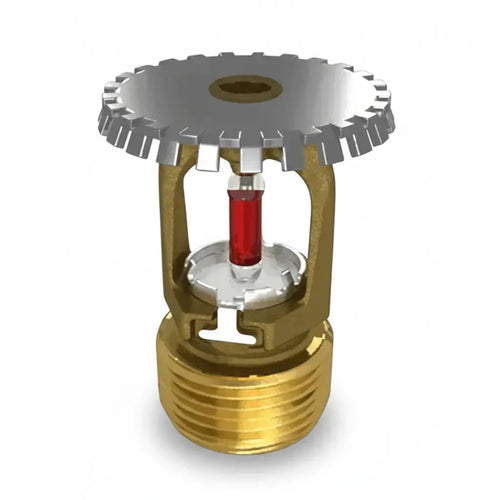


Selecting the Right Fire Sprinkler Head for a Warehouse: The 2026 Professional Guide
Would your facility pass a surprise fire marshal inspection today, or are you one incorrect K-factor away from a forced shutdown? Selecting the right fire sprinkler head for a warehouse isn't just a matter of checking a box; it's a high-stakes technical decision that dictates your operational safety and insurance eligibility. With the 2025 edition of NFPA 13 now in full effect, the margin for error has vanished. You likely feel the pressure of navigating dense regulations while trying to distinguish between ESFR and Control Mode heads for your high-piled storage. It's a complex landscape where the wrong hardware can lead to catastrophic failure or expensive retrofits.
We understand that your priority is unwavering reliability and code adherence without the guesswork. This professional guide will help you master the technical requirements for warehouse fire suppression and identify the exact sprinkler heads needed for industrial compliance. We'll break down the specific K-factors required for ceilings over 30 feet and explain how the 2026 edition of NFPA 25 impacts your maintenance protocols. From sourcing brand-name components to understanding response types, you'll gain the expert confidence needed to secure your facility and eliminate regulatory doubt.
Key Takeaways
- Understand how Class I-IV and plastic commodity classifications dictate the required thermal sensitivity and water density for your specific facility.
- Learn to match high-piled storage heights with high-volume K-factors like 11.2 or 16.8 to ensure adequate water flow during a fire event.
- Master the strategic differences between suppression and control by selecting the right fire sprinkler head for a warehouse based on current NFPA 13 design criteria.
- Identify specialized solutions for refrigerated spaces and harsh environments, including the use of dry pendent sprinklers and corrosion-resistant coatings.
- Ensure long-term industrial compliance by sourcing verified, brand-name components that meet the rigorous 2025 NFPA safety standards.
Why Warehouse Fire Sprinkler Selection is a High-Stakes Decision
Warehouse fires are uniquely dangerous environments that demand more than a standard fire protection strategy. Unlike office buildings, warehouses feature high fuel loads and massive vertical spaces that act like chimneys during a fire. Heat rises rapidly, creating a plume that can spread flames to the ceiling in seconds. According to data published by the NFPA in 2026, the financial impact of warehouse fires has seen a modest increase over time. This trend underscores the vital importance of selecting the right fire sprinkler head for a warehouse to mitigate catastrophic property loss. Modern fire sprinkler systems are the primary line of defense, but their effectiveness depends entirely on matching the hardware to the specific hazards of the facility.
The stakes extend beyond physical safety. Choosing non-compliant hardware can lead to immediate failure during fire marshal inspections or the denial of insurance claims following an incident. If a sprinkler head cannot deliver the required water density to a specific commodity, the fire will simply grow unchecked. Precision in selection is the only way to ensure 96% effectiveness in controlling or extinguishing a fire, as established by current industry performance standards.
Understanding Commodity Classifications
Not all inventory burns with the same intensity. NFPA 13 categorizes goods into Class I through IV based on their combustibility and the presence of plastic packaging. Class I represents the lowest risk, typically non-combustible products on wooden pallets. Class IV includes higher-hazard items like corrugated electronics or furniture. The most significant challenge involves Group A plastics, which release immense heat and require specialized suppression strategies. Your storage arrangement also dictates water distribution needs. Open racks allow for better water penetration but also encourage faster fire spread, while solid-piled pallets require different flow patterns to reach the core of the fire.
The Impact of High-Piled Storage Laws
Under the 2025 edition of NFPA 13, high-piled storage is generally defined as any storage exceeding 12 feet in height. At these elevations, standard residential or light commercial sprinkler heads are fundamentally insufficient. The heat from a high-piled fire creates a powerful upward draft that can deflect small water droplets. To combat this, you need industrial-grade heads with high K-factors that produce large, heavy droplets capable of punching through the heat plume. It's essential to source sprinkler system components online that meet these rigorous industrial density requirements. Selecting the correct response type and orifice size is the only way to satisfy the local Authority Having Jurisdiction (AHJ) and ensure the building remains operational and safe.
Decoding Warehouse Sprinkler Specs: K-Factors and Response Times
Technical specifications are the engine of your fire suppression system. When selecting the right fire sprinkler head for a warehouse, you're choosing the specific mechanical behavior that will occur during a crisis. The two most critical variables are the K-factor and the response time. These aren't just manufacturing numbers; they determine how much water reaches the fire and how fast the system reacts to rising temperatures. Choosing the wrong spec can result in a system that is either too slow to contain a blaze or incapable of delivering the water volume required to suppress high-intensity flames. You can find a wide range of high-performance fire protection components that meet these exact industrial requirements.
Selecting the Correct K-Factor for High Ceilings
K-factor is the mathematical relationship between pressure and flow. In a warehouse setting, standard 5.6 K-factor heads used in offices are insufficient because they produce small droplets that vaporize before reaching the fuel source. Warehouses typically require K-factors of 11.2, 14.0, 16.8, or even higher. Larger K-factors utilize a larger orifice to produce heavy, high-velocity water droplets. These droplets have the mass to punch through the powerful updrafts created by high-piled storage fires. Under the 2025 edition of NFPA 13, non-storage occupancies with ceiling heights over 30 feet now require a minimum K-factor of 11.2 for Ordinary Hazard 2 (OH-2) classifications. You must match this K-factor to your building's fire pump capacity and pipe diameters to ensure the system doesn't overtax your water supply.
Orientation also plays a role in flow efficiency. Upright heads are common in open-ceiling warehouses where piping is exposed, while pendent heads are utilized when piping is hidden or when specific coverage patterns are needed. Each orientation must be verified against the K-factor to ensure the discharge pattern isn't obstructed by structural steel or storage racks.
Response Types: Quick Response vs. Standard Response
Thermal sensitivity is measured by the Response Time Index (RTI). Standard response sprinklers have a higher RTI, meaning they take longer to activate. While this prevents accidental discharge in some environments, it's often too slow for modern high-bay facilities. Quick response (QR) sprinklers use a smaller glass bulb or a more sensitive fusible link to detect heat faster. For OH-2 occupancies with ceilings exceeding 40 feet, the 2025 NFPA 13 standards now mandate quick-response sprinklers because standard response heads simply cannot react fast enough at those heights. It's also vital to align these sensitivity levels with proper fire sprinkler head temperature ratings. If you select a QR head with a temperature rating that's too low for your warehouse's peak summer heat, you risk a costly non-fire discharge.
ESFR vs. Control Mode: Which Technology Fits Your Strategy?
The choice between Early Suppression Fast Response (ESFR) and Control Mode technology is the most significant decision you'll make when selecting the right fire sprinkler head for a warehouse. This choice dictates how your system interacts with a fire. Suppression technology aims to extinguish the fire by delivering a massive volume of water directly to the fuel source. In contrast, Control Mode technology is designed to limit the fire's spread and manage the heat until the fire department arrives. Understanding the infrastructure of your facility is vital, as the two technologies have vastly different requirements for water pressure and volume.
The Advantages of ESFR Sprinklers
ESFR technology is often called the gold standard for high-bay warehouses. Its primary advantage is the ability to protect high-piled storage without the need for in-rack sprinklers. This eliminates the risk of accidental discharge from forklift strikes and allows you to reconfigure your racking without expensive plumbing modifications. ESFR heads are specifically designed to protect high-value commodities like electronics and aerosols by reacting instantly to heat. Sourcing high-quality Viking fire sprinkler heads ensures your suppression system operates with the precision required for these high-stakes environments. Keep in mind that ESFR systems are demanding; they require significant water supply and pressure that must be addressed early in the building design process to be effective.
When to Choose Control Mode (CMSA/CMDA)
Control Mode technology remains a vital tool, particularly in older facilities or those with limited water infrastructure. Control Mode Density/Area (CMDA) and Control Mode Special Application (CMSA) heads work by wetting the surrounding combustible materials to prevent fire growth. This approach is often more feasible when your building's fire pump cannot meet the high-pressure demands of an ESFR system. CMSA heads are also effective for specific hazards where immediate suppression might not be the primary goal, such as certain palletized storage configurations. Maintenance for these systems is often more straightforward in high-traffic zones, though you must ensure your storage heights don't exceed the specific "control" limits defined by NFPA 13. While ESFR offers more flexibility for changing inventory, Control Mode provides a dependable solution for facilities where water supply is a fixed constraint.

Specialized Warehouse Environments: Cold Storage and Corrosion
Not every industrial facility is a climate-controlled box. When selecting the right fire sprinkler head for a warehouse, environmental factors like sub-zero temperatures and corrosive air are just as critical as ceiling height. Standard wet-pipe systems fail in these conditions because water freezes or hardware degrades. Precision is non-negotiable here. You must choose specialized components that can withstand harsh environments without compromising the system's integrity. For unheated spaces, the role of air compressors for dry sprinkler systems is essential. These compressors maintain the air pressure needed to keep water out of the piping until the moment of activation, preventing catastrophic pipe bursts in winter.
Protecting Cold Storage with Dry Pendent Heads
Refrigerated warehouses and walk-in coolers require dry pendent sprinklers. These units feature a specialized barrel assembly that keeps water in the warm piping above the freezer ceiling. When the head activates, the seal at the top of the barrel opens to release the water. You must select the correct barrel length to ensure the seal stays well within the heated zone. The 2026 edition of NFPA 25 now mandates annual inspections for ice plugs where the piping enters the cold storage area. Choosing heads with high-quality seals and verified thermal links is the only way to avoid ice buildup that could block water flow during a fire. It's a matter of ensuring the system works exactly when it's needed most.
Combating Corrosion in Industrial Zones
Corrosive fumes from chemical storage or battery charging stations can eat through standard brass sprinkler heads. This degradation can lead to accidental leaks or, worse, a head that fails to activate. To prevent this, you should select hardware with specialized coatings such as wax, lead, or PTFE (Teflon). These finishes are UL-listed for specific corrosive environments and protect the sensitive thermal link from premature failure. The 2026 edition of NFPA 25 has made the maintenance of corrosion mitigation systems an enforceable requirement, so you can't afford to overlook these details. You can easily find the necessary fire protection parts online to replace aging or compromised hardware. If your facility handles hazardous materials or high-humidity processes, investing in stainless steel or coated heads is a functional necessity for long-term safety. You can source your specialized warehouse components from our verified inventory to ensure total compliance.
Obstruction management is another vital factor. Structural steel beams and HVAC ductwork can block the spray pattern of your sprinklers. Under the 2025 edition of NFPA 13, any sprinkler installed under an obstruction must be a quick-response model or have a fast-response element. This ensures that even if the water path is partially hindered, the system reacts fast enough to contain the heat before it spreads beyond the reach of the nearest heads.
Procuring Code-Compliant Warehouse Sprinklers at Fire Protection Parts
Identifying the technical specifications for your facility is only the first step. The second half of the safety equation is professional procurement. When selecting the right fire sprinkler head for a warehouse, you need a partner that understands the high-stakes nature of industrial protection. General hardware suppliers often lack the specialized inventory required for high-piled storage or high-hazard commodities. Sourcing from a dedicated fire safety retailer ensures that every component is listed, verified, and ready for the scrutiny of a fire marshal inspection. We focus on providing peace of mind through professional expertise and a no-nonsense approach to business.
Brand reliability is the cornerstone of any fire suppression strategy. Names like Viking, Tyco, and Reliable aren't just labels; they represent decades of engineering excellence. These brands offer the strength and longevity required to withstand the rigors of a warehouse environment. Whether you're managing a single facility or a national logistics network, you can't afford to compromise on the quality of your hardware. Our team understands the urgency of warehouse protection and provides the support needed to navigate bulk orders for large-scale retrofits or emergency repairs.
The Fire Protection Parts Advantage
Accessing a full catalog of industrial-grade sprinkler heads shouldn't be a hurdle. We provide a streamlined experience that allows you to match replacement heads to your existing hydraulic designs with precision. Every item in our inventory is selected to meet the 2025 NFPA 13 and 2026 NFPA 25 standards. This commitment to excellence eliminates doubt and ensures your system remains compliant with FM Global and other major insurance requirements. Our technical support is geared toward professionals, helping you verify that every K-factor and response type aligns with your specific facility hazards. We act as a dependable guide, making complex procurement feel manageable and efficient.
Streamlining Your Procurement Process
Efficiency is vital for contractors and facility managers who need to maintain tight schedules. Our online store allows you to find specific K-factors and temperature ratings in seconds. We understand that warehouse safety involves more than just the heads. That's why we also offer seismic bracing for sprinkler systems to protect your infrastructure from environmental shifts and ground motion. We prioritize fast shipping and results-oriented service to keep your facility operational and safe. Don't leave your fire protection to chance by using unverified sources. Browse our full selection of industrial fire sprinkler heads today and invest in the unwavering reliability your warehouse requires.
Secure Your Warehouse with Precision Engineering
Selecting the right fire sprinkler head for a warehouse is a technical decision that protects your inventory, your facility, and your bottom line. As we move through 2026, adherence to the latest NFPA 13 and NFPA 25 standards is the only way to ensure total compliance and operational safety. You now understand that high-piled storage demands high K-factors and that ESFR technology offers the flexibility needed for modern logistics. Whether you're managing a refrigerated space or a high-hazard chemical zone, the hardware you choose today determines your resilience tomorrow. Don't leave your fire suppression strategy to chance with unverified components.
We are here to serve as your dependable guide and mission-driven partner. As an authorized dealer for industry-leading brands, we provide code-compliant hardware that meets the rigorous demands of NFPA 13 and FM Global. Our team offers expert technical support for contractors and facility managers to eliminate doubt during the procurement process. You can trust our professional expertise to help you make the safest choice for your facility.
Shop Professional-Grade Warehouse Sprinkler Heads at Fire Protection Parts and gain the peace of mind that comes with unwavering reliability. Your facility deserves the best protection available.
Frequently Asked Questions
What is the difference between ESFR and standard warehouse sprinklers?
ESFR (Early Suppression Fast Response) sprinklers are engineered to extinguish a fire quickly, whereas standard Control Mode sprinklers only aim to limit its spread until firefighters arrive. ESFR heads utilize a sensitive fast-response thermal element and high-volume discharge to overwhelm the fire plume. This technology is the preferred choice for modern industrial facilities when selecting the right fire sprinkler head for a warehouse with high-piled storage.
How do I determine the K-factor needed for my warehouse ceiling height?
Ceiling height determines the required water droplet mass needed to penetrate a fire's heat plume. For ceilings over 30 feet, the 2025 edition of NFPA 13 typically mandates a minimum K-factor of 11.2. This is a critical factor when selecting the right fire sprinkler head for a warehouse to ensure water reaches the fuel source without vaporizing at extreme heights. Higher ceilings often require K-factors of 14.0 or 16.8.
Are in-rack sprinklers still required if I use ESFR heads?
In most modern applications, ESFR ceiling heads eliminate the need for in-rack sprinklers. They provide enough water density from the ceiling to suppress fires in high-piled racks without additional plumbing between the shelves. This reduces the risk of accidental discharge from forklift strikes and provides more flexibility for rack reconfiguration. You should always verify your specific commodity classification with your insurance provider and fire marshal.
Can I use CPVC pipe with warehouse-grade sprinkler heads?
Yes, Viking Plastics CPVC Pipe for Fire Protection is a viable option for certain warehouse applications when it's listed for the specific occupancy hazard. CPVC is often easier to install in retrofits and offers excellent corrosion resistance compared to traditional steel. You must ensure the pipe is compatible with the specific warehouse-grade heads and the hydraulic requirements of your suppression system before beginning a project.
What temperature rating is best for a standard warehouse environment?
Standard warehouse environments usually utilize ordinary temperature ratings, typically 155°F or 165°F. However, if your racks are near heaters or under uninsulated skylights, you may need intermediate ratings of 200°F to 212°F. Selecting an incorrect rating can lead to accidental activation during peak summer temperatures. It's essential to match the head's sensitivity to the highest possible ambient ceiling temperature in your facility.
How often should warehouse fire sprinkler heads be inspected or replaced?
The 2026 edition of NFPA 25 requires standard response sprinklers to be tested or replaced every 50 years. Fast-response heads have a shorter 20-year window before testing is required. If your heads are located in corrosive environments or show signs of physical loading, they require immediate replacement. Regular visual inspections are necessary to ensure that dust buildup or paint hasn't compromised the head's thermal link.
Do I need a fire pump to support high K-factor sprinkler heads?
High K-factor heads often require a fire pump to maintain the necessary pressure and flow rates. Because these heads discharge a massive volume of water to achieve suppression, your city's main water pressure is frequently insufficient on its own. A dedicated pump ensures the system meets the rigorous hydraulic demands of your specific warehouse design and satisfies the requirements of the local Authority Having Jurisdiction. If your project involves trenching or rock-breaking for these critical underground lines, click here to learn more about professional blasting and demolition services.
What are the most common causes of accidental warehouse sprinkler activation?
Mechanical impact from forklifts is the leading cause of accidental activation in busy warehouses. Other common triggers include pipe freezing in unheated areas and corrosion of the thermal link in harsh environments. Using dry pendent sprinklers in cold storage and air compressors for dry systems can significantly reduce these risks. Ensuring your heads have the correct temperature rating for your climate also prevents non-fire activations.

