

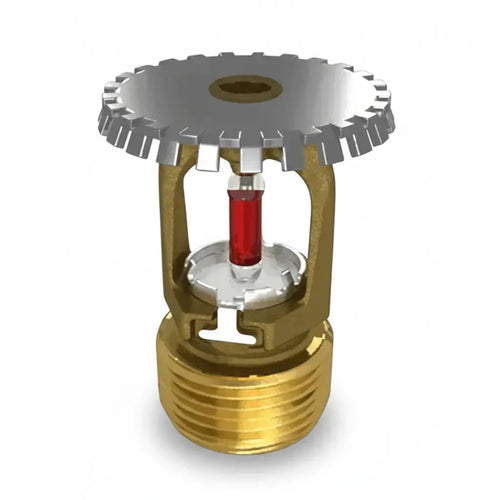


Ames Series 4000B-3: 3/4" Backflow Preventer Guide
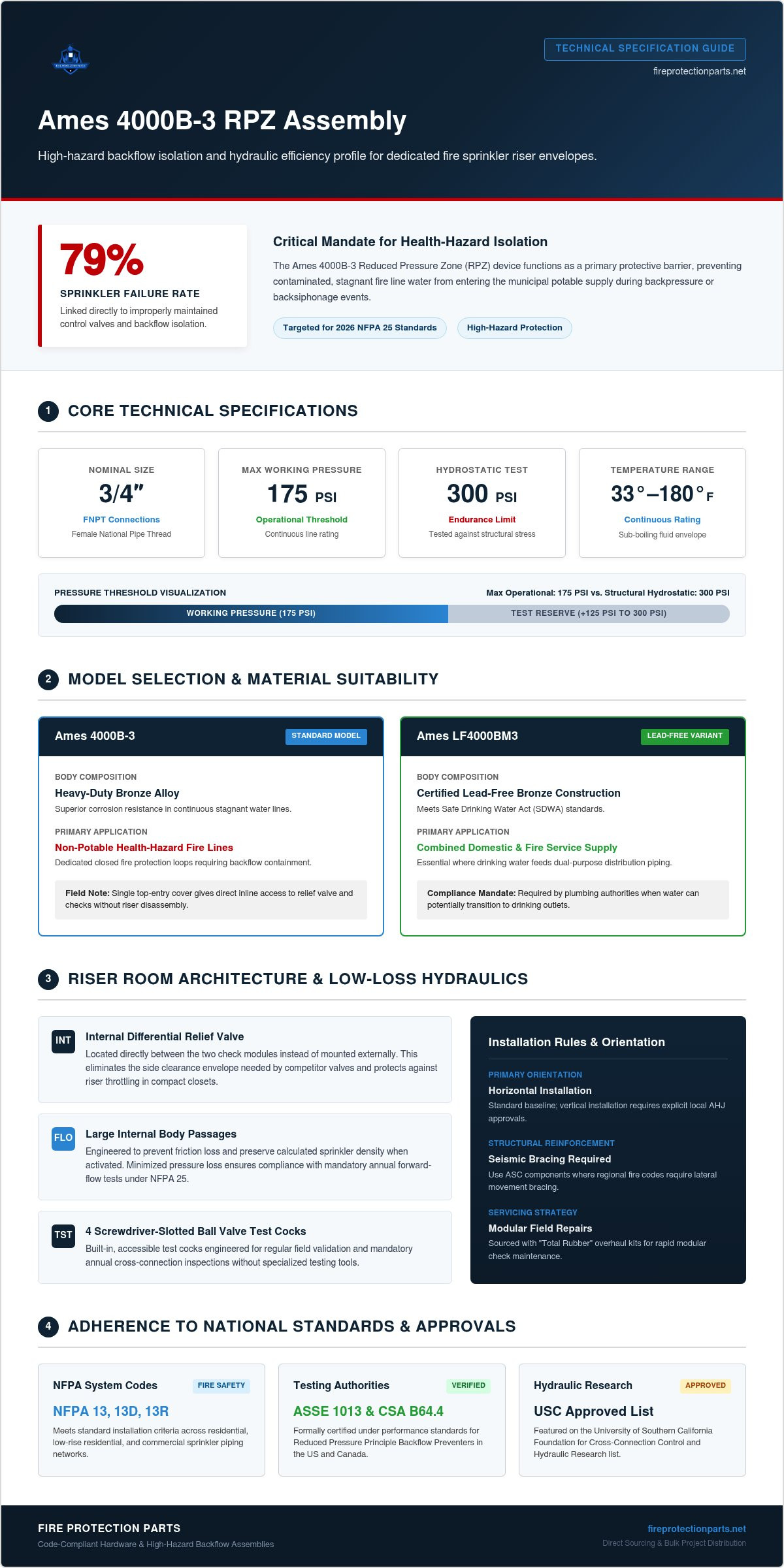
Did you know that 79% of fire sprinkler system failures are linked to improperly maintained control valves and backflow isolation? It's a sobering reality that underscores why your choice of hardware is a critical life safety mandate rather than a simple line item. You're likely here because you need to ensure your system meets the rigorous 2026 NFPA 25 standards without sacrificing valuable floor space. Finding the exact repair kits or verifying if the 4000b-3 fits your specific riser closet shouldn't feel like a high-stakes guessing game.
We understand the frustration of navigating complex certification requirements and the need for low-pressure drop solutions in tight envelopes. This guide helps you master the technical specifications, maintenance requirements, and installation standards for the Ames 4000B-3 Reduced Pressure Zone assembly. We'll break down the modular design that allows for efficient flow in confined areas and clarify the differences between standard bronze and lead-free models. From sourcing "Total Rubber" overhaul kits to verifying local fire code adherence, you'll gain the professional assurance needed to keep your facility protected and fully compliant.
Key Takeaways
- Master the technical specifications of the 4000b-3, including its heavy-duty bronze construction and 3/4-inch sizing for high-hazard applications.
- Understand how the compact footprint and superior flow characteristics minimize pressure loss in modernized, smaller riser rooms.
- Confirm adherence to NFPA 13, 13D, and 13R standards and verify the assembly's ASSE 1013 and CSA B64.4 certification status.
- Master maintenance by identifying common wear points and utilizing the modular design to access check valves quickly during field repairs.
- Simplify your project workflow with direct e-commerce access to code-compliant hardware and bulk ordering capabilities for large-scale installations.
Ames 4000B-3 Technical Specifications and Overview
The Ames 4000b-3 is a specialized 3/4-inch Reduced Pressure Zone (RPZ) backflow preventer engineered for high-hazard cross-connections. It provides a critical barrier that prevents contaminated water from entering the municipal supply during backpressure or backsiphonage events. These backflow prevention devices are foundational to modern fire protection, ensuring that stagnant water within a sprinkler system never compromises potable lines. With its FNPT (Female National Pipe Thread) connections, the unit integrates directly into standard piping, making it a reliable choice for both new builds and system retrofits.
Core Material and Build Quality
Durability is the primary focus of the 4000b-3 construction. The assembly features a heavy-duty bronze body designed to withstand a maximum working pressure of 175 psi. This specific bronze alloy is chosen for its superior corrosion resistance, though facility managers should note that the standard model is intended for non-potable, health-hazard dedicated fire lines. For applications involving combined domestic-fire services, the lead-free LF4000BM3 variant is required to meet Safe Drinking Water Act standards.
The design prioritizes field efficiency. A single top-entry access cover allows technicians to inspect or service both check modules and the relief valve without removing the assembly from the riser. To facilitate mandatory annual testing, the unit is equipped with four screwdriver-slotted ball valve test cocks. These components are built to endure hydrostatic test pressures up to 300 psi, providing professional assurance that the unit won't fail under extreme system stress.
Dimensional Data for Riser Rooms
Modern riser rooms and manifold closets often lack the luxury of space. The 4000b-3 addresses this pain point through a compact internal relief valve geometry. Unlike competitive RPZ valves that require significant side clearance for external relief mechanisms, the Ames design places the differential pressure relief valve directly between the two check modules. This reduces the total footprint and simplifies installation in tight envelopes.
- Temperature Range: Rated for continuous operation between 33°F and 180°F.
- Mounting Orientation: Primarily designed for horizontal installation; always verify specific local AHJ approvals for vertical configurations.
- Support Requirements: While compact, the unit's weight requires proper support. Ensure that seismic bracing, such as ASC components, is utilized where regional fire codes mandate protection against lateral movement.
By maintaining a streamlined profile, this assembly allows for easier compliance with NFPA standards regarding clearance and accessibility. It's a functional remedy for contractors who need to fit high-performance protection into restricted mechanical spaces without compromising on safety or longevity.
Performance Benefits: Why the 4000B-3 Leads the Market
Performance in a fire protection system isn't just about meeting codes. It's about hydraulic efficiency and long-term reliability. The 4000b-3 stands out in the industry by balancing heavy-duty protection with streamlined fluid dynamics. While standard backflow assemblies often create significant friction loss, this model is engineered to keep water moving with minimal resistance. This ensures that when a sprinkler head activates, the system pressure remains high enough to deliver the calculated density required for fire suppression.
Low Pressure Drop Dynamics
The 4000b-3 utilizes large internal body passages that facilitate high flow rates. This design choice directly addresses a common pain point for contractors: the risk of hydraulic throttling. In many 3/4-inch RPZ models, tight internal geometries can cause a significant pressure drop, potentially compromising the hydraulic calculations of the entire sprinkler system. The Ames design minimizes this loss, providing a functional remedy for systems where every PSI counts.
Verification is key to professional assurance. This assembly is featured on the list of USC Approved Backflow Prevention Assemblies, confirming it has passed rigorous hydraulic research and testing standards. By choosing a unit with proven low-head loss characteristics, you eliminate the doubt associated with generic or uncertified alternatives. This performance advantage is particularly critical during annual forward-flow tests mandated by NFPA 25, where the device must prove it won't impede the full fire sprinkler demand.
Modular Design Advantages
Maintenance efficiency is where the 4000b-3 truly leads the market. It features a modular check construction that allows technicians to access internal components without specialized tools. This "No Special Tools" promise means faster service times and lower labor costs during five-year internal inspections. By standardizing on Ames parts, facility managers can reduce truck stock complexity, as many internal components are interchangeable with the Watts 009M3 platform.
The internal relief valve design is another major benefit. Unlike competitive valves that might discharge water during minor pressure fluctuations, the 4000b-3 relief valve is positioned to prevent nuisance spitting. This reduces water waste and prevents potential water damage in riser rooms. If you're looking to upgrade a legacy system or outfit a new project, you can source the 4000b-3 to ensure your facility benefits from this superior engineering. The result is a system that stays pressurized, remains dry, and is remarkably easy to maintain over its service life.
Installation and Compliance: NFPA Standards for 2026
Compliance with NFPA 13 installation standards is the baseline for any commercial fire system. The 4000b-3 is specifically engineered to meet these rigorous requirements, alongside NFPA 13D and 13R for residential applications. It carries ASSE 1013 and CSA B64.4 certifications, which are the industry gold standards for Reduced Pressure Zone (RPZ) assemblies. These certifications provide the professional assurance that your system is protected against both backpressure and backsiphonage in high-hazard environments. Verification of these standards ensures your facility stays within the legal framework of local fire codes.
When installing the unit indoors, proper discharge piping is a functional remedy for potential relief valve activation. An air gap drain is mandatory. It ensures that any discharge from the relief valve is captured and directed to a safe floor drain without the risk of cross-connection. This setup prevents water damage in the riser room while maintaining the integrity of the air gap required by code. It's a simple step that eliminates the risk of significant property damage during a pressure surge.
Integration with Fire Riser Rooms
A successful installation requires coordinating the 4000b-3 with other essential sprinkler system components online to create a complete, code-compliant riser setup. The unit should be placed downstream of the main OS&Y (Outside Stem and Yoke) indicating valve. If your system includes a fire pump, the backflow preventer must be positioned to handle the specific pressure surges associated with pump activation. In regions prone to earth movement, you must secure the assembly using seismic bracing for sprinkler systems. This ensures the unit remains operational and attached to the structure during a seismic event, eliminating doubt about system performance when it's needed most.
Testing and Certification Protocols
Annual performance testing is a non-negotiable requirement for RPZ assemblies in commercial buildings. Under the 2026 NFPA 25 standards, you must document a certified forward-flow test. This proves the 4000b-3 can handle the full hydraulic demand of the system without causing an unacceptable pressure drop. Keep detailed records for your local fire marshal inspections to avoid the risk of uncorrected impairments. Most jurisdictions also require that the installer and tester hold state-specific backflow prevention licenses. Skipping these steps can lead to significant regulatory fines, which can reach up to $16,550 per occurrence according to recent enforcement reviews. Professional expertise in sourcing and maintaining these units is your best defense against compliance failures.
Maintenance, Troubleshooting, and Repair Parts
Maintaining the 4000b-3 is a streamlined process thanks to its top-entry design. The most common wear points in this 3/4-inch assembly are the rubber seals within the check modules and the relief valve diaphragm. Over time, mineral buildup or pipe scale can prevent these components from seating correctly. Identifying these issues during monthly visual inspections prevents minor leaks from escalating into system impairments. Using genuine Ames repair kits is essential for maintaining both your warranty and your code compliance status.
Troubleshooting Common RPZ Issues
Relief valve discharge is the most frequent indicator of a mechanical problem. If you notice continuous discharge, debris is likely trapped in the first check valve. This prevents the valve from closing fully, causing a pressure imbalance that triggers the relief mechanism. Intermittent discharge usually stems from supply pressure fluctuations rather than a mechanical failure. If the valve discharges during stagnant flow, the second check module is often the culprit. Cleaning the internal modules often solves the problem; however, if the rubber is pitted or the springs have lost tension, a full rebuild is necessary.
Accessing the internal components is fast. After closing the shutoff valves and bleeding the pressure through the test cocks, you simply remove the access cover. The modular check assemblies can be lifted out without special tools. This design provides a functional remedy for the high labor costs typically associated with the 5-year internal inspection required by NFPA 25. It eliminates the doubt that often comes with servicing more complex, non-modular assemblies.
Sourcing Replacement Components
Facility managers should maintain a basic inventory of "Total Rubber" overhaul kits to ensure rapid response times. Finding the right fire protection parts online allows you to verify compatibility with the 4000b-3 before ordering. Your inventory checklist should include:
- First and second check module kits (ARK 4000BM3-CK1 and CK2)
- Relief valve rubber kits (ARK 4000BM3-RV)
- Replacement O-rings and seats
When working on the assembly, maintain professional situational awareness. Understanding fire sprinkler head temperature ratings is critical if your backflow preventer is located near sensitive sprinkler heads. High-heat tools or accidental impact can trigger a discharge, leading to costly water damage. To maintain system reliability without compromise, source your Ames 4000B-3 repair kits from an authorized vendor who understands the critical nature of fire safety hardware.
Procuring the Ames 4000B-3 from Fire Protection Parts
Sourcing critical safety hardware shouldn't involve guesswork or administrative delays. When you're ready to secure the 4000b-3 for your next project, you need a partner that understands the urgency of life safety compliance. Fire Protection Parts provides direct e-commerce access, allowing you to bypass the opaque barriers often found with traditional distributors. We prioritize professional assurance, ensuring that every unit in our catalog meets the stringent requirements of modern fire codes. You don't have to wait for a callback to verify availability; our platform is designed for the fast-paced needs of the industry.
Navigating our catalog is straightforward. We've organized our inventory to help you find the 4000b-3 along with every necessary repair kit and accessory. This methodical approach ensures that technical details are easy to digest, helping you make a compliant choice without compromise. We position ourselves as a mission-driven partner, focusing on the physical performance of the items we offer to ensure your facility remains protected.
The Fire Protection Parts Advantage
We provide more than just a transaction; we offer a dependable guide for navigating complex safety requirements. Our team specializes in NFPA-compliant hardware sourcing, which means we understand the specific pressures contractors face. If you're managing large-scale fire protection projects, our bulk ordering capabilities provide a functional remedy for supply chain bottlenecks. We maintain a sense of unwavering reliability, ensuring that your procurement process is as efficient as the hardware itself. You can move quickly from identifying a need to implementing a solution, all while maintaining absolute confidence in the quality of your components.
Completing Your System
A backflow preventer is only one part of a high-performance suppression system. To ensure long-term durability, many professionals pair the 4000b-3 with Viking CPVC fire sprinkler pipe. This combination is ideal for modernized riser rooms where space and corrosion resistance are top priorities. Before you finalize your order, use this checklist to ensure a successful installation:
- Verify the required mounting orientation for your specific riser.
- Ensure you have the correct air gap drain for indoor discharge piping.
- Confirm the lead times for the 4000B series to stay on schedule for 2026 inspections.
- Include necessary shut-off valves and test cocks if they aren't already part of your assembly.
By sourcing all your components from a single, reliable fire safety vendor, you eliminate doubt and ensure system compatibility. Our commitment to excellence means we only offer parts that meet the highest industry standards. Take the no-nonsense approach to your fire safety needs and secure the hardware that protects both your facility and the public water supply.
Ensure Compliance with Proven Fire Safety Hardware
Choosing the right hardware is the first step in ensuring long-term life safety and regulatory compliance. The 4000b-3 offers a compact, high-performance solution that fits into restricted spaces without sacrificing hydraulic efficiency. By prioritizing modular components and heavy-duty bronze construction, you're investing in a unit designed for durability and ease of maintenance. Meeting the 2026 NFPA standards requires a no-nonsense approach to system integrity, and this assembly provides the functional remedy your facility needs.
Fire Protection Parts is a mission-driven partner for contractors and facility managers who value quality above all else. We provide code-compliant hardware that's trusted by fire protection contractors nationwide. When you source from us, you gain access to expert technical support to eliminate any doubt during the procurement process. Take the proactive step to protect your facility and the public water supply today.
Buy the Ames Series 4000B-3 Backflow Preventer at Fire Protection Parts and ensure your fire suppression system remains reliable and fully compliant for years to come.
Frequently Asked Questions
What is the maximum working pressure for the Ames 4000B-3?
The maximum working pressure for the 4000b-3 is 175 psi (12.06 bar). It is also rated for a hydrostatic test pressure of up to 300 psi, ensuring it can handle significant system stress during initial commissioning. This high-pressure rating makes it suitable for most commercial fire protection applications. Always verify that your system's operating parameters stay within these limits to maintain the integrity of the bronze body and internal components.
Can the Ames 4000B-3 be installed vertically?
This assembly is primarily designed for horizontal installation to ensure the relief valve operates correctly. While some specific configurations might allow for vertical flow-up, this is strictly dependent on the specific model's listing and local Authority Having Jurisdiction (AHJ) approvals. Installing the unit in an unapproved orientation can lead to improper relief valve discharge and code violations. Always consult the manufacturer's specification sheet and your local fire marshal before finalizing a vertical riser design.
Do I need special tools to service the 4000B-3 backflow preventer?
You don't need any specialized tools to service the 4000b-3 assembly. The unit features a modular, top-entry design that allows technicians to access both check valves and the relief valve using standard hand tools. This "No Special Tools" promise simplifies field repairs and reduces the time required for five-year internal inspections. It is a functional remedy for facility managers looking to lower labor costs while ensuring the system remains in peak operating condition.
What is the difference between the Ames 4000B and the 4000B-3?
The "3" in the 4000B-3 model name refers to "Modification 3," which represents the modern internal redesign of the original 3/4-inch platform. While the core function remains the same, the M3 version features improved internal geometries and modular check modules that aren't always interchangeable with older, legacy 4000B units. Technicians often query this specific model to ensure they're sourcing the current industry-standard parts for modern fire protection risers and branch lines.
Is the Ames 4000B-3 lead-free compliant?
The standard Ames 4000B-3 bronze model is not lead-free compliant and is strictly limited to non-potable, health-hazard dedicated fire lines. If your project involves a combined domestic and fire service or any connection to a potable water supply, you must specify the lead-free model, designated as LF4000BM3. This version complies with NSF/ANSI 61 and 372 standards, ensuring it contains less than 0.25% lead as required by the federal Safe Drinking Water Act.
How often should the 4000B-3 be tested according to NFPA standards?
Under the 2026 edition of NFPA 25, the assembly requires a monthly visual inspection of the relief valve port for signs of continuous discharge. An annual performance test is mandatory to verify the differential relief valve opening point and check valve integrity. Additionally, a full forward-flow test at system demand must be conducted annually. Every five years, the unit requires a comprehensive internal inspection to check for obstructions or worn rubber components.
Where can I find a repair parts breakdown for the 3/4 inch 4000B series?
You can find a complete repair parts breakdown for the 3/4-inch 4000B series directly on the Fire Protection Parts e-commerce platform. Our catalog includes detailed schematics and part numbers for "Total Rubber" kits, check modules, and relief valve assemblies. Sourcing from an authorized retailer ensures you receive genuine Ames components that maintain the unit's ASSE 1013 certification. This eliminates the doubt associated with using generic, non-compliant third-party seals or springs.
What causes the relief valve on my Ames 4000B-3 to spit water?
Water "spitting" or discharge from the relief valve is typically caused by debris trapped in the first check valve. This prevents a tight seal, causing the differential pressure to drop and triggering the relief valve to open. If the discharge is intermittent, it is often a result of supply pressure fluctuations rather than a mechanical failure. Cleaning the internal modules or installing a "Total Rubber" repair kit is the standard functional remedy to stop the discharge.

