



Annual Fire Sprinkler Inspection Parts: A 2026 Compliance Sourcing Guide
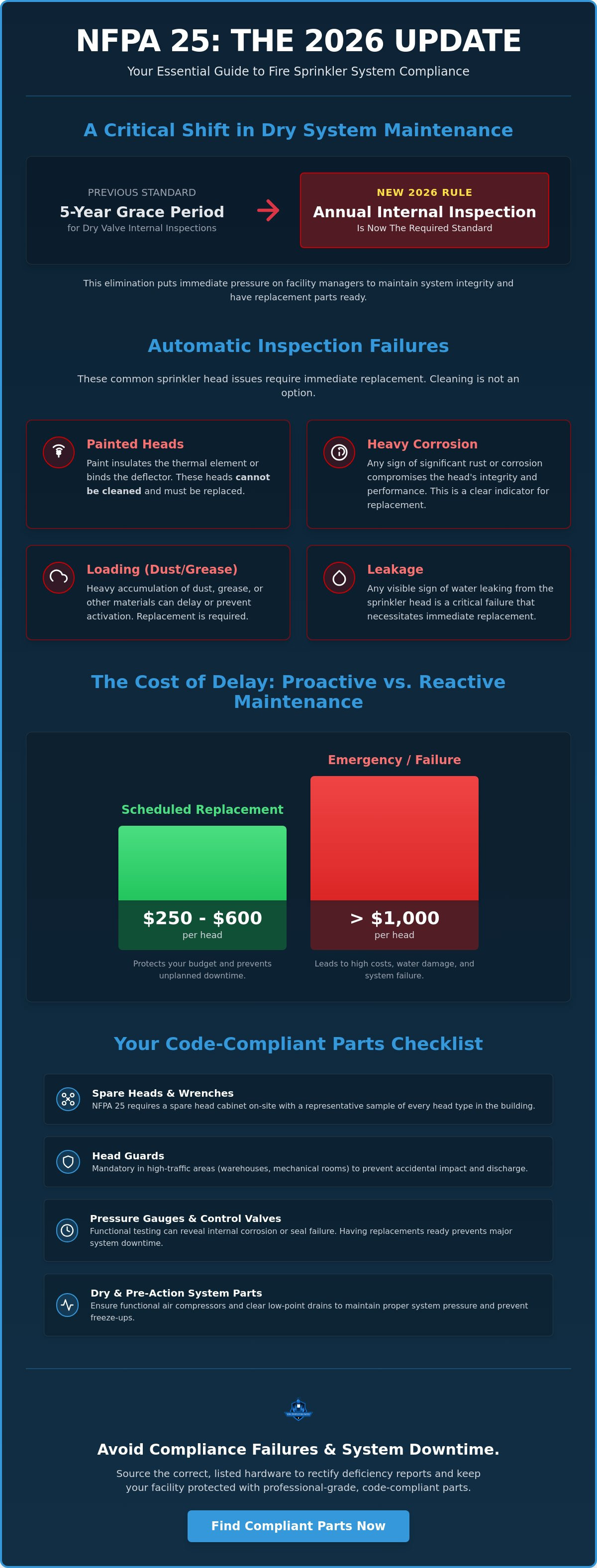
The 2026 edition of NFPA 25 has officially eliminated the five-year grace period for dry valve internal inspections, making annual oversight the new non-negotiable standard. It's a shift that puts immediate pressure on facility managers to maintain a precise fire sprinkler system maintenance parts checklist to avoid failing their next walkthrough. You've likely felt the frustration of staring at a technical deficiency report, wondering how to find an exact replacement for a component that hasn't been manufactured in a decade. Fear of a failed re-inspection is a valid concern when safety is on the line.
We understand that compliance isn't just about paperwork; it's about the physical integrity of your life safety systems. Safety doesn't allow for compromise. This guide will show you how to identify and source the critical hardware needed to meet the latest 2026 requirements without the stress of trial and error. We'll preview the essential components for dry and pre-action systems, clarify new hose valve inspection rules, and provide the technical clarity you need to keep your facility protected and your downtime to an absolute minimum.
Key Takeaways
- Understand the direct link between NFPA 25 inspection requirements and the specific hardware replacements needed to maintain system certification.
- Identify critical indicators for sprinkler head replacement, including corrosion and paint loading, to prevent automatic inspection failures.
- Utilize a professional fire sprinkler system maintenance parts checklist to ensure your pressure gauges and control valves meet current 2026 standards.
- Recognize the essential maintenance needs for dry and pre-action systems, focusing on functional air compressors and low-point drains.
- Learn how to quickly source compliant hardware to rectify deficiency reports and minimize system downtime.
Understanding NFPA 25: The Link Between Inspection and Parts
NFPA 25 isn't just a manual; it's the operational law for water-based fire protection. The 2026 edition of this standard dictates every move your inspector makes, focusing on the visual integrity and functional readiness of your entire system. When an inspector hands you a deficiency report, they aren't just pointing out flaws. They're providing a direct call to action for part replacement. Adhering to a comprehensive fire sprinkler system maintenance parts checklist ensures that you're prepared to address these citations before they escalate into legal liabilities or system failures.
Proactive maintenance is a strategy of professional assurance. The 2026 industry data shows the average cost of a scheduled sprinkler head replacement ranges from $250 to $600. If you wait for an emergency or a system failure, those costs can easily exceed $1,000 per head. Sourcing parts before the next inspection cycle protects your budget and your facility. A Fire sprinkler system is only as reliable as its weakest component. Every valve, gauge, and pipe must be ready to perform under pressure without hesitation.
Visual Inspection vs. Functional Testing
Visual failures are the most common citations in any annual report. Painted sprinkler heads are an automatic failure because the paint can insulate the thermal element or bind the deflector. These components cannot be cleaned; they must be replaced. Your fire sprinkler system maintenance parts checklist should always include a stock of spare heads and the correct wrenches. NFPA 25 explicitly requires a spare head cabinet on-site, containing a representative sample of every head type installed in the building.
Functional testing goes deeper, revealing issues that the eye can't see. Testing a control valve or a backflow preventer might reveal internal corrosion or seal failure that prevents a full shut-off. These hardware failures require immediate remediation. Replacing a faulty valve during a scheduled shutdown is manageable. Dealing with a valve that won't close during a pipe burst is a catastrophe. Professional facility managers prioritize these functional repairs to maintain the highest safety standards.
Just as functional testing reveals issues that the eye can't see in fire systems, a professional home inspection Virginia Beach from a veteran-owned provider like A Premier Home Inspection provides a deeper look into a property's overall condition, ensuring that every safety component is thoroughly vetted.
The Role of Code-Compliant Hardware
In life-safety environments, generic hardware is a liability you can't afford. Every component must be "listed" and "approved," meaning it has been tested by organizations like UL or FM Global to meet specific performance criteria. Using unlisted parts can void your insurance coverage and compromise the system's ability to suppress a fire. To ensure your safety measures align with your policy requirements, Paterson Insurance Brokers provides professional risk management advice and tailored insurance solutions. Reliability is built on verified quality, not the lowest bid.
Finding the right match for older systems can be difficult, but sourcing sprinkler system components online from specialized vendors eliminates the guesswork. Professional-grade sourcing ensures that the parts you receive meet the 2026 NFPA 25 requirements. Whether you're replacing a 50-year-old residential head or a complex deluge valve, using the correct, listed hardware is the only way to ensure compliance and long-term performance.
Critical Replacement Parts for Sprinkler Head Compliance
Compliance begins at the point of discharge. Sprinkler heads are the frontline of your defense, yet they are often the most neglected components in a facility. According to the NFPA 25 standard, any head showing signs of leakage, heavy corrosion, or "loading" (the accumulation of dust or grease) requires immediate replacement. If you spot paint on the deflector or the thermal element, don't attempt to scrub it off. A painted head is an automatic failure because cleaning it can damage the sensitive components. It must be swapped for a new unit to ensure the system activates exactly when needed.
Maintaining a robust fire sprinkler system maintenance parts checklist allows you to act fast when these deficiencies are flagged during an annual walkthrough. Beyond the heads themselves, you must consider physical protection. In high-traffic environments like warehouses or mechanical rooms, head guards are mandatory. These simple wire cages prevent accidental impact from forklifts or equipment, saving you from the high costs of an accidental discharge and subsequent water damage. Proactive procurement of these shields is a small investment that prevents a massive operational headache.
Identifying and Replacing Sprinkler Heads
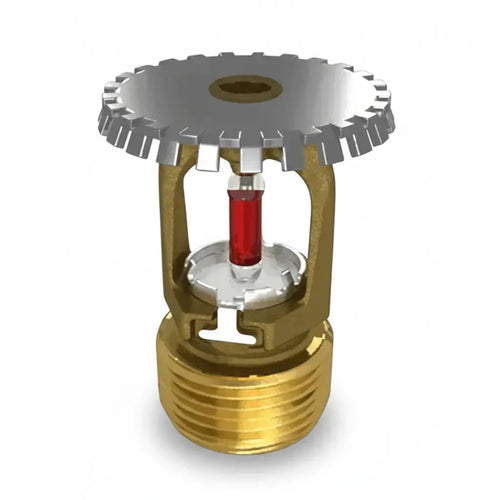
Correct replacement requires more than just picking a similar-looking part. You must use the Sprinkler Identification Number (SIN) to match the exact orifice size and response type. Proper fire sprinkler head identification involves checking the K-factor and the temperature rating, which is often indicated by the color of the liquid inside the glass bulb. For example, an orange bulb indicates a 135°F rating, while a red bulb signifies 155°F. Mixing different sprinkler brands within the same area is prohibited because it can disrupt the uniform water distribution pattern and thermal response of the system. You can find a wide selection of replacement sprinkler heads to match your existing system's specifications and restore compliance quickly.
Escutcheons and Decorative Trim
Escutcheons are frequently dismissed as purely aesthetic, but they serve a critical safety function. They seal the gap between the ceiling and the sprinkler head, maintaining the fire rating of the ceiling assembly. If an escutcheon is missing, hanging, or mismatched, it's an immediate inspection failure. You must distinguish between recessed, flush, and adjustable models to ensure a proper fit. A recessed escutcheon allows the head to sit partially above the ceiling line, while a flush model sits level. When sourcing these parts, always match the finish, whether chrome, white, or brass, to ensure the building’s aesthetics remain consistent while meeting strict safety codes.
Maintenance Hardware for Valves, Gauges, and FDC Connections
While sprinkler heads are the most visible components, the core of system reliability resides in the riser room and at the building's exterior. Control valves, such as Outside Stem and Yoke (OS&Y) or Butterfly valves, must operate smoothly without binding. A valve that's stuck or has a failing tamper switch is a major deficiency. These components ensure water is available when needed and that the system status is constantly monitored. Adhering to OSHA automatic sprinkler system regulations means maintaining these control points in peak condition. Your fire sprinkler system maintenance parts checklist should include replacement tamper switches and lubricants specifically designed for fire protection hardware.
Internal integrity is just as vital as external operation. NFPA 25 requires check valves to be inspected internally every five years. This process verifies that the clapper moves freely and the seat is clear of obstructions. If the internal components show pitting or the seal is degraded, sourcing a repair kit or a full replacement valve is the only path to compliance. Neglecting these hidden components can lead to backflow issues or system failure during a fire event. Professional assurance comes from knowing every internal seal is as reliable as the exterior hardware.
The 5-Year Gauge Replacement Rule
Gauges are the system's primary diagnostic tool, but they don't last forever. NFPA 25 mandates that pressure gauges be replaced or lab-tested every five years. In almost every scenario, it's more efficient and cost-effective to purchase new fire protection parts online than to pay for professional calibration of an old unit. You must distinguish between air pressure gauges for dry systems and water pressure gauges for wet systems, as they operate on different pressure scales. To identify a gauge that's out of calibration, check if the needle fails to return to the zero mark when pressure is removed or if it shows a significant discrepancy compared to a calibrated master gauge.
FDC and Exterior Hardware
The Fire Department Connection (FDC) is the gateway for emergency water supply. These inlets are often targets for vandalism or debris accumulation, which can block the flow of water during a fire. Break-away caps are a professional solution that keeps the inlets clear of trash and birds' nests while allowing firefighters quick access. Proper signage is also a strict code requirement. High-visibility plates labeled "Automatic Sprinkler" or "Standpipe" must be present at the riser room and FDC. Sourcing specialized exterior hardware that resists corrosion ensures these critical points remain functional despite years of exposure to rain, snow, and salt.
Specialized Components for Dry and Pre-Action Systems
Dry and pre-action systems introduce a layer of mechanical complexity that standard wet systems don't have. These systems rely on pressurized air or nitrogen to hold back the water supply. If the air pressure fails, the dry pipe valve trips, leading to accidental water discharge and potential freezing in unheated areas. Including specialized hardware on your fire sprinkler system maintenance parts checklist is the only way to manage these risks effectively. Professional facility managers know that a nuisance trip isn't just an inconvenience; it's a threat to the system's longevity and the building's safety.
Dry pendent heads require particular attention during an annual inspection. Unlike standard heads, they feature a sealed barrel of a specific length to prevent water from entering the freezing zone. If an inspector flags a dry pendent for corrosion or loading, you must match the barrel length exactly during replacement. A discrepancy of even half an inch can compromise the thermal seal, making the system vulnerable to ice plugs that block water flow. Automatic air maintenance devices are also essential, as they regulate the compressor's output to prevent over-pressurization while ensuring the system stays charged.
Air Supply and Compressor Maintenance
The air compressor is the heart of any dry system. An undersized or failing compressor can't keep up with minor leaks, leading to constant low-air alarms and unnecessary system downtime. For professional guidance on selection and sizing, refer to our guide for air compressors for dry sprinkler systems. Common maintenance items like pressure switches and relief valves should be kept in your spare parts cabinet. These components ensure the compressor cycles correctly and maintains the precise pressure differential required to keep the dry pipe valve closed.
Low-Point Drains and Corrosion Control
Condensation is inevitable in dry pipe systems, and moisture is the primary driver of internal corrosion. Low-point drains, commonly known as drum drips, collect this moisture so it can be removed without tripping the system. If the valves on a drum drip are seized or leaking, they must be replaced immediately to prevent pipe freeze-ups and subsequent bursts. Modern systems often incorporate nitrogen generators to displace oxygen and mitigate the risk of pinhole leaks caused by microbiologically influenced corrosion (MIC). Ensuring your drainage points are functional is a non-negotiable part of 2026 compliance. You can source high-quality air compressors and dry pendent heads to keep your specialized systems operational and code-compliant.
Procuring Code-Compliant Parts from Fire Protection Parts
Identifying a deficiency is only half the battle. The true challenge lies in sourcing the exact component that restores system integrity without delay. We maintain an extensive inventory of hardware from the industry's most trusted brands, ensuring you never have to settle for second-best. Whether you're managing a single residential building or a sprawling industrial complex, our platform bridges the gap between your fire sprinkler system maintenance parts checklist and a fully compliant facility. We prioritize professional-grade solutions because in fire protection, there is no room for error.
Direct e-commerce sourcing provides a tactical advantage when facing tight re-inspection deadlines. You shouldn't have to wait weeks for a simple valve or struggle with outdated catalogs. Our streamlined procurement process allows for a rapid response to deficiency reports, keeping your system operational and your property protected. If you're unsure about a specific SIN number or technical specification, our experts are available to provide the clarity needed to make a safe, compliant choice. We act as your mission-driven partner in safety, ensuring your hardware meets every 2026 standard.
Bulk Sourcing for Contractors
For large-scale contractors, proactive inventory management is the key to operational efficiency. Ordering spare head cabinets and essential stock in advance eliminates the panic of last-minute sourcing. If your project involves system expansions or retrofits, utilizing Viking CPVC fire sprinkler pipe ensures you're working with materials that meet the highest durability standards. Our online storefront is designed for speed, allowing you to secure the hardware you need and move on to the next job with confidence. Reliability is our baseline, and your success is our priority.
The Fire Protection Parts Reliability Standard
Every part we sell is a commitment to excellence. We strictly offer listed and approved components that have undergone rigorous testing for life-safety applications. Compromise isn't part of our vocabulary. By choosing professional-grade hardware, you eliminate the doubts that come with generic alternatives. We invite you to explore our full range of solutions and experience the peace of mind that comes with expert-backed procurement. Don't let a minor deficiency become a major liability. Shop our full inventory of fire sprinkler inspection parts today and secure your facility for the long term.
Secure Your Compliance for the 2026 Inspection Cycle
Compliance is a moving target that requires constant vigilance and professional-grade hardware. The 2026 updates to NFPA 25, particularly the shift to annual internal inspections for dry and deluge valves, mean your maintenance schedule must be more precise than ever before. Utilizing a comprehensive fire sprinkler system maintenance parts checklist ensures you have the right hardware on hand to address deficiencies before they escalate into failed inspections or costly system downtime. Safety doesn't allow for second-guessing; it demands verified components and expert execution.
We bridge the gap between technical reports and functional safety by providing code-compliant parts from trusted brands like Viking. Our platform offers fast shipping to meet urgent repair deadlines and expert support for even the most difficult technical part identification. You don't have to navigate complex safety requirements alone. Protecting your facility is a shared mission, and we're here to provide the unwavering reliability your life-safety systems demand. Take control of your maintenance strategy today to ensure your property remains protected and compliant for years to come.
Shop NFPA-Compliant Fire Sprinkler Parts Now and take the first step toward a worry-free annual inspection.
Frequently Asked Questions
What are the most common parts that fail a fire sprinkler inspection?
Sprinkler heads with paint, loaded deflectors, and expired pressure gauges are the most frequent causes of inspection failure. Other common issues include missing Fire Department Connection caps and leaking control valve seals. Maintaining a proactive fire sprinkler system maintenance parts checklist helps you identify these high-fail items before the inspector arrives. Addressing these small hardware deficiencies prevents the administrative burden of a re-inspection and ensures your system remains fully operational.
Do I have to replace a fire sprinkler head if it has paint on it?
You must replace any fire sprinkler head that has paint on it because cleaning it can damage the heat-sensitive bulb or deflector. Paint acts as an insulator, delaying the head's activation during a fire, or it can physically bond parts together, preventing proper water distribution. NFPA 25 standards are clear that field-painted heads are a critical deficiency. Attempting to scrape or solvent-clean a head is a violation and will lead to an automatic failure.
How often do pressure gauges need to be replaced in a sprinkler system?
Pressure gauges must be replaced or tested for accuracy every five years according to the 2026 edition of NFPA 25. Most facility managers choose to replace them entirely because the cost of new, listed gauges is typically lower than the cost of professional laboratory calibration. If a gauge doesn't return to zero when depressurized or shows a discrepancy of more than 3 percent compared to a master gauge, it requires immediate replacement to maintain compliance.
Can I buy fire sprinkler heads online for a commercial building?
It is entirely possible to purchase commercial fire sprinkler heads online as long as you verify they are UL-listed and FM-approved for your specific system. You must match the Sprinkler Identification Number, temperature rating, and K-factor to the original design specifications. Professional e-commerce platforms provide a reliable way to source these components quickly, helping you rectify deficiency reports without the long lead times often found through traditional local distributors.
What is a spare sprinkler head cabinet and why is it required?
A spare sprinkler head cabinet is a code-required metal box that stores a representative sample of every head type installed in your building. NFPA 25 mandates this cabinet to ensure that if a head is damaged or activates, it can be replaced immediately with an identical unit. The cabinet must also contain the specific sprinkler wrenches required for each head type. This ensures that your fire sprinkler system maintenance parts checklist is physically supported by on-site inventory for emergency repairs.
What is the difference between an escutcheon and a head guard?
An escutcheon is a decorative trim ring that seals the gap between the ceiling and the sprinkler head to maintain the fire rating of the ceiling assembly. In contrast, a head guard is a heavy-duty wire cage designed to protect the sprinkler from physical impact in high-traffic areas like warehouses. While an escutcheon is often required for aesthetics and code-compliant ceiling seals, a head guard is a functional safety component used specifically to prevent accidental discharge from mechanical damage.
How do I identify the manufacturer of my existing sprinkler heads?
The easiest way to identify the manufacturer is to locate the Sprinkler Identification Number stamped onto the deflector of the head. This three to six-character alphanumeric code, such as VK302, identifies the specific model and manufacturer. Once you have this number, you can cross-reference it with technical data sheets to find the exact temperature rating, K-factor, and response type needed for an identical replacement. This ensures your system balance remains intact during repairs.
Is it possible to repair a leaking sprinkler head or must it be replaced?
You cannot repair a leaking fire sprinkler head; it must be replaced with a new unit immediately. Fire sprinkler heads are precision-engineered safety devices with factory-set seals that cannot be serviced in the field. A leak often indicates internal corrosion or a compromised thermal element that could lead to an accidental discharge or a failure to activate. Replacing the head is the only way to ensure the integrity of the life-safety system and satisfy NFPA requirements.

