

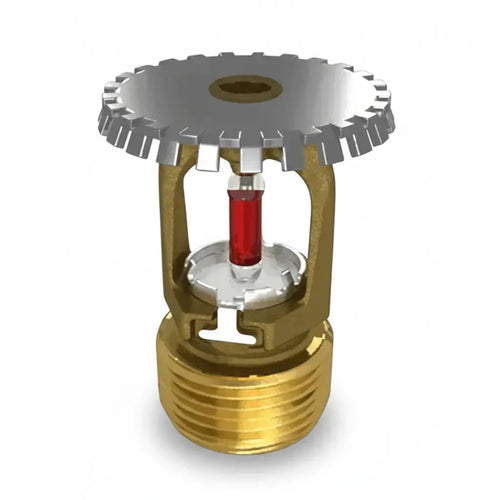


ASC 2026 Seismic Bracing Fire Protection Sourcing Guide
A single non-compliant brace can stall an entire certificate of occupancy, turning a profitable project into a costly liability. You know that selecting the correct ASC seismic bracing for fire protection and ensuring hardware compatibility is often the most stressful part of an installation. The fear of an AHJ rejection due to a simple component mismatch is a reality that keeps many contractors up at night. It's a high-stakes environment where there is no room for compromise on structural integrity.
This guide helps you master the essentials of ASC Engineered Solutions hardware to maintain strict NFPA 13 compliance. You'll learn how to choose the right components to eliminate doubt and protect your reputation on the job site. We provide the expert assurance you need to ensure your systems remain secure during seismic events and meet the latest 2026 standards.
We'll examine the specific Afcon hardware line and explain how quick-install features reduce field labor. You'll also see how to differentiate between bracing for steel and CPVC pipe while using Seis Brace 2.0 software for accurate calculations. This is your roadmap to acquiring UL Listed and FM Approved bracing components with total professional confidence.
Key Takeaways
- Navigate the latest NFPA 13 standards to ensure your ASC seismic bracing for fire protection meets all structural requirements and passes inspection.
- Discover how Afcon’s high load ratings and quick-install hardware reduce the total number of braces needed, significantly cutting down on field labor hours.
- Master the Seis Brace 2.0 tool to automate complex zone of influence calculations and eliminate manual design errors in your fire protection system.
- Identify the critical differences in bracing requirements between steel and CPVC piping systems to ensure hardware compatibility and long-term structural integrity.
- Streamline your procurement process by sourcing certified ASC components directly, bypassing complex manufacturer portals for faster, more reliable delivery.
What is ASC Seismic Bracing for Fire Protection?
ASC seismic bracing for fire protection is a specialized assembly of sway braces, connectors, and structural attachments engineered by ASC Engineered Solutions. These systems are designed to keep fire sprinkler piping securely attached to the building structure during an earthquake. Within the ASC ecosystem, the Afcon brand serves as the primary line for seismic restraints. It provides the heavy-duty hardware required to meet rigid safety standards. This hardware is not just about holding pipes in place; it's about ensuring the entire fire suppression system remains functional after a disaster.
The fundamental purpose of these components is to manage seismic performance by preventing differential movement. When a building shakes, the piping and the structure often move at different frequencies. Without proper bracing, this movement causes pipe ruptures, joint failures, and total system collapse. Bracing ensures the sprinkler system moves in unison with the building. This protects the life-safety infrastructure when it's needed most, giving facility managers and owners peace of mind.
The Critical Role of NFPA 13 Compliance
Compliance isn't optional for modern commercial projects. NFPA 13 and ASCE 7 mandate seismic protection in specific geographic zones and building categories. ASC hardware carries UL Listing and FM Approval, which are the gold standards for reliability in the fire protection industry. These certifications reassure the Authority Having Jurisdiction (AHJ) that the components can handle the calculated seismic loads. A key part of this calculation involves the Cp seismic coefficient, a value that represents the horizontal force acting on the system. ASC seismic bracing for fire protection components are engineered to withstand these specific forces. Using verified hardware reduces the risk of system failure and ensures a smooth inspection process for contractors.
Key Components in the ASC Seismic Catalog
The ASC catalog is built around modularity and strength. You aren't just buying a clamp; you're buying a tested path from the pipe to the structure. The system relies on a few core categories of hardware to succeed.
- Sway Brace Attachments: These connect the bracing pipe to the system pipe. They come in both lateral and longitudinal configurations to handle different force directions.
- Swivel Fittings: These components allow for flexible angles. They make it easier to attach braces to beams or concrete at various degrees without complex field modifications.
- Structural Attachments: These are the anchors that secure the system to the building's structure, such as steel beams or concrete decks.
- Pipe Clamps and Adapters: Specifically designed for various diameters, these ensure a tight fit on both steel and CPVC pipe.
Contractors often pair these with all-thread rod to complete the assembly. Having the right combination of parts is the only way to guarantee the system remains intact during a seismic event. Choosing the wrong adapter or a non-compliant fitting can compromise the entire installation.
The Afcon Advantage: Engineering Speed into Safety
Afcon represents the mechanical backbone of the ASC Engineered Solutions catalog. While engineers focus on the math, field techs focus on the clock. Afcon components bridge this gap by offering higher load ratings than many generic alternatives. This efficiency allows for greater spacing between supports. When you reduce the component count, you reduce the risk of installation error and lower your overall project costs. It's a system designed to solve problems before they reach the job site.
The durability of these parts is non-negotiable. They're built to withstand corrosive environments and the extreme stresses of a seismic event. This reliability is why ASC seismic bracing for fire protection remains an industry standard. You can find the full range of ASC seismic hardware ready for immediate dispatch to keep your project on schedule.
Swivel Fittings and Universal Attachments
Field conditions are rarely perfect. Swivel fittings solve this by allowing for variable bracing angles between 30 and 90 degrees. This flexibility means you don't have to fight the building's geometry. One of the most valued features is the "break-off" bolt head. Once the installer reaches the required torque, the bolt head snaps off. This provides an instant visual confirmation for the inspector that the brace is secured correctly. It eliminates the guesswork and the need for a torque wrench on every single fitting. These universal attachments work seamlessly across wood, steel, and concrete. This versatility means your team spends less time searching for the right bracket and more time finishing the install.
Longitudinal vs. Lateral Sway Bracing
Understanding the direction of force is essential for meeting NFPA 13 seismic bracing requirements. Lateral sway bracing protects the system from side-to-side movement. This movement can easily snap hangers or damage walls if left unchecked. Longitudinal bracing secures the pipe along its own axis, preventing it from sliding through its supports during a tremor. ASC 1-inch sway braces are often the go-to choice for these applications. They provide high performance in a compact footprint. By using these specialized ASC seismic bracing for fire protection components, you ensure the system acts as a rigid unit during ground motion. This prevents the differential movement that leads to catastrophic leaks.
Seis Brace 2.0: The Software Behind the Hardware
Precision in fire protection starts long before a single hanger is bolted to a beam. ASC Engineered Solutions provides Seis Brace 2.0 to bridge the gap between complex code requirements and field execution. This tool ensures that every piece of ASC seismic bracing for fire protection is placed exactly where it's needed to withstand seismic forces. It's a compliance engine that aligns with NFPA 13 standards, including the 2019 and 2022 editions. As the industry moves toward the 2025 updates, using a verified calculation tool is the only way to maintain a no-nonsense approach to safety.
The software transforms raw engineering data into a clear hardware manifest. It eliminates the guesswork that often leads to costly field modifications. By using digital tools, you project the image of a seasoned professional who values quality and adherence to standards above all else. This methodical approach ensures that your project stays on schedule and passes inspection the first time.
Automating Zone of Influence Calculations
The "zone of influence" calculation is the most critical part of seismic design. It determines the total horizontal load a specific brace must support based on the surrounding pipe network. By inputting pipe material, such as Viking Plastics CPVC or traditional steel, along with pipe diameter and building geometry, the software automatically calculates these loads. It then selects the optimal Afcon product for the specific load. This prevents over-engineering, which often leads to over-spending on hardware you don't actually need. You get exactly what is required for structural integrity, no more and no less.
From Engineering Submittal to Procurement
Once your calculations are finished, Seis Brace 2.0 generates a detailed submittal report. This report acts as your blueprint for procurement and installation. You can take these specific hardware lists and source the exact parts at Fire Protection Parts to ensure your inventory matches your engineering. Having these digital submittals ready for plan reviewers and AHJs eliminates doubt during the approval process. When your field installation matches the software-generated detail sheets, you remove the risk of rejection. This creates a seamless, efficient workflow that respects your time and your budget.
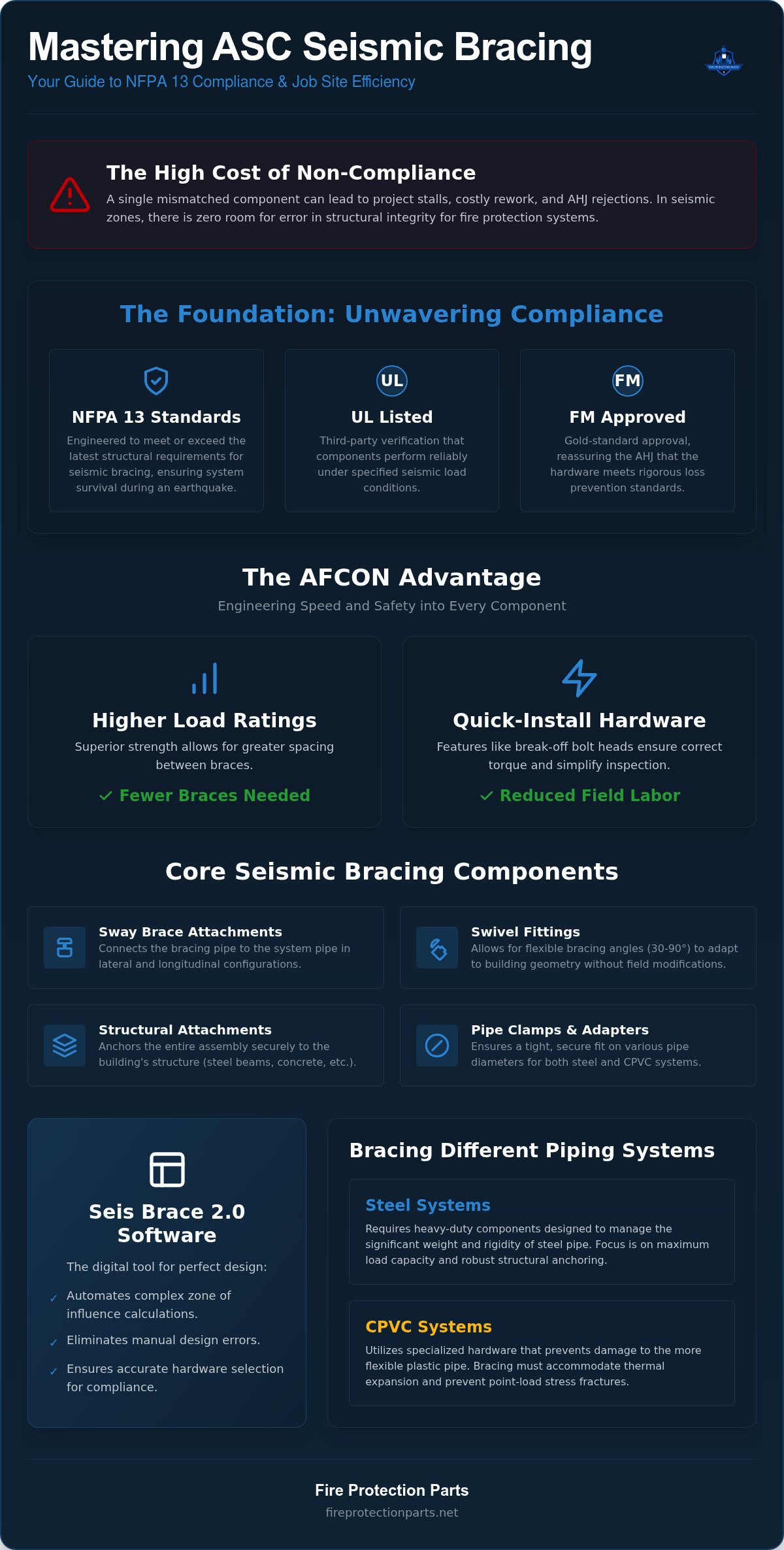
Selection Guide: Bracing Steel vs. CPVC Systems
Material selection dictates your hardware strategy. You can't treat a rigid steel system the same way you treat a flexible thermoplastic one. While both require ASC seismic bracing for fire protection, the clamp tolerances and installation methods vary significantly. Steel systems rely on high-torque connections to manage heavy loads. CPVC systems require a more delicate balance to ensure the pipe isn't crushed or compromised during a seismic event. Matching the hardware to the material is the only way to guarantee structural integrity.
Before ordering, you must determine the seismic coefficient, or Cp value, for your specific project. Consult the structural engineer to get this data; it's the foundation of your entire bracing design. Once you have the Cp value, measure the pipe diameters across the system. ASC offers hardware ranges covering 1-inch to 8-inch lines, ensuring you have a compliant fit for every run. Finally, identify your structural attachment points. Whether you're mounting to steel beams, concrete decks, or wood joists, the attachment must be rated for the calculated load. You'll also need to account for companion hardware by using all thread rod in fire system support to complete the drop from the structure to the pipe.
Special Considerations for CPVC Fire Sprinklers
Protecting thermoplastic piping requires specialized knowledge. One of the biggest risks is "point loading," where a brace creates a concentrated stress point that can lead to pipe failure. To avoid this, always use ASC components that are specifically listed for use with Viking CPVC fire sprinkler pipe. These fittings are designed to distribute the load evenly without damaging the pipe wall. You also need to account for thermal expansion and contraction. Unlike steel, CPVC moves significantly with temperature changes. Your bracing system must restrain the pipe against seismic forces while still allowing for this natural thermal movement. This prevents unnecessary stress on the joints and fittings over time.
Sourcing Companion Support Hardware
A seismic brace is only as strong as its weakest link. High-quality hangers and bracing go hand-in-hand to ensure system longevity. If you use sub-par companion hardware, you risk a failure at the structural attachment point during an earthquake. A complete seismic restraint order should include sway brace attachments, swivel fittings, and the correct structural anchors. Having a full manifest ready prevents field delays and ensures your team has everything needed for a compliant install. You can order your complete ASC seismic hardware kit today to ensure your project is prepared for the next inspection.
Buying ASC Seismic Bracing Online: Why Fire Protection Parts?
Procurement is the final hurdle in your compliance journey. For many contractors, navigating complex manufacturer portals or waiting on local supply house lead times creates unnecessary friction. Fire Protection Parts offers a streamlined alternative. We provide direct access to ASC seismic bracing for fire protection without the administrative overhead. This allows you to move quickly from the design phase to the installation phase, keeping your project on track and your crew productive.
Expert curation is at the heart of our offering. We don't just list parts; we stock a verified selection of 27 specific seismic restraint components. Every item in our catalog is chosen for its adherence to rigid code standards and real-world reliability. Our inventory is comprehensive, covering everything from sway braces and swivel fittings to the sprinkler system components they are designed to protect. We understand that in fire protection, there is no such thing as a "minor" component. Every piece must perform.
Support for the busy contractor goes beyond just having the right parts. It means providing no-nonsense shipping and clear technical details. When you source your hardware through a specialized e-commerce partner, you eliminate the doubt that comes with generic alternatives. You get the professional assurance that your system will withstand seismic forces and pass the most stringent AHJ inspections.
Reliable Sourcing for High-Stakes Projects
Using non-compliant or generic bracing hardware is a risk you can't afford to take. A single failed component can lead to catastrophic system damage and massive liability. Our inventory is specifically curated to match the rigorous specs required by modern seismic bracing for sprinkler systems. Whether you're bracing a high-rise commercial complex or a smaller industrial facility, the hardware must meet UL and FM standards. We provide professional-grade hardware for those who value quality above compromise. This commitment to excellence ensures that your reputation remains as solid as the systems you install.
Ready to Secure Your System?
Protecting a building from seismic events requires a methodical approach and the right tools. Before you finalize your procurement, take a moment to double-check your Seis Brace 2.0 manifest. Ensure that your quantities match your zone of influence calculations and that you've accounted for all companion hardware like all-thread rod. Once your list is verified, you can proceed with total confidence. Shop the ASC Seismic Bracing Collection at Fire Protection Parts today and secure the components your project demands.
Secure Your Project with Professional Compliance
Maintaining structural integrity during a seismic event requires more than just following a plan; it demands using the right hardware for the job. You've seen how the Afcon line and Seis Brace 2.0 software work together to eliminate design errors and reduce installation time. Whether you're working with traditional steel or Viking CPVC, choosing the correct ASC seismic bracing for fire protection is the only way to ensure your system meets the latest 2026 safety standards.
Fire Protection Parts is your authorized ASC Engineered Solutions retailer, providing the professional assurance you need to pass inspection. We stock a range of specific components, all of which are UL Listed and FM Approved for maximum reliability. Our inventory is in-stock and ready for immediate dispatch, helping you skip the long lead times of traditional supply houses. You don't have to compromise on safety when expert-curated solutions are available for fast-track procurement.
Shop the ASC Seismic Bracing Collection at Fire Protection Parts today to protect your infrastructure and your reputation. Your commitment to safety starts with verified hardware that leaves no room for doubt.
Frequently Asked Questions
Is ASC seismic bracing required for all fire sprinkler systems?
Seismic bracing isn't mandatory for every system. Requirement depends on the building's Seismic Design Category (SDC) as defined by ASCE 7 and NFPA 13. Generally, systems in Categories C, D, E, or F require protection. Smaller pipes often have exemptions, so you must consult the project's structural report to confirm if ASC seismic bracing for fire protection is necessary for your specific installation.
What is the difference between Afcon and ASC Engineered Solutions?
Afcon is the specialized product brand, while ASC Engineered Solutions is the parent manufacturer. You'll often see the names used interchangeably, but Afcon refers specifically to the sway braces, attachments, and swivel fittings. ASC provides the broader engineering support and software that makes the Afcon hardware line a complete system for fire protection contractors who value reliability and professional assurance.
Can I use ASC seismic bracing with CPVC fire sprinkler pipe?
Yes, you can use these braces with CPVC, but you must select hardware specifically listed for thermoplastic pipe. Standard metal clamps can cause point loading and damage the pipe wall. ASC offers specialized adapters and clamps that protect Viking Plastics CPVC while providing the rigid support required by code. This ensures the system remains flexible enough for thermal expansion but secure during an earthquake.
How do I calculate the number of sway braces needed for my system?
Calculations are based on the "zone of influence" and the horizontal seismic force (Fp). You should use the Seis Brace 2.0 software to automate this process. It takes your pipe material, size, and building geometry to determine the exact number of braces. Manual calculations are prone to error and often lead to over-engineering, which increases your total project hardware costs and installation time.
Are ASC seismic components UL Listed and FM Approved?
Every primary component in the ASC seismic catalog is UL Listed and FM Approved. These certifications are essential for passing AHJ inspections and ensuring long-term structural integrity. Using verified hardware eliminates the risk of using non-compliant, generic alternatives that could fail under stress. It provides the professional assurance that your fire suppression system will perform as designed during a seismic event without compromise.
What size all-thread rod is compatible with ASC swivel fittings?
Most ASC swivel fittings and structural attachments are compatible with 3/8-inch, 1/2-inch, and 5/8-inch all-thread rod. The specific size you need depends on the calculated load and the model of the fitting you've selected. Always check the hardware submittal sheet before procurement to ensure your rod size matches the internal thread of the ASC component. This ensures a secure connection to the building structure.
Does ASC provide software for seismic bracing design?
ASC provides the Seis Brace 2.0 tool to simplify the design and submittal process. This software is updated to reflect current NFPA 13 standards and helps you generate accurate hardware manifests. By using this tool, you can ensure that your ASC seismic bracing for fire protection order is precise. It moves your project from engineering data to a procurement-ready shopping list while reducing the risk of manual errors.
How do I know if I need lateral or longitudinal bracing?
You need both to protect the system from different directions of force. Lateral bracing stops the pipe from swinging side-to-side, which is the most common requirement. Longitudinal bracing prevents the pipe from sliding back and forth along its own axis. NFPA 13 provides specific spacing requirements for each type. You must install a combination of both to ensure the entire piping network moves in unison with the building structure.

