



ASC Seismic Bracing for Fire Protection: A Professional Sourcing Guide
Your seismic bracing strategy is more than a simple compliance checklist. It's a critical engineering strategy where component synergy can actually reduce your seismic coefficients and lower total project costs. When you're sourcing ASC seismic bracing for fire protection, the goal isn't just to hang pipe. It's to build a system that survives a seismic event while meeting the rigid demands of the 2022 edition of NFPA 13.
You probably know the headache of navigating complex calculations or the confusion that arises when comparing FM Approved versus UL Listed hardware. It's a high-pressure environment where one incorrect swivel or clamp can lead to a failed AHJ inspection and expensive rework. We understand that you need clear, technical answers and a reliable way to source Afcon-branded components without the typical corporate runaround. Reliability is non-negotiable when life safety is on the line.
This guide will help you master the technical requirements and component selection needed to ensure your fire sprinkler systems remain NFPA-compliant and structurally sound. We'll examine the latest ASCE 7-22 standards, identify the correct hardware for both steel and Viking Plastics CPVC systems, and provide a roadmap to streamline your procurement of ASC Engineered Solutions. You'll gain the expert confidence needed to make safe, compliant choices every time.
Key Takeaways
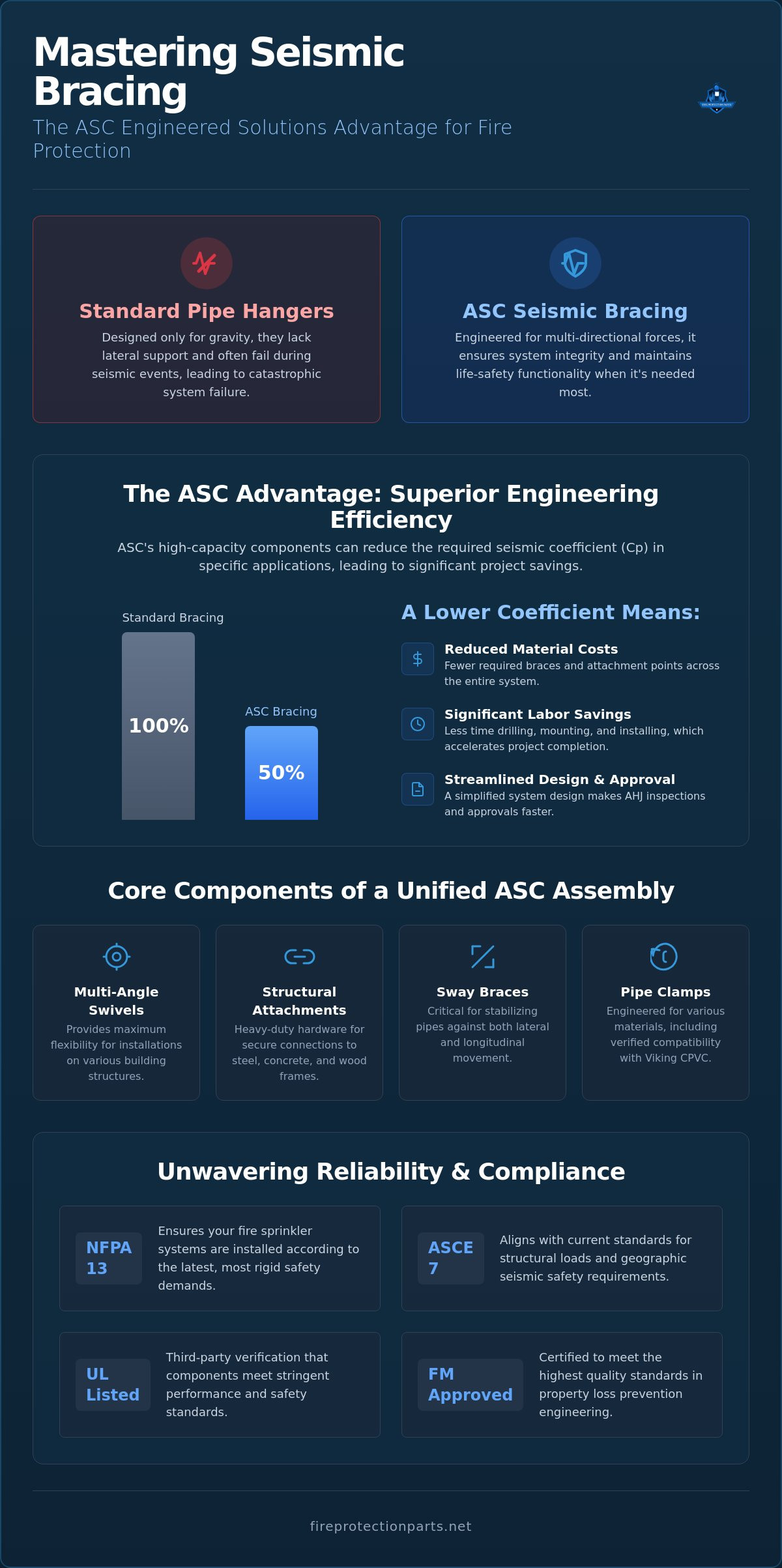
- Discover how ASC engineering can reduce your seismic coefficient by up to 50 percent, significantly lowering your total material and labor costs.
- Identify the critical swivel and structural attachments required to build a code-compliant assembly for various building frames.
- Master the technical alignment between NFPA 13 and ASCE 7 to ensure your fire sprinkler system meets current geographic safety standards.
- Streamline your procurement of ASC seismic bracing for fire protection by sourcing through authorized retailers with ready-to-ship inventory.
- Gain professional assurance by using UL Listed and FM Approved Afcon components that are specifically built for unwavering reliability.
Understanding ASC Seismic Bracing for Fire Sprinkler Systems
ASC Engineered Solutions represents the benchmark for stabilizing fire suppression systems. This manufacturer, formerly known as Anvil and Smith-Cooper, produces a specialized system of components designed to keep fire lines intact during lateral and vertical ground movement. Utilizing ASC seismic bracing for fire protection ensures your system doesn't just hang from the ceiling. It remains rigid when the building moves. The system typically consists of several core elements:
- Multi-angle swivels for flexible installation
- Heavy-duty structural attachments for steel, concrete, and wood
- Lateral and longitudinal sway braces
- Precision-engineered clamps for various pipe materials
This protection is vital for the "Zone of Influence" (ZOI). The ZOI refers to the specific section of piping that a single brace is engineered to protect. If these areas aren't secured, pipe ruptures and catastrophic water damage are almost certain during a seismic event. Bracing must be placed strategically to account for the weight of the water-filled pipe and the forces generated by ground acceleration. This is essential for compliance in high-risk regions like California, the Pacific Northwest, and the New Madrid Seismic Zone. In these areas, building codes are strict. They require documented proof that every component in the fire line can withstand specific G-forces without failure.
The Role of Seismic Restraint in Life Safety
Standard pipe hangers are designed for gravity loads. They don't handle dynamic movement. During a tremor, these hangers often fail because they lack lateral support. This causes the entire fire line to swing and eventually break. Maintaining sprinkler functionality is a life-safety requirement for post-earthquake fire suppression. If the pipes burst, the fire suppression system becomes useless, leaving the building vulnerable to fire following the earthquake. By applying earthquake engineering principles, designers ensure the system remains operational when it's needed most. Seismic restraint is the proactive stabilization of fire suppression infrastructure against multi-directional forces.
ASC vs. Generic Bracing: Why Engineering Matters
Precision matters. Generic hardware often lacks the verified load ratings required for high-stakes fire protection. ASC components are precision-engineered to work as a unified assembly. This provides a level of reliability that off-brand parts can't match. This synergy is particularly important when installing Viking CPVC fire sprinkler pipe. There is a verified compatibility between ASC bracing and Viking CPVC systems that ensures the pipe isn't crushed or stressed by the bracing itself. Choosing a single-source manufacturer for the entire assembly eliminates compatibility doubts. It also streamlines the approval process with your local AHJ. When you use ASC seismic bracing for fire protection, you're using components designed to work together, reducing the risk of component failure under stress.
The ASC Advantage: Engineering for Reduced Seismic Coefficients
Most contractors view seismic bracing as a necessary expense. However, ASC Engineered Solutions reframes this by focusing on engineering efficiency. When you choose ASC seismic bracing for fire protection, you aren't just buying hardware; you're investing in a system designed to reduce the seismic coefficient (Cp) by up to 50 percent in specific applications. This reduction isn't a marketing gimmick. It's a result of rigorous testing and high-capacity load ratings that often exceed standard industry expectations.
Lower coefficients directly translate to fewer required braces across the entire system. If you can reduce the number of braces by even 15 or 20 percent, the impact on your bottom line is immediate. You save on material costs, but the real victory is in labor. Fewer points of attachment mean fewer hours on a lift and less time spent drilling into concrete or steel. This performance is validated by FM Approval and UL Listing. These certifications ensure that efficiency gains never compromise the system's structural integrity or its ability to meet NFPA 13 standards.
Leveraging Seis Brace 2.0 for Project Efficiency
Calculating seismic loads manually is a recipe for error and expensive over-engineering. Seis Brace 2.0 software eliminates this guesswork by automating Zone of Influence (ZOI) calculations and generating professional submittal packages. The software guides you through selecting the most efficient swivel types and anchor attachments for your specific building conditions. This precision streamlines the Authority Having Jurisdiction (AHJ) approval process, as the generated reports provide the verified data inspectors need to see. If you're looking to simplify your next submittal, you can order Afcon components online to match your software-generated bill of materials.
Cost Mitigation Through Superior Design
High-capacity braces allow for wider spacing between restraint points without sacrificing safety. This superior design reduces the total physical footprint of the seismic system, making it easier to coordinate with other trades in tight ceiling spaces. Every ASC brace is a precision instrument designed to minimize the physical footprint of the seismic system while maximizing its protective capacity. By utilizing ASC’s streamlined brace selection features, contractors can significantly cut down on installation complexity and overhead. It's a no-nonsense approach to business that prioritizes both safety and profitability. Using ASC seismic bracing for fire protection means you're building a system that is as lean as it is strong.
Core Components of an ASC Seismic Bracing Assembly
A complete ASC seismic bracing for fire protection assembly is a chain of four distinct components. If one link fails, the entire system is compromised. These precision parts work in unison to transfer the energy of a seismic event from the fire sprinkler pipe into the building's structural frame. Understanding how these pieces interact is the first step toward a successful installation that will pass a rigorous inspection.
The swivel attachment serves as the critical pivot point of the assembly. It allows for multi-angle bracing, which is vital when you're navigating around existing HVAC ductwork or electrical conduits. Without a high-quality swivel, installers are often forced into awkward angles that can stress the brace. Next is the structural attachment. This piece secures the assembly to the building's steel, concrete, or wood frame. It's the anchor that holds everything in place when the ground begins to move. Every attachment must be rated for the specific load and material it's biting into.
The connection to the fire line itself happens at the pipe attachment. These are specialized clamps designed to grip either the main or the branch lines without slipping. Finally, the brace member bridges the gap between the pipe and the structure. While some systems use cable, most professional installations rely on Schedule 40 pipe or all-thread rod to provide the necessary rigidity. This rigid member ensures the pipe moves with the building rather than swinging independently.
Afcon Seismic Bracing for Steel Pipe
Steel systems have high mass and require heavy-duty hardware to manage the resulting kinetic energy. Afcon seismic components for steel pipe focus on high-capacity clamps and swivels that can handle significant lateral loads. In most commercial environments, rigid bracing is preferred over cable because it handles both tension and compression forces effectively. Common Afcon part series, such as the AF035 sway brace fittings, are the industry standard for these high-stakes applications. They provide a secure, vibration-resistant connection that keeps steel mains from swinging during a tremor. It's a no-nonsense solution for heavy-duty fire suppression infrastructure.
Specialized Solutions for CPVC Systems
Bracing CPVC requires a more nuanced approach than steel. Plastic pipe is sensitive to point-loading and thermal expansion. If you use a standard steel clamp on a CPVC line, you risk crushing the pipe or creating stress fractures over time. ASC Engineered Solutions offers clamps specifically designed for plastic pipe to distribute pressure evenly across the pipe's surface. These components ensure the pipe remains secure without compromising the material's integrity. For contractors managing complex builds, checking the Sprinkler System Components Online guide can help you find the right complementary hardware. Using the correct ASC seismic bracing for fire protection on CPVC lines isn't just about code; it's about preventing long-term material failure.
Ensuring Compliance: NFPA 13 and ASCE 7 Standards
Compliance with NFPA 13 and ASCE 7-22 is the backbone of fire system safety. These standards ensure that every component of your ASC seismic bracing for fire protection can withstand the specific seismic forces of your project location. NFPA 13 mandates both lateral and longitudinal bracing. Lateral bracing prevents side-to-side swaying. Longitudinal bracing keeps the pipe from shifting along its length. Without both, the system will likely fail during a significant tremor. It's a risk you can't afford to take.
ASCE 7-22 dictates these force levels based on granular geographic data. It's no longer enough to rely on outdated maps. You must use digital hazard data to determine the specific seismic coefficient for your site. High-value commercial properties often require FM Approved components to satisfy insurance requirements. This goes beyond basic UL Listing. Field inspectors will demand documentation, including submittal sheets and detail drawings. Having these ready prevents delays and ensures your system is verified for performance. Reliability is built on these technical details.
Navigating Seismic Design Categories (SDC)
Seismic Design Categories (SDC) range from A to F. SDC A represents the lowest risk, while SDC F is reserved for critical facilities in high-activity zones. Even if a system is technically "exempt" under lower categories, basic seismic restraint is a smart investment to prevent pipe rupture from minor shifts. SDC C and above typically mandate a fully engineered seismic bracing solution. Don't wait for a failed inspection to find out your design category requires a higher level of protection. To ensure your next project stays on schedule and passes inspection, buy code-compliant ASC bracing components today.
The Importance of UL Listing and FM Approval
Understanding the difference between UL Listing and FM Approval is vital for procurement. UL testing protocols verify that hardware meets minimum safety standards for general use. FM Global testing is often more rigorous, focusing on loss prevention for high-value assets and industrial facilities. Mixing non-listed hardware with ASC components voids the system compliance and places the entire facility at risk. You can verify certifications and learn more about code requirements by visiting our guide on Seismic Bracing for Sprinkler Systems. Using ASC seismic bracing for fire protection that carries both certifications provides the peace of mind that your system won't fail under pressure.
Sourcing ASC Bracing for Your Next Project
Procuring ASC seismic bracing for fire protection shouldn't be a hurdle in your project timeline. Many manufacturers bury their inventory behind complex corporate portals and mandatory logins. This creates unnecessary friction for contractors who need immediate answers and verified stock levels. By sourcing through an authorized retailer like Fire Protection Parts, you bypass these barriers. You gain direct access to genuine Afcon quality with the professional assurance that every component meets the rigid standards discussed throughout this guide.
One of the most significant advantages is the availability of "ready-to-ship" inventory. Whether you're managing a new installation or an urgent system retrofit, waiting weeks for a specialized swivel or clamp isn't an option. Having these components in stock allows you to maintain momentum and meet tight deadlines. You can also pair your bracing needs with other critical fire protection parts online, such as backflow preventers or air compressors. This consolidation simplifies your logistics and ensures all system components arrive when needed. If you're unsure about specific Afcon part numbers, expert technical support is available to guide your selection.
Bulk Ordering for Large-Scale Installations
Managing procurement for multi-story commercial projects requires meticulous coordination. You need a partner who can handle high-volume orders without the typical lead time delays associated with large manufacturers. Coordinating your ASC seismic bracing for fire protection delivery with your pipe and sprinkler head shipments prevents job site clutter and reduces the risk of lost hardware. By choosing an efficient online source, you streamline the entire procurement cycle. This allows your team to focus on installation rather than tracking down missing components in a complex supply chain.
Final Checklist Before You Buy
Before finalizing your order, run through this technical checklist to eliminate the risk of returns or field failures. Precision at this stage prevents headaches during the AHJ inspection. Verify these four critical data points:
- Pipe size and material: Ensure your clamps match the exact OD of your steel or Viking Plastics CPVC pipe.
- Structural attachment type: Confirm if you're biting into concrete, an I-beam, or a wood frame.
- Seismic coefficient (Cp): Double-check the requirements provided by the project engineer to ensure the brace capacity is sufficient.
- Installation environment: Determine if you need standard finishes or the high-corrosion resistance of the AF700SS series stainless steel components.
Browse our full selection of ASC Seismic Bracing components today to ensure your next project is built for unwavering safety and full compliance.
Secure Your System with Professional-Grade Bracing
Building a code-compliant fire suppression system requires more than just following a checklist. It demands a strategic approach to component synergy and verified engineering data. By leveraging the ASC advantage, you can reduce seismic coefficients and streamline your installation without compromising safety. Whether you're securing steel mains or Viking Plastics CPVC lines, using ASC seismic bracing for fire protection provides the structural integrity needed to survive a seismic event. Don't settle for generic hardware when life safety is on the line.
Fire Protection Parts is your dependable partner for professional-grade safety hardware. As an authorized ASC Engineered Solutions retailer, we offer a comprehensive, NFPA-compliant inventory and expert technical support tailored for fire pros. We help you eliminate the doubt of procurement by providing ready-to-ship Afcon components that are UL Listed and FM Approved. Take the guesswork out of your next project and ensure every swivel and clamp is built to last. Our mission is to provide you with the peace of mind that comes from unwavering reliability.
Shop ASC Seismic Bracing and Afcon Hardware Now to maintain your system's compliance and operational readiness. We're here to help you protect what matters most with confidence and professional assurance.
Frequently Asked Questions
What is the difference between ASC and Afcon seismic bracing?
ASC Engineered Solutions is the parent manufacturer, while Afcon is the specific brand name for their seismic bracing product line. When you source ASC seismic bracing for fire protection, you are typically purchasing Afcon-branded hardware. This relationship ensures that every component is backed by the extensive engineering resources and testing protocols of the larger ASC organization. It is the industry standard for precision-engineered fire suppression support.
Does ASC seismic bracing work with CPVC fire sprinkler pipes?
Yes, ASC hardware is specifically designed to be compatible with Viking Plastics CPVC systems. Specialized Afcon clamps are engineered to prevent the point-loading and crushing that can occur with generic hardware on plastic pipe. This compatibility is vital for maintaining the structural integrity of CPVC fire lines during a tremor. It ensures your installation remains compliant with manufacturer guidelines and NFPA standards without compromising the pipe material.
What is Seis Brace 2.0 and do I need it for my project?
Seis Brace 2.0 is a professional design tool used to automate seismic load calculations and generate project submittals. While not strictly required for every minor repair, it is essential for any project that needs an engineered layout to pass AHJ inspection. The software identifies the specific swivels and attachments needed based on your building's seismic design category. It eliminates the guesswork and ensures your system is not over-engineered.
Are ASC seismic components FM Approved and UL Listed?
All Afcon seismic hardware is both UL Listed and FM Approved to meet the highest safety standards. These certifications are critical because they provide verified proof that the components will perform as expected during a seismic event. Many commercial insurance policies and local building codes mandate the use of listed hardware. Using these components eliminates doubt and ensures your system is ready for the most rigorous field inspections.
Can I use ASC bracing for both lateral and longitudinal restraint?
Yes, the ASC catalog provides dedicated solutions for both lateral and longitudinal bracing requirements. Lateral braces are designed to resist forces perpendicular to the pipe; longitudinal braces resist forces acting along the pipe's axis. NFPA 13 requires a specific distribution of both types to ensure the fire suppression system remains rigid. ASC's multi-angle swivels make it easy to install both types of restraint in tight ceiling spaces.
How do I determine the Zone of Influence for my bracing layout?
Determining the Zone of Influence (ZOI) involves calculating the total weight of the water-filled pipe that a single brace must support. This calculation must factor in the pipe's diameter, the material type, and the seismic force levels of your specific region. Most professionals use calculation software to determine the ZOI for each brace point. This ensures that every component in the assembly is rated for the specific load it will carry during an earthquake.
What structural attachments are available for ASC bracing?
ASC provides a comprehensive range of structural attachments for steel, concrete, and wood building frames. These include specialized beam clamps, concrete expansion anchors, and wood-mounting brackets. Every attachment is designed to integrate seamlessly with Afcon swivels and brace members. This variety allows you to maintain a consistent, engineered bracing strategy across different structural environments within a single facility. It ensures a secure connection from the pipe to the building's skeleton.
Where can I buy ASC Engineered Solutions parts online with fast shipping?
You can purchase genuine ASC seismic bracing for fire protection directly through the Fire Protection Parts online store. We specialize in providing fast shipping and "ready-to-ship" inventory for contractors who need to bypass complex corporate portals. Our platform is designed for efficiency, allowing you to source code-compliant hardware quickly for both new installations and urgent system retrofits. We ensure you get the right parts without the wait.

