

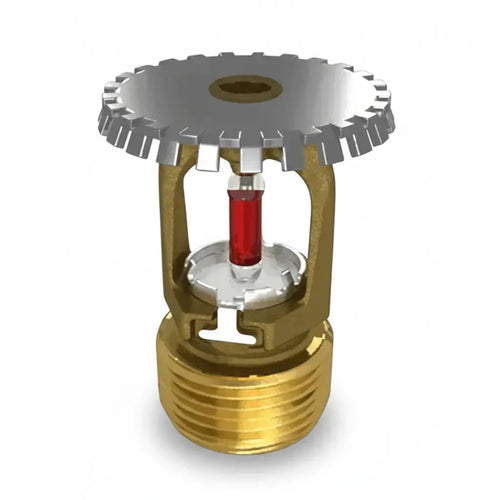


Fire Sprinkler Head Temperature Rating: The Complete 2026 Reference Guide
On a 104°F afternoon in South Texas, roof deck temperatures can climb as high as 150°F, pushing standard equipment to its absolute limit. If your fire sprinkler head temperature rating isn't perfectly matched to your environment, that heat isn't just a discomfort; it's a liability for accidental discharge. Choosing the wrong hardware can lead to catastrophic water damage or a system that fails to activate when it matters most. Precision is the only way to guarantee protection.
We understand that navigating NFPA 13 requirements feels like a high-stakes balancing act between safety and false alarms. It's frustrating to decipher bulb colors while worrying about high-ambient-heat zones and fire marshal inspections. This guide simplifies the complex color-coded standards and technical classifications into a clear, actionable reference for 2026. You'll learn how to identify existing ratings at a glance, understand the critical difference between bulb colors and link classifications, and select the exact hardware needed to ensure 100% system reliability.
Key Takeaways
- Identify the correct fire sprinkler head temperature rating using 2026 NFPA 13 classifications to prevent accidental discharge in high-heat environments.
- Master the standardized color-coding system for both glass bulbs and fusible links to quickly verify your facility's code compliance.
- Learn the exact measurement protocols for calculating safe distances from heat sources like furnaces to avoid system failure and inspection issues.
- Use the Sprinkler Identification Number (SIN) to source exact replacement hardware and ensure seamless, long-term system maintenance.
- Understand why painting or coating sprinkler heads is a critical safety violation that compromises thermal response and system reliability.
The Critical Role of Fire Sprinkler Head Temperature Ratings
A fire sprinkler head temperature rating represents the exact thermal threshold at which the sprinkler activates. It isn't a suggestion; it's a precision-engineered trigger point designed to balance speed with stability. When the ambient heat reaches this rated temperature, the internal thermal element breaks or melts to release water. For a comprehensive fire sprinkler overview, understanding how these ratings prevent accidental discharge is fundamental. In the 2026 safety landscape, matching these ratings to your specific environment is the only way to ensure 100% system reliability.
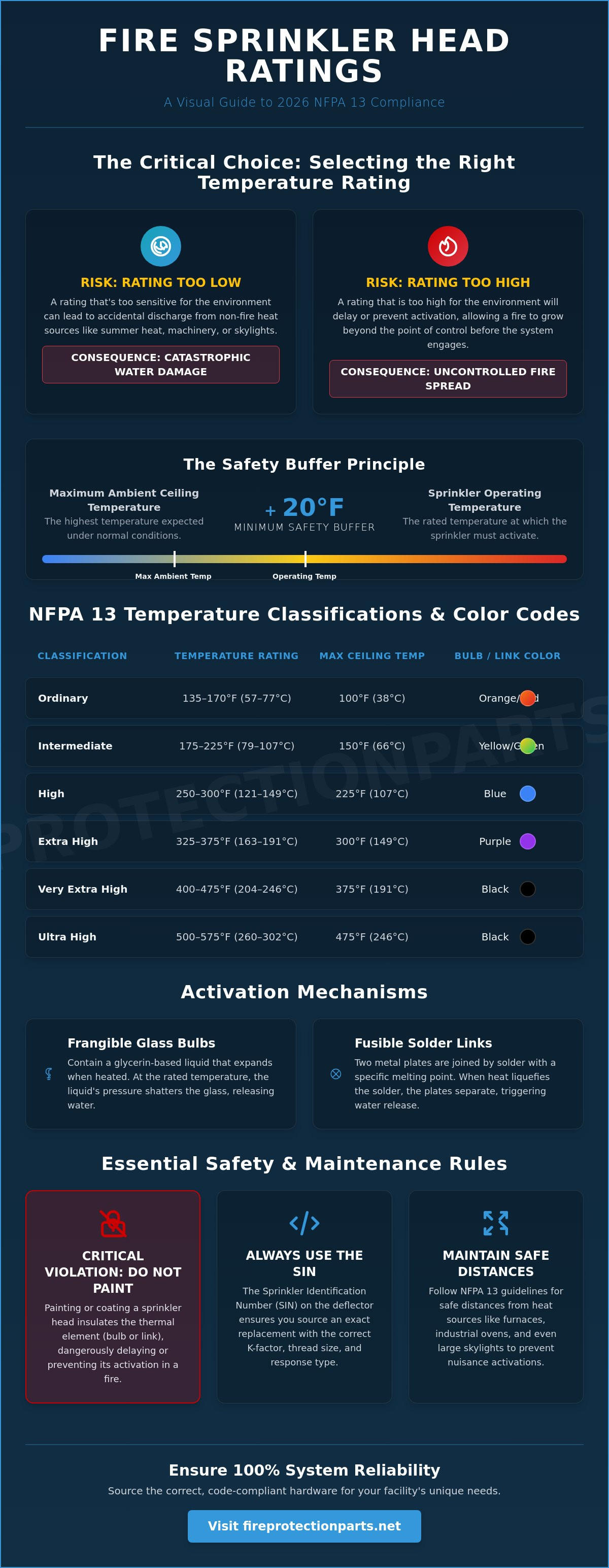
NFPA 13 categorizes these ratings into classifications ranging from "Ordinary" to "Ultra High." An ordinary rating usually falls between 135°F and 170°F, making it suitable for standard office spaces or residential settings. In contrast, "High" ratings (250°F to 300°F) are reserved for industrial environments where machinery or manufacturing processes generate significant heat. Selecting the wrong fire sprinkler head temperature rating creates two dangerous scenarios. A rating that's too low leads to "nuisance activation," causing massive water damage without a fire. Conversely, a rating that's too high results in a delayed response, allowing a fire to spread beyond the point of control before the system engages.
Maximum Ambient Temperature vs. Operating Temperature
The maximum ambient temperature is the highest heat expected at the ceiling level under normal conditions without a fire present. Fire marshals and NFPA 13 standards typically require a 20-degree safety buffer between this ambient peak and the sprinkler's operating temperature to account for seasonal fluctuations. The safety margin is the designated temperature gap between the highest recorded ambient ceiling heat and the sprinkler's activation point to prevent thermal fatigue. Maintaining this gap ensures the hardware remains stable during summer heat waves or during the operation of heavy equipment.
Why One Size Does Not Fit All in Commercial Buildings
Every zone in a commercial facility has a unique thermal profile. A climate-controlled office requires high sensitivity, while a commercial kitchen or a warehouse with large skylights faces much higher ambient heat. Large skylights can trap solar heat, raising local temperatures significantly above the building's average. Proximity to HVAC vents can also cause rapid temperature swings that stress thermal elements over time. Heavier industrial sprinklers often experience "thermal lag," where thicker metal components take longer to reach the activation temperature compared to thin glass bulbs. Identifying these micro-climates is essential for choosing the right hardware and passing fire marshal inspections.
Standardized Color Coding and Activation Mechanisms
Identifying a fire sprinkler head temperature rating is a matter of immediate visual recognition. The industry utilizes two primary mechanical triggers to hold back water: frangible glass bulbs and fusible solder links. While their physical forms differ, both are precision-engineered to fail at an exact thermal threshold. Understanding the physics behind these mechanisms is the first step in ensuring your facility remains compliant and protected.
Glass bulbs are the most common activation method in modern commercial builds. These bulbs contain a small amount of liquid, typically an alcohol-based glycerin solution. As heat from a fire rises, the liquid expands at a predictable rate. Once the heat reaches the rated temperature, the internal pressure shatters the glass, allowing the orifice cap to drop and water to flow. This mechanism is incredibly reliable because it relies on basic thermodynamics. Adhering to OSHA sprinkler system standards requires that these bulbs remain free of paint or debris, as any coating can insulate the glass and delay activation.
Fusible links rely on a different principle. Two metal plates are joined together by a specialized solder with a specific melting point. When the solder liquefies, the plates separate under the tension of the sprinkler's frame, triggering the water release. Color coding provides a visual shorthand for these ratings, allowing fire marshals and facility managers to verify a system's status from the floor. For 2026, the universal color codes remain the gold standard for identification:
- Orange or Red: Ordinary temperature classification.
- Yellow or Green: Intermediate temperature classification.
- Blue: High temperature classification.
Frangible Glass Bulb Color Chart
The specific color of the liquid inside the bulb indicates the fire sprinkler head temperature rating with high precision. Orange bulbs are rated for 135°F (57°C) and are typically found in residential or low-heat office settings. Red bulbs, rated at 155°F (68°C), are the standard for most commercial "Ordinary" environments. When you move into "Intermediate" zones, such as commercial kitchens or laundry facilities, you'll see Yellow (175°F) or Green (200°F to 210°F) bulbs. These are designed to withstand higher ambient temperatures without triggering a nuisance discharge.
Fusible Link Classifications and Identification
Fusible links don't have colored liquid to guide you. Instead, manufacturers apply colored paint to the frame or the link plate itself to signify the rating. Beyond the temperature, you must also identify the thermal sensitivity of the head. Quick Response (QR) heads feature a smaller mass to react faster to heat, while Standard Response (SR) heads are more robust. If you're inspecting an existing system and the paint has faded, consult the Replacement Fire Sprinkler Head Identification Guide (2026) for visual matching. Choosing the right fire protection hardware is essential for maintaining a code-compliant environment that protects both lives and property.
NFPA 13 Temperature Classifications: 2026 Standards
Compliance starts with understanding the regulatory framework that governs every installation. Choosing a fire sprinkler head temperature rating requires more than just looking at a bulb; it requires adherence to the NFPA's rigorous classification system. These standards ensure that your fire protection system remains dormant during normal operations but reacts with absolute precision during an emergency. For a deeper look at these requirements, the NFPA sprinkler temperature classifications provide the foundational data used by fire marshals across North America.
Every compliant sprinkler head features permanent markings stamped onto the deflector. This data includes the Sprinkler Identification Number (SIN), the specific temperature rating, and the year of manufacture. These markings are essential for verification. If a fire marshal cannot read the deflector, the head will likely fail inspection. In industrial manufacturing, 'Extra High' and 'Ultra High' ratings are vital for zones near furnaces, boilers, or high-pressure steam lines. These environments would trigger a standard head instantly. Using specialized hardware in these zones prevents catastrophic water damage while maintaining a high level of life safety.
From Ordinary to Ultra High: The Temperature Spectrum
The NFPA 13 spectrum is divided into six primary classifications. Each classification corresponds to a specific range and a standardized color code for the frame arms or link plates. Understanding this spectrum is the only way to ensure your fire sprinkler head temperature rating is correct for your specific zone.
- Ordinary (Uncolored or Black): 135°F to 170°F. These are the standard for climate-controlled environments.
- Intermediate (White): 175°F to 225°F. Required for areas with elevated ambient heat.
- High (Blue): 250°F to 300°F. Used in commercial kitchens and mechanical rooms.
- Extra High (Red): 325°F to 375°F. Common in industrial manufacturing.
- Very Extra High (Green): 400°F to 475°F. Specialized for high-heat industrial processes.
- Ultra High (Orange): 500°F to 650°F. The highest level of protection for extreme environments.
Code Requirements for Intermediate Sprinklers
Code requirements for intermediate-rated heads have become more stringent in 2026. NFPA 13 mandates the use of intermediate sprinklers in uninsulated attics where solar gain can push ceiling temperatures well above 100°F. Similarly, any sprinkler located under a skylight must be rated as intermediate to account for direct sunlight and heat accumulation. In residential glass-roofed areas, the 'direct sunlight' rule applies; standard heads are prohibited if they are exposed to concentrated solar radiation. If your facility includes unheated areas prone to freezing, such as loading docks or parking garages, you must utilize Dry Pendent Sprinkler Heads. These specialized units prevent water from entering the head until activation, protecting your pipes from bursting in cold climates.
Calculating Safe Distances from Heat Sources
Thermal stability depends on the physical distance between a sprinkler and a heat source. When a sprinkler is placed too close to a furnace, oven, or high-wattage light, the risk of a nuisance discharge skyrockets. To maintain a safe environment, you must apply the correct fire sprinkler head temperature rating based on the heat intensity of the surrounding equipment. The standard measurement protocol is simple but strict: measure in a straight line from the nearest edge of the heat source directly to the sprinkler head.
The "Heat Source Rule" for luminaires (lighting fixtures) is a common area of confusion. For lights with a wattage up to 499 watts, specific clearance distances are mandated to prevent the glass bulb from reaching its breaking point. If a sprinkler head falls within this "heat zone," you face a choice: move the sprinkler or upgrade its temperature rating. Moving a head often involves expensive pipe reconfiguration. In many cases, selecting a higher-rated head is the most efficient functional remedy for passing a fire marshal inspection without the need for extensive plumbing work.
Residential Kitchen and Appliance Clearances
Kitchens are high-risk zones for accidental activation due to concentrated heat. For standard kitchen ranges, NFPA 13 requires a minimum clearance of 9 to 18 inches when using intermediate-rated heads. Fireplace fronts require even more space, with 36 to 60 inches of clearance necessary to account for radiant heat. Even uninsulated hot water pipes or heating ducts require a 6 to 12-inch safety zone to avoid thermal fatigue on the solder or glass bulb. Ignoring these distances often leads to water damage that far exceeds the cost of proper hardware installation. If you're unsure about your current setup, you can browse professional fire protection hardware to find a compliant solution for your specific zone.
Attics, Concealed Spaces, and Commercial Vents
Attics and concealed spaces are unique because they're classified as high-ambient zones regardless of active heat sources. Solar gain through the roof can trap heat in building cavities, pushing temperatures past the limit of ordinary heads. Managing air registers is equally critical. The distance requirements for side-wall vents differ from ceiling vents because air flow patterns change how heat accumulates around the sprinkler. Interestingly, the shift toward 2026 energy-efficient LED lighting has altered traditional heat-distance rules. Because LEDs generate significantly less heat than legacy incandescent bulbs, they allow for tighter clearances in modern commercial designs without compromising the fire sprinkler head temperature rating or system safety.
Sourcing and Maintaining Code-Compliant Sprinkler Heads
Selecting the correct fire sprinkler head temperature rating is only the first step in protecting your facility. Long-term reliability depends on proper maintenance and the use of verified hardware. Even a perfectly rated head becomes a liability if it's compromised by environmental factors or improper handling. In the 2026 regulatory environment, fire marshals look for specific indicators of system health that go beyond the color of a glass bulb. Precision in procurement is your best defense against system failure.
One of the most dangerous maintenance errors is painting or coating a sprinkler head during building renovations. A layer of paint acts as an insulator, significantly delaying the thermal response of the bulb or link. This delay allows a fire to grow unchecked, potentially overwhelming the system. If a head is accidentally painted, it cannot be cleaned or "scraped" back to compliance; it must be replaced immediately. Similarly, if a head discharges, you must replace the entire assembly. You cannot simply swap out a shattered bulb or a melted link. The internal seals and components are designed for a single use, and attempting a partial repair compromises the mechanical integrity of the unit.
Before sourcing replacements, use this procurement checklist to ensure a 100% match for your existing system:
- Brand and Model: Always match the manufacturer to ensure the head is compatible with your existing pipe fittings.
- K-Factor: This determines the water flow rate. A mismatch here can lead to insufficient coverage or excessive pressure.
- Orientation: Verify if you need a pendent, upright, or sidewall head. Installing a head in the wrong orientation will disrupt the spray pattern.
- Listings: Ensure the hardware carries current UL or FM approvals for 2026.
Identifying Your Existing Hardware
Every professional-grade sprinkler head features a Sprinkler Identification Number (SIN) stamped directly onto the deflector or frame. This four to six-digit alphanumeric code is the most reliable way to find an exact match for your fire sprinkler head temperature rating. By cross-referencing the SIN with the manufacturer's technical data sheet, you can verify the exact thermal threshold and response time index (RTI) of the unit. For detailed instructions on identifying older or obscured hardware, consult our guide on Fire Protection Parts and Hardware for System Repairs. This step eliminates guesswork and ensures your replacement is code-compliant.
Procuring Reliable Replacements in 2026
Buying from authorized distributors is the only way to guarantee that your hardware meets modern safety standards. Counterfeit or "budget" heads often lack the precision-engineered thermal elements required for reliable activation. When you receive your order, verify the 2026 manufacture date stamped on the deflector. Installing recently manufactured hardware ensures you aren't using stock that has been sitting in a humid warehouse where thermal fatigue might have already begun. Ready to upgrade or replace? Shop our full inventory of code-compliant fire sprinkler heads here. We provide the professional-grade hardware you need to maintain a safe, compliant, and reliable fire protection system.
Future-Proof Your Fire Protection Strategy
Precision is the foundation of fire safety. By mastering the 2026 NFPA 13 standards and the nuances of color-coded identification, you eliminate the risks of accidental discharge and system failure. Whether you're managing high-ambient-heat zones in an industrial facility or standard climate-controlled offices, selecting the correct fire sprinkler head temperature rating ensures your hardware responds exactly when needed. Maintaining compliance requires vigilant inspection and the use of the Sprinkler Identification Number (SIN) for all replacements. Never compromise on safety by attempting to clean or paint existing heads; full replacement is the only functional remedy.
Protecting your property and its occupants shouldn't be a guessing game. We provide the professional expertise and high-quality components necessary to keep your system code-compliant and reliable. Our inventory features UL and FM listed components backed by expert technical support to guide your procurement. With same-day shipping on in-stock parts, you can address maintenance needs without delay.
Secure Your System with Code-Compliant Fire Sprinkler Heads
Make the right choice for long-term performance and professional peace of mind today.
Frequently Asked Questions
What happens if I install a sprinkler head with a temperature rating that is too low?
Installing a rating that's too low causes nuisance activation, leading to massive water damage even when no fire is present. This occurs because the thermal element can't withstand the normal ambient heat of the space. It's a costly error that compromises building operations and results in expensive cleanup. Always ensure your hardware matches the maximum expected ceiling temperature to maintain unwavering system stability.
Can I tell the temperature rating of a sprinkler head just by looking at it?
You can identify the fire sprinkler head temperature rating by checking the color of the glass bulb or the paint on the fusible link. For example, a red bulb indicates an ordinary 155°F rating, while a blue bulb signifies a high 286°F rating. This standardized color coding provides a quick visual shorthand for inspectors and facility managers to verify compliance from the floor.
Are there different temperature ratings for residential and commercial sprinkler heads?
Temperature ratings are standardized across the industry, but residential and commercial applications often prioritize different classifications based on the environment. Residential systems primarily use "Ordinary" ratings, such as 155°F, to ensure rapid response in living areas. Commercial environments frequently require a mix of "Ordinary," "Intermediate," and "High" ratings to account for industrial processes, commercial kitchens, and large-scale mechanical equipment.
What is the most common temperature rating for a standard office building?
The most common rating for a standard office building is the "Ordinary" classification, typically 155°F (68°C). These heads usually feature a red glass bulb. This rating is ideal for climate-controlled environments where ambient temperatures don't exceed 100°F. It provides the necessary sensitivity to protect occupants while preventing accidental discharge during normal business operations. It's the gold standard for professional office protection.
Do I need to change my sprinkler heads if I install a new high-heat light fixture?
You must upgrade your sprinkler head if a new high-heat light fixture violates the mandatory clearance distances established by NFPA 13. High-wattage luminaires generate significant radiant heat that can trigger a standard head. If you can't relocate the fixture, replacing the existing head with one that has a higher fire sprinkler head temperature rating is the most effective way to prevent a nuisance discharge and protect your property.
How do I find the Sprinkler Identification Number (SIN) on my sprinkler head?
The Sprinkler Identification Number (SIN) is permanently stamped onto the flat metal deflector or the frame of the head. This alphanumeric code allows you to cross-reference the manufacturer's data sheet for exact technical specifications. Finding this number is the only way to guarantee you are sourcing an identical replacement for your specific fire protection system. It eliminates doubt and ensures your hardware meets modern safety standards.
Is it legal to use different temperature ratings in the same room?
It's legal and often mandatory to use different temperature ratings in the same room if specific zones have different heat profiles. For example, you might use ordinary heads in a large open area but require intermediate heads near a commercial oven or a large skylight. NFPA 13 allows this variation to ensure each individual head is matched to its local ambient environment for maximum reliability.
What is an 'Intermediate' temperature sprinkler, and where is it required?
An "Intermediate" temperature sprinkler is rated between 175°F and 225°F and is typically identified by a white frame or a yellow/green bulb. These are required in areas where ambient temperatures exceed 100°F, such as uninsulated attics, mechanical rooms, or areas directly under skylights. They provide a critical safety buffer to prevent accidental activation in high-heat zones. Using them is a functional remedy for environments that stress standard hardware.

