

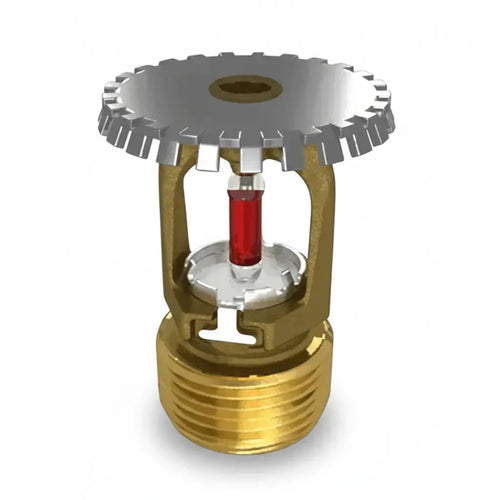


How to Winterize a Fire Sprinkler System: The 2026 Professional Guide
A single frozen pipe doesn't just cause a leak. Under the 2026 NFPA 25 standards, ice in your piping officially classifies your fire protection system as impaired, which triggers a mandatory and expensive impairment response protocol. You understand that winter is the ultimate test for your facility's safety. The threat of catastrophic property damage from a burst pipe is a constant concern, especially when navigating the updated compliance requirements for this year. Choosing the correct products for winterizing fire sprinkler systems is no longer just a recommendation; it's a requirement for operational continuity and safety.
You need more than just a temperature check to stay safe. You need a professional strategy. This guide will help you master the technical steps and hardware requirements needed to maintain NFPA 25 compliance and ensure your system remains fully functional in sub-zero temperatures. We'll provide a clear maintenance plan and a list of the specific hardware that eliminates doubt. From managing antifreeze concentrations to maintaining dry pipe air compressors, we'll preview the essential components that protect your investment when the mercury drops. Our goal is to provide the expert confidence you need to secure your property against the harshest winter conditions.
Key Takeaways
- Understand the physics of a burst pipe and why maintaining a minimum of 40°F is the non-negotiable industry standard for heated areas.
- Ensure 2026 NFPA 25 compliance by testing your system's antifreeze concentration levels and replacing diluted solutions before the first freeze.
- Implement a rigorous schedule for draining auxiliary drains (drum drips) to prevent moisture from freezing inside dry pipe systems.
- Identify and secure the essential products for winterizing fire sprinkler systems, including UL-listed antifreeze and high-performance air compressors.
- Conduct a hardware audit of your gauges and sprinkler heads to verify accuracy and identify signs of corrosion in vulnerable, unheated zones.
Understanding the Risks of Frozen Fire Sprinkler Systems
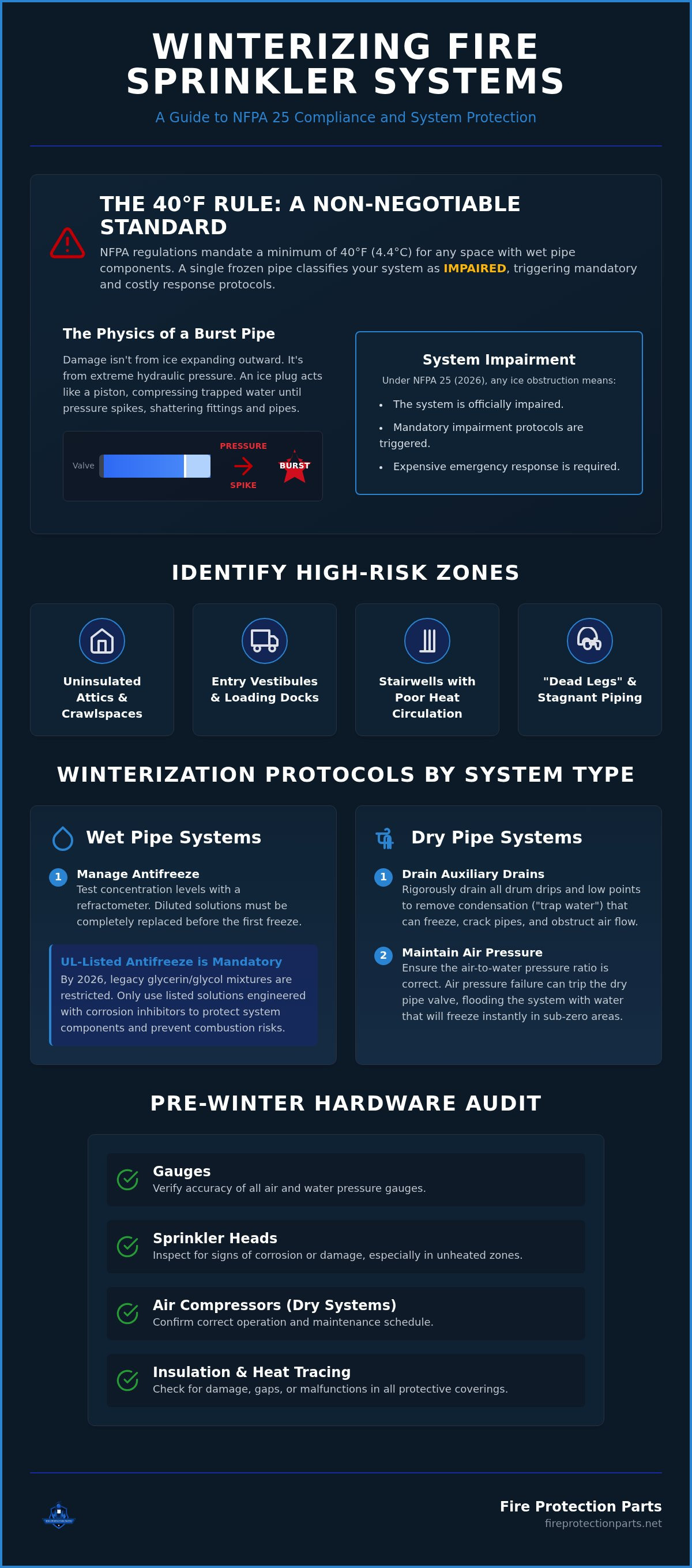
The 40-degree rule isn't a suggestion; it's the industry standard for heated areas. NFPA regulations require that any space housing wet pipe components must be maintained at a minimum of 40°F. When temperatures dip below this point, the physical integrity of your system is at immediate risk. Understanding the specific mechanics of a freeze event helps you choose the right products for winterizing fire sprinkler systems before the first frost hits.
The physics of a burst pipe are often misunderstood. Damage isn't usually caused by the ice itself pushing against the pipe walls. Instead, it's caused by hydraulic pressure. As an ice plug forms, it expands and acts like a piston. This expansion compresses the liquid water trapped between the ice and a closed valve. Pressure can spike to thousands of PSI, which is more than enough to shatter fittings and cause catastrophic failure. Identifying common failure points is your first line of defense:
- Entry vestibules and loading docks
- Uninsulated attics and crawlspaces
- Stairwells with poor heat circulation
The financial impact of a flood far outweighs the cost of proactive maintenance. Investing in specific products for winterizing fire sprinkler systems is a calculated decision that prevents total system impairment and the high cost of emergency repairs.
The Vulnerability of Wet Pipe Systems
Wet systems are the most susceptible to freezing because they are constantly filled with water. In residential applications, CPVC fire sprinkler pipe is a popular choice due to its durability, but it still requires thermal protection in unheated zones. You must pay close attention to "dead legs." These are stagnant sections of piping where water doesn't move. Without circulation, these areas freeze rapidly. Utilizing the correct solutions, such as UL-listed antifreeze, is essential for these high-risk configurations.
The Hidden Dangers in Dry Pipe Systems
Don't assume a dry system is immune to cold. While different fire sprinkler system types offer varying levels of protection, dry systems face their own unique challenges. Condensation often accumulates in low points, creating "trap water" that can freeze and crack the pipe. You must also maintain the proper air-to-water pressure ratio. If the air pressure fails, the dry pipe valve may trip. This floods the piping with water that will freeze almost instantly in sub-zero environments, leading to the exact damage the system was designed to avoid.
Winterizing Wet Pipe Systems with Antifreeze and Insulation
Wet pipe systems demand precise maintenance before winter arrival. Unlike dry systems, these pipes contain pressurized water at all times. If the temperature in an unheated attic or stairwell drops below 40°F, you face an immediate risk of system failure. Utilizing professional products for winterizing fire sprinkler systems ensures your facility remains compliant and operational through the coldest months.
Testing is your first priority. You must verify that existing antifreeze solutions meet the concentration levels mandated by the 2026 NFPA 25 standards. This typically involves using a refractometer to check the specific gravity of the fluid at multiple points in the system. If the solution is diluted or non-compliant, you must drain the system and replace it entirely. Only UL-listed antifreeze should be used; these solutions are specifically formulated to prevent freezing without becoming combustible during a fire event, a risk associated with older, non-listed mixtures.
Choosing and Sourcing the Right Antifreeze
The transition to listed antifreeze is a critical safety update. By 2026, legacy glycerin and propylene glycol mixtures are restricted because they can fuel a fire if the concentration is incorrect. To determine how much you need, calculate the total internal volume of the protected piping, including all drops and stagnant dead legs. Unlike automotive alternatives, listed fire protection antifreeze is chemically engineered with specific corrosion inhibitors and stabilizers that protect metal and plastic components alike. You can find high-quality UL-listed antifreeze solutions in our online store to ensure your system meets these rigorous safety benchmarks without compromise.
Protecting CPVC in Residential Installations
Residential systems often rely on Viking CPVC fire sprinkler pipe due to its superior flow characteristics and ease of installation. However, CPVC in unheated "bonus rooms" or garage ceilings requires careful insulation. Use high-grade, fire-rated insulation materials to wrap exposed runs. It's vital to ensure that insulation does not obstruct the sprinkler head or interfere with its deployment pattern. Pay close attention to cold spots near exterior walls where insulation may have settled or been improperly installed. Eliminating these thermal gaps is the only way to guarantee the system remains functional when sub-zero temperatures hit.
Maintaining Dry Pipe Systems: Draining Drum Drips and Air Supply
Auxiliary drains, commonly called drum drips, are your first line of defense. During periods of extreme cold, you should increase your draining frequency from weekly to daily. Follow this sequence to prevent accidental trips:
- Close the top valve to isolate the drum drip from the system pressure.
- Open the bottom valve slowly to release any collected water.
- Close the bottom valve once the flow stops.
- Reopen the top valve to put the drain back in service.
This methodical approach ensures the clapper doesn't trip and flood the piping. Documenting the amount of water removed from each location is vital. It helps you identify problematic condensation areas that may require additional hardware or insulation. Consistent water accumulation in one specific drain often points to an air leak or a failing seal that requires immediate attention before the temperature drops further.
Air Compressor Health and Maintenance
Your air supply must remain clean and dry. If your compressor introduces humid air into the piping, you'll face internal corrosion and localized ice plugs. Choosing the correct air compressors for dry sprinkler systems is a critical decision for facility managers. Tank-mounted compressors offer stable pressure but require manual or automatic tank draining to remove moisture. Riser-mounted units are efficient for smaller systems but need frequent checks on their vibration pads and seals.
Investing in high-performance products for winterizing fire sprinkler systems, such as refrigerated air dryers, eliminates the doubt of internal freezing. These units strip moisture from the air before it ever enters the system. Reliable hardware ensures your system stays pressurized and ready, regardless of the outdoor temperature. Don't wait for a low-air alarm in the middle of a blizzard to check your compressor's oil levels and belt tension.
A Comprehensive Winterization Hardware Inspection Checklist
A successful winterization strategy relies on the physical integrity of your hardware. You must conduct a systematic audit of all components before the first freeze. Pressure gauges are a priority. Inaccurate readings can mask a slow air leak in a dry system or a drop in pressure in a wet system. You should replace any gauge that doesn't return to zero or shows signs of internal condensation. Control valves, particularly OS&Y valves, must be fully operational. Lubricate the stems and cycle the valves to ensure they don't seize during an emergency. This proactive approach ensures you have the necessary products for winterizing fire sprinkler systems ready before conditions deteriorate.
Seismic bracing is often overlooked during winter prep. In regions prone to winter tremors, you must verify that all ASC Seismic Bracing components are secure. Shifting pipes create stress points that lead to fractures when the metal becomes brittle in cold temperatures. Checking these supports now prevents mechanical failure when the system is under the additional stress of thermal contraction.
Identifying Components for Replacement
Unheated zones require specialized hardware to prevent local freezing. If you have standard heads in an area where temperatures might drop below 40°F, you should swap them for dry pendent sprinkler heads. These are designed to keep water behind the thermal barrier, preventing the head itself from freezing. You should also consult our guide on fire sprinkler head temperature ratings to ensure your heads are appropriate for the specific environmental conditions of each zone. Proactively identifying worn-out sprinkler system components online allows you to perform repairs on your schedule, rather than reacting to a midnight pipe burst.
The Riser Room Audit
The riser room is the heart of your fire suppression system. It must be protected at all costs. Verify that the room heater is functional and set to maintain at least 40°F. Inspect your backflow preventers for any signs of weeping or hairline cracks, which often indicate previous freeze damage. You must also ensure all hydraulic nameplates and signage are legible; this is a core requirement for NFPA 25 compliance. Having the right products for winterizing fire sprinkler systems on hand, such as replacement gaskets and seals, ensures that minor issues don't escalate into system-wide failures. For high-quality replacement parts, you can source code-compliant hardware directly from our inventory to maintain your system's reliability.
Professional Sourcing for Code-Compliant Winterization Parts
Sourcing the right components is the final step in a robust winterization strategy. When a freeze event occurs, you don't have time to wait for local suppliers to restock. Accessing fire protection parts online allows you to secure the hardware you need for immediate repairs before the weather worsens. Every component you install must carry UL/FM approvals to maintain the system's listing. This ensures the hardware operates exactly as designed under the extreme stress of thermal contraction and hydraulic pressure.
Transitioning from reactive repairs to proactive seasonal maintenance is the hallmark of professional facility management. Instead of waiting for a pipe to burst, you should stock a "Winter Emergency Kit" to handle minor issues before they escalate. This kit should include essential items such as:
- Spare sprinkler heads, including dry pendents for unheated zones
- Head wrenches specific to your installed models
- Replacement pressure gauges and gaskets
- UL-listed antifreeze for necessary system top-offs
By maintaining a small inventory of essential products for winterizing fire sprinkler systems, you eliminate the delays that lead to prolonged system impairment. Ready access to hardware means your facility stays protected even during the peak of the winter season.
Why Quality Hardware Matters for Winter Safety
Using non-listed fittings in freezing conditions is a significant risk. Substandard materials often lack the tensile strength to withstand the pressure spikes caused by ice expansion. High-quality, code-compliant components reduce your facility's long-term liability by ensuring the system remains reliable. Fire Protection Parts serves as your dedicated partner, providing the professional-grade hardware necessary for year-round system integrity. We focus on providing the physical solutions that meet the rigorous 2026 safety standards, giving you peace of mind that your equipment won't fail when it's needed most.
Final Steps: Documentation and Compliance
Your winterization process isn't complete until it's documented. Update your Inspection, Testing, and Maintenance (ITM) logs to reflect that all antifreeze levels have been verified and drum drips have been drained. This record-keeping is essential for demonstrating compliance during fire marshal inspections. You should also mark your calendar for a spring "de-winterization" audit to check for any slow leaks or signs of stress that occurred during the cold months. Thorough documentation provides an indisputable paper trail that protects your organization against insurance claims in the event of a system failure.
Secure Your Fire Protection System for the 2026 Winter Season
Winterization isn't just a seasonal task; it's a critical safety protocol that prevents system impairment and catastrophic property damage. By strictly adhering to the 40-degree rule and maintaining your drum drips, you eliminate the primary causes of pipe failure. Using UL-listed antifreeze and high-performance air compressors ensures your facility remains compliant with the latest NFPA 25 standards. Selecting the right products for winterizing fire sprinkler systems is the difference between a secure facility and an expensive emergency repair.
You can find everything you need to protect your investment in our comprehensive catalog. We provide UL and FM listed components with fast shipping across the United States. Our expert-selected inventory is designed specifically for NFPA compliance, giving you the peace of mind that your system will perform when it matters most. Don't wait for the first freeze to audit your hardware and stock your emergency kit.
Order Your Code-Compliant Winterization Supplies Now and stay ahead of the weather. Your proactive approach today ensures a safe, uninterrupted winter tomorrow.
Frequently Asked Questions
How often should I drain the drum drips on my dry pipe system?
You should drain auxiliary drains weekly during the winter, but increase this to a daily schedule during periods of extreme sub-zero temperatures. Condensation accumulates rapidly when warm, moist air from the compressor hits cold piping. If you don't remove this water, it will freeze and crack your fittings. Consistent documentation of water removal helps you identify which low points in your system are most prone to moisture buildup.
What is the minimum temperature required for a fire sprinkler riser room?
The industry standard and NFPA 25 requirement is a minimum of 40°F (4°C) for any room housing water-filled piping. Maintaining this temperature is critical for preventing ice formation and ensuring the system remains operational. You should verify that your riser room heater is functional and equipped with a low-temperature alarm—for those in the Calgary area, Prodigy Mechanical can assist with the heating and mechanical maintenance required to keep these spaces safe. This proactive monitoring provides the necessary lead time to intervene before a catastrophic freeze event occurs.
No, you must never use automotive antifreeze in a fire suppression system. Automotive fluids are often combustible and can actually fuel a fire if discharged through a sprinkler head. You must only use UL-listed products for winterizing fire sprinkler systems, such as glycerin or propylene glycol solutions specifically formulated for fire protection. These listed fluids are non-combustible and contain inhibitors that protect your piping from internal corrosion.
What happens if a fire sprinkler pipe freezes but does not burst?
Even if the pipe remains intact, ice inside the piping classifies the system as "impaired" under the 2026 NFPA 25 standards. An ice plug acts as a physical barrier that prevents water from reaching the sprinkler heads during a fire. You must follow full impairment protocols, which include notifying the fire department and your insurance carrier. The system isn't considered functional until the ice is thawed and the piping is inspected.
Do residential fire sprinkler systems need to be winterized?
Yes, residential systems require specific winterization steps, particularly for Viking CPVC pipe located in unheated attics or garage ceilings. These systems often rely on insulation or antifreeze loops to prevent freezing. You must ensure that insulation remains undisturbed and that any "dead legs" in the piping are protected. Neglecting residential winterization can lead to massive water damage in living spaces if a pipe shatters during a cold snap.
How do I know if my antifreeze solution is still effective?
You must test your antifreeze solution annually using a refractometer to verify its concentration and freeze point. Over time, solutions can become diluted or contaminated, losing their ability to prevent ice formation. The 2026 NFPA 25 standards require specific concentration levels to ensure the fluid doesn't become a fire hazard. If your readings fall outside the manufacturer's specified range, you must drain the system and replace the fluid entirely.
What are the best types of sprinkler heads for unheated attics?
Dry pendent sprinklers are the superior choice for unheated attics or walk-in freezers. These specialized heads feature a long, pressurized barrel that keeps the water supply behind a thermal barrier in a heated space. This design prevents water from entering the cold zone until the head activates. Using these specific products for winterizing fire sprinkler systems eliminates the need for complex antifreeze loops in many unheated residential and commercial applications.
Is it possible to winterize a fire sprinkler system without shutting it down?
It's possible to perform many winterization tasks, such as draining drum drips or testing antifreeze, while the system remains pressurized. However, replacing hardware or refilling antifreeze loops usually requires a temporary shutdown and a subsequent fire watch. You should coordinate these activities to minimize downtime. Proactive maintenance, like inspecting heaters and air compressors, can be completed during normal operation to ensure your system is prepared for sub-zero temperatures.

