



Ames 4000B-2 Backflow Preventer: The Complete 2026 Maintenance & Sourcing Guide
What if the only thing standing between your facility's safety and a total water service shutdown is a single, misunderstood part number? For many facility managers, the Ames 4000b-2 is a critical line of defense. However, maintaining it often feels like a puzzle of conflicting technical specs and confusing cross-references. You likely already know the frustration of trying to determine if a Watts 009M2 repair kit is truly compatible or if your current 2-inch model meets the latest lead-free standards. System downtime isn't just an inconvenience; it's a liability that risks non-compliance with NFPA and local water authority regulations.
This guide simplifies the procurement and maintenance process. We'll help you master the technical specifications, repair requirements, and sourcing options for the Ames 4000b-2 to ensure your fire protection system remains operational and code-compliant. You'll learn how to verify the correct repair kit for the 2-inch model, understand the specs for a full replacement, and confirm your hardware meets the necessary lead-free requirements. We've compiled everything you need to eliminate doubt and secure your water supply with professional-grade confidence. By the end of this guide, you'll have a clear path to maintaining a safe, compliant, and reliable system.
Key Takeaways
- Understand the critical role of the 2-inch bronze Reduced Pressure Zone assembly in preventing backsiphonage and backpressure within your water system.
- Simplify your parts procurement by recognizing the functional equivalence and shared design specifications between Ames components and the Watts 009M2 series.
- Eliminate system downtime by identifying the root cause of relief valve leaks through targeted troubleshooting of the first and second check valves.
- Maintain strict NFPA and local authority compliance by adhering to precise orientation and clearance requirements during installation.
- Ensure the long-term reliability of your fire protection system by sourcing verified hardware for the 4000b-2 using exact serial number matching.
Understanding the Ames 4000B-2 Reduced Pressure Zone Assembly
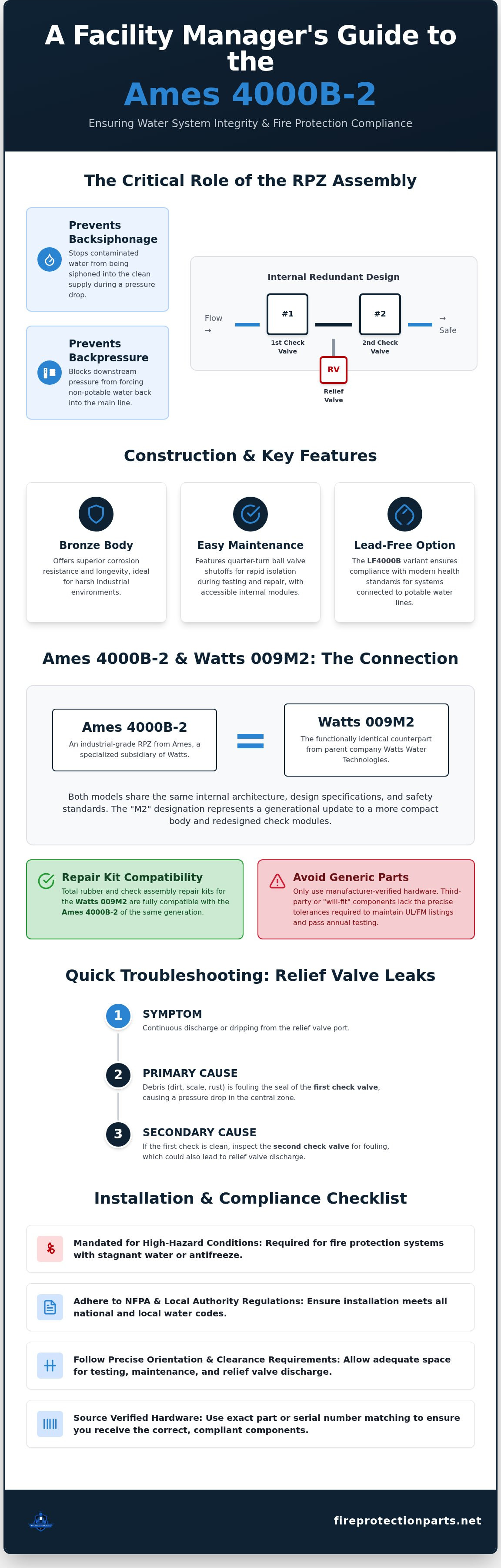
The Ames 4000b-2 represents a critical standard in fluid safety technology. As a 2-inch bronze Reduced Pressure Zone Assembly, its primary mission is to safeguard municipal water supplies from the risks of backsiphonage and backpressure. Contamination in a water main often stems from cross-connections where non-potable water might flow backward into the clean supply. The 4000b-2 mitigates this risk through a redundant mechanical design that prioritizes reliability above all else.
At its core, the assembly utilizes two independent check valves coupled with a pressure differential relief valve. This internal architecture ensures that even if one check valve is fouled by debris, the system remains protected. The relief valve acts as a fail-safe; it's designed to discharge water to the atmosphere if the pressure between the two checks drops too low. This physical air gap is the most reliable method known for preventing backflow in high-hazard environments.
The Role of RPZ Assemblies in Fire Protection
Fire protection systems often contain stagnant water or chemical additives like antifreeze. These are considered high-hazard conditions because they pose a significant health risk if they enter the drinking water supply. In these scenarios, local water authorities often mandate an RPZ assembly over a standard double-check valve. The Ames 4000b-2 provides an extra layer of security; its relief valve will discharge water if a pressure drop occurs, preventing non-potable fire system water from migrating upstream. The 2-inch sizing is specifically engineered to handle the high flow rates required for sprinkler activation while maintaining a manageable footprint for mechanical rooms. Choosing the right size is not just about fit; it's about ensuring the hydraulic performance meets the demands of your fire suppression design.
Material and Construction Standards
Reliability in fire safety depends on the quality of the hardware. The 4000b-2 features a heavy-duty bronze body that offers superior corrosion resistance and longevity in harsh environments. For ease of maintenance, the assembly includes quarter-turn ball valve shutoffs. These allow for rapid isolation during testing or repair without the need for specialized tools. While the standard bronze model is a staple in fire suppression, facility managers must also consider lead-free requirements. The LF4000B variant is the designated choice for systems that also serve potable water lines. This ensures compliance with modern health standards without compromising the physical strength of the unit. Adherence to these material standards is what separates a code-compliant installation from a potential liability.
Ames 4000B-2 vs. Watts 009M2: Technical Specifications
Ames Fire & Waterworks and Watts Water Technologies are not competitors in the traditional sense; Ames is a specialized subsidiary of the Watts brand. This corporate relationship is why the 4000b-2 shares nearly all its internal architecture with the Watts 009M2 series. They are functionally identical units built to the same rigorous safety standards. When you inspect a 2-inch 4000B assembly, you are looking at the industrial-grade equivalent of the Watts 009, designed for high-demand fire protection and commercial plumbing environments.
A frequent point of confusion for facility managers is the "M2" designation. This suffix represents a generational update in the bronze body and internal configuration. The original 4000B series featured a longer body profile, while the M2 version introduced a more compact footprint and redesigned check valve modules for easier access. For contractors, this means the repair kits for a 4000b-2 are specifically cross-referenced to the Watts 009M2. Understanding these generational shifts is a vital part of maintaining a comprehensive Backflow Prevention Overview for your facility. Using parts from the wrong generation will lead to seal failure or immediate rejection during annual testing.
Cross-Brand Compatibility Guide
Because the internal modules are shared, rubber total kits and check assemblies for the Watts 009M2 are fully compatible with the Ames unit. However, you must avoid generic "will-fit" kits. Third-party components often lack the precise material tolerances required to maintain UL/FM listings. If you need to buy backflow preventers or specific repair hardware, always opt for genuine factory-branded kits. This ensures the assembly performs exactly as engineered during a high-hazard backflow event, protecting both your property and the municipal supply.
Physical Dimensions and Flow Characteristics
Replacement planning requires exact measurements to avoid expensive piping reconfigurations. The 2-inch assembly typically operates at a maximum working pressure of 175 psi and can handle water temperatures up to 180 degrees Fahrenheit. The pressure drop across the unit is a critical variable for fire system hydraulic calculations. A standard 2-inch model will see a pressure loss of approximately 10 to 12 psi at typical flow rates. Always verify your system's static pressure before installation to ensure the sprinkler heads receive adequate supply during an emergency. The compact M2 design helps fit these units into tight mechanical closets without sacrificing this hydraulic performance.
Troubleshooting and Repair: When to Service Your 4000B-2
A dripping relief valve is the most visible sign that your 4000b-2 requires immediate attention. In most cases, this discharge isn't a sign of a mechanical failure but rather a signal that the device is reacting to debris. When sand, scale, or pipe solder becomes trapped between the check valve and its seat, the pressure differential is compromised. This triggers the relief valve to open, discharging water to prevent a potential backflow event. Understanding these signals is a core part of managing different Backflow Preventer Types and ensuring your specific RPZ assembly remains code-compliant.
Isolating the source of the leak is the first step toward a functional remedy. If the relief valve discharges water under static conditions, the first check valve is likely fouled or damaged. If the discharge only occurs when downstream pressure increases, the second check valve is failing to prevent backpressure from entering the reduced pressure zone. To simplify the removal of these internal components, professionals use the "Checkmate" tool. This specialized hardware provides the necessary leverage to extract check modules from the 2-inch bronze body without damaging the internal seats, which are critical for a watertight seal.
Common Failure Modes
External leaks from the relief valve are the most frequent issue, but they aren't the only risk. Internal bypass can occur when water slips past the checks without triggering a visible discharge. This condition is dangerous because it's only detectable during a formal test, yet it compromises the safety of the entire system. Additionally, ball valve shutoffs can become seized over time if they aren't cycled. If you can't isolate the unit, you can't perform the necessary repairs, turning a simple maintenance task into a major plumbing project.
Choosing the Right Repair Kit
Restoring your 4000b-2 to factory standards requires the correct parts. A Rubber Total Kit is the standard choice for annual maintenance, providing the O-rings, diaphragms, and rubber discs that wear out through normal operation. If the check modules themselves are cracked or heavily scaled, a full Check Kit allows for a complete internal module swap. For problems specifically located in the differential pressure mechanism, a Relief Valve Kit contains the springs and stems required to rebuild that specific section. Always verify your serial number to ensure the kit matches the M2 generational updates mentioned previously.
Installation and Maintenance Standards for 2-Inch Backflow Assemblies
Proper installation of the 4000b-2 is the first step in ensuring long-term system reliability. While the unit is designed for durability, its performance depends on its environment. Most 2-inch bronze RPZ assemblies must be installed in a horizontal orientation. This allows the relief valve to function correctly and prevents sediment from settling in the check modules. If your specific application requires vertical installation, you must verify that the assembly is specifically rated for up-flow or down-flow configurations to avoid immediate failure during testing. Choosing the wrong orientation is a common mistake that leads to recurring relief valve discharge.
Maintenance access is a non-negotiable requirement for code compliance. A minimum clearance of 12 to 24 inches on all sides is typically required to allow a tester to connect their gauges and service the internal components. Additionally, the relief valve must be equipped with an air gap drain. This component ensures that any discharge is channeled away safely without risking a cross-connection with the sewer system. Without a proper air gap, a flooded riser room could lead to catastrophic water damage or, worse, contaminated potable water entering the municipal supply. Professional installation ensures these physical barriers remain intact and functional.
NFPA 25 Maintenance Cycle
Compliance with NFPA 25 is essential for fire protection systems. This standard requires weekly or monthly visual inspections to check for external leaks and physical damage. Every year, the 4000b-2 must undergo a formal forward flow test to verify it can handle the hydraulic demands of the sprinkler system. Every five years, the internal components require a full inspection. This methodical approach identifies wear before it leads to a system failure. Adhering to this cycle provides the peace of mind that your facility is protected and your documentation is ready for fire marshal inspections.
Step-by-Step Maintenance Preparation
Before you open the assembly, you must isolate the system. Use the integrated quarter-turn ball valves to shut off the water supply safely. Relieving internal pressure through the test cocks is a critical safety step to prevent injury from pressurized components. Once the unit is depressurized, you can begin inspecting the fire protection parts online for signs of mineral buildup or rubber degradation. If you identify worn seals or fouled seats, replace them immediately with genuine hardware to maintain the unit's UL/FM listing. Ensure your system remains code-compliant by visiting our store to order genuine Ames repair kits today.
Where to Source Reliable Ames 4000B-2 Parts and Hardware
Sourcing for the 4000b-2 requires more than just finding a part number in a catalog. It requires meticulous verification of model generations and serial numbers to ensure a perfect fit. While general plumbing suppliers might stock basic repair kits, they often lack the specialized inventory required for fire protection standards. Finding a full 2-inch assembly versus an individual rubber total kit can be the difference between a simple morning repair and a week-long system shutdown. You need a partner who understands the difference between the standard bronze body and the M2 generational updates to avoid ordering incompatible internal modules.
Contractors value speed and accuracy above all else. Direct e-commerce sourcing allows you to bypass the long wait times and technical errors often associated with traditional wholesale counters. When you're repairing a potable water line, ensuring lead-free compliance isn't just a suggestion; it's a legal necessity. Genuine Ames hardware carries the required UL and FM approvals that keep your system in good standing with insurance providers and local water authorities. Don't risk your facility's safety on unverified components that might fail during a high-hazard backflow event.
Buy Genuine Ames Parts Online
Speed is critical when a system is down. Purchasing your hardware through a dedicated online platform ensures that you have access to real-time inventory levels. This transparency eliminates the guesswork of whether a part is actually in stock. For the 4000b-2, this means you can quickly secure the specific check valves or relief valve modules needed to pass your next inspection. Every component we provide is verified for adherence to industry standards, ensuring that your replacement parts perform with the same reliability as the original installation.
The Fire Protection Parts Advantage
Choosing a specialized retailer provides a level of technical expertise that general vendors simply can't match. We understand the nuances of the assembly and can help you identify the exact fire protection parts online needed for your specific model. Rapid shipping is our standard because we know that a compromised backflow preventer means your fire suppression system is effectively offline, leaving your building vulnerable. Our team acts as a dependable guide to help you navigate complex safety requirements without unnecessary delays.
Efficiency in procurement often comes from strategic bundling. You can source your backflow hardware alongside other critical sprinkler system components online to streamline your maintenance schedule and reduce shipping costs. This unified approach ensures that every part of your riser room meets the same high standard of excellence. We are committed to providing code-compliant hardware that protects lives and property without compromise. Whether you're managing a residential complex or a large-scale commercial facility, having the right parts on hand is the only way to guarantee safety.
Secure Your Fire Protection System with Genuine Hardware
Maintaining the 4000b-2 is a critical responsibility that demands precision and adherence to strict safety standards. We've explored the technical cross-compatibility with the Watts 009M2 series, the diagnostic signs of relief valve failure, and the rigorous NFPA 25 maintenance cycles required for code compliance. Every decision you make regarding your backflow prevention assembly impacts the integrity of your fire suppression system and the safety of the municipal water supply. Settling for generic parts or delaying essential repairs creates unnecessary liability for your facility.
As a specialized retailer for fire suppression components, we provide the professional-grade hardware you need to eliminate doubt. Our inventory features genuine, code-compliant parts designed to maintain your system's UL and FM approvals. Contractors and facility managers rely on our expertise and fast shipping to resolve critical repairs without extended downtime. Don't risk your facility's safety on unverified components; take the next step in securing your building by investing in verified hardware that meets the highest industry standards.
Shop Ames 4000B-2 Backflow Parts and Assemblies to ensure your system remains reliable and compliant. Protecting your property starts with choosing the right partner for your safety-critical hardware.
Frequently Asked Questions
Is the Ames 4000B the same as the Watts 009?
The Ames 4000B is functionally equivalent to the Watts 009 because Ames is a subsidiary of Watts Water Technologies. They share identical internal part designs and engineering standards. For most maintenance applications, the repair kits are interchangeable between the two brands. However, you must always verify the specific model generation, such as the M2 or M3 series, to ensure the rubber components and check modules align perfectly with the valve body during the repair process.
How do I identify a 4000B-2 repair kit?
You can identify the correct kit by checking the nameplate on the bronze body for the model number and serial number. A standard 4000b-2 repair kit will typically be labeled for use with the 2-inch model and may cross-reference with Watts 009 series parts. Look for specific kit types, such as the Rubber Total Kit for seals or the Check Kit for internal modules, to match your specific repair needs and maintain code compliance.
What is the difference between the 4000B and 4000BM2?
The primary difference lies in the body design and internal module configuration. The original 4000B had a larger profile, while the 4000BM2 features a more compact body and redesigned check valves for easier maintenance access. These generational updates mean that internal parts from an original 4000B won't fit the M2 version. Most modern installations use the M2 series because it mirrors the current Watts 009M2 engineering standards and offers a smaller installation footprint.
Does the Ames 4000B-2 meet lead-free requirements?
The standard Ames 4000B-2 is a bronze assembly, but only the specific "LF" models, such as the LF4000B-FP, are certified lead-free. If your application involves potable water, you must source the lead-free version to comply with federal and local plumbing codes. As of September 2026, the LF4000B-FP 2-inch assembly is the industry standard for these requirements. Always verify the lead-free status on the valve's tag before installation to ensure full compliance.
Why is my 4000B-2 relief valve dripping?
A dripping relief valve usually indicates that debris is trapped in the first or second check valve. This prevents the check from sealing properly, causing a pressure drop in the reduced pressure zone. The 4000b-2 is designed to discharge water under these conditions as a safety measure. Cleaning the check seats often resolves the issue. If the dripping persists, the rubber discs or the relief valve diaphragm may be worn and require a full rebuild.
How often should 2-inch backflow preventers be tested?
Annual testing is a legal requirement in most states and is mandated by NFPA 25 for fire protection systems. This ensures the assembly functions correctly under both backpressure and backsiphonage conditions. Failure to complete this testing can result in fines or termination of water service by your local authority. Some jurisdictions may require more frequent testing for high-hazard applications. Always check with your local water purveyor for specific compliance deadlines and certified tester requirements.
Can I install the Ames 4000B-2 vertically?
Vertical installation is only permitted if the specific model is UL/FM approved for that orientation. Most standard Ames 4000b-2 assemblies are designed for horizontal installation to ensure the relief valve functions correctly and sediment doesn't foul the checks. If you must install vertically, you must verify it's an "up-flow" rated unit. Installing a horizontal-only unit vertically will cause it to fail testing and compromise your facility's safety and regulatory standing.
What tools are needed to service the Ames 4000B-2?
You'll need basic hand tools like a socket set, adjustable wrenches, and a screwdriver. However, the most critical tool for professional service is the "Checkmate" module removal tool. This specialized hardware allows you to extract the internal check modules from the 2-inch bronze body without damaging the seats. Using the correct tools ensures a faster repair and protects the longevity of the assembly's internal components during maintenance. It's the best way to avoid expensive mistakes.

