

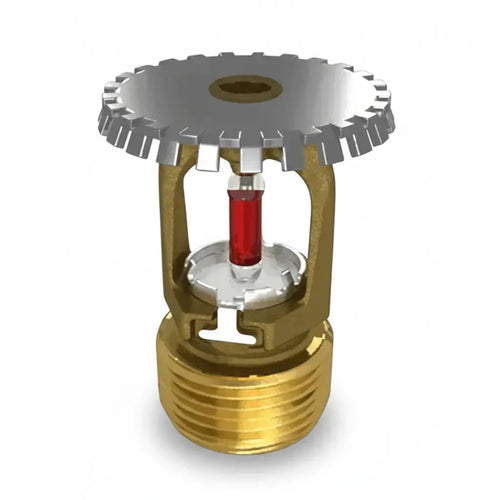


Fire Protection Control Valves: The 2026 Professional Sourcing Guide
A single failed component in a fire riser room isn't just a technical glitch; it's a liability that can compromise an entire facility. Choosing the wrong fire protection control valves often leads to more than just a failed inspection. It creates a point of failure that endangers lives and property. You likely already know that staying ahead of shifting NFPA standards feels like a constant challenge. The 2026 updates to NFPA 25 and NFPA 72 have introduced stricter semiannual testing requirements for supervisory devices, making your hardware choices more critical than ever.
This guide ensures you master the technical specifications and compliance requirements needed to select the right fire protection control valves for any suppression system. We'll break down the functional differences between OS&Y and Butterfly valves while providing a clear path to verify compliance with NFPA 13, 13R, or 13D. You'll gain the expert confidence to source reliable hardware that eliminates doubt and secures your system for the long term. From understanding new quarterly inspection rules for hose valves to identifying the right retrofit for an existing system, we've mapped out the essential details for professional sourcing in 2026.
Key Takeaways
- Understand why fire protection control valves act as the system's primary gatekeepers and why maintaining a locked-open status is a non-negotiable safety requirement.
- Compare the physical footprint and operational advantages of OS&Y and Butterfly valves to ensure the perfect fit for your specific riser room configuration.
- Learn how to align valve selection with Wet, Dry, or Pre-action system types while verifying critical material compatibility between valves and piping.
- Master a 5-point technical checklist to evaluate hardware quality and ensure full compliance with updated 2026 NFPA standards before purchasing.
- Identify reliable sourcing paths for verified, brand-name hardware from trusted manufacturers like Viking and PTR to eliminate system risk and ensure longevity.
What Are Fire Protection Control Valves and Why Do They Matter?
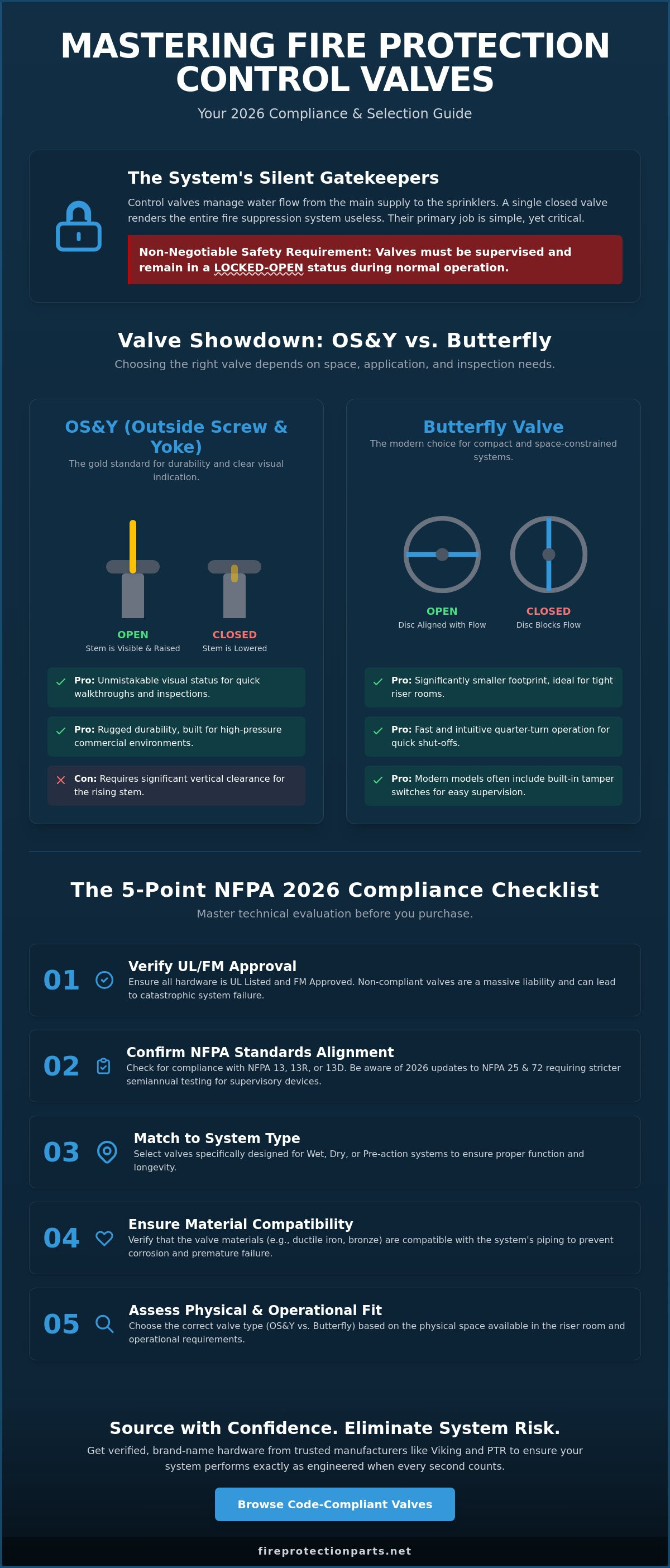
Fire protection control valves are the silent gatekeepers of every fire suppression system. Their primary job is simple: stay open. In a life-safety environment, these valves manage the flow of water from the main supply to the sprinkler heads. If they're closed when a fire breaks out, the entire system is useless. This is why standard operating procedure dictates that fire protection control valves remain locked in the "open" position during normal operation. A closed valve is a point of failure that no facility can afford.
Modern safety protocols don't leave valve status to chance. Supervision, usually through electronic tamper switches, ensures that any unauthorized movement of the valve handle triggers an immediate alarm at the fire panel. This eliminates the risk of human error or intentional sabotage. To manage large facilities effectively, systems use different valve configurations based on their location:
- Main Control Valves: These are typically located at the system riser and control the water supply for the entire building.
- Floor Control Valves: These isolate specific levels in multi-story buildings. They allow for localized maintenance without leaving the rest of the building unprotected.
- Sectional Valves: Often found in large industrial footprints, these divide the system into manageable zones for easier troubleshooting.
The Functional Mechanics of System Control
Control valves allow technicians to isolate specific portions of a system for repair or upgrades. Without these components, a small leak in one room would require shutting down protection for an entire facility. A critical feature of any compliant valve is its "indicating" design. This physical attribute allows a technician or inspector to see at a glance, even from a distance, whether the valve is open or closed. Supervision is the electronic monitoring of valve position to prevent accidental shut-offs.
Regulatory Foundations: NFPA 13 and Beyond
NFPA 13 sets strict standards for how fire protection control valves are identified and accessed. Every valve must be clearly labeled with its function and placed in a location where it can be reached quickly during an emergency. Adherence to these codes isn't just about safety; it's about legal and financial protection. Using hardware that lacks UL Listing or FM Approval is a massive risk. In the event of a fire, non-compliant valves can lead to system failure and catastrophic liability for property owners. Verified, brand-name hardware ensures the system performs exactly as engineered when every second counts.
Essential Types of Fire Protection Control Valves: A 2026 Roundup
Selecting the right hardware requires a clear understanding of valve architecture and its impact on system performance. In 2026, the industry has seen a decisive shift toward compact, pre-assembled valve solutions. These integrated units reduce installation time and minimize potential leak points. Whether you are designing a new system or retrofitting an old one, the choice usually comes down to the physical footprint of your riser room and the specific hydraulic needs of the facility. Your fire protection control valves must be easy to operate and even easier to inspect.
OS&Y Valves (Outside Screw and Yoke)
OS&Y valves remain the gold standard for heavy commercial applications due to their rugged durability. They provide a clear, mechanical visual indicator. When the threaded stem is up and visible, the valve is open. This design makes it impossible to misinterpret the valve status during a quick walkthrough. The primary drawback is the physical space required. Because the stem rises, you must ensure there is enough vertical clearance in the mechanical room to allow for full operation. They are built for longevity and resist the wear and tear of high-pressure environments.
Butterfly Valves: Compact and Efficient
Butterfly valves have become the preferred choice for modern, space-constrained buildings. Their quarter-turn operation is fast and intuitive. Most 2026 models feature built-in tamper switches, which simplifies the electronic supervision process. While they offer a significantly smaller footprint than OS&Y valves, they do introduce slightly higher friction loss because the valve disc remains in the waterway even when open. For most standard suppression systems, this trade-off is well worth the space savings and ease of installation. You can browse our selection of butterfly valves to find the right fit for your project.
Specialized Deluge and Check Valves
Beyond the primary gatekeepers, specialized valves manage system integrity and high-hazard response. Check valves are critical for preventing backflow and maintaining consistent system pressure. They ensure water only moves in the intended direction. For environments where rapid fire spread is a risk, such as chemical storage or hangars, electric deluge solutions are the standard. These systems, like the PTR Electric Deluge VXD, provide the immediate, high-volume response necessary to control intense hazards. For a deeper dive into these technologies, read our guide on Electric Deluge Valve Fire Suppression: The 2026 Guide to Rapid Response Systems. Choosing the right fire protection control valves for these specialized roles ensures your system is ready for the specific risks of your facility.
Selecting the Right Valve: System Compatibility and Material Analysis
System architecture dictates your hardware requirements. A standard wet pipe system has different mechanical needs than a dry or pre-action system. In a wet system, the valve is constantly exposed to pressurized water. In contrast, dry systems require fire protection control valves that integrate seamlessly with air maintenance devices and specialized trim. Choosing a valve without considering the system type leads to integration headaches and potential leaks. Your choice must reflect the specific hydraulic demands of the environment.
Pressure ratings are a non-negotiable specification. For most commercial applications, 175 PSI is the standard benchmark for fire protection control valves. However, high-rise buildings or high-pressure industrial zones often require ratings of 300 PSI or higher. Installing a valve with an insufficient pressure rating isn't just a code violation; it's a catastrophic safety risk. Always verify the maximum working pressure of your specific water supply before finalizing a purchase. It's the only way to ensure the hardware can withstand the stresses of a full-flow event.
Environmental factors also play a decisive role in longevity. In coastal areas or chemical processing plants, standard iron valves may succumb to corrosion prematurely. In these settings, specialized coatings or stainless steel internal components are essential. Protecting your investment means selecting materials that can survive the local atmosphere without compromising the valve's ability to seat or seal.
CPVC Integration and Residential Systems
Residential and light commercial projects often utilize Viking CPVC fire sprinkler pipe for its ease of installation and cost-effectiveness. However, connecting metal valves to plastic piping requires precision. You must use approved transition fittings to prevent stress fractures and chemical compatibility issues. Never use standard pipe dope on CPVC connections; only use lubricants and sealants specifically rated for use with plastic fire protection materials. This ensures a leak-free seal that won't degrade the pipe over time.
Backflow Prevention and Water Supply Integrity
Backflow preventors are a critical subset of system control. They ensure that stagnant water from the sprinkler system doesn't siphon back into the municipal drinking water supply. Local water authorities typically mandate "Reduced Pressure Zone" (RPZ) valves for high-hazard systems. These units are more than just a plumbing requirement; they are an integral part of the fire riser assembly. We provide a full range of backflow preventors designed to meet strict local codes while maintaining the flow characteristics required for fire suppression. Proper selection here prevents legal friction with water utilities and guarantees the integrity of the facility's water supply.
Key Features to Evaluate Before Purchasing Fire Control Valves
Procuring hardware for a life-safety system requires more than just checking a price list. When you source fire protection control valves in bulk, small technical oversights can lead to massive delays during the AHJ inspection phase. You need hardware that is verifiable, traceable, and compatible with modern monitoring technology. Reliability is built into the details of the specification. Use this 5-point checklist to verify every valve before you finalize your order:
- Certification Status: Confirm both UL Listing and FM Approval for the specific model and size.
- Pressure Rating: Ensure the valve meets or exceeds your system's maximum working pressure, typically 175 PSI or 300 PSI.
- Supervision Compatibility: Verify the valve accepts standard tamper switches or comes with integrated monitoring hardware.
- Connection Configuration: Match the valve ends to your piping (grooved, flanged, or threaded) to avoid the need for costly adapters.
- Manufacturer Traceability: Look for permanent, cast-in markings that include the manufacturer’s name, model, and year of production.
Traceability is often overlooked but remains vital for long-term liability management. If a recall occurs or a component fails years after installation, having clear manufacturer data allows you to identify affected units quickly. High-quality fire protection control valves from reputable brands provide this peace of mind. You can shop our verified inventory of control valves to ensure your project uses only the most reliable, traceable hardware available.
Verification of UL/FM Certification
Never take a "compliant" claim at face value. Use the UL Product iQ database to verify that the specific valve model is currently listed for fire service. While UL Listing is a baseline requirement, FM Global approval is often considered the gold standard for protecting high-value assets and industrial facilities. A UL Listing ensures the valve has undergone rigorous fire-cycle testing to prove operational reliability under extreme thermal stress. Choosing double-certified hardware eliminates doubt and satisfies the strictest insurance underwriters.
Connection Types: Grooved vs. Flanged vs. Threaded
The speed of installation often dictates the profitability of a project. Grooved connections have become the industry favorite for modern contracting because they allow for rapid assembly and provide some flexibility for seismic movement. However, heavy-duty risers and large-diameter mains may still require flanged connections for maximum structural rigidity. Smaller residential systems frequently rely on threaded ends for compact installations. Regardless of the type, you must ensure 100% compatibility with your existing fire protection fittings and accessories to maintain a leak-free system. Mixing mismatched connection types leads to mechanical stress and premature failure at the joint.
Sourcing Code-Compliant Valves from Fire Protection Parts
Sourcing the right hardware shouldn't be a guessing game. In an industry where compliance saves lives, your supplier must be more than a vendor. Fire Protection Parts serves as a mission-driven partner for contractors and facility managers. We provide the peace of mind that comes from verified, code-compliant hardware. By sourcing your fire protection control valves from a specialist, you eliminate the risk of purchasing low-quality components that fail during critical testing.
There is a distinct operational advantage to consolidating your procurement. When you source your Viking Plastics CPVC pipe and your fire protection control valves from the same expert retailer, you guarantee mechanical compatibility. You won't struggle with mismatched fittings or unapproved transition components. Our inventory features industry-leading brands like Viking and PTR. This ensures every piece of hardware meets the rigorous standards of 2026.
Facility managers often face the challenge of identifying the correct valve for a legacy system. We provide the expert guidance needed to navigate these technical hurdles. Our support team helps you identify the exact specifications required for your riser room. This includes everything from pressure ratings to supervision requirements. We don't just sell parts; we provide the professional assurance that your system is ready for service.
The Fire Protection Parts Advantage
We act as a dependable guide in a landscape of complex safety requirements. Our focus is on the elimination of doubt through professional expertise. Whether you need the high-hazard response of the PTR Electric Deluge VXD or simple sectional valves, our inventory is curated for performance. We also understand that maintenance is an ongoing reality. Finding replacement parts for existing systems is straightforward. This ensures your facility never remains unprotected due to a backordered component.
Ensuring System Longevity with Quality Hardware
Choosing high-quality, brand-name valves offers a superior long-term ROI compared to generic alternatives. Reliable hardware reduces the frequency of repairs. It prevents the catastrophic costs associated with system failure. For more information on maintaining your setup, explore our guide on Fire Protection Parts and Hardware for System Repairs. Investing in excellence today secures your facility for years to come.
Browse our full selection of Fire Protection Control Valves today.
Securing Your System with Precision and Compliance
The safety of your facility depends on the components that sit behind the scenes. Selecting the right fire protection control valves is a decision that impacts everything from daily maintenance to emergency performance. You now have the tools to navigate the physical constraints of riser rooms and the technical nuances of material compatibility. By prioritizing hardware with verified UL Listing and FM Approval, you eliminate the risk of system failure and ensure your project meets the highest standards of protection.
Quality sourcing is the final step in the chain of reliability. Whether you're installing a new commercial riser or retrofitting a residential system, your hardware must be beyond reproach. We are an authorized retailer of Viking and PTR hardware, providing code-compliant parts that satisfy NFPA 13, 13D, and 13R requirements. Our team offers expert technical support to help you make an informed choice with professional confidence.
Shop Code-Compliant Fire Protection Control Valves
Take the guesswork out of your next procurement cycle. With the right hardware and a mission-driven partner, you can build a system that stands the test of time and keeps your facility secure.
Frequently Asked Questions
What is the difference between an OS&Y valve and a Butterfly valve?
OS&Y valves feature a rising stem that provides a clear visual indicator of the valve’s status. When the stem is visible, the valve is open. In contrast, Butterfly valves use a rotating disc and are much more compact. While OS&Y valves are prized for their ruggedness in heavy commercial settings, Butterfly valves are often preferred for their space-saving design and integrated tamper switches. Both are essential fire protection control valves depending on your riser room's footprint.
Why do fire protection control valves need to be supervised?
Supervision is a non-negotiable safety requirement that prevents the system from being accidentally deactivated. A closed valve is the leading cause of sprinkler system failure during a fire. By using electronic tamper switches, any movement of the valve handle triggers an immediate alarm at the fire panel. This ensures that facility managers can address unauthorized closures before a life-safety emergency occurs. It’s about maintaining a constant, ready state for the water supply.
Are all fire protection valves UL Listed and FM Approved?
Not every valve sold is suitable for fire service. You must specifically look for hardware that carries UL Listing and FM Approval. These certifications prove the device has passed rigorous thermal and mechanical stress tests. Using uncertified hardware can lead to catastrophic system failure and significant legal liability. Always verify the manufacturer's credentials in the UL Product iQ database to ensure the fire protection control valves you buy meet current 2026 standards.
How often should fire protection control valves be inspected?
Inspection frequencies vary based on how the valve is secured. NFPA 25 generally requires weekly visual inspections for valves that are not locked or supervised. If the valve is locked or electronically supervised, the requirement often moves to monthly. However, the 2026 updates to NFPA 72 now mandate semiannual testing for the supervisory devices themselves. Regular maintenance ensures the valve hasn't seized and remains fully operational for an emergency.
Can I use a standard plumbing gate valve for a fire sprinkler system?
You cannot substitute a standard plumbing valve for one rated for fire protection. Fire service valves must be "indicating" types, allowing an inspector to verify the open status at a glance. Standard gate valves don't provide this visual confirmation or the necessary mounting points for tamper switches. Additionally, plumbing valves aren't tested to withstand the specific pressure surges and flow requirements mandated by NFPA 13. Using non-rated valves will result in a failed inspection.
What is a tamper switch and why is it required on control valves?
A tamper switch is an electronic monitoring device that alerts the fire alarm panel if a valve is partially or fully closed. It is required to prevent human error from compromising building safety. If a technician forgets to reopen a valve after maintenance, the tamper switch ensures the mistake is caught immediately. It provides a layer of electronic oversight that manual locks alone cannot match in modern high-occupancy buildings.
What happens if a fire control valve is accidentally left closed?
If a valve is left closed, the fire suppression system will fail to discharge water when needed. This turns a preventable incident into a potential catastrophe. Sprinkler heads will activate as intended, but no water will reach the fire. This results in rapid fire spread, extensive property damage, and extreme risk to occupants. This scenario is why codes emphasize "locked open" status and the use of supervised indicating valves.
How do I identify the correct replacement for an old fire riser valve?
Identifying a replacement starts with checking the cast-in markings on the valve body. These usually list the manufacturer, model, size, and pressure rating. You must also confirm if the connection is grooved, flanged, or threaded. If the valve is too old to read, measure the "face-to-face" or "take-out" length to ensure the new hardware fits the existing pipe gap. Consult a technical expert to match legacy specs with modern, compliant alternatives.

