



Fire Sprinkler Valve Trim Buying Guide: Choosing Pre-Configured Collections in 2026
A single mismatched component in your fire sprinkler valve trim can turn a routine safety inspection into a costly non-compliance nightmare. With component prices rising, including a 5% to 7% increase for trim valves as of May 2026, you can't afford the waste or delay of on-site assembly errors. You've likely felt the frustration of trying to source individual fittings that meet exact UL/FM standards for a specific valve model. It's a complex puzzle where one wrong piece compromises the entire system's integrity and your peace of mind.
We understand that your priority is unwavering reliability and the absolute protection of your facility. This guide will help you master the intricacies of valve trim and explain why pre-assembled collections have become the industry standard for professional contractors. We'll break down the transition to "plug-and-play" kits that reduce installation time and guarantee NFPA compliance. You'll learn how to simplify your maintenance schedule and ensure your dry, pre-action, or deluge systems are prepared for the 2026 edition's stricter annual internal inspection requirements. It's time to eliminate the guesswork and focus on precision-engineered safety.
Key Takeaways
- Understand the three critical functions of fire sprinkler valve trim, including operational control, supervisory monitoring, and system drainage.
- Learn why every individual component in a trim package must meet UL/FM standards to ensure total system compliance.
- Discover how pre-configured Reliable Fire Protection Trim Collections eliminate on-site assembly errors and significantly reduce labor costs.
- Identify the specific trim requirements for dry pipe, deluge, and pre-action systems using our five-step matching framework.
- Explore 74 precision-engineered trim solutions designed to fit virtually any standard valve configuration for maximum plug-and-play reliability.
What is Fire Sprinkler Valve Trim and Why is it Critical?
Think of the primary suppression valve as the heart of your protection system. If the valve is the heart, then the fire sprinkler valve trim is the complex network of arteries and sensors that keep it functioning. Trim consists of the peripheral pipes, valves, and gauges that surround the main valve body. Without this hardware, the primary valve is just a heavy piece of cast iron. It cannot be tested, it cannot be monitored, and it certainly cannot be maintained to code. For a foundational perspective on how these systems operate, this fire sprinkler system overview explains the broader mechanics of water-based suppression.
The trim serves as the critical interface between the massive water supply entering the building and the sensitive monitoring equipment located in the riser room. It translates physical changes in water or air pressure into actionable data for your facility managers. Fire sprinkler valve trim is the essential hardware required to manage, test, and maintain a fire sprinkler valve.
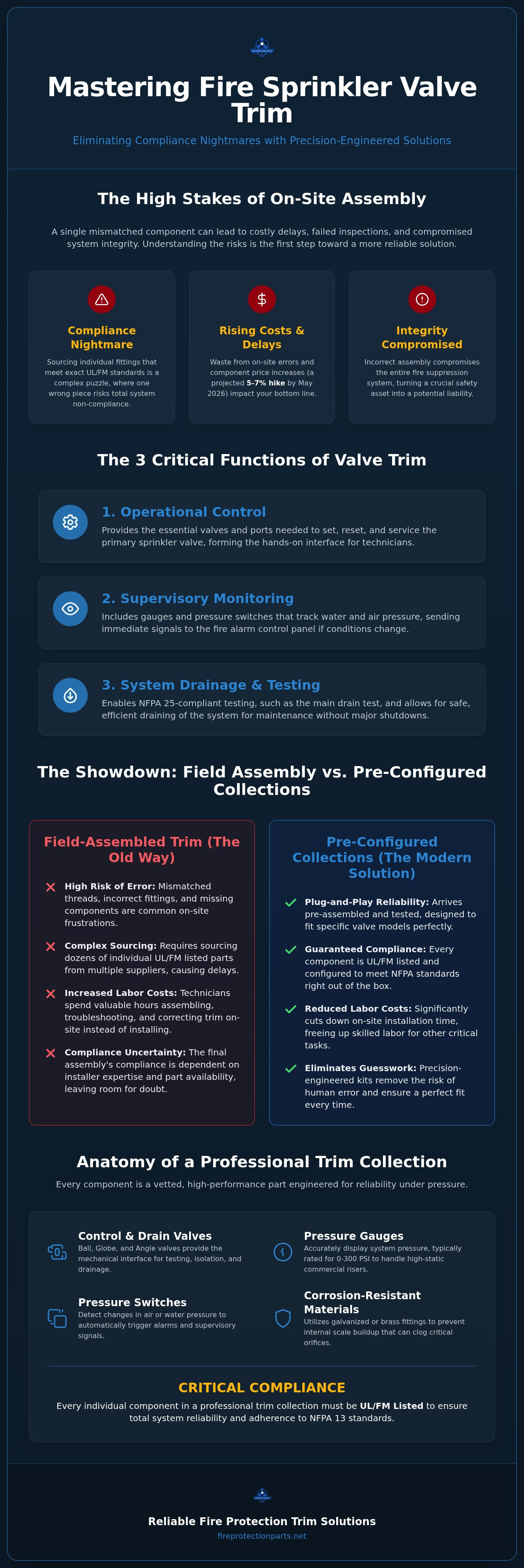
Every professional trim package performs three core functions. It provides operational control to set the system, supervisory monitoring to ensure readiness, and system drainage for testing or repairs. If any single fitting in this assembly fails, the entire suppression system may become a liability rather than a safeguard.
The Role of Trim in System Monitoring
In dry pipe and pre-action systems, the trim manages the supervisory air or nitrogen pressure that holds the valve closed. It's a delicate balance. If the pressure drops too low, the valve might trip accidentally, causing water damage. High-quality pressure gauges within the trim allow technicians to identify slow leaks or supply issues before they trigger an alarm. These components also interface directly with fire alarm control panels. When a pressure switch on the trim detects a change, it sends an immediate signal to the panel, ensuring that a fire event or a system fault never goes unnoticed.
Maintenance and Testing Capabilities
Compliance with NFPA 25 requires regular testing, and the trim makes this possible without shutting down the entire building's protection. The trim assembly facilitates the "main drain test," which verifies that the water supply is still adequate and that there are no obstructions in the piping. Professional collections include three-way valves that allow for simplified gauge testing and replacement without draining the system. When a system does trip or requires a scheduled shutdown, the trim provides the necessary valves and drip cups to reset the assembly efficiently. It eliminates the mess and the downtime, returning your facility to a protected state as quickly as possible.
Essential Components of a Professional Trim Collection
A high-quality fire sprinkler valve trim package is a precision-engineered assembly where every fitting serves a specific purpose. It isn't just a collection of pipes; it's a vetted system that must perform under extreme pressure without hesitation. Material quality is paramount. In wet environments, using corrosion-resistant brass or galvanized fittings prevents the internal scale buildup that can clog small orifices and compromise the system. Every component, from the smallest nipple to the main drain valve, must carry a UL/FM listing. This ensures that the hardware meets the rigorous performance criteria established by the NFPA 13 standard for installation and reliability.
Control and Drain Valves
Valves are the primary mechanical interfaces of the trim. While ball valves offer quick operation, globe valves are often preferred for their superior throttling capabilities during testing. Angle valves are the workhorse for drainage applications because their design minimizes friction loss and allows for more efficient water discharge. You'll need to ensure these valves are correctly positioned. Most are "normally closed" to prevent accidental discharge, but supervisory switches will monitor them to alert you if a valve is moved. Selecting the right professional trim hardware ensures these configurations remain compliant year after year.
Monitoring Gauges and Pressure Switches
Accurate data is your best defense against system failure. Standard trim includes gauges rated for 0-300 PSI to handle the high static pressures found in many commercial risers. To prevent false alarms, retard chambers are integrated into the trim to absorb minor pressure surges from the city water supply. Supervisory pressure switches act as the system's voice. They monitor air and water pressure simultaneously, sending immediate signals to the alarm panel if levels drift outside of safe operating parameters.
Auxiliary Trim Components
Small details often provide the earliest warnings. Drip cups are positioned to catch minor weeping from the valve seat, allowing you to identify a failing seal before it becomes a major leak. For dry pipe systems, the trim must include air compressors for dry sprinkler systems or air maintenance devices to keep supervisory air at the correct level. Deluge and pre-action systems also require manual emergency release stations. These allow a technician to trip the system manually if the electronic detection fails, providing a final layer of safety that never relies on power.
Pre-Configured Collections vs. Field-Assembled Trim
Choosing between a pre-configured Reliable Fire Protection Trim Collection and a field-assembled setup is more than a matter of convenience. It's a strategic decision that directly impacts your labor budget and liability profile. When you source individual components, you're essentially acting as a manufacturer in the riser room. This introduces variables that can lead to system failure. A factory-tested, pre-configured collection eliminates these variables, providing a "plug-and-play" solution that arrives ready for immediate installation. It turns a complex assembly task into a simple installation procedure.
Managing procurement through a single SKU streamlines the entire project lifecycle. Instead of tracking dozens of line items from multiple vendors, you manage one. This simplicity extends from the warehouse to the installation site. When you choose a factory-tested kit, you're buying peace of mind. You know the fire sprinkler valve trim configuration is correct because it was engineered that way, not because a technician had to figure it out on the fly.
Labor and Efficiency Analysis
The hidden costs of field assembly are significant. Estimating the time required to thread and assemble 20 or more individual fittings on-site reveals a major drain on resources. A technician might spend several hours organizing, sealing, and joining disparate parts. In contrast, a pre-assembled kit reduces this task to a few primary connections. This efficiency allows you to allocate your most specialized labor to complex system diagnostics rather than routine pipe fitting. You also eliminate the project-halting discovery of missing parts that frequently plagues site-built fire sprinkler valve trim. Every minute saved on the riser is a minute gained on project completion.
Compliance and Liability Protection
Compliance is the foundation of fire safety. Factory-assembled trim provides a level of assurance that site-built networks often struggle to match during a fire marshal inspection. Every component in a pre-configured kit is verified to meet UL/FM standards. This ensures you never accidentally install a non-listed fitting that could compromise the system's legal standing. For more insights on professional procurement, see our guide on sourcing sprinkler system components online. Using a standardized collection provides a clear, documented path for compliance. It protects the facility owner and the contractor from the long-term liability of assembly errors.
Selecting Trim Based on System Architecture
Matching your fire sprinkler valve trim to the specific architecture of your suppression system is a non-negotiable step in fire protection design. A mismatch isn't just an inconvenience; it's a critical point of failure. Every valve model has unique porting and pressure requirements that require a specific trim configuration. To ensure a safe and compliant choice, follow this 5-step selection framework:
- Identify System Type: Determine if you're outfitting a wet, dry, deluge, or pre-action valve.
- Verify Manufacturer and Model: Trim is rarely universal. It must be engineered for your specific valve body.
- Assess Environmental Factors: Evaluate if the riser room is subject to freezing or corrosive atmospheres.
- Determine Actuation Method: Choose between hydraulic, pneumatic, or electric release based on your detection system.
- Confirm Listing Compliance: Ensure the entire assembly and its individual parts meet UL/FM standards for the intended application.
Environmental conditions dictate material choices. In unheated areas, galvanized or corrosion-resistant trim is essential to prevent internal scaling and freeze-related bursts. It's about more than just fitting pipes; it's about ensuring the system reacts correctly when seconds count.
Dry Pipe and Pre-action System Requirements
Dry systems rely on precise air-to-water pressure ratios to keep the clapper closed. The trim must include dedicated ports for a system air compressor or maintenance device to maintain supervisory pressure. For larger systems, you must integrate accelerators into the trim. These devices speed up the exhausting of air, allowing the valve to trip and deliver water to the fire faster. Precision in these connections is what prevents accidental system trips.
Deluge System High-Hazard Trim
Deluge systems protect high-hazard zones where rapid, total coverage is required. The trim layout for these systems is complex, often featuring electric solenoid valves or hydraulic actuators for rapid release. Redundancy is a core requirement here. You must incorporate manual release stations into the trim design. This allows a technician to trip the system manually if the automated detection fails, providing a final layer of protection for the facility.
Wet System and Riser Trim
Wet system trim is often the most straightforward, focusing on the alarm check valve and the main drain. The "main drain" is the workhorse of the assembly, facilitating the annual water flow tests required by code. In modern configurations, you should also consider how your riser hardware interfaces with backflow preventers to ensure the building's fire water doesn't contaminate the municipal supply. Explore our full range of pre-configured trim collections to find the exact match for your system's architecture.
Top Reliable Fire Protection Trim Solutions for 2026
Finding the exact fire sprinkler valve trim for your system shouldn't be a guessing game. We've curated a massive selection of 74 Reliable Fire Protection Trim Collections to ensure you have access to the precise hardware your facility requires. These aren't generic bundles. Every collection is precision-engineered for specific Reliable valve architectures, eliminating the compatibility risks associated with third-party components. By choosing a pre-configured solution, you're investing in a system that's been vetted for performance and adherence to the latest safety standards.
Navigating our inventory is straightforward. Each kit is organized by valve model and system type, allowing you to match your hardware with expert confidence. To find the right fit for your specific installation, visit our Trim Collections page for detailed model matching and technical specifications.
Solutions for Dry and Pre-Action Valves
Dry pipe systems require specialized monitoring to prevent accidental trips. Our collections for Model D and Model FX dry valves include everything from precision supervisory air gauges to complete drip cup assemblies. These kits are designed to integrate seamlessly with your air maintenance devices, providing a stable environment for your riser. By using these factory-configured sets, you ensure that every pressure switch and relief valve is positioned exactly where the manufacturer intended. It's the most reliable way to maintain the air-to-water ratio required for peak performance.
Deluge and Special Hazard Trim Kits
High-hazard environments demand hardware that reacts without hesitation. Our trim solutions for Model DDX deluge valves are built for these extreme scenarios. Whether your system uses manual, hydraulic, or electric release configurations, these kits provide the necessary redundancy for total peace of mind. Every component in our deluge collections undergoes a rigorous factory-testing process to verify its operation under high-flow conditions. You don't have to worry about a single fitting failing when it matters most because the entire assembly has been proven as a unit.
Simplified Wet System Riser Trim
Wet systems are the backbone of most commercial protection strategies, and their maintenance should be simple. We offer cost-effective trim kits designed for alarm check valves that prioritize durability and ease of access. These collections make quarterly inspections faster and more accurate, ensuring your main drain and alarm tests are conducted without a hitch. Reliability doesn't have to be complicated. You can browse our full range of 74 Reliable Trim Collections here to secure the professional hardware your building deserves.
Secure Your System with Precision-Engineered Trim
Choosing the right fire sprinkler valve trim is a decision that defines the long-term reliability of your suppression system. By moving away from the risks of field assembly and adopting pre-configured collections, you eliminate the guesswork that leads to costly delays and compliance failures. These kits ensure that every gauge, valve, and fitting is exactly where it needs to be to meet strict UL/FM standards. You don't just save on labor; you gain the peace of mind that comes from a precision-engineered solution designed for your specific valve architecture.
With 74+ pre-configured trim collections in stock, we provide the hardware necessary to protect your facility without compromise. Our solutions are built for the toughest environments and the most demanding safety codes. It's time to simplify your procurement and focus on what matters most: unwavering protection. We've done the complex work of matching components so you can focus on a successful installation.
Shop Reliable Fire Protection Trim Collections
Take the first step toward a more efficient and compliant riser room today. Your facility deserves the highest standard of safety.
Frequently Asked Questions
What is the difference between standard trim and specialized trim?
Standard trim includes basic components for operational control and drainage, typically used for wet systems. Specialized trim includes additional hardware like air maintenance devices, accelerators, or solenoid valves for dry, deluge, or pre-action systems. The complexity of specialized fire sprinkler valve trim reflects the higher risk and specific actuation requirements of these architectures. Matching the trim to the hazard level ensures the system triggers correctly when every second counts.
Do I need a different trim kit for a vertical vs. horizontal valve installation?
Yes, the orientation of the valve dictates the physical layout of the trim piping and components. Gravity-dependent parts, such as drip cups and drain lines, must be positioned correctly to function. Using a vertical trim kit on a horizontal installation will lead to improper drainage and potential supervisory faults. Always verify the planned installation orientation before selecting your Reliable trim collection to ensure total mechanical compatibility and compliance with safety standards.
Can I use Reliable trim collections on valves from other manufacturers?
No, you shouldn't use Reliable trim collections on valves from other manufacturers. These kits are engineered to align with the exact port locations and pressure requirements of a specific Reliable valve body. Attempting to adapt trim to a different manufacturer's valve compromises the UL/FM listing and increases the risk of system failure. Stick to manufacturer-matched components to maintain the integrity of your fire protection system and ensure total compliance with safety regulations.
Are all the components in your trim collections UL Listed and FM Approved?
Yes, every individual component within our pre-configured trim collections meets strict UL/FM standards. This includes the pipes, fittings, gauges, and valves that make up the assembly. Using listed components is a requirement for NFPA compliance and ensures that the hardware can withstand the pressures and environmental stresses of a fire riser room. We prioritize verified quality to eliminate doubt during your fire marshal inspections and long-term system operation.
What maintenance is required for fire sprinkler valve trim?
Maintenance involves regular inspections and testing as mandated by NFPA 25. You must perform quarterly visual inspections to check for leaks, corrosion, or damaged gauges. Annual testing includes the main drain test to verify water supply and checking the operation of all supervisory switches. Keeping the fire sprinkler valve trim clean and ensuring all valves are in their correct positions is essential for system readiness and overall facility safety.
How do I know which trim collection matches my specific valve model?
You can identify the correct match by checking the data plate on your valve for the manufacturer, model, and size. Our collections are organized by these specific identifiers to make selection simple. If you're outfitting a new system, refer to the engineered drawings for the valve specifications. Matching these details to our curated list of 74 Reliable collections ensures a perfect fit and avoids the complexity of on-site configuration.
Does the trim kit include the pressure gauges and switches?
Yes, our pre-configured trim collections are comprehensive and include the necessary pressure gauges and switches for the specific valve type. For example, a dry pipe kit will include both air and water pressure gauges, along with the required supervisory switches. This approach eliminates the risk of missing critical monitoring hardware. It ensures your riser room equipment is fully prepared to interface with the fire alarm control panel immediately upon installation.
Can I buy individual replacement parts for my Reliable trim collection?
Yes, individual replacement parts are available if a specific component like a gauge or ball valve needs service. While pre-configured collections are ideal for new installs, you don't always need a full kit for minor repairs. We provide access to the same UL/FM listed components used in our full assemblies. This allows you to maintain the original engineering standards of your trim without purchasing an entirely new collection when a single fitting fails.

