



When to Replace Fire Sprinkler Heads: The 2026 Compliance Guide
Did you know that 59% of fire sprinkler failures are caused by system deficiencies that could have been identified during a routine inspection? It's a sobering reality for any facility manager or property owner. You likely worry about whether your system will actually perform when it matters most, or if a fire marshal's visit will result in a failed inspection and costly fines. Confusion often stems from the technical gap between routine testing and mandatory replacement; this leaves many to wonder if a head that looks fine is actually a hidden liability.
Finding the right replacement fire sprinkler heads shouldn't be a guessing game based on surface appearance. This 2026 compliance guide simplifies the latest NFPA 25 requirements so you can stop guessing and start securing your property with expert confidence. We will break down the specific triggers for replacement, identify visual signs of failure like corrosion or loading, and provide a clear path to sourcing the exact components you need. By the end of this article, you'll have the technical clarity to eliminate doubt and ensure your fire protection system remains an unwavering line of defense.
Key Takeaways
- Understand the critical distinction between a visual inspection and a functional performance test under the 2026 NFPA 25 standards.
- Learn to identify immediate failure signs like corrosion or leakage that require sourcing replacement fire sprinkler heads before your next inspection.
- Master the updated age-based timelines for standard and quick-response heads to ensure your system meets current regulatory mandates.
- Discover how to use the Sprinkler Identification Number (SIN) and K-factor to guarantee your new hardware matches your system's hydraulic requirements.
- Ensure long-term property protection by choosing UL-listed and FM-approved components from authorized professional sources.
Understanding NFPA 25 Standards for Sprinkler Replacement
NFPA 25 stands as the definitive benchmark for the inspection, testing, and maintenance of water-based fire protection. It's the standard that ensures your fire sprinkler system remains operational when lives are on the line. Many property managers confuse a simple visual inspection with a functional performance test. While an inspection involves a floor-level check for leaks or physical damage, a test often requires laboratory analysis of sample heads to verify their thermal sensitivity. This distinction is critical because replacement fire sprinkler heads are often mandated based on the age of the system, even if the hardware looks pristine from the ground.
Sprinkler heads are unique mechanical devices. They are designed to stay idle for decades and then activate flawlessly in seconds. This dormancy is exactly what makes them dangerous. Internal components can seize due to corrosion or mineral buildup without any outward sign of trouble. The 2026 edition of NFPA 25, which took effect on September 9, 2025, emphasizes that reliability cannot be assumed. It introduces stricter requirements, such as the mandate that sprinklers in dwelling units installed for 50 or more years must be replaced or undergo thermal sensitivity testing to ensure they still meet fast-response criteria.
The Role of the Authority Having Jurisdiction (AHJ)
The Authority Having Jurisdiction (AHJ) acts as the ultimate enforcer of safety standards. This entity, typically a local fire marshal or an insurance underwriter, has the power to interpret NFPA 25 for your specific facility. Their interpretation matters because they decide when a "minor" issue requires a full system overhaul. If an AHJ determines your system is out of compliance, the consequences are severe. You may face heavy fines, the immediate closure of your facility, or the denial of insurance claims after a fire. Proactively identifying the need for replacement fire sprinkler heads is a practical strategy to avoid these professional risks.
Standard Response vs. Quick Response (QR) Timelines
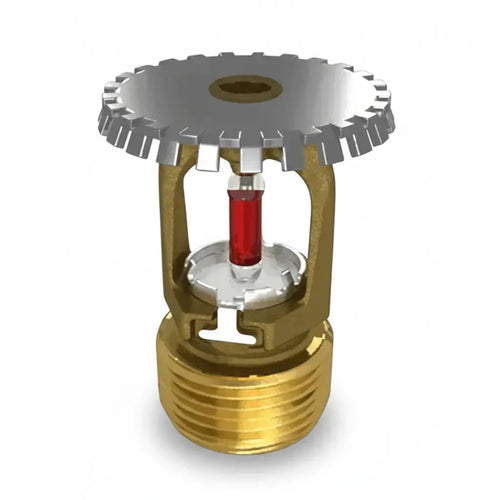
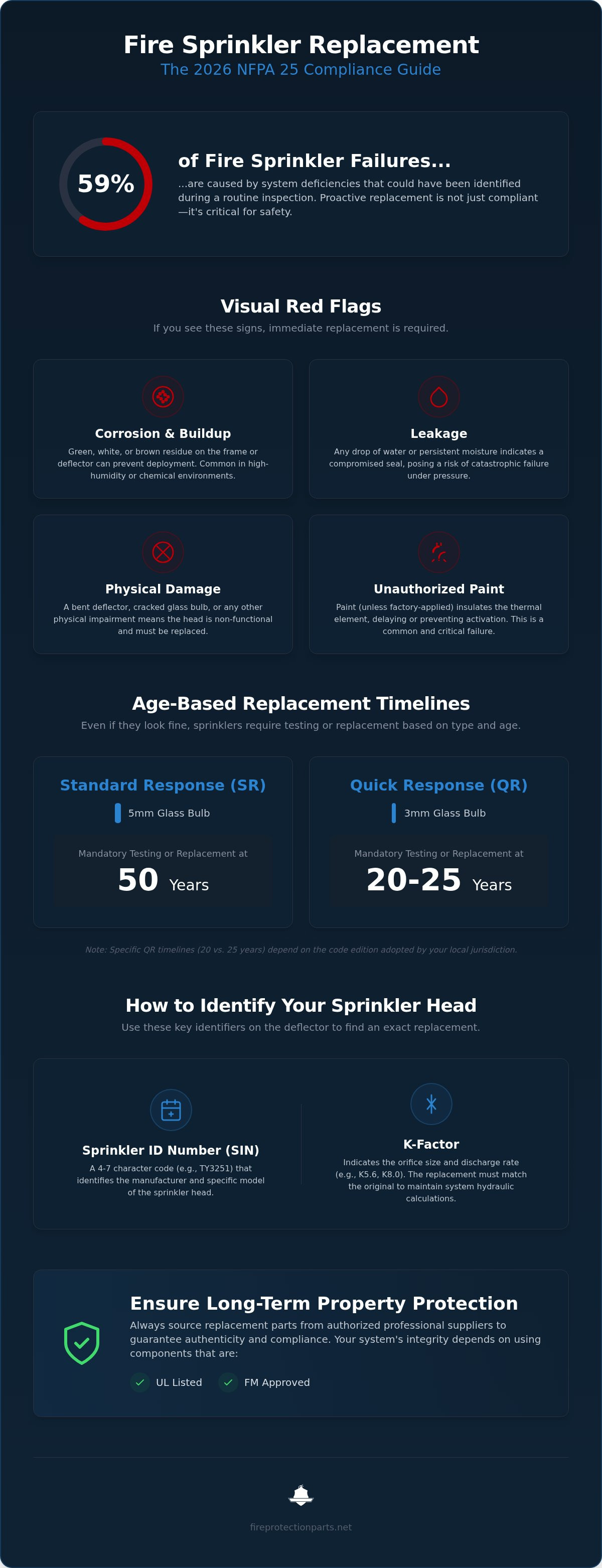
Identifying your hardware type is the first step in scheduling maintenance. The fundamental difference is that Quick Response heads are designed to activate at a lower thermal threshold to enhance life safety in populated areas. You can usually tell them apart by looking at the glass bulb; Standard Response (SR) heads typically have a 5mm bulb, while Quick Response (QR) heads use a thinner 3mm bulb. Because QR heads are more sensitive, they follow more stringent timelines. While standard heads often reach a 50-year milestone before mandatory testing, QR heads require testing or replacement at 20 or 25-year intervals depending on the specific edition of the code adopted by your local jurisdiction.
Visual Red Flags: When to Replace Sprinklers Immediately
Visual inspections are the most direct way to identify a system that is no longer protecting your property. While age-based testing is a scheduled necessity, visual defects trigger an immediate requirement for replacement fire sprinkler heads. If a sprinkler head shows any sign of physical impairment, it's considered non-functional. You don't need a laboratory test to confirm a failure when the evidence is visible to the naked eye.
A single drop of water or a persistent bead of moisture on the deflector is a critical red flag. This indicates a compromised seal, which can lead to a slow leak or a catastrophic failure during a fire. Similarly, physical damage such as a bent deflector or a cracked glass bulb is an automatic fail. These components are precision-engineered; even a slight misalignment can ruin the spray pattern, leaving your building vulnerable. Adhering to OSHA requirements for workplace safety means addressing these visual impairments the moment they're discovered.
Identifying Corrosion and Mineral Buildup
Corrosion often appears as a green, white, or brown powdery residue on the sprinkler's frame or deflector. This isn't just an aesthetic issue. These minerals can "cake" onto the moving parts, physically preventing the deflector from deploying when the thermal element breaks. Environments with high humidity, chemical fumes, or salt air, such as indoor pools and industrial plants, accelerate this degradation. If you see buildup that obscures the metal surface, you need replacement fire sprinkler heads immediately.
The Danger of Field-Painted Sprinklers
Paint is one of the most common reasons for failed fire marshal inspections. Whether it's a "dusting" from a ceiling touch-up or a heavy coat, paint acts as an insulator. It delays the thermal response of the bulb or link, allowing a fire to grow larger than the system was designed to handle. NFPA 25 is clear: you cannot clean, scrape, or solvent-wash a painted head. Any attempt to remove paint can damage the sensitive components. If a head is painted in the field, the only compliant solution is total replacement.
Glass Bulb Integrity and Liquid Levels
The liquid-filled glass bulb is the heart of most modern sprinklers. Inside that bulb, a small air bubble must be present. This bubble allows the liquid to expand slightly under normal temperature fluctuations without breaking the glass. If the bulb is completely full (missing bubble), clear, or has changed color significantly, the seal has likely failed. A bulb without its bubble or proper liquid level won't activate at the correct temperature, rendering the head useless.
When these red flags appear, don't wait for your next annual inspection to take action. You can find reliable fire protection hardware to replace compromised components and maintain your building's safety standards.
Age-Based Timelines: When Does Testing Become Mandatory?
Age is a silent factor in system reliability. While visual defects are obvious, the internal integrity of a thermal element degrades over decades without showing outward signs of wear. NFPA 25 establishes strict chronological milestones to ensure these devices function the moment heat is detected. If your building has reached these age limits, you must decide between laboratory testing of sample heads or a full installation of replacement fire sprinkler heads.
Standard Response sprinklers traditionally follow the 50-year rule. Once they hit this half-century mark, you must test or replace them every 10 years. Quick Response (QR) heads operate on a faster track. Under the 2023 and 2026 codes, these sensitive components generally require testing or replacement at 25-year intervals. The 2026 edition also introduces a specific mandate for dwelling units; sprinklers installed for 50 years or more in hotels, apartments, and assisted living facilities must now be replaced with new fast-response models or undergo thermal sensitivity testing. Dry pendent sprinklers, often used in unheated areas, require action every 20 years. Extra-high temperature heads found in high-heat industrial zones are the most strictly regulated, requiring a mandatory 5-year testing cycle.
Harsh Environment and Corrosive Atmosphere Rules
Corrosive atmospheres accelerate mechanical failure. Commercial kitchens, steam rooms, and coastal facilities subject hardware to grease, moisture, and salt air. In these zones, the standard multi-decade rules don't apply. NFPA 25 mandates testing every 5 years for heads in these environments regardless of their age. Using specialized wax-coated or lead-coated heads can provide better longevity, but it doesn't bypass the inspection frequency. If your facility operates in these conditions, proactive replacement is often more cost-effective than the logistical burden of repeated lab testing.
Residential System Specifics (NFPA 13D)
Residential fire protection under NFPA 13D focuses on maximizing life safety and evacuation time. Modern homes and multi-family units frequently utilize Viking CPVC fire sprinkler pipe for its durability and corrosion resistance. When updating older residential systems, it's vital to ensure that your residential pump systems can still maintain the required pressure for legacy hardware. Older heads may have different hydraulic requirements than modern equivalents. If you're updating a system, sourcing compatible replacement fire sprinkler heads is essential to maintain the hydraulic balance and ensure the pump can deliver the necessary flow during an emergency.
How to Identify Your Sprinkler Head for Accurate Replacement
Selecting the correct hardware is the most technical part of the procurement process. You cannot rely on a visual "best guess" because two heads that look identical might have completely different hydraulic characteristics. Using the wrong replacement fire sprinkler heads can unbalance your system's hydraulic calculations, leading to insufficient water flow during a fire. To ensure a safe and compliant match, you must identify four critical specifications: the Sprinkler Identification Number (SIN), the K-factor, the temperature rating, and the orientation.
Orientation is your starting point. Pendent heads point downward from the ceiling, upright heads stand atop the piping to avoid debris collection, and sidewall heads mount on walls to spray across a room. Once you've confirmed the orientation, check the temperature rating. This is usually stamped on the deflector and color-coded via the liquid in the glass bulb (e.g., red for 155°F or green for 200°F). You must never swap a lower-temperature head for a higher one without an engineer's approval, as this delays activation and allows the fire to spread beyond control.
Decoding the SIN and Manufacturer Marks
The SIN is a 4 to 7-character alphanumeric code located on the sprinkler's deflector. It's the "DNA" of the head. Major manufacturers use specific prefixes: Viking heads often start with "VK," while Tyco heads typically begin with "TY." This code allows you to find the exact technical datasheet, which confirms the K-factor (the orifice size that dictates water discharge) and thread size. If the SIN is unreadable due to heavy corrosion or age, don't guess. Check the spare head box required to be on-site by NFPA 25, or consult the original system as-built drawings to verify the hardware specs.
Matching Escutcheons and Accessories
An escutcheon is not just a decorative trim; it's a functional part of the assembly. The escutcheon must be specifically listed for use with your chosen head. Using generic or "one-size-fits-all" trim is a major compliance risk because an ill-fitting plate can physically block the head from dropping or prevent the thermal element from receiving proper airflow. For a deeper look at these critical parts, consult our sprinkler system components online guide. Ensuring your trim and heads are a matched, listed pair is the only way to satisfy a fire marshal's inspection.
When you're ready to secure your building, you can find the exact replacement fire sprinkler heads and authorized Viking components you need to maintain a code-compliant system.
Sourcing Code-Compliant Replacement Sprinkler Heads
Buying fire protection hardware from unverified third-party marketplaces is a gamble you can't afford to take. These platforms often lack the rigorous quality control and chain of custody required for life-safety components. When you source replacement fire sprinkler heads, you must ensure they carry UL listing and FM approval. These certifications are not just stickers; they represent thousands of hours of fire testing and mechanical stress analysis. Maintaining system integrity requires high-quality fire protection parts that are fully traceable to the manufacturer, ensuring that every head activates exactly as engineered.
NFPA 25 requires every building to maintain a spare head cabinet on-site. This cabinet must contain a representative sample of every type of sprinkler installed in the building, along with the specific wrenches needed for installation. For systems with fewer than 300 sprinklers, you need at least 6 spares. If you have 300 to 1,000 sprinklers, the requirement jumps to 12. Having these spares readily available prevents system downtime after a head is damaged or activated. It's a simple compliance step that eliminates the panic of a "fire watch" while waiting for parts to arrive.
The Importance of Brand Matching
Mixing different manufacturers on the same branch line can create subtle but dangerous hydraulic imbalances. While different brands might share the same K-factor, their friction loss characteristics and spray patterns can vary. For optimal performance and reliability in 2026, it's crucial to select replacement heads from a trusted manufacturer that offers consistent performance across both commercial and residential applications. Sourcing specialized components like dry pendent sprinkler heads requires an authorized partner who understands the technical nuances of these assemblies. Sticking with a single, trusted manufacturer for your replacement needs simplifies future maintenance and ensures your hydraulic calculations remain valid.
Final Checklist Before You Buy
Accuracy in procurement is your final line of defense. Before finalizing your order for replacement fire sprinkler heads, run through this technical checklist to avoid costly returns or inspection failures:
- Verify the SIN: Cross-reference the alphanumeric code on the deflector with the manufacturer's datasheet.
- Check the K-factor: Ensure the orifice size matches your system's design requirements exactly.
- Confirm Thread Size: Most standard heads use 1/2-inch or 3/4-inch NPT threads; they are not interchangeable.
- Secure the Correct Wrench: Every sprinkler model has a specific wrench profile. Using a standard crescent wrench can crush the frame or damage the thermal element, voiding the warranty and the UL listing.
Don't leave your property's safety to chance. Secure your facility with code-compliant fire sprinkler heads from Fire Protection Parts and gain the peace of mind that comes with professional-grade hardware.
Securing Your System for 2026 and Beyond
Maintaining a fire suppression system isn't just about meeting a checklist; it's about ensuring your property remains protected when the unexpected happens. We've explored how visual red flags like corrosion and field painting trigger immediate mandates, and why age-based milestones under the 2026 NFPA 25 standards are non-negotiable for safety. Identifying the correct hardware through SIN and K-factor verification is the only way to ensure your system's hydraulic integrity remains uncompromised.
Don't let technical confusion or unverified marketplaces put your facility at risk. Fire Protection Parts acts as your dependable guide, offering specialized SIN identification support to help you find the exact replacement fire sprinkler heads you need. As an authorized Viking and Tyco retailer, we ship directly to contractors and facility managers, providing the professional-grade components required to pass your next inspection with confidence. It's time to eliminate the doubt and reinforce your building's primary line of defense.
Browse Code-Compliant Replacement Fire Sprinkler Heads
Frequently Asked Questions
How often do fire sprinkler heads need to be replaced by law?
Fire sprinkler heads must be replaced or tested based on specific timelines established by NFPA 25. Standard response heads typically follow a 50-year rule. The 2023 and 2026 editions extended testing intervals for fast-response sprinklers to 25 years and dry sprinklers to 20 years. In harsh environments like commercial kitchens, testing happens every 5 years. If a head fails a performance test or shows visual damage, replacement is required immediately to maintain safety.
Can you clean a fire sprinkler head that has been painted?
No, you cannot clean a painted fire sprinkler head. NFPA 25 specifically prohibits the use of solvents or mechanical scraping to remove paint because these methods can damage the sensitive thermal element or the seal. Even a thin layer of paint acts as an insulator, significantly delaying the head's activation during a fire. If you discover paint on any part of the frame or bulb, you must install replacement fire sprinkler heads to remain compliant.
What is the 50-year rule for fire sprinklers?
The 50-year rule mandates that standard response sprinklers must be replaced or laboratory-tested once they have been in service for five decades. If the sample heads pass the test, the system is cleared for another 10 years before the next round of testing is required. The 2026 edition of NFPA 25 has expanded this rule to include a mandatory replacement or testing for fast-response sprinklers in dwelling units that have reached the 50-year milestone.
Do residential fire sprinkler heads have different replacement rules than commercial ones?
Residential systems under NFPA 13D focus primarily on life safety and allowing occupants time to escape. While commercial systems follow the strict ITM schedules of NFPA 25, residential heads still require regular visual inspections for leaks or damage. Modern residential systems often use Viking Plastics CPVC Pipe for Fire Protection, which resists corrosion better than traditional steel. If residential heads are painted or damaged, they must be replaced with identical models to maintain the system's specific hydraulic design.
How can I tell the age of my fire sprinkler heads?
You can determine the age of your hardware by examining the deflector. Most manufacturers stamp the year of manufacture directly onto the metal plate. If the stamp is unreadable, you can look for the Sprinkler Identification Number (SIN) and cross-reference it with the manufacturer's technical datasheets. For older systems where the heads are heavily corroded, you should consult the original installation records or as-built drawings to verify when the system was first commissioned.
Is it possible to replace just one sprinkler head or do I need to replace the whole system?
You can replace individual heads without upgrading the entire system, provided the new hardware matches the original specifications. When sourcing replacement fire sprinkler heads, you must ensure the SIN, K-factor, and temperature rating are identical to the existing units. Replacing a single damaged or corroded head is a routine maintenance task. However, if a large percentage of heads fail laboratory testing, it's often more cost-effective to replace all heads on that branch line simultaneously.
Why are some fire sprinkler heads green or corroded?
Green or white powdery residue indicates corrosion, often caused by high humidity or exposure to salt air and chemicals. This oxidation can seize the mechanical parts of the head, preventing the deflector from deploying during a fire. In environments like indoor pools or industrial plants, this buildup happens much faster. If the corrosion obscures the metal surface or the thermal element, the head is considered impaired and requires immediate replacement to ensure reliable performance.
What happens if I fail a fire sprinkler inspection?
Failing an inspection typically results in a notice of violation from your local fire marshal. You'll be given a specific timeframe to correct the deficiencies. If you don't address the issues, you could face heavy fines, increased insurance premiums, or even a mandatory building closure. Proactively identifying the need for replacement fire sprinkler heads before an official visit helps you avoid these professional risks and ensures your facility remains a safe environment for all occupants.

