

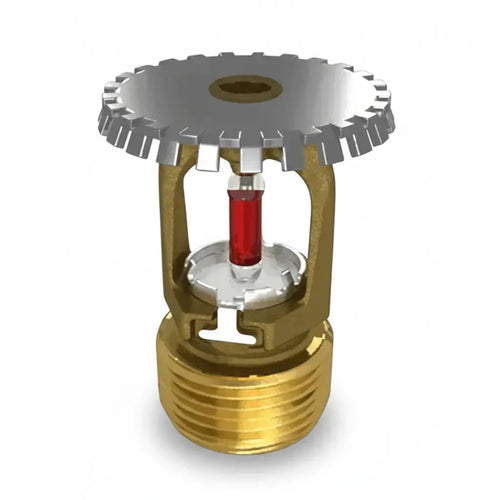


Commercial Fire Sprinkler System Parts: The 2026 Professional Sourcing Guide
In 2026, a single overlooked valve inspection or an outdated spare parts cabinet inventory list can result in immediate non-compliance and staggering operational risks. The latest NFPA 25 updates have raised the stakes, requiring quarterly testing for electrical solenoid devices and annual inspections for large valves. You understand that keeping a high-occupancy facility safe isn't just about the initial install. It's about the relentless pursuit of hardware integrity. Sourcing the exact commercial fire sprinkler system parts you need shouldn't feel like a gamble against the clock or a fight with complex code requirements.
You deserve a procurement process that's as reliable as the systems you maintain. This guide empowers you to master the complexities of modern fire suppression by identifying, sourcing, and maintaining the critical, code-compliant components your facility requires. We'll examine the specific hardware changes mandated for 2026, highlight the premium brands that ensure long-term reliability, and provide a roadmap to streamline procurement for large-scale operations. From backflow preventers to specialized air compressors, it's time to eliminate doubt and secure your infrastructure with professional-grade precision.
Key Takeaways
- Understand the multi-stage suppression network to accurately identify whether a system failure lies within initiation, delivery, or control components.
- Learn how to use the Sprinkler Identification Number (SIN) to source the exact commercial fire sprinkler system parts required for your specific facility layout.
- Discover why industry-leading components and high-grade CPVC materials are preferred for long-term reliability and hydraulic performance.
- Recognize the critical role of ASC Seismic Bracing and backflow preventers in maintaining structural integrity and protecting municipal water supplies.
- Streamline your 2026 procurement strategy by verifying UL/FM listings and brand certifications to ensure every replacement part meets updated NFPA standards.
The Anatomy of Commercial Fire Sprinkler System Parts
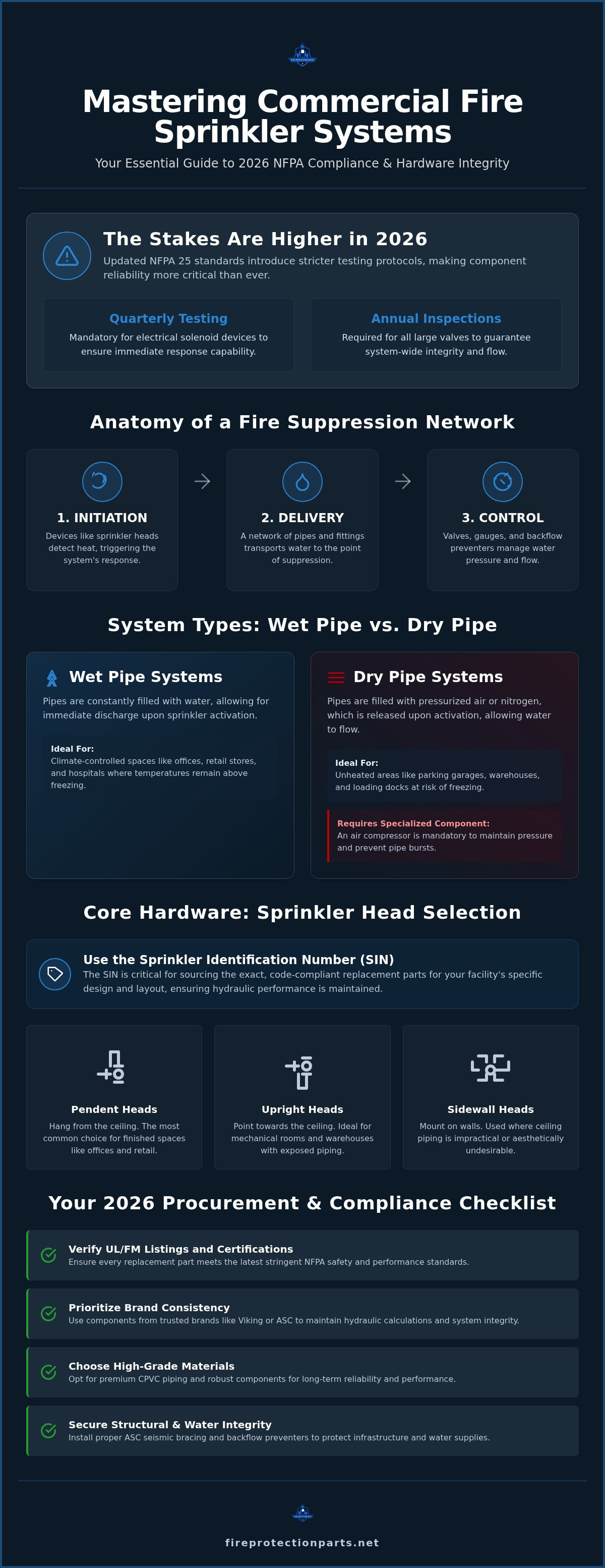
A commercial fire sprinkler system functions as a high-performance, multi-stage suppression network rather than a collection of independent pipes and valves. Understanding the Anatomy of a fire sprinkler system is the first step toward maintaining a code-compliant facility. These systems rely on three primary categories of commercial fire sprinkler system parts: initiation devices that detect heat, delivery components that transport water, and control hardware that manages pressure and flow.
In 2026, the industry has shifted toward smart, monitored components. This includes IoT-enabled sensors and solenoid devices that provide real-time status updates to facility managers, ensuring the system is ready before an emergency occurs. Brand consistency is vital for maintaining the integrity of these networks. When you mix manufacturers, you risk compromising the precision of hydraulic flow and pressure calculations. Using verified components, such as Viking Plastics CPVC or PTR Electric Deluge VXD systems, ensures every part works in harmony to meet the building's fire load requirements.
Wet Pipe vs. Dry Pipe Component Requirements
Hardware needs vary significantly based on the environment. Wet pipe systems are standard for climate-controlled spaces where water stays in the pipes constantly. In unheated warehouses or parking garages, dry pipe configurations are mandatory to prevent freezing. These systems require specialized air compressors to maintain internal pressure and prevent pipe bursts. The dry pipe valve acts as the primary gatekeeper; it holds back water with air pressure until a sprinkler head activates to prevent accidental discharge in freezing conditions. Choosing the correct commercial fire sprinkler system parts for your specific climate is a non-negotiable safety requirement.
The Role of Initiation Devices
Sprinkler heads are the primary initiation devices, serving as both the heat detector and the extinguisher. In commercial settings, the speed of activation is critical to life safety and property protection. You must select heads based on specific response times and temperature ratings tailored to the room's occupancy and potential fire hazards. It's essential to have a deep understanding of fire sprinkler head temperature ratings to ensure your system doesn't trigger prematurely or fail to activate during a genuine fire event. Using the wrong hardware at this stage can lead to catastrophic system failure or unnecessary water damage from accidental activation.
Core Delivery Hardware: Sprinkler Heads and Piping
The delivery stage of a fire suppression network is only as effective as its weakest link. For decades, Viking fire sprinkler heads have remained the industry standard for reliability because of their precision engineering and consistent thermal response. Selecting the right commercial fire sprinkler system parts involves more than just meeting a budget; it's about adherence to NFPA 13 installation standards to ensure water reaches the fire exactly when and where it is needed. Whether you are installing a new system or replacing aged components, the hardware you choose dictates the long-term performance of the entire suppression network.
Selecting the Right Sprinkler Head for Your Facility
Head selection depends on ceiling height, structural obstructions, and the presence of hazardous materials. Different environments demand specific spray patterns to control or extinguish a fire effectively.
- Pendent Heads: These hang from the ceiling and are the most common choice for finished office spaces and retail environments.
- Upright Heads: These point toward the ceiling and are ideal for mechanical rooms, warehouses, or areas with exposed piping where the spray must clear obstructions.
- Sidewall Heads: These are installed on walls where ceiling piping is impractical or aesthetically undesirable.
In specialized environments like cold storage or walk-in freezers, dry pendent sprinklers are essential. These specialized commercial fire sprinkler system parts feature a dry barrel that prevents water from entering the freezing zone until the head activates. For finished ceilings, code-compliant escutcheons are required to maintain the fire rating of the ceiling assembly while providing a professional, finished look.
Viking Plastics CPVC: The Future of Fire Piping
The evolution of piping hardware has seen a significant shift toward Viking CPVC fire sprinkler pipe. Unlike traditional black steel, CPVC offers superior corrosion resistance. This is critical in high-humidity commercial environments where metal pipes often suffer from internal scaling, microbiologically influenced corrosion (MIC), or pinhole leaks.
The hydraulic benefits of CPVC are equally impressive. It provides a smoother internal surface than metal, which significantly reduces friction loss. This allows for better water pressure at the sprinkler head and often permits the use of smaller pipe sizes during the design phase. For contractors, the 'Easy-Install' advantage translates to lower labor costs and faster project timelines. Solvent cement welding replaces heavy threading machines and the need for hot work permits, making retrofits much more manageable. The durability of CPVC fittings ensures a leak-free system that requires less maintenance over its lifecycle. If you are planning a system upgrade, you can browse our full inventory of delivery hardware to find the right fit for your facility.
Control and Monitoring: Valves, Gauges, and Deluge Systems
Control components act as the brain and muscle of the suppression network. While earlier sections focused on water delivery, the control stage ensures that water is managed safely and effectively. OS&Y (Outside Screw and Yoke) valves are essential for indoor visibility, showing the valve position at a glance through the stem's height. In contrast, Post Indicator Valves (PIVs) provide outdoor control, allowing first responders to identify system status from a distance. Adhering to OSHA sprinkler system regulations ensures these valves remain unobstructed and fully operational. Sourcing high-quality commercial fire sprinkler system parts like these is critical for maintaining long-term workplace safety.
The PTR Electric Deluge VXD Solution
High-hazard zones like chemical storage or aircraft hangars require immediate, large-volume water delivery. The PTR Electric Deluge VXD offers a significant upgrade over traditional hydraulic deluge systems. By utilizing electric actuation, the VXD eliminates the lag time associated with hydraulic lines, providing a faster response to fire signals. This system integrates seamlessly with modern fire alarm control panels, allowing for precise monitoring and remote triggering. Under the 2026 NFPA 25 standards, these electrical solenoid devices now require quarterly testing. This frequency ensures that the electric actuation remains reliable, eliminating the doubt often associated with older, purely mechanical setups.
Backflow Preventers and Control Valves
Protecting the municipal water supply is a legal and ethical requirement. Reduced pressure zone (RPZ) backflow preventers are the industry standard for preventing contaminated sprinkler water from flowing back into the public grid. These devices require regular testing to ensure they don't impede flow during an emergency. Similarly, OS&Y valves need routine maintenance to ensure they don't seize over years of inactivity. You can find a comprehensive selection of these commercial fire sprinkler system parts and more in our guide to sprinkler system components online.
Accurate pressure gauges serve as your first line of defense in system monitoring. A functional gauge provides an immediate visual confirmation of system health. If a gauge shows a pressure drop, it's an immediate signal that your system's integrity is compromised, whether through a leak or a pump failure. In 2026, many facilities are transitioning to digital gauges that provide remote alerts, further streamlining the inspection process and reducing potential downtime. Investing in high-quality gauges prevents the common headache of false alarms or, worse, undetected pressure loss.
Specialized Support: Seismic Bracing and Air Supply
While heads and valves are the visible components of a system, specialized support hardware ensures these commercial fire sprinkler system parts remain functional during extreme environmental events. In many commercial jurisdictions, seismic bracing is no longer an optional upgrade; it's a code-mandated requirement for life safety. These components protect the system's structural integrity during lateral movement, preventing pipe ruptures that could render the suppression network useless when it's needed most. Professional sourcing for these parts requires a deep understanding of both local building codes and the physics of fluid-filled systems.
Compliance in High-Risk Zones with ASC Bracing
Understanding seismic bracing for sprinkler systems is essential for projects in earthquake-prone regions. The primary goal is to limit the differential movement between the piping and the building structure. ASC Seismic Bracing utilizes a combination of lateral and longitudinal braces to secure the network. Sway bracing attaches directly to the pipe to stabilize it, while structural attachments secure the brace to the building's beams or deck. ASC Engineered Solutions provide the necessary rigidity for NFPA 13 compliance. Without this specialized hardware, the momentum of water-filled pipes during a tremor can easily shear off hangers and fittings, leading to massive water damage and system failure.
Maintaining Dry Pipe Systems
For systems protecting unheated spaces, air supply and temperature management are the priorities. Using dedicated air compressors for dry sprinkler systems is superior to relying on general-purpose shop air. Fire-rated compressors are designed for the specific duty cycles required to maintain system pressure without overheating or failing. These systems also rely on air maintenance devices to regulate pressure and prevent "nuisance" trips. A nuisance trip occurs when minor pressure fluctuations trigger the dry pipe valve unnecessarily, flooding the system and requiring a costly reset.
In wet systems exposed to potential freezing, UL-listed anti-freeze solutions provide a critical layer of protection. These solutions must be chemically compatible with your piping, especially when using CPVC, to prevent environmental stress cracking. In 2026, codes strictly require pre-mixed anti-freeze to ensure the correct concentration is maintained throughout the system. Ensuring your system has the correct commercial fire sprinkler system parts for environmental support is a matter of professional due diligence. You can order specialized seismic and air supply hardware today to ensure your facility remains fully compliant with the latest safety standards.
Sourcing Strategy: Buying Commercial Parts Online
Procuring commercial fire sprinkler system parts shouldn't involve guesswork. Precision sourcing begins with identifying the Sprinkler Identification Number (SIN). This five-to-six-character alphanumeric code, typically stamped on the deflector, is the only way to guarantee a match for K-factor, orifice size, and thermal sensitivity. Once identified, you must verify that all replacement hardware carries UL or FM listings. These certifications are the legal and technical baseline for insurance compliance and operational safety. Using non-listed components can void your coverage and jeopardize the lives of building occupants.
Don't ignore the riser room during your procurement cycle. Audit your pressure gauges and control valve signage for wear or damage. If a gauge is more than five years old or shows signs of calibration drift, it's time for a replacement. Clear, legible signage is equally critical; it allows first responders and inspectors to identify system zones and control points quickly. Partnering with a specialized e-commerce leader like Fire Protection Parts ensures you have access to verified hardware that meets these rigorous standards.
The Contractor's Checklist for ITM Compliance
Inspection, Testing, and Maintenance (ITM) compliance hinges on the immediate availability of backup hardware. Your spare head cabinet must be fully stocked according to the total number of sprinklers in your facility. The 2026 NFPA 25 update now mandates that these cabinets include a comprehensive inventory list. You must also ensure the cabinet contains the specific wrenches designed for each head type. Using a generic wrench can damage the sprinkler frame, leading to leaks or delayed activation. Documenting every new part installation is also vital. Keep detailed records of SINs and installation dates to streamline your next fire marshal inspection and prove your commitment to code adherence.
Why Professional Sourcing Matters
The dangers of using generic 'equivalent' parts cannot be overstated. A minor deviation in a seal material or a spring's tension can lead to catastrophic failure under system pressure. Sourcing fire protection parts online through a specialized partner reduces lead times for emergency repairs. You get direct access to brand-verified hardware like Viking Plastics CPVC or PTR Electric Deluge systems without the delay of traditional procurement channels. This efficiency minimizes system downtime and ensures your facility remains protected 24/7. Browse our complete inventory of commercial fire protection parts.
Securing Your Facility for the 2026 Standards
Maintaining a high-performance suppression network requires more than just meeting the minimum requirements. It demands a commitment to hardware integrity and a deep understanding of how each component interacts within the system. By prioritizing brand consistency and verifying UL/FM listings, you eliminate the operational risks that lead to failed inspections and system downtime. Whether you are upgrading to Viking Plastics CPVC for its hydraulic benefits or integrating PTR Electric Deluge systems for rapid response, every choice you make strengthens your facility’s safety profile.
Navigating the 2026 NFPA updates is simpler when you have a dependable partner for your commercial fire sprinkler system parts. You don't have to wait for an emergency to secure your infrastructure. As an authorized Viking and ASC distributor, we provide an expert-vetted inventory designed for long-term reliability. We focus on fast shipping for ITM essentials so your system remains fully operational without unnecessary delays.
Take control of your facility's safety today. Shop Code-Compliant Commercial Fire Sprinkler Parts Now and gain the peace of mind that comes from professional-grade protection. You’ve built a strong foundation; let’s ensure it stays that way.
Frequently Asked Questions
What are the most common commercial fire sprinkler system parts that fail?
The most common components that fail in commercial systems include pressure gauges, sprinkler heads, and control valve seals. Gauges often lose calibration after five years, providing inaccurate pressure readings. Sprinkler heads frequently require replacement due to corrosion or accidental painting, which interferes with the thermal response. Regular inspection helps identify these commercial fire sprinkler system parts before they compromise your facility's safety and lead to expensive emergency repairs.
How do I identify a replacement fire sprinkler head in an older building?
You identify a replacement head by locating the Sprinkler Identification Number (SIN) stamped on the deflector. This five-to-six-character alphanumeric code defines the manufacturer, orifice size, and response type. In older buildings where the SIN is illegible, you must match the K-factor and thread size exactly to maintain the original hydraulic calculations. Never guess or use a similar-looking head; incorrect hardware will disrupt water distribution and fail fire marshal inspections.
Is CPVC piping approved for all commercial fire protection applications?
Viking Plastics CPVC is approved for many commercial applications, but it isn't universal. It's primarily used in light-hazard occupancies or specific ordinary-hazard rooms. You must verify that the building's hazard classification and ceiling type permit CPVC usage under NFPA 13. While it offers superior corrosion resistance compared to metal, it shouldn't be used in high-hazard areas or where it's exposed to direct mechanical damage without specific listed protection.
Why do I need a specialized air compressor for my dry pipe system?
Specialized air compressors for dry pipe systems are necessary because they are designed for the specific duty cycles of fire protection. Standard shop compressors often lack the reliability and moisture-removal capabilities required to prevent internal pipe corrosion. A fire-rated compressor ensures the system maintains constant pressure to hold back the dry pipe valve. This prevents nuisance trips and ensures the suppression network remains ready for immediate activation in freezing environments.
How often should commercial fire sprinkler heads be replaced?
Standard response sprinkler heads generally require testing or replacement after 50 years, while fast-response heads should be evaluated every 20 to 25 years. However, any head showing signs of corrosion, leakage, or physical damage must be replaced immediately. In harsh environments like chemical storage or coastal areas, replacement cycles are much shorter. Always refer to your latest NFPA 25 inspection report to determine if your commercial fire sprinkler system parts require updating.
What is the difference between a deluge valve and a standard alarm valve?
A deluge valve, such as the PTR Electric Deluge VXD, stays closed until a separate detection system triggers it to flood all open sprinkler heads simultaneously. A standard alarm valve is used in wet pipe systems where water is already in the pipes; it only flows when an individual closed head melts. Deluge valves are for high-hazard zones where rapid fire spread is expected, while alarm valves handle localized suppression in standard commercial spaces.
What seismic bracing components are required for NFPA 13 compliance?
NFPA 13 compliance requires a combination of lateral and longitudinal braces, such as ASC Seismic Bracing, along with structural attachments. These components must be specifically engineered to handle the weight of water-filled pipes during a seismic event. You'll need sway braces for every main and branch line over a certain size and four-way bracing for risers. These parts ensure the piping moves with the building rather than snapping under lateral stress during tremors.
Can I mix different brands of sprinkler heads and valves in one system?
You should not mix different brands of sprinkler heads and valves within the same system. While it might seem convenient, mixing manufacturers can compromise hydraulic flow calculations and listing requirements. Most systems are listed and tested as a complete assembly. Using a different brand of head for a repair could change the discharge pattern or pressure requirements. Stick to one manufacturer to ensure consistent performance and simplified maintenance for your commercial suppression network.

