



Fire Sprinkler System Deficiency Parts: A 2026 Sourcing Guide for NFPA 25 Compliance
The 2026 edition of NFPA 25 has introduced stricter mandates for components like external reset valves and 50-year-old residential heads, making it harder than ever to pass a follow-up inspection with "close enough" hardware. You've likely received an inspection report filled with technical jargon and a ticking clock to fix identified issues. It's stressful to decipher exactly which fire sprinkler system deficiency parts are required to satisfy the Fire Marshal and ensure your facility remains protected. You need parts that fit perfectly and meet the latest safety standards without the risk of a second failure.
This guide eliminates that uncertainty by identifying the precise, code-compliant components needed to resolve common deficiencies and restore your system to full operational status. We'll provide the clarity you need to navigate the 2026 requirements, from sourcing specific manufacturer-specified wrenches to replacing missing escutcheons with listed components. We will break down the sourcing requirements for everything from residential pump components to the latest corrosion mitigation hardware mandated by the current standards, ensuring you can complete repairs quickly and with total confidence.
Key Takeaways
- Distinguish between non-critical deficiencies and system impairments to prioritize your repair schedule and maintain building safety.
- Identify the exact fire sprinkler system deficiency parts required to resolve common citations for painted heads, missing escutcheons, or leaking valves.
- Master the sourcing requirements for critical hardware, including air compressors for dry systems and listed control valve components.
- Reduce future maintenance costs and inspection failures by installing preventative solutions like sprinkler head guards and code-compliant seismic bracing.
- Secure full NFPA 25 compliance by selecting verified, brand-name components from industry leaders such as Viking and ASC Engineered Solutions.
Understanding Fire Sprinkler System Deficiencies vs. Impairments
Safety is not a suggestion; it's a measurable standard. When an inspector hands you a report, the terminology they use determines your legal responsibility and the safety of your occupants. NFPA 25, the standard for the inspection, testing, and maintenance of any fire sprinkler system, categorizes issues into two distinct buckets: deficiencies and impairments. Understanding this distinction is the first step in selecting the correct fire sprinkler system deficiency parts to keep your building compliant and your insurance valid.
A deficiency is a condition where a system component doesn't meet the standard but hasn't yet reached the point of total failure. It impacts performance, but it doesn't mean the system is "down." For example, a painted sprinkler head or a missing escutcheon is a deficiency. These are non-critical until they aren't. In contrast, an impairment is a critical failure. If a main valve is stuck closed or a fire pump won't start, the system is impaired. Impairments require an immediate fire watch and notification to the Authority Having Jurisdiction (AHJ). Deficiencies, while urgent, allow for a scheduled repair timeline, provided you act before the AHJ’s follow-up deadline.
The AHJ plays a pivotal role in this process. They are the local fire marshals or building officials who enforce the 2026 NFPA 25 requirements. If they see a deficiency on a report that hasn't been corrected, they have the power to issue fines or even revoke occupancy permits. They don't want excuses; they want to see that you've sourced the right fire sprinkler system deficiency parts to restore the system's integrity.
The NFPA 25 Hierarchy of System Health
- Normal Condition: Your system is fully operational. All components are listed, tested, and within their service life.
- Deficiency: A component is damaged, loaded with dust, or out of its design limits. The system will likely function, but its effectiveness is compromised.
- Impairment: A major part of the system is shut down or inoperable. This is a life-safety emergency that requires immediate remediation.
Why Rapid Remediation Prevents Liability
Ignoring a "non-critical" citation is a dangerous gamble. Over time, minor issues cascade into expensive system impairments. A small leak in a control valve is a deficiency today, but if that valve seizes, it becomes an impairment tomorrow. From a legal standpoint, a documented deficiency that goes unaddressed is evidence of negligence. If a fire occurs and the system underperforms due to a known, uncorrected deficiency, your liability increases exponentially. Sourcing certified fire protection parts ensures your facility meets 2026 compliance standards by replacing compromised components with listed hardware that satisfies the most recent NFPA 25 updates.
Sourcing Parts for Non-Critical Deficiencies
Non-critical deficiencies might seem like minor housekeeping issues, but they represent the most common reasons for inspection failure. While these problems don't immediately stop water flow, they compromise the system's ability to respond accurately during a fire. Sourcing the correct fire sprinkler system deficiency parts requires a focus on technical specifications rather than aesthetic appeal. For example, pressure gauges must be replaced or recalibrated every five years per 2026 standards. If your gauges are outdated, replacing them is a simple, cost-effective way to maintain NFPA 25 Compliance without the stress of a major system overhaul.
Accuracy is the priority when selecting replacement components. When a head is cited for replacement, you must match the K-factor and orientation exactly. A common mistake is installing a pendent head where an upright is required; this error disrupts the spray pattern and leaves areas of your building unprotected. Proper procurement means verifying these details against your original system design before placing an order. It's about getting the right part the first time to minimize system downtime.
Remediating "Loaded" or Painted Sprinkler Heads
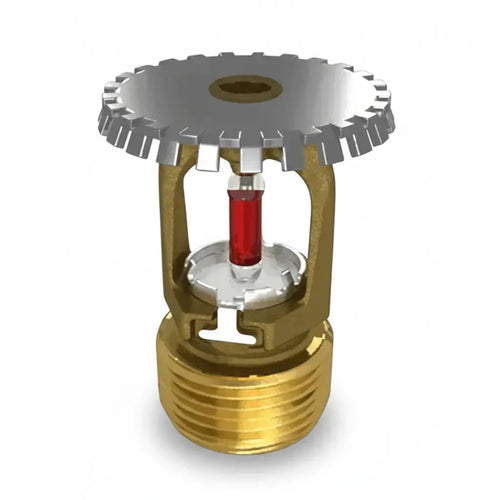
Finding paint or heavy dust on a sprinkler head is an automatic citation. NFPA standards strictly prohibit cleaning or field-painting these components because any residue can delay the thermal response of the bulb or link. You must replace the head entirely. When sourcing replacements, you can't just pick a similar-looking model. You need to verify the fire sprinkler head temperature ratings to ensure the new part mirrors the original design. Use a fire sprinkler head identification guide to locate the Sprinkler Identification Number (SIN) stamped on the deflector. This alphanumeric code is the only way to guarantee you're buying the exact SKU required for your specific hazard area.
Trim and Cosmetic Deficiencies
Escutcheons and cover plates are often dismissed as "cosmetic," but they are vital for maintaining the fire rating of a ceiling or wall. If an escutcheon is missing, rusted, or covered in paint, it creates a gap that allows heat to bypass the sprinkler head and collect in the ceiling cavity. This "skipping" effect can significantly delay activation. The 2026 edition of NFPA 25 clarifies that missing or damaged trim must be replaced with listed components from the original assembly. You cannot swap a Viking cover plate for a generic alternative; the tolerances are too tight. Ensuring you have the right matching trim keeps your system responsive and compliant. If you're unsure which trim fits your existing heads, professional guidance can help you avoid buying incompatible hardware. You can find a full selection of compliant fire sprinkler system deficiency parts to resolve your report today.
Critical Deficiencies: Hardware for High-Priority Repairs
Critical deficiencies represent a direct threat to life safety. While non-critical issues like dusty heads can wait for a scheduled maintenance window, critical repairs require a sense of urgency to prevent system impairments. Sourcing the correct fire sprinkler system deficiency parts for these high-priority repairs is about restoring the functional core of the system. This includes the valves that control water flow, the compressors that maintain air pressure, and the pumps that ensure adequate pressure in residential settings. You can't afford to compromise on these items; they must function perfectly when the system is called into action.
Remediating these issues often involves heavy hardware that must meet strict listing requirements. For example, backflow preventers are essential for protecting the municipal water supply, but they are prone to internal wear. Sourcing repair kits for reduced pressure zone (RPZ) valves is a standard part of resolving annual inspection citations. Using the right fire sprinkler system deficiency parts ensures that your backflow preventer passes its re-test and maintains the necessary pressure levels throughout the riser.
Control Valve and Riser Room Remediation
The riser room is the brain of your fire protection system. If a control valve is leaking or fails to operate smoothly, it's a major safety risk. Many facilities face citations for damaged handwheels or corroded stems on os&y valves. These mechanical failures can prevent a valve from fully opening or closing during an emergency. Replacing these components requires listed hardware that matches the specific valve manufacturer to ensure a watertight seal and long-term durability.
Electronic monitoring is equally important for compliance. A common deficiency is a failing tamper switch that no longer sends a signal to the fire alarm panel. Without this monitoring, a valve could be closed without anyone's knowledge, leaving the building unprotected. When you need to resolve these riser room issues, sourcing sprinkler system components online provides a streamlined way to find listed tamper switches and valve repair kits that meet 2026 standards.
Dry Pipe and Pre-Action System Parts
Dry systems rely on air pressure to keep water at bay until a head activates. A failing air compressor for dry sprinkler systems is a critical deficiency because it leads to nuisance trips and potential pipe freezing. If your compressor is cycling too frequently or failing to reach the required pressure, it's time for a replacement or a new automatic air maintenance device to regulate the flow.
Repairing these systems often requires more than just a new compressor. Accelerators and deluge valves must be in peak condition to ensure water reaches the fire within the time limits mandated by NFPA 13. Sourcing high-quality deluge valve rebuild kits or replacement pressure switches ensures your dry system remains operational even in the harshest conditions. For residential owners, ensuring that fire pump systems meet NFPA 13D pressure requirements is the final step in a fully compliant repair strategy.

Preventative Hardware: Avoiding Future Deficiency Citations
Correcting a deficiency is a necessity. Preventing one is a strategy. High-traffic areas like gymnasiums or warehouses are magnets for mechanical damage citations. If an inspector sees a bent deflector, it's an automatic failure. By proactively installing head guards, you eliminate the risk of accidental impact. This foresight reduces the need for frequent fire sprinkler system deficiency parts procurement and keeps your system ready for action.
Compliance also extends to what you keep on-site. NFPA 25 requires a spare head cabinet containing a minimum number of replacement sprinklers and at least one wrench for every head type installed. For systems with up to 300 sprinklers, you need at least six spares. If you have over 1,000, you need 24. Missing these spares is a common, easily avoidable citation that signals a lack of readiness to the AHJ. Maintaining this inventory is the simplest way to ensure you can perform immediate repairs without waiting for a shipment.
Mechanical Protection and Support
Proper support is the backbone of system integrity. Using all thread rod for pipe hanging ensures that your system can withstand its own weight and the hydraulic forces of activation. Heavy-duty head guards provide an extra layer of defense in zones where equipment or personnel might strike a head. Correcting "improper support" citations now with code-compliant hangers prevents pipe sagging and joint leaks that lead to costly impairments later. These mechanical upgrades are high-impact investments in system longevity.
Environmental and Thermal Protection
Temperature fluctuations pose a significant threat to wet systems in unheated areas. To avoid "improper solution" citations, you must use the correct anti-freeze for fire sprinkler systems. The 2026 standards emphasize the use of UL-listed and FM-approved premixed solutions to ensure fire suppression isn't hindered by flammable or overly viscous mixtures. In regions prone to earth movement, installing seismic bracing for sprinkler systems is essential. Seismic restraints prevent system-wide deficiencies during tremors by limiting lateral and longitudinal movement that could otherwise shear pipe connections. You can browse our full inventory of preventative fire sprinkler system deficiency parts to stay ahead of your next inspection.
Professional Sourcing: Why Fire Protection Parts is the Compliance Partner
Sourcing the right fire sprinkler system deficiency parts is about more than just checking off a list. It's about ensuring every component carries the necessary UL listings and FM approvals required for life-safety applications. Generic hardware often lacks the precision engineering required to integrate with existing systems. If a part isn't listed for your specific assembly, it doesn't matter if it physically fits; it's non-compliant. We act as a bridge between your inspection report and a fully restored system, providing brand-name reliability from trusted manufacturers like Viking, PTR, and ASC Engineered Solutions.
When an AHJ sets a re-inspection date, time becomes your biggest enemy. You can't afford to wait weeks for a specialty valve or a specific sprinkler head. Our streamlined procurement process and expert support help you identify even the most obscure or legacy fire sprinkler system deficiency parts that generic retailers simply don't stock. We prioritize fast shipping because we know that every day a deficiency remains uncorrected is another day of unnecessary liability. Safety isn't a gamble, and compliance shouldn't be a struggle.
The Advantage of Specialized Fire Protection Sourcing
Procuring fire protection parts online simplifies the complex logistics for contractors and facility managers alike. Every item in our inventory is vetted to ensure it meets the current 2026 NFPA standards, eliminating the guesswork from your repair plan. For large-scale facility remediation, we offer bulk ordering options that allow you to address multiple citations across several buildings simultaneously. This methodical approach ensures consistency across your entire fire protection infrastructure, making future inspections much smoother.
Final Checklist for Deficiency Resolution
Before finalizing your repair, verify that your new components are compatible with your existing piping. For example, if you are working with Viking CPVC fire sprinkler pipe, you must use compatible cement and fittings to avoid chemical stress cracking. Once the physical repair is complete, document everything. Keep receipts and specification sheets for the AHJ and your insurance provider to prove the system has been restored with listed parts. Don't forget to order the correct installation tools, such as manufacturer-specific wrenches, to ensure the job is done to professional standards. A complete repair is a compliant repair.
Securing Your Facility for 2026 and Beyond
Resolving an inspection report isn't just about clearing a list; it's about verifying the integrity of your life-safety infrastructure. We've explored the critical differences between system impairments and deficiencies, emphasizing that even non-critical issues like painted heads or missing escutcheons require precise, listed replacements. By sourcing the correct fire sprinkler system deficiency parts and implementing preventative measures like head guards or seismic bracing, you protect your building from both fire risks and regulatory fines. These proactive steps ensure your system remains ready for the unexpected.
Success in fire protection relies on accuracy and speed. You need components that meet the rigorous 2026 NFPA 25 standards without the delay of trial-and-error procurement. We provide code-compliant parts from trusted brands like Viking and ASC, backed by expert technical support to help you identify even the most obscure legacy components. Our fast shipping ensures you meet your re-inspection deadlines with total confidence. Don't let a minor citation turn into a major liability.
Browse our full catalog of code-compliant fire sprinkler deficiency parts today to restore your system's compliance. Your facility's safety is a priority that deserves the highest standard of hardware and professional support.
Frequently Asked Questions
What is the difference between a fire sprinkler deficiency and an impairment?
An impairment is a critical failure that renders the system inoperable, while a deficiency is a non-compliant condition that impacts performance but doesn't stop the system from functioning. Impairments require an immediate fire watch and notification to the fire department. Deficiencies are serious but allow for a scheduled repair timeline before a follow-up inspection.
How long do I have to fix a fire sprinkler system deficiency?
You must typically correct a deficiency within 30 to 90 days, though the exact timeline is determined by your local Authority Having Jurisdiction (AHJ). Failing to source the necessary fire sprinkler system deficiency parts before your re-inspection date can lead to fines or the loss of your occupancy permit. Always prioritize repairs based on the urgency noted in your inspection report.
Can I clean a painted fire sprinkler head instead of replacing it?
No, you cannot clean a painted sprinkler head; it must be replaced entirely. NFPA 25 strictly prohibits cleaning, sanding, or field-painting heads because these actions can damage the sensitive components or delay thermal activation. Even a thin layer of paint acts as an insulator that prevents the bulb from breaking at the correct temperature during a fire.
Are fire sprinkler gauges required to be replaced every 5 years?
Yes, pressure gauges must be replaced or recalibrated every five years to maintain compliance. Most facility managers choose to replace them because the cost of a new, listed gauge is lower than professional recalibration services. New gauges ensure that the pressure readings used during your annual system testing are accurate and reliable.
What parts are required in a spare sprinkler head cabinet?
A spare head cabinet must contain at least six replacement sprinklers and one manufacturer-specified wrench for every head type installed in the building. The required number of spare heads increases if your system has more than 300 sprinklers. Keeping these parts on-site ensures that your system can be restored to service immediately after an activation or repair.
Can I use any brand of escutcheon for my fire sprinkler heads?
No, you must use an escutcheon that is specifically listed for use with your particular sprinkler head model. Mismatched or generic brands often have different tolerances that can create gaps in the ceiling. These gaps allow heat to bypass the sprinkler head, which significantly delays activation and compromises the fire rating of the room.
How do I identify the correct replacement fire sprinkler head?
You identify the correct replacement by locating the Sprinkler Identification Number (SIN) stamped on the deflector. This alphanumeric code, such as VK302 or TY3251, tells you the exact K-factor, response type, and orientation of the head. Matching this number ensures you buy the correct fire sprinkler system deficiency parts to maintain the system's original design and listing.
What happens if I ignore a non-critical deficiency citation?
Ignoring a citation leads to increased legal liability, potential fines from the fire marshal, and issues with insurance coverage. If a fire occurs and a documented deficiency was left uncorrected, insurance providers may deny your claim based on negligence. Promptly resolving these citations is the only way to guarantee the safety of your building and its occupants.

