

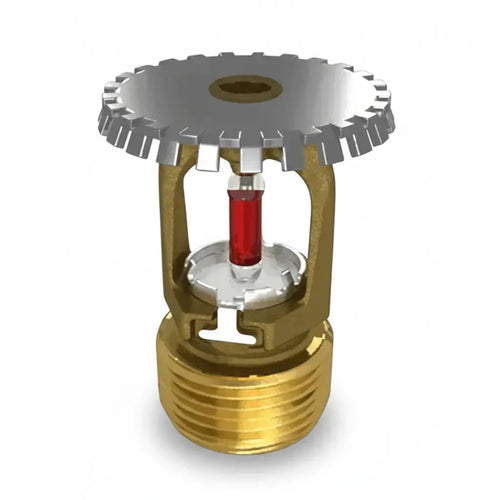


Fire Sprinkler System Replacement Parts: The 2026 Guide to Maintenance and Compliance
A single "close enough" component in a life-safety system is a guaranteed point of failure. Finding the exact fire sprinkler system replacement parts you need is the only way to ensure your building remains protected and compliant with the 2026 NFPA 25 standards. You likely already know that the difference between a passed inspection and a costly violation often comes down to the smallest fitting or a correctly matched sprinkler head. It's stressful to deal with obsolete models or the confusion between standard hardware and fire-rated parts, especially when a fire marshal is scheduled for a walkthrough.
This guide provides the professional assurance you need to identify, source, and replace critical system components with confidence. We'll explain how to find direct matches for damaged heads, how to select the right residential pump systems, and why the 2026 code now mandates original manufacturer escutcheons. You'll gain a clear roadmap for maintaining your system's integrity, from seismic bracing requirements to annual internal valve inspections. We'll walk you through the technical details of sourcing Viking CPVC and PTR deluge solutions, ensuring your facility stays ready for any emergency without the guesswork.
Key Takeaways
- Learn why using fire-rated components is mandatory to avoid legal liability and catastrophic system failure.
- Master the process of finding fire sprinkler system replacement parts by locating the unique Sprinkler Identification Number (SIN) on the deflector.
- Understand the shift toward Viking CPVC and how residential fire pump systems ensure adequate pressure in low-flow environments.
- Identify signs of Microbiologically Influenced Corrosion (MIC) during mandated five-year internal pipe inspections to protect your system's integrity.
- Streamline your procurement process by sourcing code-compliant hardware directly from professional life safety specialists.
Sourcing Fire Sprinkler System Replacement Parts: Safety vs. Compliance
In the industry of life safety, there's no room for "good enough." Choosing the correct fire sprinkler system replacement parts is the difference between a system that activates during a crisis and one that fails when it's needed most. The National Fire Protection Association (NFPA) sets rigorous standards to ensure every component, from the smallest fitting to the main control valve, performs under extreme conditions. Compliance isn't just about passing an inspection; it's about ensuring the physical integrity of a system that protects lives and property. When you source parts, you're looking for verified reliability that meets the specific engineering requirements of your building's fire profile.
Life Safety vs. Irrigation: A Dangerous Distinction
When to Seek Replacement Parts
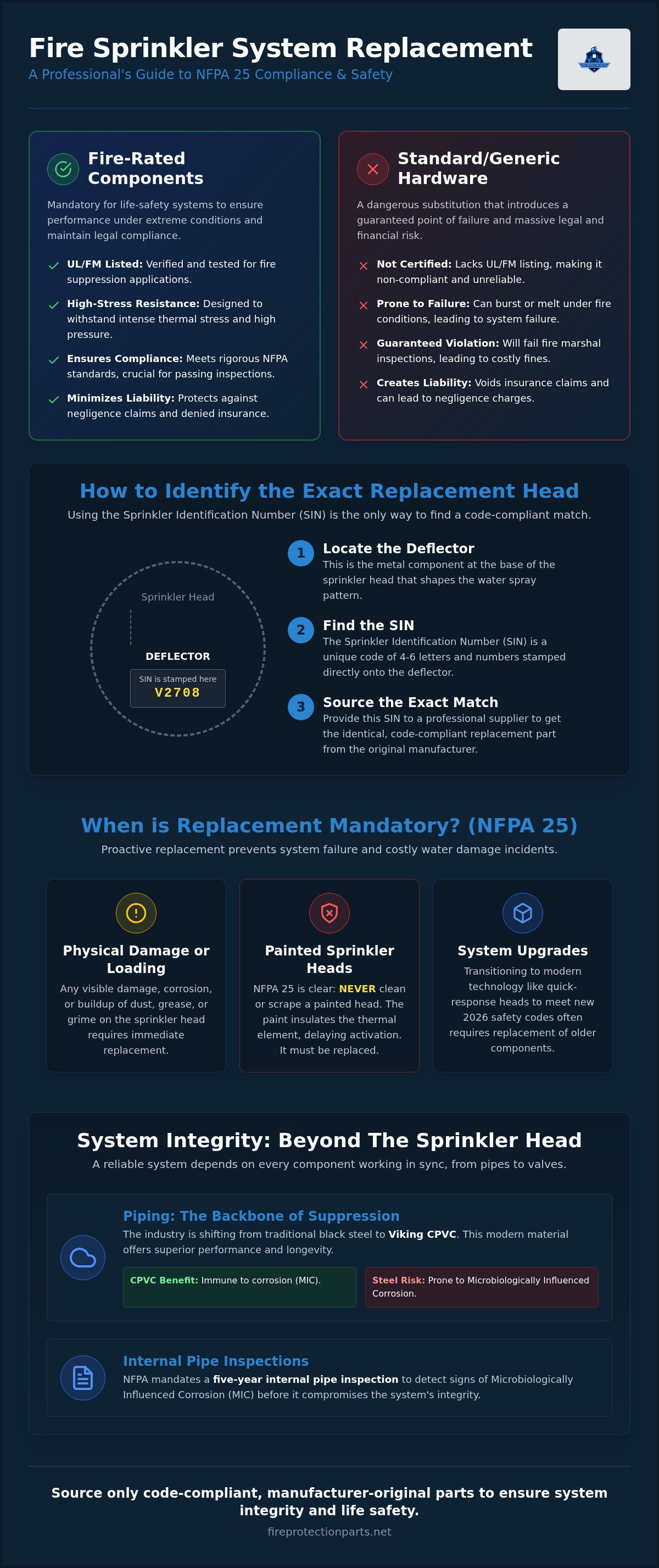
Regular inspections often reveal physical damage or "loading," which is the buildup of dust, grease, or grime on a deflector. Fire sprinkler heads are precision instruments. Even a thin layer of paint can insulate the thermal element and delay activation. NFPA 25 is clear on this: you can't clean or scrape a painted sprinkler head. It must be replaced with a listed component from the original manufacturer to ensure the spray pattern remains effective. You should also consider system upgrades when moving from standard to quick-response technology to meet 2026 safety codes. Identifying corrosion or leaks early allows you to source the right fire sprinkler system replacement parts before a "nuisance" discharge causes massive water damage.
A complete system relies on several critical categories of hardware. Sprinkler heads handle the discharge, while piping like Viking Plastics CPVC pipe for fire protection provides the distribution network. Valves and monitoring devices, such as the PTR Electric Deluge VXD, ensure water flows only when intended. Keeping these verified components in stock ensures your facility remains life-safety ready at all times. By choosing brand-name reliability over generic substitutes, you eliminate doubt and prioritize professional excellence.
Core Components of a Reliable Fire Suppression System
A robust fire suppression system relies on a network of high-performance components working in perfect synchronization. When you're sourcing fire sprinkler system replacement parts, you must look beyond the sprinkler heads to the infrastructure that feeds them. This includes everything from the pipes that carry the water to the seismic bracing that keeps the system stable during an earthquake. Maintaining NFPA 25 compliance requires a methodical approach to identifying and replacing worn or outdated hardware before a failure occurs. This proactive strategy ensures that every valve and fitting is ready to perform under pressure.
Piping and Fittings: The Backbone of Suppression
The industry has seen a massive shift toward Viking Plastics CPVC pipe for fire protection. Unlike traditional black steel, CPVC is immune to the corrosion that often plagues metal systems. It's lighter, easier to install in retrofit scenarios, and provides superior hydraulic performance. When repairing a section of pipe, it's vital to use matched CPVC fire protection fittings to ensure chemical compatibility. Solvent welding creates a bond that is effectively stronger than the pipe itself. This process eliminates the leaks often associated with threaded or mechanical joints in older systems, providing long-term peace of mind.
Pressure Management: Pumps and Air Supply
Water pressure is the lifeblood of suppression. In many areas, municipal supply isn't enough to meet the hydraulic demands of a modern system. This is where residential fire pump systems become essential, particularly for NFPA 13D and 13R compliance in 2026. These pumps ensure that even in low-flow zones, your sprinklers have the force needed to control a fire. Without adequate pressure, the spray pattern of the head may fail to cover the designated area, leaving the structure vulnerable.
Dry pipe and preaction systems introduce another layer of complexity. These systems use pressurized air or nitrogen to hold back the water until a head activates. Reliable air compressors for dry sprinkler systems are necessary to maintain this supervisory pressure. If the compressor fails, you risk a "nuisance trip," where the system floods without a fire. This leads to expensive cleanup and system resets. For high-hazard zones, monitoring your PTR Electric Deluge VXD valves is just as critical. These specialized valves control water flow in deluge systems and require precise maintenance to function. If you're upgrading an older facility, you can browse our inventory for these specialized fire sprinkler system replacement parts to ensure every component meets modern safety standards.
How to Identify Replacement Fire Sprinkler Heads
Identifying the correct head is the most granular task when sourcing fire sprinkler system replacement parts. You cannot simply look at a sprinkler and guess its specifications based on size or color. Every modern fire sprinkler features a Sprinkler Identification Number, or SIN. This is a 4-7 digit alphanumeric code stamped directly onto the deflector or the frame of the head. The SIN is the "DNA" of the component. It tells you the exact manufacturer, the model, and the specific performance characteristics required for your system's design. If you provide this number to a specialist, you eliminate the risk of installing an incompatible part that could compromise your building's safety.
Beyond the SIN, you must match the physical orientation and thermal sensitivity. Sprinklers are designed for specific positions: Pendent heads point down from the ceiling, Upright heads sit atop the piping, and Sidewall models mount to the wall to spray across a room. Matching the fire sprinkler head temperature ratings is equally vital. The color of the liquid inside the glass bulb indicates its activation point. A red bulb typically signifies a 155°F rating, while green or blue bulbs indicate higher thresholds for environments like kitchens or mechanical rooms. Installing the wrong temperature rating can lead to delayed activation or accidental discharge.
Deciphering the Sprinkler Head Markings
Look closely at the frame to find the manufacturer's logo, such as Viking, Tyco, or Reliable. You'll also see the K-factor, a numerical value that determines the water flow rate at a given pressure. A standard residential head might have a K-factor of 5.6, while high-challenge warehouse heads have much higher values. Finally, confirm the response type. Quick Response (QR) heads feature a thinner glass bulb designed to activate faster in life-safety environments, whereas Standard Response (SR) heads are often found in older commercial applications. Mixing these response types in the same compartment is a violation of 2026 safety standards.
Escutcheons and Accessories
Replacement involves more than just the head itself. Escutcheons are critical components that maintain the fire seal between the ceiling and the sprinkler. The 2026 NFPA 25 update explicitly forbids caulking or adhering these plates to the ceiling; they must be listed components from the original manufacturer to ensure they don't impede deployment. If your sprinklers are in high-traffic areas or rack storage, you may need to source replacement head guards or water shields to prevent mechanical damage. Always use the manufacturer-specified wrench during installation. Using a standard pipe wrench can distort the frame, leading to leaks or a complete failure of the thermal element. Keeping a spare wrench for every head type on-site is now a mandatory requirement for fire sprinkler system replacement parts compliance.
Maintaining System Integrity: Replacement and ITM Compliance
Compliance with Inspection, Testing, and Maintenance (ITM) protocols is the bedrock of building safety. It's not enough to install a system and forget it. You must actively monitor for internal threats like Microbiologically Influenced Corrosion (MIC). During the mandatory five-year internal pipe inspection, inspectors look for the telltale signs of MIC, such as black sludge or localized pitting. If your system is compromised, you'll need to source fire sprinkler system replacement parts immediately to prevent a total system failure. Proactive replacement is always more cost-effective than an emergency repair after a pipe bursts.
Integrity also means being prepared for the aftermath of an event. If your system experiences a discharge, whether from a fire or a mechanical failure, the activated components are spent. You can't just reset a head; it must be replaced. This is why NFPA 25 mandates the presence of a spare head cabinet on the premises. This cabinet must house a representative sample of every head type used in the building, along with the specific manufacturer-prescribed wrench. Without these tools, your system remains impaired and non-compliant until a technician arrives with the right gear.
Anti-Freeze and Wet System Maintenance
Wet systems in unheated areas face the constant threat of freezing. To combat this, you must use UL-listed, non-toxic anti-freeze solutions. Older, glycerin-based mixtures are often non-compliant under 2026 standards because they can become flammable if the concentration is incorrect. Regularly test your system's concentration levels to ensure it provides adequate protection without creating a secondary hazard. Part of this maintenance involves checking your backflow preventers. These devices are the only thing standing between stagnant system water and your building's potable water supply. If they fail, the health risks are significant.
Seismic and Structural Support Upgrades
The pipes are only as reliable as the structures holding them up. In high-risk geographic zones, standard hangers aren't enough. You should evaluate all-thread rods and sway braces for signs of metal fatigue or rust. Upgrading to ASC engineered solutions provides the lateral and longitudinal support required to keep the system functional during an earthquake. Modern seismic restraints are designed to handle extreme dynamic loads, preventing the system from shearing off at the joints. You can order these specialized components today to ensure your facility meets the latest structural safety codes.
Procuring Code-Compliant Parts from Fire Protection Parts
Sourcing the right hardware shouldn't be a gamble. When a system is impaired, the clock is ticking on both your safety and your compliance status. Professionals choose to source fire protection parts online because they need immediate access to verified, code-compliant components without the delays of traditional wholesale channels. At Fire Protection Parts, we operate as a mission-driven partner rather than a simple vendor. We understand that every fitting and valve we provide is a critical link in a life-safety chain. Our inventory is curated to meet the strict demands of 2026 NFPA standards, ensuring you never have to compromise on quality.
Navigating a massive catalog for specific fire sprinkler system replacement parts can be daunting. We've streamlined our digital storefront to help you find exactly what you need quickly. Whether you're looking for Viking Plastics CPVC or ASC seismic bracing, our platform categorizes components by manufacturer and application. This precision eliminates the risk of ordering "close enough" parts that could fail during a fire marshal's inspection. We prioritize transparency, providing the technical data you need to verify listings and approvals before you click buy. It's about providing the expert confidence you need to make a safe choice for your facility.
The Fire Protection Parts Difference
We provide a no-nonsense procurement experience designed for the high-stakes world of fire safety. Contractors and facility managers benefit from direct access to professional-grade hardware that often isn't available at local hardware stores. If you're struggling to identify an obsolete sprinkler head or a specialized valve, our team provides the expert support necessary to find a modern, compliant equivalent. We also offer bulk ordering capabilities. This allows maintenance teams to stock their spare head cabinets and emergency kits with the fire sprinkler system replacement parts required by law, reducing downtime during future repairs.
Next Steps for Your System Repair
Your first step is a thorough audit. Compare your current inventory and system condition against your latest inspection report to identify gaps in compliance. Once you've identified the necessary components, consult with a licensed fire protection professional to plan the installation. While we provide the hardware, professional installation is the only way to ensure the system functions as engineered. Visit our online store today to secure your replacement parts and restore your system's integrity. Don't wait for a violation or a failure to act. Secure your peace of mind by choosing the brand that values excellence above all else.
Securing Your Facility for the 2026 Safety Standard
Maintaining a fire suppression system is a continuous commitment to life safety. By mastering the identification of SIN codes and prioritizing the use of brand-name hardware like Viking Plastics CPVC and ASC seismic bracing, you eliminate the dangerous guesswork of "close enough" repairs. Proactive maintenance, including five-year internal inspections and the upkeep of spare head cabinets, ensures your building remains fully protected and ready for any fire marshal walkthrough. It's about more than just passing an inspection; it's about the reliable performance of your system when every second counts.
Finding the right components shouldn't be a source of stress. When you choose a partner that specializes exclusively in verified, code-compliant hardware, you gain the peace of mind that comes from professional expertise. As an authorized distributor of Viking Plastics CPVC and a stockist for ASC seismic bracing and PTR deluge valves, we provide the expert-vetted components you need to meet the highest safety standards. Secure your system with code-compliant fire sprinkler replacement parts today.
Frequently Asked Questions
Can I replace a fire sprinkler head myself?
You should never attempt to replace a fire sprinkler head yourself unless you're a licensed professional. Fire suppression systems are under high pressure and require specialized tools to prevent leaks or accidental discharge. A licensed technician ensures the new head matches the system's hydraulic design and meets all local building codes. Attempting a DIY repair can lead to catastrophic water damage or a system failure during a fire event.
What is a SIN number and why do I need it for replacement parts?
A SIN (Sprinkler Identification Number) is a unique 4-7 digit alphanumeric code that identifies the specific manufacturer and model of the head. You need this number to source exact fire sprinkler system replacement parts with absolute confidence. It ensures the K-factor, response time, and temperature rating match the original engineering specifications for your building. Without the SIN, you risk installing an incompatible component that could compromise your life-safety system.
How do I know if my fire sprinkler head is obsolete?
You can determine if a head is obsolete by checking its SIN against current manufacturer catalogs or consulting with a fire safety specialist. If the model is no longer in production, you'll need a listed equivalent that matches the original specs. The 2026 edition of NFPA 25 also mandates that sprinklers in dwelling units in service for 50 years must be replaced or tested. This effectively marks many older models as functionally obsolete.
Do I need to replace the escutcheon when I replace a sprinkler head?
Yes, you must replace the escutcheon with a listed component from the original manufacturer if the old one is damaged, painted, or missing. The 2026 NFPA 25 standards explicitly prohibit using generic covers or adhering them to the ceiling with caulk. A proper escutcheon is vital because it maintains the fire seal and ensures the sprinkler deploys correctly. Using the wrong plate can delay activation and lead to a failed fire marshal inspection.
Can I use CPVC fittings from a hardware store for my fire sprinkler system?
No, you cannot use standard plumbing or irrigation CPVC fittings for any fire protection system. Fire-rated components like Viking Plastics CPVC are specifically engineered to withstand extreme heat and high-pressure environments. Using unlisted hardware from a general hardware store is a major code violation that creates significant legal liability. It also increases the risk of system failure. Always source your fittings from a dedicated life-safety specialist to ensure they meet UL and FM standards.
How often should fire sprinkler system parts be inspected for replacement?
Your system should undergo professional inspections annually to identify worn or damaged components that require attention. Specific fire sprinkler system replacement parts, such as dry pipe valves and preaction valves, require internal inspections every year. Additionally, a comprehensive internal pipe inspection is required every five years to check for corrosion or obstructions. Regular monitoring allows you to identify issues like Microbiologically Influenced Corrosion (MIC) before they lead to a system-wide failure.
What happens if I paint over my fire sprinkler head?
If you paint over a fire sprinkler head, it must be replaced immediately to maintain system integrity. Paint acts as an insulator that prevents the thermal element from sensing heat, which can delay or stop the head from activating. NFPA 25 strictly prohibits cleaning, scraping, or using solvents to remove paint from a head. The only compliant solution is to install a new, listed replacement that matches the original manufacturer's specifications for that specific zone.
Where can I buy Viking fire sprinkler replacement parts online?
You can buy authentic Viking fire sprinkler replacement parts directly from Fire Protection Parts through our online store. As an authorized retailer of Viking Plastics CPVC and other professional-grade hardware, we provide the verified components needed for code-compliant repairs. Our catalog allows you to source specific heads, valves, and fittings with the assurance of brand-name reliability. We help you eliminate the guesswork and ensure your facility remains protected and ready for inspection.

