



The Professional Buying Guide to Fire Sprinkler Pipe Hangers for 2026
A fire sprinkler system is only as reliable as its weakest support point. If your hardware fails under pressure, the entire installation becomes a liability rather than a life-saving asset. Selecting the right fire sprinkler pipe hangers is a critical decision that impacts structural integrity and long-term safety. You likely already know that compliance isn't just about ticking a box; it's about protecting lives and property without compromise. Whether you're struggling with 2025 NFPA 13 spacing requirements or worrying about material compatibility for CPVC systems, the pressure to get it right is real.
This guide helps you master the technical requirements and selection criteria for fire sprinkler pipe hangers to ensure a code-compliant, secure, and durable suppression system. We'll clarify how to calculate load ratings for heavy steel, which require supports to hold five times the water-filled pipe weight plus an additional 250 pounds at each point. You'll learn to identify the correct hardware for every pipe material and ensure your system passes inspection every time. We'll preview the essential fasteners and rods needed to build a system that stands the test of time in the 2026 regulatory environment.
Key Takeaways
- Master NFPA 13 compliance to ensure your installation meets current safety standards and passes every inspection without delay.
- Identify the correct fire sprinkler pipe hangers for your specific pipe material, including specialized solutions for CPVC to prevent damage.
- Learn to calculate critical load ratings that account for water weight and safety margins to maintain long-term structural integrity.
- Discover how to select durable fasteners and rods based on mounting surfaces like concrete or steel and environmental exposure risks.
- Integrate ASC Seismic Bracing into your design to protect the system against vertical lift and seismic activity.
Understanding Fire Sprinkler Pipe Hangers and NFPA Compliance
Fire sprinkler pipe hangers are the mechanical supports that secure fire suppression piping to a building's structure. They aren't just accessories; they're critical safety components. Without robust support, pipes can sag, joints can leak, and vibration can cause catastrophic failure. A professional pipe support strategy eliminates these risks by distributing weight evenly across the building's framing.
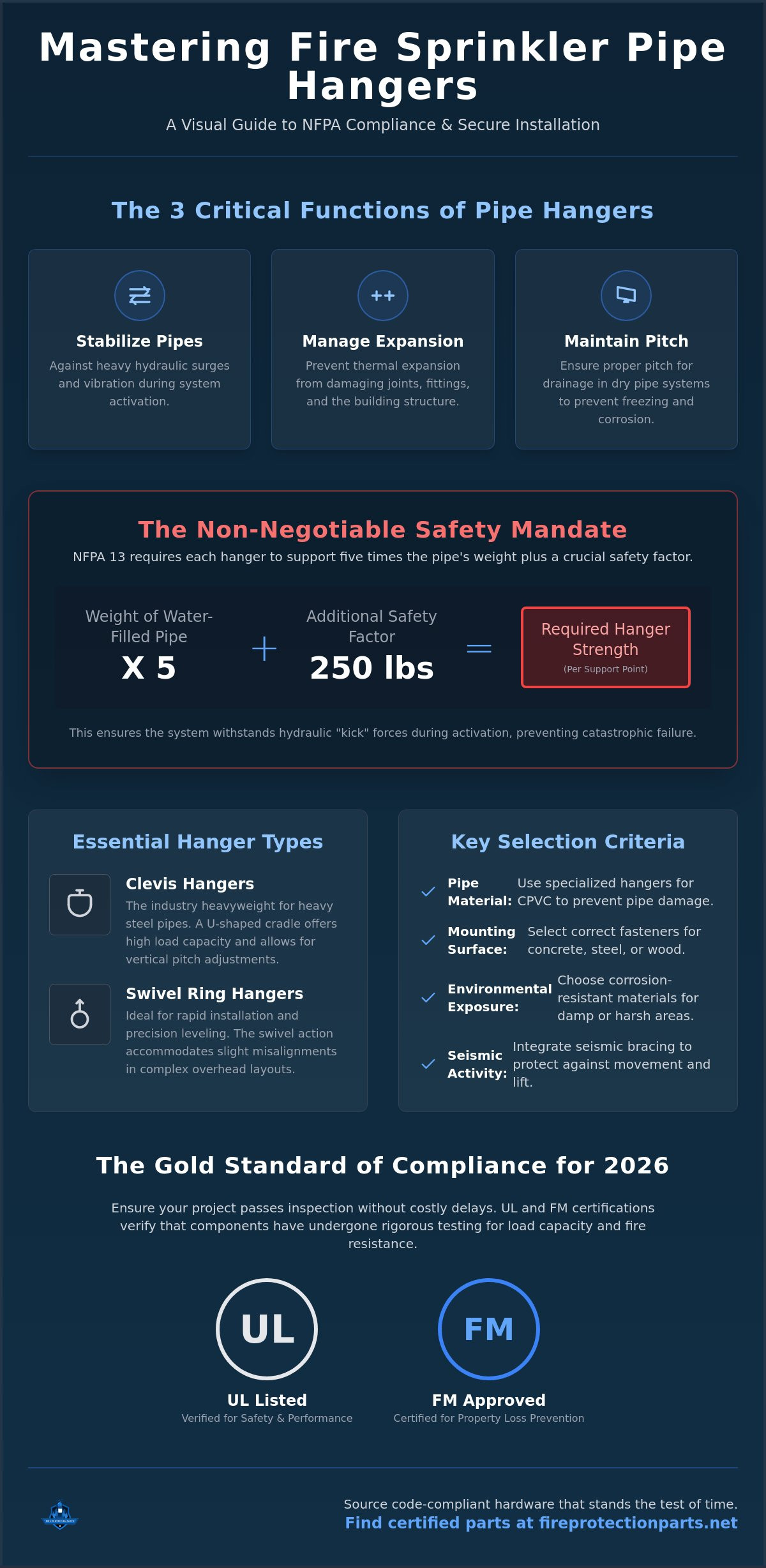
Hangers perform three vital functions in a fire protection system:
- Stabilize pipes against heavy hydraulic surges during activation.
- Prevent thermal expansion from damaging joints or fittings.
- Maintain the proper pitch for dry pipe drainage to prevent corrosion.
Standard plumbing hangers often fail in fire scenarios. They aren't rated for the extreme thermal and hydraulic stresses of a sprinkler activation. Code compliance starts with understanding the specific NFPA standards for your project. NFPA 13 governs commercial installations, while NFPA 13D and 13R cover residential applications. These standards ensure that every inch of pipe remains secure. If you use hangers designed for general plumbing, you risk failing your final inspection and compromising the system's life-saving capabilities.
The 5-Times Weight Rule
Safety is built on redundancy. Every hanger must be capable of supporting five times the weight of the water-filled pipe, plus an additional 250 pounds at each point of support. This isn't a suggestion; it's a non-negotiable requirement for inspectors. When a sprinkler head activates, the sudden surge of pressure creates significant hydraulic forces. The 250-pound safety factor ensures the hardware can withstand these "kick" forces without pulling away from the ceiling or wall. Using verified fire sprinkler pipe hangers provides the peace of mind that your system will stay intact when the water starts flowing. It's the difference between a secure system and a dangerous collapse during an emergency.
Regulatory Standards for 2026
In the 2026 regulatory landscape, UL listing and FM approval are the gold standards for quality assurance. These certifications verify that the hangers have undergone rigorous testing for load capacity and fire resistance. When you source sprinkler system components online, you must ensure they carry these specific ratings. Proper documentation of your hardware choices simplifies the final inspection process. It provides the building official with clear proof that you haven't cut corners. Choosing components that meet these standards demonstrates a commitment to professional excellence and long-term reliability. It removes the doubt that can lead to costly delays and rework.
Essential Types of Sprinkler Pipe Hangers for Every Application
Selecting the right hardware is a matter of structural geometry. It's not just about holding the pipe up; it's about how that pipe interacts with the building's skeleton. You'll generally find four primary categories of fire sprinkler pipe hangers in a professional inventory: clevis, swivel ring, beam clamps, and side attachments. Each serves a specific structural purpose depending on whether you're mounting to wood, steel, or concrete. Choosing the wrong category can lead to sagging pipes or even structural damage to the building itself.
Fixed-height supports offer simplicity, but adjustable options are almost always the better choice for complex layouts. Swivel attachments act as the ultimate problem solvers for overhead installations. They accommodate the slight misalignments common in large-scale construction. This ensures the pipe stays level without putting unnecessary stress on the joints or the building's attachment points. In a high-pressure system, even a minor misalignment can lead to a joint failure during activation.
Clevis Hangers and Swivel Ring Hangers
Clevis hangers remain the industry heavyweight for steel pipe support. Their design allows the pipe to rest securely in a U-shaped strap, providing a high load capacity that exceeds standard requirements. The vertical adjustment bolt makes it easy to maintain the necessary pitch for dry pipe systems. If your project demands rapid installation, swivel ring hangers are the solution. They feature a knurled adjustment nut that allows for precision leveling on the fly. These are particularly useful in tight spaces where maneuvering a heavy clevis strap is difficult. In environments where noise transfer or mild corrosion is a concern, PVC-coated variants provide an extra layer of protection without compromising the physical strength of the steel.
Beam Clamps and Side Attachments
When your mounting surface is structural steel, beam clamps are indispensable. They allow you to secure pipes to I-beams without the need for drilling or welding. This preserves the structural integrity of the beam and speeds up the construction timeline. Pay close attention to throat openings and set screw torque requirements. A loose clamp is a failure waiting to happen, especially when the system undergoes hydraulic testing. For residential wood-frame construction, side beam brackets offer a secure attachment point that distributes the weight across the timber. These brackets ensure that the fasteners are loaded in shear rather than tension, which provides a much more secure connection. If you're planning a complex installation, you can explore professional-grade hardware options to ensure every connection is code-compliant and built to last.
Material Compatibility: Selecting Hangers for CPVC and Steel Systems
Material compatibility is a structural requirement that determines the long-term viability of your suppression system. Steel and CPVC behave differently under load and environmental stress. While steel is prized for its rigidity and strength, it requires specialized finishes to prevent oxidation. CPVC is lightweight and corrosion-proof, yet it remains sensitive to physical abrasion and chemical exposure. Selecting the wrong fire sprinkler pipe hangers for your material can lead to pipe failure, leaks, or a system that fails to meet the 2025 NFPA 13 standards.
Support spacing is the first major difference you'll encounter. Steel pipe is rigid enough to allow for spans of 12 to 15 feet between supports. In contrast, CPVC requires more frequent hardware, often every 6 to 10 feet depending on the pipe diameter, to prevent bowing or deflection. When installing plastic systems, you must follow the "No-Sharp-Edges" rule. Metal hangers with burrs or sharp corners create localized stress points on the pipe wall. Over time, these points turn into stress fractures. Always refer to the Viking CPVC fire sprinkler pipe installation guidelines to ensure your hardware choices don't void your warranty or compromise the plastic's integrity.
Chemical compatibility is another silent risk. Many standard metal hangers are coated in oils or residues from the manufacturing process. These substances can chemically degrade CPVC, leading to environmental stress cracking. Professionals ensure their hardware is verified as chemically compatible with the specific plastic resins used in fire protection.
Specialized CPVC Hangers
Residential systems often utilize two-bolt straps or wrap-around hangers to provide 360-degree support. In tight joist spaces, one-hole straps are the preferred solution because they allow for close-proximity mounting without sacrificing security. The most important feature for any CPVC support is a broad bearing surface. Wider straps distribute the weight of the water-filled pipe over a larger area, which reduces the pressure on the pipe wall and prevents long-term deformation.
Corrosion Resistance for Steel Pipe
For steel systems, the environment dictates the finish. Electro-galvanized hangers are the industry standard for dry, climate-controlled interiors. However, if you're working in high-humidity areas or near coastal regions, you should upgrade to hot-dipped galvanized or stainless steel hardware. These finishes provide a thicker protective layer against moisture and salt air. Sourcing high-quality fire protection parts online allows you to match the hardware to the specific corrosive risks of your job site. It's a simple step that ensures your system remains secure for decades rather than years.
Key Selection Criteria: Load Ratings, Environment, and Fasteners
Your choice of fire sprinkler pipe hangers is only as strong as the fastener securing it to the building deck. Professional procurement requires a holistic view of the entire support assembly. You must account for the static weight of the pipe, the dynamic weight of the water, and the mandatory 250-pound safety margin required by NFPA 13. This total load determines the diameter of your rods and the grade of your anchors. If one component is undersized, the entire system is at risk of structural failure during a high-pressure event. Safety is a calculation, not a guess.
Environmental factors dictate the lifespan of your hardware. Indoor installations in climate-controlled spaces typically use electro-galvanized finishes. However, outdoor or industrial environments require hot-dipped galvanized or stainless steel components. Consistency is key. Your rods, nuts, and anchors must match the corrosion resistance of the hanger to prevent galvanic corrosion. If you're installing a system in a high-humidity area, using mismatched materials can lead to premature oxidation and system failure.
Seismic Considerations
In seismic-prone regions, vertical support isn't enough. You must integrate seismic bracing for sprinkler systems into your hanger layout. While standard fire sprinkler pipe hangers handle the weight of the pipe, sway braces prevent lateral and longitudinal movement. This ensures the system doesn't shake itself apart during an earthquake. Proper seismic bracing protects your investment and ensures the system remains operational when it's needed most. It's a specialized requirement that bridges the gap between gravity-based support and total structural security.
Fastener and Rod Selection
All Thread Rod (ATR) is the backbone of overhead suspension. Most fire protection systems utilize 3/8-inch or 1/2-inch rods, but you must verify the rod diameter against the total load rating of the pipe size. For wood-frame structures, grade-specific wood screws are mandatory. These ensure the threads bite deep enough into the structural members to resist pulling out under load. In concrete, use expansion or wedge anchors that are specifically rated for fire protection applications. Ensuring that every hex nut and washer is tightened to the correct torque is the final step in a professional installation. You can buy professional-grade fasteners and rods here to ensure every part of your assembly meets the 2026 standards.
Top-Rated Hangers and Fasteners from Fire Protection Parts
A reliable suppression system requires more than just a good design. It demands high-performance hardware that meets every regulatory benchmark. Our professional-grade collection features over 300 individual components, providing a one-stop procurement solution for any project scale. From small residential retrofits to massive industrial warehouses, we provide the fire sprinkler pipe hangers and support hardware you need to ensure a secure installation. We understand that procurement delays can stall a job site. That's why we maintain a deep inventory of bulk sourcing options for large-scale commercial projects, ensuring you have the quantity you need when you need it.
Every component in our inventory is selected for its structural integrity and ease of installation. We offer specialized hardware tailored to the specific needs of different materials, including specialized hangers designed for the Viking Plastics CPVC Pipe line. These supports ensure your plastic piping remains secure without the risk of chemical degradation or physical abrasion. For projects in high-risk zones, our universal sway braces and ASC Seismic Bracing components provide the lateral stability required to meet 2026 seismic codes. We don't just sell parts; we provide the building blocks of a safe environment.
Standout Products for Your Next Project
- Standard Clevis Hangers: These are the workhorses of the industry. Constructed from heavy-duty galvanized steel, they support pipe sizes ranging from 1 inch to 8 inches with ease.
- NFPA Swivel Ring Hangers: If speed is your priority, these are the preferred choice. They allow for fast, adjustable overhead runs and precision leveling in seconds.
- Universal Beam Clamps: Built from malleable iron, these clamps feature high-torque set screws that provide a bite-strength you can trust on any structural steel member.
Why Source from Fire Protection Parts?
Reliability is our baseline. We only stock code-compliant hardware from trusted industry brands, so you never have to worry about a failed inspection due to substandard materials. Our team provides expert support to help you navigate complex requirements. Whether you're matching hangers to specific fire sprinkler head temperature ratings or calculating rod diameters for heavy steel, we're here to help. We prioritize fast shipping on critical components to keep your project on schedule and your clients protected. Eliminate the guesswork and secure your system with hardware built for professional performance.
Browse our full Hangers & Fasteners collection today.
Building Structural Integrity into Every Installation
Compliance isn't a mere checkbox; it's the foundation of a functional fire suppression system. You've learned how to match hardware to specific pipe materials and calculate load requirements that withstand extreme hydraulic surges. By prioritizing NFPA-compliant fire sprinkler pipe hangers, you eliminate the risks of sagging, stress fractures, and failed inspections. Every support point is a critical link in your building's safety chain.
Long-term reliability depends on the precision of your fasteners, rods, and bracing. Whether you're installing Viking Plastics CPVC or heavy-duty steel, the right assembly ensures the system remains secure for decades. We supply contractors and facility managers nationwide with over 310 specialized hardware items in stock. Every component is designed to meet rigorous code standards and streamline your procurement process. Safety is a calculation; don't leave your installation to chance.
Take the next step in building a secure, code-compliant system today. Shop the Hangers & Fasteners Collection and secure your project with confidence. Your commitment to quality ensures the protection of lives and property for years to come.
Frequently Asked Questions
What is the maximum spacing for fire sprinkler pipe hangers?
Hanger spacing depends primarily on the pipe material and its nominal diameter. For steel pipe, maximum spacing is generally 15 feet for pipes 1 inch and larger. CPVC requires much tighter intervals, often every 6 feet for 1-inch pipe, to prevent bowing. Always consult the specific NFPA 13 tables for your pipe schedule. Proper spacing ensures the system remains rigid during high-pressure activation and prevents long-term joint stress.
Can I use standard zinc-plated hangers for CPVC fire sprinkler pipes?
No, you should only use hardware specifically listed for use with plastic piping to avoid chemical incompatibility. Standard hangers often contain manufacturing oils or have sharp edges that cause environmental stress cracking in CPVC. These specialized fire sprinkler pipe hangers feature a smooth finish and are verified as chemically safe for the pipe material. Using unlisted hardware can lead to leaks and void your manufacturer warranty.
What size all-thread rod is required for a 4-inch sprinkler pipe?
A 3/8-inch diameter all-thread rod is the minimum standard for 4-inch piping according to NFPA 13 requirements. If your pipe size exceeds 4 inches, you must upgrade to a 1/2-inch rod to handle the increased water weight safely. Ensuring the rod diameter matches the pipe size is a critical step in passing your structural inspection. Don't undersize your suspension hardware; it's the backbone of the entire suppression system.
Do fire sprinkler hangers need to be UL listed or FM approved?
Yes, all fire sprinkler pipe hangers must be UL listed or FM approved to ensure they meet rigorous safety standards. NFPA 13 requires all support components to be specifically rated for fire protection service. These listings provide assurance that the hardware has been tested against extreme heat and hydraulic forces. Using unlisted hardware is a code violation that compromises life safety and can result in system failure during an emergency.
How do I determine if I need seismic bracing for my pipe hangers?
Seismic bracing is required if your project is located in a high-risk area, typically Seismic Design Category C or higher. You'll need to calculate the lateral and longitudinal loads to determine the placement of sway braces. While vertical hangers manage gravity, seismic bracing prevents the system from swinging and breaking during an earthquake. Consult your local building codes and structural engineers to confirm your specific project requirements.
What is the difference between a riser clamp and a pipe hanger?
A riser clamp is designed to support vertical pipe loads at floor penetrations, whereas a hanger supports horizontal piping from above. A riser clamp transfers the weight of the vertical stack directly to the building's floor slab or structural steel. Hangers use rods and attachments to suspend horizontal runs from the ceiling. Both are essential components, but they serve different structural roles and cannot be used interchangeably.
Can I attach pipe hangers directly to a metal deck?
You cannot attach hangers directly to a metal deck without using approved deck inserts or structural attachments that distribute the load. Direct attachment to thin gauge metal isn't code-compliant because it can't support the weight of water-filled pipes. You must use inserts cast into concrete or specialized clamps that attach to the structural ribs. Proper installation prevents the pipe from pulling through the deck during system operation.
What fasteners are best for attaching hangers to wood joists?
Lag screws and specialized drive screws are the preferred fasteners for securing hangers to wood structural members. The screw diameter and embedment depth must comply with NFPA 13 standards to ensure they don't pull out under load. It's best to pre-drill holes to prevent the wood from splitting, which can weaken the connection. Using the correct fasteners ensures your support system remains anchored for the life of the building.

