

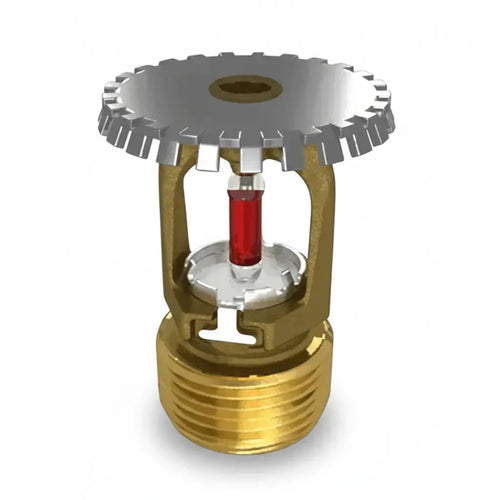


Commercial Fire Extinguisher Types: The 2026 Professional Guide to Compliance
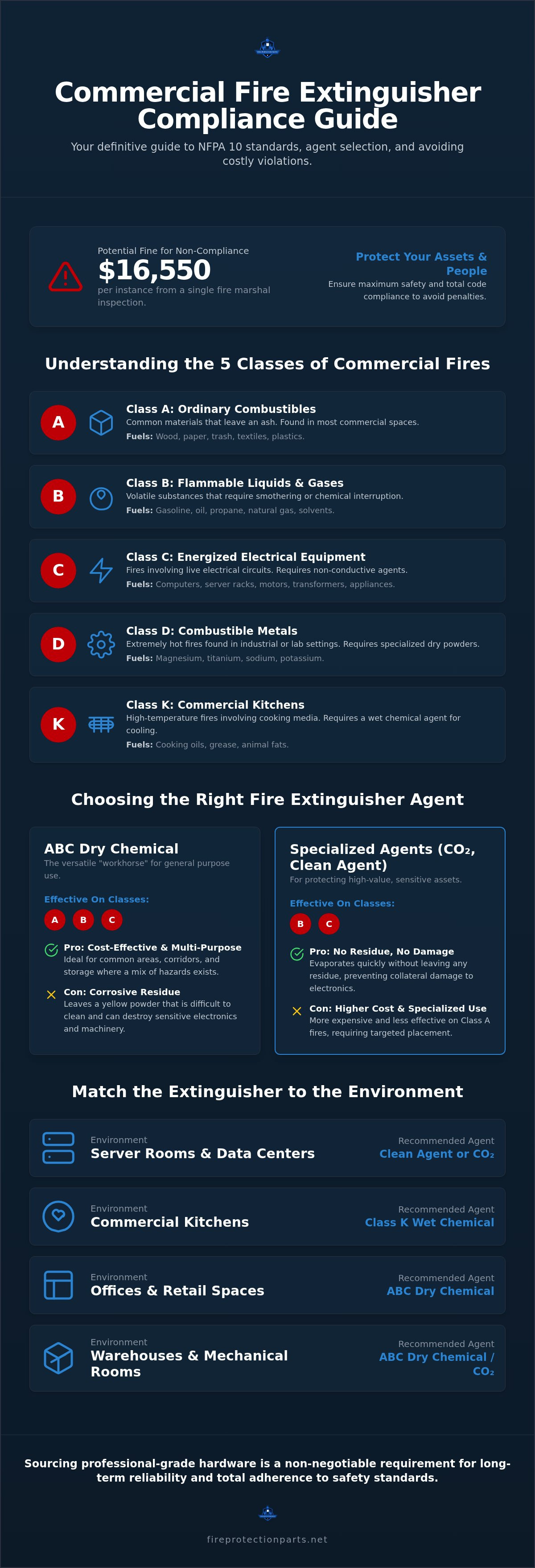
A single fire marshal inspection can result in fines of up to $16,550 per instance if your facility lacks the correct suppression hardware. It's a high price to pay for a simple oversight in equipment selection. Most facility managers feel a natural sense of confusion when faced with the overlapping labels of various commercial fire extinguisher types, especially when trying to match specific chemical agents to hazards like server rooms or commercial kitchens. You want to protect your assets and your people without the constant fear of failing a surprise audit.
We understand that navigating the latest safety codes often feels like a moving target. This guide identifies the exact hardware required for your facility to ensure maximum safety and total code compliance under the current NFPA 10 2026 standards. You'll gain a clear understanding of fire classes A through K and the specific mounting heights and travel distances mandated by OSHA. We'll provide a definitive list of extinguisher types for every zone in your building, giving you total confidence in your sourcing and installation strategy.
Key Takeaways
- Learn to distinguish between Class A through K fire hazards to select the correct suppression agent for every specific zone in your facility.
- Identify the primary commercial fire extinguisher types, including ABC dry chemical and CO2 units, to ensure your hardware matches the unique risks of your environment.
- Master NFPA 10 2026 compliance by applying precise rules for travel distances and mounting heights to avoid costly inspection failures.
- Protect sensitive electronics and commercial kitchens by deploying specialized clean agents that suppress fire without causing unnecessary collateral damage.
- Understand why sourcing professional-grade hardware is a non-negotiable requirement for long-term reliability and total adherence to safety standards.
Understanding the 5 Classes of Commercial Fires
Selecting the right hardware begins with a clear assessment of what might actually burn in your facility. Fire Class is the categorization of fuel sources to determine suppression tactics. Without this foundation, you risk deploying ineffective or even dangerous tools. Most facilities require a mix of commercial fire extinguisher types to address the specific hazards present in different zones, from the front office to the loading dock.
- Class A: These involve ordinary combustibles like wood, paper, trash, and textiles. These materials are ubiquitous in office environments and retail spaces.
- Class B: This category covers flammable liquids and gases such as gasoline, oil, and propane. These are critical concerns for mechanical rooms, storage areas, and warehouses.
- Class C: Energized electrical equipment defines this class. Non-conductive suppression agents are mandatory here to prevent operator electrocution and further equipment damage.
- Class D: These fires involve combustible metals like magnesium, sodium, or titanium. You'll typically only find these in specialized manufacturing or laboratory settings.
- Class K: Specifically designed for commercial kitchens, these fires involve high-temperature cooking oils and fats that require specialized wet chemical agents to cool and smother the flames.
Why Fire Classification Dictates Your Hardware Choice
Using the wrong agent isn't just a compliance failure; it's a significant safety hazard. Discharging water onto a grease fire (Class K) causes the fuel to splash and spread the fire instantly. Similarly, using a conductive agent on energized electrical equipment puts the user at risk of severe shock. Understanding fire extinguisher classifications is a core requirement for passing fire marshal inspections and maintaining lower insurance premiums. Professional-grade protection relies on matching the chemical agent to the specific molecular behavior of the fire.
Identifying Hazards in Your Specific Facility
A zone-by-zone hazard analysis is the most reliable way to determine your needs. You must differentiate between 'Light' hazard areas like classrooms, 'Ordinary' hazards like parking garages, and 'Extra' hazards such as chemical processing plants. Portable commercial fire extinguisher types are your first line of defense, but they don't work in isolation. These units function alongside fixed sprinkler system components online to provide a tiered suppression strategy. By identifying the specific fuel loads in each room, you ensure your procurement strategy is both cost-effective and code-compliant.
Types of Commercial Fire Extinguishers and Their Agents
Matching the right agent to the hazard is the cornerstone of effective suppression. While many facilities rely on a single "all-purpose" unit, the diversity of modern workplace risks requires a more nuanced approach. Selecting among various commercial fire extinguisher types involves balancing extinguishing power against the potential for collateral damage to equipment.
ABC Dry Chemical units are the industry workhorse. They use monoammonium phosphate to interrupt the chemical reaction of a fire. These are effective on Class A, B, and C fires, making them the standard for general corridors and storage areas. However, they leave a yellow, corrosive powder that can destroy sensitive electronics. For environments like server rooms or laboratories, Carbon Dioxide (CO2) or Clean Agents are superior. CO2 displaces oxygen to stifle flames without leaving any residue behind. Water and foam extinguishers are also used for Class A and B hazards, providing essential cooling properties to prevent re-ignition.
Clean Agents like Halotron or FE-36 represent the gold standard for high-value asset protection. Unlike dry chemicals, these agents are non-conductive and evaporate quickly, ensuring the suppression process doesn't cause more damage than the fire itself. This is a critical consideration for 2026 compliance, as data centers and telecommunications hubs become more central to business operations. Adhering to OSHA requirements for fire extinguishers ensures these units are placed where they can be most effective during an emergency.
ABC Dry Chemical vs. Specialized Agents
The cost-benefit analysis of choosing a specialized agent over a standard ABC unit often comes down to the cleanup factor. A standard ABC unit is affordable but messy. If discharged in a server room, the fine powder can penetrate circuit boards and cause permanent failure. Clean agents carry a higher upfront cost but prevent the total loss of expensive hardware. In commercial kitchens, Wet Chemical (Class K) units are mandatory. These potassium-based agents create a soapy foam layer through a process called saponification, which traps vapors and cools the oil to prevent re-ignition.
Class D and Purple-K: Industrial Specialties
High-hazard environments like oil and gas sites or metal fabrication shops require heavy-duty solutions. Purple-K is a potassium bicarbonate-based dry chemical that is significantly more effective on Class B fires than standard ABC powder. For combustible metals like titanium, Class D extinguishers use dry powder agents to crust over the fuel and stop the burn. Maintaining these systems requires high-quality fire protection parts online to ensure valves and hoses remain pressurized. If you are updating your facility's safety plan, consider sourcing professional-grade hardware to guarantee long-term reliability.
Matching Extinguisher Types to Commercial Environments
Effective fire safety isn't a one-size-fits-all solution. Your choice of commercial fire extinguisher types must align with the specific fuel loads and hazards of each individual room. In standard office environments, ABC Dry Chemical units provide the necessary coverage for paper, wood, and upholstery. These are reliable for general corridors and reception areas where ordinary combustibles are the primary concern. However, as you move into specialized zones, the requirements change drastically to meet 2026 compliance standards.
Commercial kitchens, for instance, have mandatory requirements that standard units cannot fulfill. You must install Class K wet chemical extinguishers near cooking lines. These units are specifically designed to handle high-temperature grease fires. In mechanical and utility rooms, the focus shifts to high-capacity Class B and C protection. These areas often house fuel-burning equipment and high-voltage electrical panels, requiring agents that can suppress liquid fires without conducting electricity back to the operator.
The Data Center Challenge: Protecting Electronics
Data centers and server rooms house your most critical digital assets. They are also the zones where the wrong equipment causes the most damage. Discharging a dry chemical unit into a server rack creates a "white dust" disaster. This fine, corrosive powder is nearly impossible to remove and often leads to immediate hardware failure. CO2 and Clean Agent units are the industry standard for these environments because they leave zero residue and do not conduct electricity. It's also vital to consider the ambient environment. You should verify fire sprinkler head temperature ratings in high-heat zones to ensure your fixed systems and portable commercial fire extinguisher types are properly calibrated for the space.
Warehousing and Industrial Fire Safety
Large-scale storage facilities present unique challenges, particularly regarding high-pile storage and unheated spaces. These zones require large-capacity extinguishers that can reach the top of racking systems before a fire spreads. In unheated warehouses, fire protection becomes more complex due to the risk of freezing. Many facilities utilize air compressors for dry sprinkler systems to keep pipes clear of water until they are needed. Your portable extinguishers serve as the vital first response in these vast spaces. Manufacturing floors often need a combination of Class D units for metal fires and high-flow Class B units for chemical storage areas. Matching the hardware to the hazard ensures you aren't just checking a compliance box but actually protecting your infrastructure.
NFPA 10 Compliance: Placement and Maintenance Rules
Possessing the correct commercial fire extinguisher types is only half of the safety equation. To meet NFPA 10 2026 standards, you must adhere to strict placement and accessibility rules. A perfectly charged unit is useless if an employee cannot reach it within seconds during an emergency. OSHA enforces these standards rigorously; violations can result in fines of up to $16,550 per instance. Proper placement ensures your hardware is visible, unobstructed, and ready for immediate deployment.
Travel distance is a critical metric for compliance. For Class A hazards, an employee should never have to travel more than 75 feet to reach an extinguisher. For Class B hazards, such as fuel storage or mechanical rooms, the maximum travel distance drops to 50 feet. Mounting heights are equally specific. If your unit weighs 40 pounds or less, the top must be no more than 5 feet from the floor. For heavier units exceeding 40 pounds, the maximum height is 3.5 feet. Regardless of weight, the bottom of the extinguisher must remain at least 4 inches off the ground to prevent moisture-related corrosion.
The Monthly Inspection Checklist for Facility Managers
Monthly visual inspections are your primary defense against equipment failure. You don't need a third-party contractor for this; it can be handled by your in-house facility team. Start by verifying that the pressure gauge needle is firmly in the "green zone." Check the pull pin and tamper seal to ensure the unit hasn't been discharged or tampered with. Finally, inspect the nozzle and hose for clogs, cracks, or signs of physical damage. Every inspection must be documented on the unit's tag to maintain an audit-ready trail for the fire marshal.
Long-Term Maintenance: Hydrostatic Testing
Beyond monthly checks, commercial fire extinguisher types require deep-cycle maintenance. Annual professional inspections are mandatory, but the 6-year internal exam and periodic hydrostatic testing are where many facilities fall out of compliance. Dry chemical extinguishers typically require hydrostatic testing every 12 years, while CO2 and water-based units require it every 5 years. This process tests the cylinder's structural integrity under high pressure. If a unit fails or shows signs of excessive wear, you must decide whether to repair it using verified fire protection parts online or replace the hardware entirely. Maintaining a fleet of compliant extinguishers is a continuous process of verification. Start your compliance journey by sourcing code-compliant hardware from a trusted partner today.
Sourcing Professional Fire Protection Hardware
Sourcing your safety equipment from a retail "big box" store might seem convenient, but it often leads to significant compliance gaps. Professional-grade hardware is engineered to withstand the rigors of commercial environments and meet the exact specifications of the 2026 fire codes. When you invest in professional equipment, you aren't just buying a canister; you're securing a verified tool designed for long-term reliability. Selecting the correct commercial fire extinguisher types is the first step, but ensuring those units are manufactured by trusted brands is what guarantees performance during a crisis.
Code compliance starts with verification. Every valve, bracket, and chemical agent must adhere to the standards set by the NFPA and OSHA. Retail units often feature plastic components that can degrade over time, leading to pressure loss or handle failure. In contrast, professional-grade hardware utilizes heavy-duty metals and high-quality seals. This durability is essential for passing annual inspections and ensuring your facility remains protected between maintenance cycles. Fire Protection Parts serves as a dedicated partner for facility managers who refuse to compromise on quality.
Building a Comprehensive Suppression Ecosystem
Portable extinguishers are most effective when they function as part of a larger, integrated safety strategy. They serve as the immediate response while your building's fixed systems provide the heavy-duty suppression required for larger incidents. For example, many modern commercial facilities rely on Viking CPVC fire sprinkler pipe for reliable, corrosion-resistant water delivery. Ensuring that your portable units match the hazards identified in your sprinkler system's design creates a seamless defense. From seismic bracing to the smallest rod hangers, every component in your ecosystem must meet the same high standard of excellence to ensure total system reliability.
Expert Support for Your Safety Procurement
Navigating the procurement process for a large facility or a complex construction project requires more than just a catalog. You need a source that understands the technical nuances of fire suppression. Fire Protection Parts provides the specialized knowledge necessary to manage bulk orders and source mission-critical components quickly. We understand that downtime isn't an option when safety is on the line. With nationwide shipping across the United States, we ensure that the hardware you need arrives on-site and ready for installation. Don't leave your facility's safety to chance with retail-grade alternatives. Secure your facility with professional-grade fire protection parts today.
Securing Your Facility for 2026 and Beyond
Compliance is a continuous commitment to safety rather than a one-time task. By accurately identifying your facility's fire classes and matching them with the appropriate commercial fire extinguisher types, you eliminate the guesswork that leads to failed inspections and property loss. Professional-grade hardware provides a level of reliability that retail alternatives simply don't match. Adhering to the 2026 NFPA 10 standards for travel distances and mounting heights ensures your defense is always within reach.
Fire Protection Parts is a trusted supplier for US commercial facilities, providing NFPA-compliant components and professional-grade equipment for contractors. Whether you're managing a data center or a commercial kitchen, we provide the mission-critical hardware you need to maintain a code-compliant suppression ecosystem. Don't wait for a surprise audit to find the gaps in your safety plan.
Shop Code-Compliant Fire Suppression Hardware at Fire Protection Parts and take the final step toward total facility protection. Your commitment to quality hardware today is the best insurance for your facility's future.
Frequently Asked Questions
How many fire extinguishers does my commercial building need?
The number of units depends on your building's square footage and hazard level. For Class A hazards, you must have an extinguisher within 75 feet of any point. A general rule is one unit for every 3,000 square feet, though high-hazard areas like chemical storage require more frequent placement. You should conduct a floor plan audit to ensure all commercial fire extinguisher types are accessible within these mandated travel distances.
What is the difference between ABC and BC fire extinguishers?
ABC extinguishers are "tri-class" units that handle wood, paper, liquids, and electrical fires. BC units are specialized for flammable liquids and electrical equipment only; they lack the monoammonium phosphate needed to suppress Class A ordinary combustibles. Using a BC unit on a wood or paper fire is ineffective. Most general commercial spaces benefit from the versatility of ABC units to cover multiple potential fuel sources in a single zone.
Can I use a residential fire extinguisher in a commercial office?
You shouldn't use residential units in a commercial setting. Commercial codes require extinguishers to be UL-listed and often specify metal valves for durability and rechargeability. Many residential units are disposable and feature plastic components that don't meet the rigorous maintenance standards of NFPA 10. Using non-compliant hardware can lead to failed OSHA inspections and significant fines. It's best to source professional-grade equipment designed for high-occupancy environments.
How often do commercial fire extinguishers need to be professionally inspected?
Professional inspections must occur annually. While your staff performs monthly visual checks, a certified technician must conduct a thorough maintenance exam every 12 months. Additional requirements include a 6-year internal examination and hydrostatic testing every 5 or 12 years, depending on the cylinder type. Keeping these records updated on the unit's tag is essential for proving compliance during a surprise fire marshal visit or a routine insurance audit.
What is a 'Clean Agent' fire extinguisher and when is it required?
A 'Clean Agent' extinguisher uses an eco-friendly gas, such as Halotron or FE-36, that suppresses fire without leaving a powdery residue. These are required in environments with high-value electronics, like data centers or medical imaging suites. Unlike standard commercial fire extinguisher types, clean agents are non-conductive and evaporate quickly. This prevents the suppression process itself from destroying sensitive circuit boards, ensuring your hardware remains functional after the fire is extinguished.
Are fire extinguishers required if I have a full sprinkler system installed?
Yes, extinguishers are mandatory even with a full sprinkler system. Sprinklers are designed for large-scale fire suppression and life safety once a fire has already reached a significant size. Extinguishers allow employees to stop small, incipient-stage fires before the sprinklers ever activate. This prevents the extensive water damage associated with sprinkler discharge. Both systems work together as a tiered defense strategy to protect your facility's infrastructure and your personnel.
What happens if a business fails to meet fire extinguisher code requirements?
Failing to meet code requirements leads to severe financial and legal consequences. OSHA can issue fines of up to $16,550 per violation for improper placement or missing inspections. Furthermore, your insurance provider may deny claims for fire damage if they find your suppression hardware was non-compliant. In the event of an injury, your business could face significant legal liability. Maintaining proper hardware is a fundamental requirement for risk management and safety.
How do I identify if a fire extinguisher is expired or non-compliant?
Look at the manufacture date stamped on the cylinder or the bottom of the unit. If a dry chemical extinguisher is over 12 years old and hasn't had a hydrostatic test, it's non-compliant. You should also check the pressure gauge; if the needle is outside the green zone, the unit is "expired" and needs service. Finally, verify that the last professional inspection tag is dated within the current calendar year to ensure compliance.

