

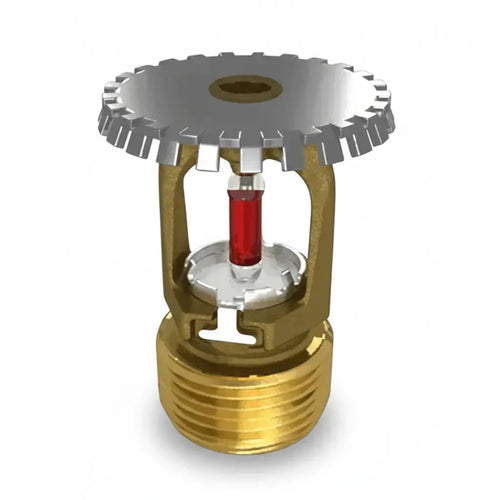


Deluge Fire Sprinkler System Components: The 2026 Professional Guide
In high-hazard environments, the reliability of your suppression system is defined by the precision of its smallest parts. A single incompatible fitting or a delayed valve response can turn a controlled environment into a catastrophe. Identifying the right deluge fire sprinkler system components has become increasingly complex as 2026 NFPA 25 standards now mandate stricter annual internal inspections and quarterly solenoid monitoring. You need more than just parts; you need a verified architecture that eliminates doubt.
We understand the frustration of navigating technical jargon while trying to source hardware that satisfies both safety inspectors and facility requirements. It's a high-stakes balancing act where compliance is mandatory and failure is not an option. This professional guide provides the clarity you need to master deluge system architecture. You'll learn how to identify critical components, from specialized open nozzles to the latest electric actuation technology designed for rapid response.
We'll examine the central role of the deluge valve in system actuation and provide a comprehensive checklist for sourcing professional-grade hardware like the PTR Electric Deluge VXD. By the end of this guide, you'll have the technical confidence to build or maintain a system that stands up to the most rigorous safety audits and protects your most critical assets.
Key Takeaways
- Identify the essential deluge fire sprinkler system components required for high-hazard protection, including the critical distinction between open nozzles and closed heads.
- Understand the technical role of the deluge valve and the specific reliability advantages of modern electric release systems like the PTR Electric Deluge VXD.
- Prepare for 2026 NFPA 25 updates that mandate annual internal valve inspections and quarterly testing of solenoid monitoring devices.
- Master the integration of heat and flame sensors with release panels to ensure instantaneous water discharge across the entire hazard area.
- Access a professional checklist for sourcing code-compliant hardware to streamline system repairs and ensure long-term operational readiness.
Understanding the Deluge System: Total Flood Architecture
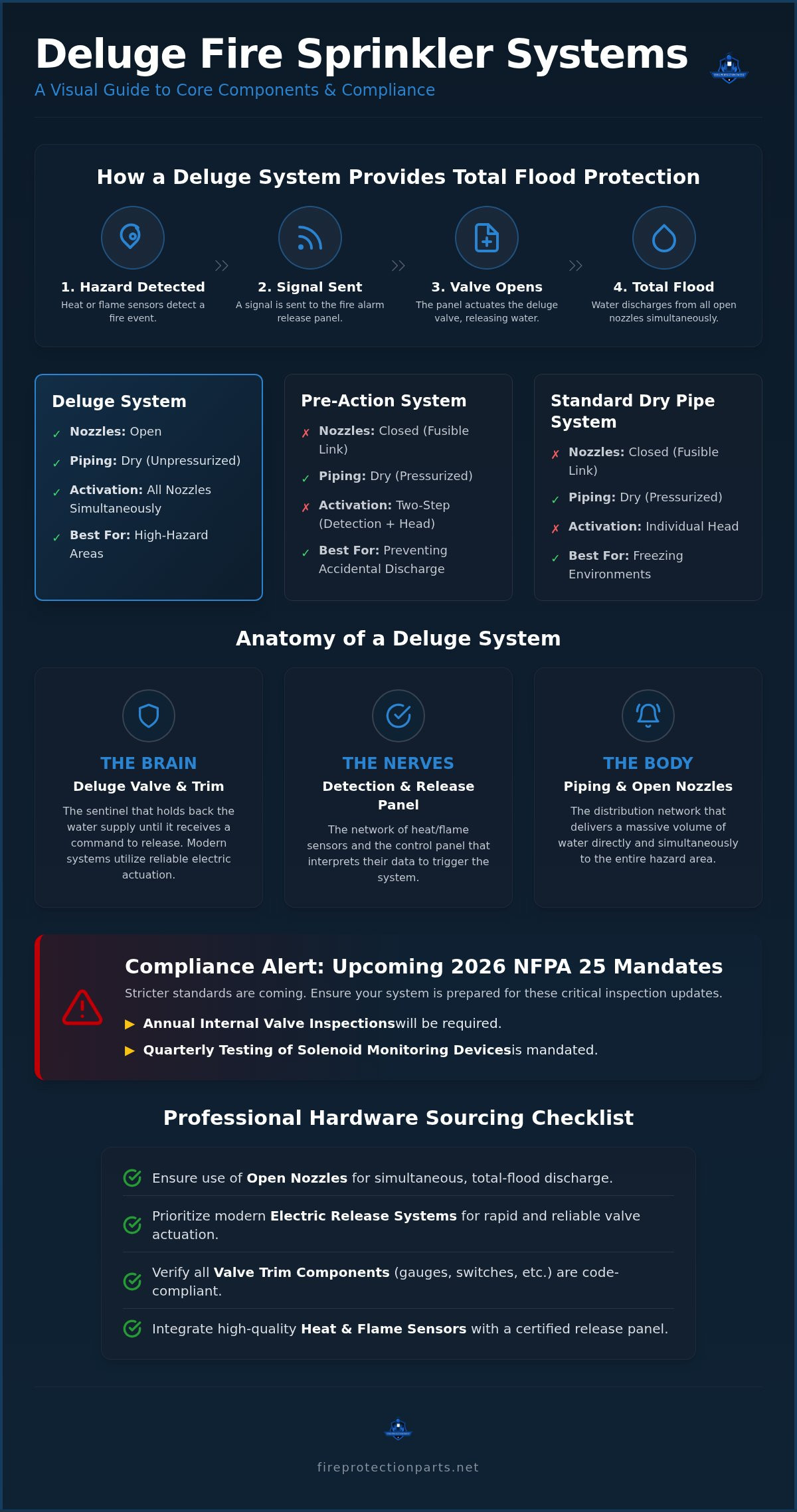
A deluge system is a specialized fire suppression strategy designed for high-risk environments where rapid fire spread is a certainty. Unlike traditional systems, Deluge fire sprinkler systems utilize unpressurized dry piping coupled with open sprinkler nozzles. There is no water in the pipes until the system actuates. Because the nozzles are always open, water discharges from every head simultaneously once the valve opens. This total flood architecture ensures that the entire hazard area is saturated at once. You don't have to wait for individual thermal elements to melt.
It's helpful to distinguish these from other dry systems. Dry pipe systems hold pressurized air to prevent freezing but still rely on closed heads. Pre-action systems require a specific detection signal before filling the pipes, often to protect sensitive electronics from accidental discharge. In contrast, the primary deluge fire sprinkler system components are built for raw speed and maximum volume. This setup is standard in aircraft hangars, transformer pits, and chemical storage facilities where a few seconds' delay could lead to a total loss.
Why Deluge Systems Outperform Standard Sprinklers in High-Risk Zones
Standard sprinklers react to heat at the ceiling level, head by head. In a high-hazard zone, a flash fire can outrun this localized reaction time. Deluge systems provide instantaneous response across the entire protected footprint. Beyond just extinguishing flames, the massive water volume provides critical heat attenuation. This cooling effect protects structural steel from warping under extreme temperatures. It's a functional remedy for environments with flammable liquids where fire spread is measured in feet per second.
The Core Component Hierarchy
Think of the system as a biological entity to understand how the parts interact. Each piece must function in perfect synchronization to ensure the protection of life and property.
- The Brain: This is the deluge valve and its actuation trim. It holds back the water supply until it receives a command to release.
- The Nerves: These are the detection devices, such as flame or infrared sensors, and the release panel that interprets their data.
- The Body: This includes the distribution piping network and the open nozzles that deliver the water directly to the hazard.
Each of these deluge fire sprinkler system components must be precisely matched. Using professional-grade hardware ensures the system meets evolving NFPA 13 requirements for 2026 and provides the peace of mind that comes from unwavering reliability.
The Deluge Valve: The Heart of Fire Suppression
The deluge valve is the sentinel of the entire system. While other deluge fire sprinkler system components distribute or detect, this valve controls the lifeblood of the suppression effort. It's designed to hold back the water supply under pressure until it receives a precise signal. Once triggered, it opens completely to flood the piping network instantly. This rapid transition from a dry state to a full discharge is what makes these systems so effective in high-hazard zones.
Actuation happens through three primary methods: hydraulic, pneumatic, or electric. Hydraulic and pneumatic systems rely on pressure changes in a pilot line to release the valve's clapper. Electric systems use a solenoid to trip the mechanism. As highlighted in the Guide to Deluge Fire Sprinkler Systems, the choice of actuation often depends on the specific hazard environment and the distance between the detection devices and the valve itself.
Surrounding the main valve is the "trim." This assembly of smaller valves, gauges, and pressure switches is vital for monitoring system status. Without a properly configured trim, you can't verify if the system is primed or if the water supply is adequate. If you are looking for specific replacement parts, you can source professional-grade valve trim online to ensure your system remains code-compliant and operational.
Modern Actuation: The PTR Electric Deluge VXD
Traditional pneumatic systems often face challenges with air leaks and compressor maintenance. The PTR Electric Deluge VXD represents a shift toward modern reliability. This electric deluge valve integrates seamlessly with modern Fire Alarm Control Panels (FACPs). It eliminates the need for complex pilot lines that are prone to environmental damage. By using a solenoid-actuated release, it reduces the overall maintenance footprint and provides a faster signal response. Contractors favor the VXD for industrial layouts where long-distance signal transmission is required without the lag of pneumatic pressure drops.
Valve Maintenance and Resetting Procedures
Operational efficiency depends on how quickly a system can be returned to service after a test or activation. Many modern valves feature an external reset. This allows you to re-arm the system without opening the valve body, saving hours of labor. However, the 2026 NFPA 25 update now mandates annual internal inspections for all deluge valves. You must check for diaphragm wear and debris buildup. These common failure points can prevent a tight seal or slow down actuation during an emergency. Always ensure the emergency manual release station is accessible and unobstructed. It serves as your final safeguard if the primary detection fails.
Distribution Hardware: Open Nozzles and Piping Networks
In a deluge system, the distribution network remains empty and open to the atmosphere until activation. This is a fundamental departure from standard wet or dry systems. Because the nozzles do not have a thermal element like a glass bulb or fusible link, they are always "on." The moment the deluge valve trips, every single head in the zone discharges water. This design is critical for high-hazard areas where you can't afford to wait for heat to build at the ceiling level. Every second counts when suppressing a flash fire.
Selecting the right K-factor for these nozzles is a matter of hydraulic precision. It's not just about getting water on the fire; it's about delivering a specific density over the entire hazard area simultaneously. If the K-factor is too low, you won't achieve the required cooling. Too high, and you risk overtaxing the water supply or dropping system pressure below effective levels. Achieving hydraulic balance across the entire grid ensures that the furthest nozzle performs as effectively as the one closest to the riser. For specific installations, using Viking Plastics CPVC fire sprinkler pipe provides a lightweight, corrosion-resistant alternative to traditional steel in approved applications.
Nozzle Selection for Specialized Hazards
Not all deluge fire sprinkler system components are created equal. For equipment like oil-filled transformers or chemical tanks, you need directional spray nozzles. These components allow you to aim the water precisely where it's needed most. Velocity and pressure are equally vital. The water must have enough force to penetrate the fire's thermal column and reach the fuel surface. In harsh industrial environments, specify nozzles with corrosion-resistant coatings. This prevents mineral buildup or chemical degradation from compromising the spray pattern over time. To ensure your entire facility remains protected, you can explore Direct Sales of Industrial Safety Equipment for Ex-certified ventilation and lighting hardware designed for these same hazardous zones.
Maintaining a deluge system requires high-quality materials that stand up to years of sitting dry. Internal corrosion is a constant threat in these networks. When air and moisture mix in dry pipes, scale can form and eventually clog the open nozzles during activation. Sourcing your sprinkler system components online ensures you have access to the exact grooved fittings and specialized pipes required for a code-compliant build. Grooved fittings are particularly useful for deluge systems. They allow for rapid installation and easy access during the annual internal inspections required by 2026 standards. Using reliable deluge fire sprinkler system components ensures that when the valve opens, the distribution network performs without compromise.
Actuation and Detection: The Trigger Mechanism
The detection network acts as the sensory array for the entire system. Without precise triggers, the most robust deluge fire sprinkler system components remain idle during a crisis. Every second counts. You have several options for detection, ranging from standard heat and smoke sensors to advanced infrared (IR) and ultraviolet flame detectors. In high-hazard industrial settings, flame detectors are the professional choice. They identify the specific light frequency of a fire within milliseconds, providing the speed necessary for total flood suppression.
One of the biggest concerns for facility managers is accidental discharge. A false trigger in a deluge system causes massive water damage and operational downtime. To mitigate this risk, engineers use "Cross-Zoning" logic. This requires the release panel to receive signals from two independent sensors before it energizes the solenoid. It's a functional remedy that ensures suppression only occurs when a fire is verified. For the ultimate safeguard, manual pull stations must be installed at every exit. This human-override component ensures that if automated sensors are compromised, the system can still be activated by on-site personnel.
Step-by-Step: How a Deluge System Fires
Understanding the sequence of operations is vital for maintenance and troubleshooting. The process is methodical and designed for maximum reliability.
- Detection: A sensor identifies a fire signature, such as rapid heat rise or a flame flicker, in the protected zone.
- Verification: The release panel confirms the signal, often by checking a second sensor or zone, to prevent false alarms.
- Actuation: Once verified, the panel sends an electric signal to the deluge valve solenoid to trip the release mechanism.
- Discharge: The valve opens fully. Water floods the piping network and discharges from all open nozzles simultaneously.
Integrating Detection with Facility Management Systems
Modern fire protection doesn't exist in a vacuum. Your release panel should integrate with your facility management system to provide real-time status updates. This allows for remote monitoring of valve positions and water pressure. When the system trips, it must also coordinate with audible and visual alarms to ensure a safe evacuation. One critical feature of professional-grade panels is the ability to test the detection circuit without discharging water. This allows for regular verification of the trigger mechanism without the risk of a wet discharge. If you're upgrading your control logic, you can find the necessary detection and control hardware to secure your facility and eliminate doubt.
Sourcing and Maintaining Code-Compliant Deluge Components
Sourcing the right deluge fire sprinkler system components shouldn't be a hurdle to your facility's safety. Many contractors and facility managers find themselves stuck when a single nozzle or solenoid fails, often facing long lead times from traditional distributors. While some firms insist you hire a full-service firm for every minor repair, a more efficient solution exists. You can now source specialized fire protection parts online, allowing you to maintain control over your maintenance schedule and budget.
When you're identifying replacement nozzles or escutcheons, precision is everything. A nozzle with the wrong spray angle or K-factor compromises the entire hydraulic balance of the grid. It's also vital to use Original Equipment Manufacturer (OEM) parts. Substituting generic components might save money upfront, but it often voids the system's UL Listing or FM Approval. For system upgrades, sourcing complete trim kits ensures that every gauge and valve works in harmony with the main deluge valve, eliminating the risk of mismatched hardware.
Critical Spare Parts Inventory for Facility Managers
Don't wait for a discharge to realize your inventory is empty. A successful recovery depends on having critical spares on hand. Stocking replacement nozzles allows for immediate restoration of the "total flood" capability after an event. You should also maintain a supply of specialized gaskets and solenoid repair kits. These small items are often the first to fail during the quarterly testing required by 2026 standards. While deluge nozzles are open, you must also ensure fire sprinkler head temperature ratings are correctly specified for any adjacent wet or dry zones. This prevents accidental activation in areas surrounding your high-hazard zones.
Verifying Compliance and Standards
Every piece of hardware in your suppression system must meet rigorous industry standards. Before purchasing, verify that all deluge fire sprinkler system components carry UL Listing and FM Approval. This isn't just a matter of paperwork; it's about ensuring the hardware can withstand the high pressures and harsh conditions typical of industrial fire protection. Adhering to the 2026 edition of NFPA 25 is also mandatory. This includes the new requirements for annual internal valve inspections and quarterly solenoid monitoring. Keeping your system compliant isn't a one-time task. It's a continuous commitment to unwavering reliability and the protection of your most valuable assets.
Browse our full catalog of code-compliant fire protection components.
Securing Your High-Hazard Facility with Precision
Maintaining a high-hazard suppression system requires more than just meeting code; it's about ensuring unwavering performance when seconds matter most. You've seen how the right architecture, from the total flood logic of open nozzles to the precision of the PTR Electric Deluge VXD, creates a reliable safety net. As 2026 NFPA 25 standards tighten requirements for internal valve inspections and solenoid monitoring, your choice of deluge fire sprinkler system components becomes the deciding factor in operational readiness.
Don't let procurement delays or generic parts compromise your facility's certification. By sourcing professional-grade hardware and maintaining a critical spare parts inventory, you eliminate the doubt that often accompanies complex safety systems. Whether you're upgrading a piping network with Viking Plastics CPVC or seeking expert technical support for a complex industrial layout, we act as your mission-driven partner. We stock the specialized hardware you need to keep your systems compliant and your assets protected.
Take the next step in securing your facility today. Shop Professional Deluge System Components at Fire Protection Parts and gain the peace of mind that comes from using verified, code-compliant hardware. Your commitment to excellence ensures that when the sensors trigger, your system will respond without compromise.
Frequently Asked Questions
What is the difference between a deluge system and a pre-action system?
A deluge system uses open nozzles and floods the entire zone simultaneously, whereas a pre-action system uses closed sprinkler heads and only fills the pipes with water after a detection event. Pre-action systems are designed to prevent accidental water damage in sensitive areas like data centers. Deluge systems prioritize raw speed and volume for high-hazard environments. The primary deluge fire sprinkler system components are built for immediate, total-area saturation rather than localized protection.
Can I use standard sprinkler heads in a deluge system?
You cannot use standard closed sprinkler heads in a deluge system because they rely on individual thermal elements to activate. Deluge systems require open nozzles that have no glass bulbs or fusible links. This design allows water to flow from every head the moment the main valve opens. Substituting standard heads would defeat the total flood purpose and create a dangerous delay in suppression during a high-speed fire event.
Does a deluge system require a fire pump?
Most deluge systems require a fire pump because they have a massive hydraulic demand that often exceeds municipal water pressure. Since every nozzle in the zone discharges at once, the system needs a high-volume water supply to maintain effective pressure at the furthest head. A dedicated fire pump system ensures that the required density is met across the entire hazard area, preventing the fire from outrunning the suppression effort.
How often should a deluge valve be tested?
According to the 2026 edition of NFPA 25, you must perform an internal inspection of the deluge valve annually. Additionally, solenoid monitoring devices now require quarterly testing to ensure electrical reliability. Full-flow trip tests are generally required every year to verify that the piping is clear and the nozzles are unobstructed. Consistent testing is the only way to guarantee that these critical deluge fire sprinkler system components will perform during an actual emergency.
What is the role of an electric solenoid in a deluge system?
The electric solenoid acts as the interface between the fire detection system and the mechanical deluge valve. When sensors identify a fire, the release panel sends an electrical current to the solenoid, which then trips the valve's release mechanism. Modern components like the PTR Electric Deluge VXD use this method to provide faster actuation and easier integration with facility management systems than traditional pneumatic or hydraulic pilot lines.
Are deluge systems prone to freezing?
While the distribution piping in a deluge system is dry and not prone to freezing, the deluge valve and its water supply piping must be protected. You must house the valve in a heated enclosure or room maintained at a minimum of 40°F. If the supply line freezes, the system won't discharge water when triggered. For systems in unheated areas, utilizing specific anti-freeze for fire protection in the supply lines can provide an additional layer of safety.
What are the most common causes of deluge system failure?
The most common causes of failure include obstructed nozzles, detection system malfunctions, and lack of valve maintenance. Internal corrosion in dry piping can create scale that clogs open nozzles during discharge. Additionally, if the main supply valve is accidentally left closed after a test, the system will actuate but fail to deliver water. Regular inspections and maintaining an OEM spare parts inventory are functional remedies to prevent these catastrophic failures.
Can CPVC piping be used in a deluge fire system?
Viking Plastics CPVC pipe is approved for use in specific fire protection applications, but its use in deluge systems depends on the hazard classification and listing. CPVC is highly resistant to the internal corrosion that often plagues dry steel pipes. However, it must be installed according to its specific UL listing, which usually requires it to be protected behind a thermal barrier. Always verify the specific listing and local codes before installation.

