



Fire Sprinkler Head Guard Guide: Protecting Your Suppression System in 2026
A single accidental impact on an unprotected sprinkler head can trigger a catastrophic discharge, flooding your facility with hundreds of gallons of water in minutes. It's a high-stakes risk that many facility managers and contractors face daily in warehouses, gyms, and mechanical rooms. Installing a professional-grade fire sprinkler head guard is the only reliable way to provide a physical barrier against mechanical injury. These essential components aren't just about preventing property damage; they're a critical requirement for maintaining safety and operational continuity in any high-impact environment.
You're likely aware that meeting safety standards is a complex task, and the pressure to remain compliant with evolving codes can feel overwhelming. This guide simplifies that process by teaching you how to select the right mechanical protection to ensure full compliance with the 2025 edition of NFPA 13. We'll examine the specific requirements for listed guards, clarify sizing and compatibility questions, and show you how to achieve zero accidental activations. By the end of this article, you'll have the expert knowledge needed to protect your suppression system with confidence and eliminate the fear of a costly, accidental discharge.
Key Takeaways
- Understand the high financial risk of accidental discharge and how mechanical barriers provide a cost-effective fail-safe against water damage.
- Identify the correct fire sprinkler head guard by matching thread sizes and sprinkler orientations to ensure a precise, secure fit.
- Navigate the 2025 edition of NFPA 13 standards to understand why "Listed" guards are mandatory for maintaining system integrity and insurance coverage.
- Differentiate between standard wire cages and heavy-duty steel guards to provide the appropriate level of protection for high-traffic or industrial zones.
- Learn how to manage large-scale facility upgrades and warehouse retrofits by sourcing professional-grade hardware that meets strict life safety requirements.
Why Fire Sprinkler Head Guards are Essential for System Integrity
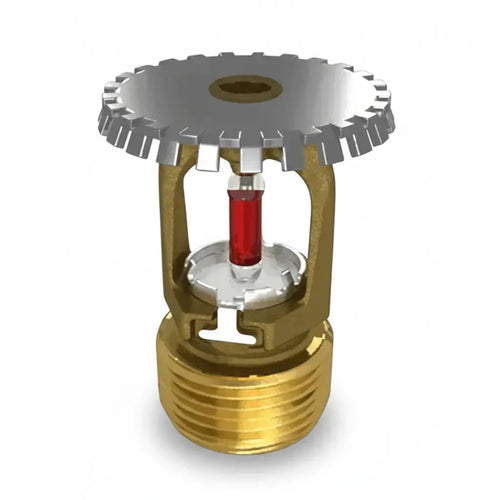
A fire sprinkler head guard is a purpose-built mechanical cage designed to shield the most vulnerable parts of your suppression system. While a fire sprinkler system is engineered for extreme durability against heat and pressure, the individual heads remain surprisingly fragile. Most heads rely on a small glass bulb filled with heat-sensitive liquid or a metal fusible link to trigger water flow. These components are designed to fail under specific conditions, but they can't distinguish between a fire's heat and a physical blow from a forklift or a stray basketball.
The financial argument for installing guards is undeniable. While a standard guard is a minimal investment, the cost of an accidental discharge is staggering. You aren't just paying for a replacement head. You're paying for emergency water extraction, potential mold remediation, damaged inventory, and significant business downtime. In high-risk environments like warehouses, gymnasiums, and low-ceiling mechanical rooms, these "nuisance" activations happen more often than facility managers care to admit. Proper protection is the only way to ensure your system remains a safety asset rather than a liability.
The Mechanics of Accidental Activation
The glass bulb in a sprinkler head is a precision instrument held under constant tension. It keeps a metal cap in place, sealing back the water in the pipes. When that bulb shatters due to a mechanical strike, the internal pressure immediately forces the cap out. Thousands of gallons of water can flood a room in under ten minutes. A fire sprinkler head guard provides the necessary clearance to ensure that tools, equipment, or sports gear never make direct contact with that sensitive trigger. It's a simple physical barrier that prevents a minor mistake from becoming a five-figure restoration project.
NFPA 13 Requirements for Sprinkler Protection
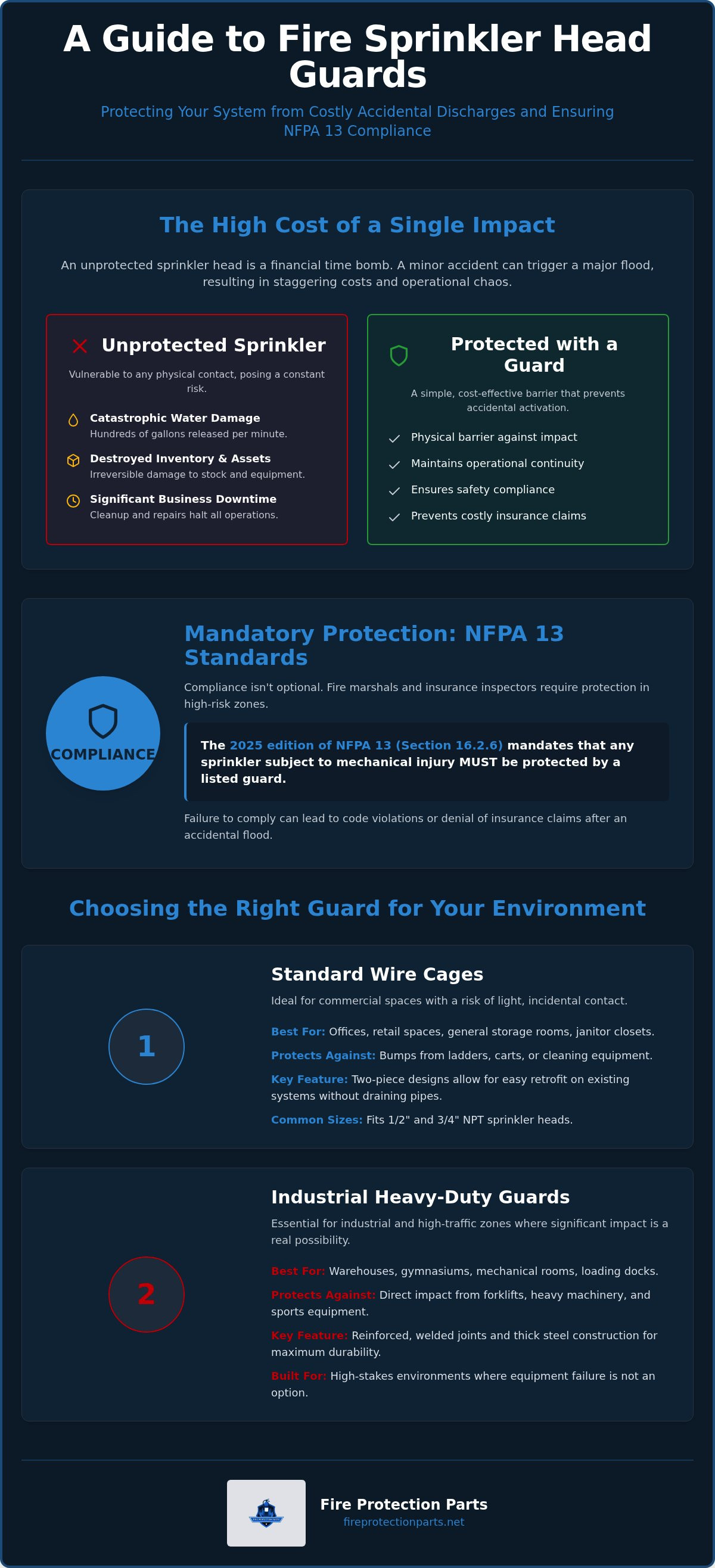
Compliance isn't optional for high-traffic zones. The 2025 edition of NFPA 13, specifically section 16.2.6, mandates that any sprinkler subject to mechanical injury must be protected by a listed guard. Fire marshals and insurance inspectors prioritize these high-risk zones during their annual walkthroughs. If your facility has sprinklers in areas where physical impact is likely, failing to install a fire sprinkler head guard can result in code violations or the denial of an insurance claim following a flood. Protective cages ensure your system stays intact until it's actually needed for life safety.
Understanding the Different Types of Sprinkler Head Cages
Selecting the correct fire sprinkler head guard requires more than just picking a cage that fits the pipe. You must match the hardware to the specific risk level of your environment. The right choice ensures your system remains compliant with NFPA 13 standards while providing the necessary structural defense against impact. Most facility managers choose between lightweight wire cages for general commercial areas and heavy-duty steel options for industrial zones where machinery is a constant factor.
Standard Wire Cages for Commercial Use
Standard wire cages are the go-to solution for retail spaces, offices, and general storage rooms. These are typically manufactured from sturdy, cold-drawn wire and finished in chrome, white, or red. They are engineered to protect 1/2 inch and 3/4 inch NPT sprinkler heads from incidental contact, such as a ladder bump during a lightbulb change or a stray broom handle in a janitor's closet.
One major advantage of these cages is the two-piece design. This allows for a quick retrofit onto existing systems without the need to drain pipes or shut down the entire suppression network. It's a cost-effective way to upgrade your protection levels instantly without professional installation fees. If you are managing a large-scale facility upgrade, you can find the right fire protection hardware to meet your specific project requirements and ensure long-term reliability.
Industrial Heavy-Duty Guards
In environments where heavy machinery or high-stacking forklifts are in operation, standard wire isn't enough. Industrial heavy-duty guards feature reinforced welded joints and significantly thicker steel construction. These guards are built to withstand considerable force, making them essential for loading docks, parking garages, and high-traffic warehouses. They provide a rigid perimeter that absorbs the energy of an impact before it reaches the fragile sprinkler head.
Beyond structural strength, material choice plays a role in the longevity of your system. While chrome-plated steel is standard, stainless steel guards are the preferred choice for corrosive environments like chemical storage or coastal facilities. Red-painted guards are frequently used to increase visibility in dim mechanical rooms, ensuring that operators see and avoid the sprinkler heads during routine maintenance. Choosing the right material ensures that your fire sprinkler head guard doesn't just stop a physical impact, but also resists environmental wear and corrosion over time.
Selecting the Right Guard for Your Specific Sprinkler Head
Precision is the foundation of fire safety. When you select a fire sprinkler head guard, you must move beyond general categories and focus on the technical specifications of your existing hardware. A mismatched guard doesn't just look unprofessional; it can fail to provide the necessary clearance during an impact or, worse, interfere with the water distribution pattern during an emergency. OSHA requires that all sprinkler system components be protected from mechanical damage, but this protection must never compromise the system's ability to suppress a fire.
Your first step is identifying the thread size of the sprinkler head. Most commercial and industrial systems utilize either 1/2 inch NPT or 3/4 inch NPT connections. A guard designed for a 1/2 inch head will not seat properly on a larger 3/4 inch frame, leading to a loose fit that rattles or falls off. Additionally, you must consider the manufacturer's frame design. While many wire cages are marketed as universal, specialized frames from major industry brands may have unique widths or heights that require a guard specifically engineered for that model's geometry.
Pendent vs. Upright Guard Configuration
Orientation dictates how a guard attaches to the sprinkler. Pendent sprinklers hang from the ceiling, while upright sprinklers point toward the roof. Because of these different positions, the mounting clips and cage depth must be oriented correctly to avoid obstructing the deflector. If a guard is installed incorrectly, it can block the spray of water, creating "dry spots" that allow a fire to spread. Always verify that the guard's mounting base is compatible with the specific orientation of your heads to ensure the cage sits securely without shifting over time.
Guards for Recessed and Semi-Recessed Heads
Protecting recessed or concealed heads presents a unique challenge for facility managers. These heads sit partially or fully within an escutcheon for aesthetic reasons, leaving very little room for a standard mounting clip. In these cases, you need extended or specialized guards designed to reach into the recessed opening without damaging the ceiling tile or the escutcheon itself. These specialized solutions allow you to maintain the high-end look of a commercial lobby or finished office while still providing a robust physical barrier against accidental impact from maintenance tools or cleaning equipment.
Compliance and Installation: Meeting NFPA 13 Standards
Achieving full compliance requires more than just buying a cage. You must ensure the installation aligns perfectly with the 2025 edition of NFPA 13. A poorly installed fire sprinkler head guard can be just as dangerous as an unprotected head if it blocks the water spray or damages the trigger mechanism. Professional contractors prioritize listed hardware to ensure the system operates exactly as the manufacturer intended during a life safety event. If you need to upgrade your system now, you can source NFPA-compliant components from our authorized inventory to ensure your facility meets every requirement.
Listed vs. Non-Listed Hardware
Listing isn't just a label; it's a certification of compatibility and performance. When a guard is "listed," it means testing laboratories like UL or FM Global have verified that the cage's wires are spaced correctly. They ensure the water can pass through without being deflected or broken into an ineffective mist. If you use a non-listed cage, you're guessing how the water will behave during a fire. This uncertainty can void your facility's insurance coverage and lead to failed fire inspections. Always verify the listing on the product packaging to confirm it's rated for your specific head model.
Installation Best Practices for Contractors
Installing a two-piece fire sprinkler head guard is a straightforward process that doesn't require draining the pipes. However, it requires a steady hand and the right tools. Use a precision screwdriver or small pliers to tighten the fasteners. Never use power tools for this task. The high torque and vibration of an impact driver can easily shatter the heat-sensitive glass bulb, leading to an immediate accidental discharge.
Follow these steps for a secure fit:
- Position the two halves of the cage around the sprinkler frame.
- Ensure the mounting base sits flush against the sprinkler's hex or threaded area.
- Tighten the screws until the guard is immobile but not deformed.
- Perform a final visual check to ensure the deflector is completely clear of the wires.
Regular inspections are vital for long-term system integrity. During your quarterly walkthroughs, look for signs of rust, deformation from previous impacts, or loose mounting clips. If a guard is bent, it has already done its job by absorbing an impact. You must replace it immediately to maintain the necessary level of protection. A compromised guard can shift over time, eventually making contact with the glass bulb and causing the very discharge you're trying to prevent.
Sourcing High-Quality Fire Protection Hardware Online
Procuring life safety hardware requires a higher level of scrutiny than standard maintenance supplies. Big-box retailers often stock generic items that lack the specific "Listed" status required for fire suppression. Professional-grade sourcing ensures that every fire sprinkler head guard you buy is certified for its specific application. This reliability is essential for contractors managing large-scale warehouse retrofits where consistency matters. Bulk ordering from an authorized retailer ensures that your entire facility meets uniform safety standards without compromise. You need a partner that understands the technical nuances of life safety and provides a dependable guide through complex requirements.
Navigating Online Procurement
Finding the exact replacement starts with the Sprinkler Identification Number (SIN). This code allows you to match the cage to the specific frame geometry of your heads. It is also vital to cross-reference your hardware with fire sprinkler head temperature ratings to ensure the guard doesn't interfere with thermal sensitivity. In many cases, a mismatched guard can delay the activation of the heat-sensitive bulb. For urgent repairs, prompt shipping is a priority. A damaged head in a high-traffic zone is a liability that requires an immediate, compliant remedy. Our specialized inventory is managed with this urgency in mind, providing the expert support needed to navigate complex procurement with ease.
Building a Reliable Inventory of Spare Parts
Planning for long-term system integrity involves more than reactive repairs. NFPA standards require facilities to keep a stock of spare parts on-site in a dedicated cabinet. Building a comprehensive inventory of sprinkler system components online allows you to respond instantly to mechanical damage. You shouldn't wait for an accident to happen before securing the necessary protection. If you're managing an industrial site with unique machinery risks, expert support can help you select heavy-duty guards. These custom configurations provide the highest level of impact resistance available in 2026, ensuring that your facility remains safe and operational without the threat of accidental discharge.
Maintaining a "sprinkler cabinet" isn't just a code requirement; it's a mission-driven strategy for business continuity. This cabinet should include a variety of guards, spare heads, and the appropriate wrenches for your specific system. By keeping these parts readily available, you eliminate downtime and ensure that any compromised component is replaced immediately with professional-grade hardware. This proactive approach to safety reflects a commitment to excellence and provides the peace of mind that comes from being fully prepared for any mechanical challenge.
Securing Your Facility for the Future
Protecting your fire suppression system is a proactive investment in property security and long-term code compliance. Throughout this guide, we've demonstrated how a professional fire sprinkler head guard acts as a critical fail-safe against the massive financial burden and operational downtime caused by accidental water discharge. By matching the right cage to your specific head orientation and ensuring every component is NFPA-listed, you eliminate the dangerous guesswork that often leads to inspection failures or insurance disputes.
Reliable protection isn't just about the hardware; it's about the expert confidence that your system remains intact and ready for life safety events. Don't wait for a mechanical strike to reveal vulnerabilities in your facility. You can Browse Professional Fire Sprinkler Head Guards at Fire Protection Parts to access NFPA code-compliant hardware backed by expert technical support. With fast shipping on critical safety components, we're here to help you maintain system integrity without unnecessary delay. Secure your high-traffic zones today and move forward with the peace of mind that your facility is fully protected against accidental activation.
Frequently Asked Questions
Do I need a guard for every fire sprinkler head in my building?
Protection is only required for heads located in areas where they are subject to mechanical injury. NFPA 13 mandates guards in high-impact zones like gymnasiums, warehouses, and low-clearance mechanical rooms. If a head is installed in a high, out-of-reach location where physical contact is unlikely, a guard is generally not necessary. Consult your local authority having jurisdiction (AHJ) to confirm specific requirements for your building's layout.
Will a sprinkler head guard affect the water spray pattern during a fire?
A listed fire sprinkler head guard is specifically engineered to ensure it doesn't obstruct water distribution. Testing agencies verify that the cage wires are positioned to allow the spray pattern to develop fully without significant deflection. Using unlisted, generic cages is dangerous because they can break the water stream into an ineffective mist. Always prioritize listed hardware to maintain the system's firefighting capabilities.
Are fire sprinkler head guards universal for all brands?
Guards are not universal; they must be matched to the specific frame geometry and thread size of the head. While some wire cages are marketed as "universal" for 1/2 inch or 3/4 inch NPT heads, many major equipment manufacturers produce frames with unique dimensions that require specific, compatible guards. A loose fit can lead to the guard shifting or falling off, potentially damaging the head during an impact.
Can I install a sprinkler head guard myself or do I need a contractor?
Facility managers can often install two-piece, retrofitted guards without specialized fire protection licensing, as these do not require draining the pipes. However, the process requires extreme care to avoid making contact with the fragile glass bulb. If the installation involves one-piece guards that require the removal of the sprinkler head itself, a licensed fire protection contractor must perform the work to ensure the system remains pressurized and operational.
What is the difference between a head cage and a heavy-duty guard?
The primary difference is the level of impact energy they can absorb. A standard head cage is made of thin wire and is suitable for protecting against incidental contact from ladders or cleaning tools in commercial offices. A heavy-duty guard is constructed from thicker, reinforced steel with welded joints. These are essential for industrial zones where high-speed impacts from forklifts or heavy machinery are a constant risk.
How do I know what size guard to buy for my sprinkler system?
You must identify two key factors: the thread size and the Sprinkler Identification Number (SIN). Most commercial systems use 1/2 inch or 3/4 inch NPT connections. The SIN, usually stamped on the deflector, identifies the exact frame model. Using these details ensures you select a fire sprinkler head guard that provides the correct clearance for the deflector and a secure mounting base for the frame.
Do fire marshals require guards on sprinklers in residential garages?
Many fire marshals require guards in residential garages due to the high probability of mechanical strikes from car racks, ladders, or storage activities. Because garage ceilings are often lower than those in living areas, the heads are at a much higher risk of accidental activation. Installing a simple wire cage is a cost-effective way to prevent a catastrophic flood in a residential setting while meeting local safety codes.
Can a guard be used on a recessed fire sprinkler head?
Yes, but it requires a specialized recessed guard designed to fit within the escutcheon. Standard cages are too wide to sit inside a recessed opening. These specialized guards feature an extended mounting base that reaches the threaded portion of the head without putting pressure on the ceiling tile. This ensures that even aesthetically pleasing, flush-mounted heads receive the physical protection required in high-traffic commercial environments.

