

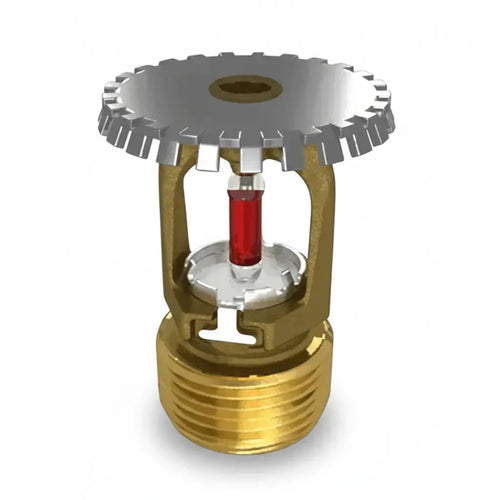


Fire Sprinkler Head Thread Size Chart: The 2026 Identification Guide
A single millimeter of difference in a pipe thread isn't just a minor plumbing error; it's a catastrophic failure point for your fire suppression system. You've likely felt the pressure of staring at a sprinkler head, unsure if you're holding a 1/2 inch NPT or a BSPT equivalent while searching for a reliable fire sprinkler head thread size chart. It's easy to confuse the orifice K-factor with the actual thread diameter, but making the wrong choice leads to leaks, system downtime, and compromised safety.
We understand that precision is the foundation of unwavering protection. This guide provides the technical clarity you need to identify your hardware with absolute certainty. You'll master the critical differences between NPT and BSPT standards, learn to measure tapered threads accurately without a gauge, and gain the confidence to order code-compliant replacement parts that fit perfectly. We've simplified the identification process so you can maintain your system with professional assurance and zero doubt.
Key Takeaways
- Distinguish between a sprinkler's K-factor and its physical thread size to ensure a pressure-tight, leak-free connection.
- Utilize our definitive fire sprinkler head thread size chart to instantly match nominal dimensions with actual outside diameter measurements.
- Identify the critical structural differences between NPT and BSPT standards by comparing thread angles and TPI counts.
- Master the step-by-step process for measuring tapered threads with digital calipers to achieve professional-grade accuracy.
- Understand why selecting verified, code-compliant hardware from brands like Viking is essential for long-term system integrity.
Understanding Fire Sprinkler Thread Sizes and System Compatibility
The Fire sprinkler remains the most effective tool for life safety and property protection. In North America, the National Pipe Taper (NPT) is the industry standard for these devices. This standard, officially known as ASME B1.20.1, ensures that components from different manufacturers fit together securely. The defining characteristic of NPT is its tapered design. Unlike straight threads that rely on gaskets, NPT threads are cut at an angle. As you tighten the sprinkler into the fitting, the threads wedge together to create a metal-to-metal, pressure-tight seal. This mechanical bond is vital for maintaining system integrity under high pressure.
Understanding the fire sprinkler head thread size chart is essential because thread size is not a measurement of the sprinkler's water output. It refers strictly to the external connection point. In most residential systems, 1/2 inch NPT is the standard. Commercial installations often utilize 3/4 inch NPT to accommodate higher flow requirements. Selecting the wrong size isn't just a nuisance; it's a code violation that prevents the system from functioning during an emergency. You must identify the physical dimensions of the thread before purchasing any replacement hardware.
Why Thread Size Matters for Fire Safety
Precision is the only acceptable standard in fire protection. If a thread is mismatched, the system will leak or fail entirely when the pipes are pressurized. NFPA 13 mandates strict adherence to thread uniformity to ensure every component works as a cohesive unit. Proper thread engagement allows the sprinkler to withstand the intense hydraulic forces present during a fire. A secure fit ensures the sprinkler stays in place, even when the system reaches its maximum rated pressure. Don't compromise on thread quality; it's the foundation of your building's safety.
Thread Size vs. Orifice Size (K-Factor)
One of the most frequent points of confusion for facility managers is the difference between thread size and orifice size, also known as the K-factor. A 1/2 inch NPT thread does not mean the internal opening is 1/2 inch wide. The K-factor, such as 5.6 or 8.0, determines the actual flow rate at a specific pressure. Sprinkler manufacturers like Viking design their frames to house various orifice sizes while maintaining a standard thread base. While you are identifying the correct thread for your system, remember that fire sprinkler head temperature ratings are completely independent of the thread size. You must verify both the physical fit and the thermal activation point to ensure a safe, code-compliant replacement.
Fire Sprinkler Head Thread Size Chart: NPT vs. K-Factor
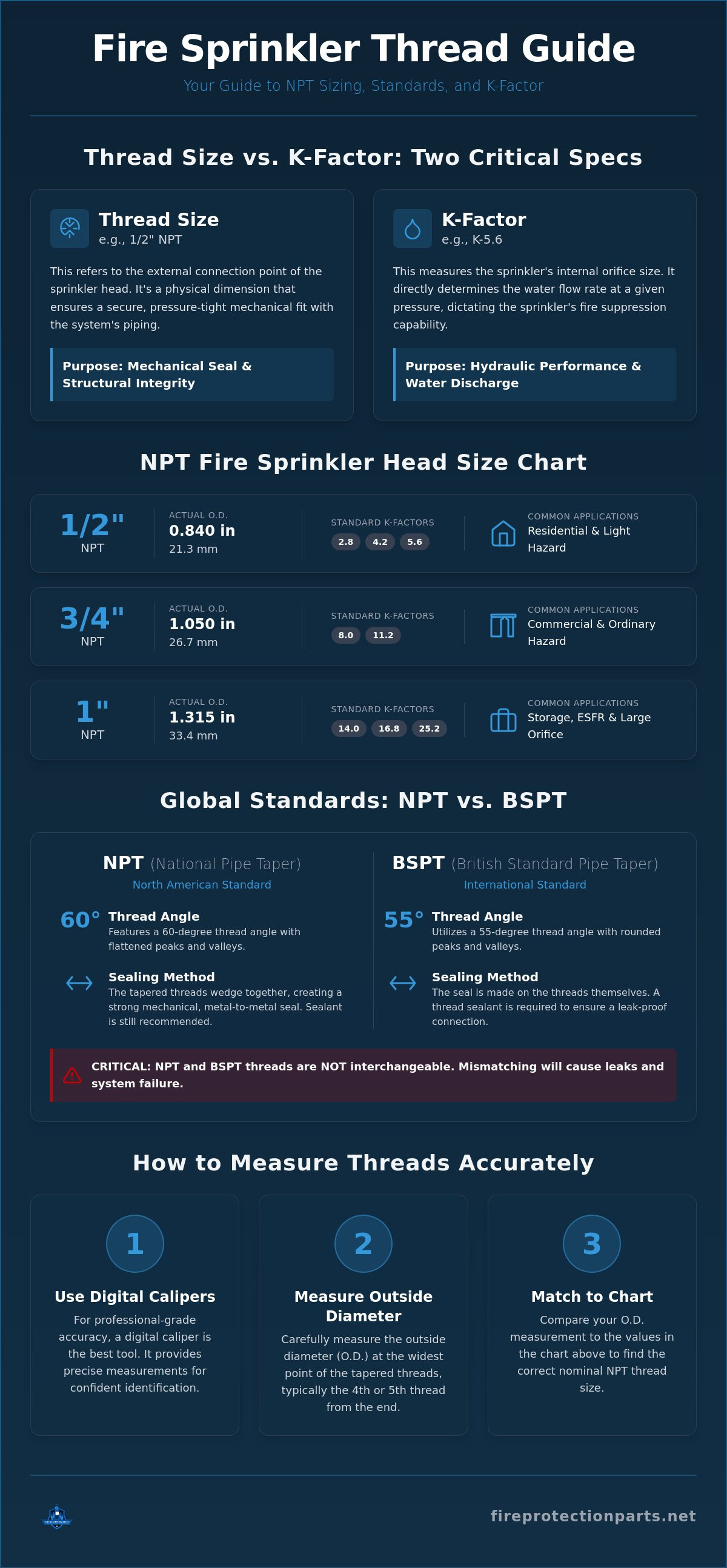
Precision is non-negotiable in fire suppression. If you're replacing a head, you can't guess. The frame's thread must match the system's piping perfectly to ensure a leak-free seal. The following fire sprinkler head thread size chart clarifies the relationship between nominal sizes and the physical measurements you'll find in the field. It bridges the gap between technical specifications and real-world application.
| Nominal Thread Size | Actual Outside Diameter (O.D.) | Standard K-Factors | Common Applications |
|---|---|---|---|
| 1/2" NPT | 0.840 inches (21.3 mm) | K-2.8, K-4.2, K-5.6 | Residential, Light Hazard |
| 3/4" NPT | 1.050 inches (26.7 mm) | K-8.0, K-11.2 | Commercial, Ordinary Hazard |
| 1" NPT | 1.315 inches (33.4 mm) | K-14.0, K-16.8, K-25.2 | Storage, ESFR, Large Orifice |
Standard 1/2 Inch NPT Sprinkler Data
Residential systems frequently utilize 1/2 inch NPT threads. This size measures roughly 0.840 inches at the widest part of the taper. It's the backbone of NFPA 13D compliance. Most K-5.6 heads use this thread because it offers the right balance of flow and size for residential safety. While smaller K-factors like 2.8 or 4.2 exist for specialized residential needs, they almost always share this universal 1/2 inch thread base to simplify installation.
Commercial 3/4 Inch and 1 Inch NPT Data
Commercial hazards demand higher water volumes. K-8.0 and K-11.2 heads typically require 3/4 inch NPT threads to handle the increased flow without excessive pressure loss. If you're managing a warehouse or high-piled storage area, you'll likely encounter 1 inch NPT threads. These are standard for K-14.0 or larger ESFR (Early Suppression, Fast Response) heads. These larger connections ensure the piping can supply the necessary water density required by the NFPA 13 standard. You can source these heavy-duty sprinkler system components online to keep your facility protected.
Verify your measurements twice. A small error in identification can lead to a massive failure under pressure. For those who value quality and precision, sourcing code-compliant fire sprinkler heads ensures your system remains operational and compliant with the latest 2026 safety standards.
NPT vs. BSPT: Navigating Global Pipe Thread Standards
While the fire sprinkler head thread size chart provided in the previous section ensures you select the correct diameter, it doesn't account for the thread standard. In North America, the National Pipe Taper (NPT) is the baseline for fire suppression systems. Across Europe, Asia, and much of the rest of the globe, the British Standard Pipe Taper (BSPT), often referred to under ISO 7-1, is the dominant specification. These two standards are fundamentally incompatible. You cannot mix them without risking a catastrophic seal failure.
The primary difference lies in the thread geometry. NPT threads feature a 60-degree included angle with flattened peaks and valleys. In contrast, BSPT threads use a 55-degree angle and have rounded peaks and valleys. Even if the 'threads per inch' (TPI) count matches, which it does for 1/2 inch and 3/4 inch sizes, the difference in angle prevents a proper mechanical seal. Attempting to force these together is a recipe for system failure. The threads will bind prematurely, leaving gaps that high-pressure water will eventually exploit.
Visual Identification of BSPT vs. NPT
Distinguishing between these standards requires a keen eye or manufacturer documentation. Most BSPT sprinkler heads are stamped with "ISO" or "R" markings to indicate their adherence to international standards. If you don't see these markings, verify the part number against the manufacturer's data sheet. In the United States, systems utilizing Viking CPVC fire sprinkler pipe almost exclusively use NPT fittings. This consistency simplifies procurement, but you must remain vigilant when sourcing heads for legacy systems or international projects. Viking sprinkler heads are a gold standard for reliability in both NPT and BSPT configurations, provided you match them to the correct piping standard.
Safety Risks of Cross-Threading
There is a dangerous "almost fits" trap in the field. A 1/2 inch BSPT head will thread into a 1/2 inch NPT fitting for about two or three turns before it starts to resist. Some technicians mistakenly believe this resistance indicates a tight seal and apply more torque. This doesn't create a seal; it deforms the metal. PTFE tape or pipe dope cannot fix this. These materials are designed to lubricate threads and fill microscopic voids, not to bridge the structural gap created by mismatched 55-degree and 60-degree angles. Under the intense pressure of a fire event, a mismatched head can literally blow out of the fitting. Code compliance requires an exact match to ensure the system performs when it's needed most.
How to Measure Fire Sprinkler Head Thread Sizes Accurately
Field identification is a critical skill for any facility manager or contractor. While a fire sprinkler head thread size chart provides the necessary reference data, you must know how to capture accurate physical measurements to use it effectively. Guesswork is not an option when system pressure can exceed 175 PSI. To ensure a perfect match, follow a methodical approach using the right tools and techniques.
- Use Digital Calipers: Avoid using a standard tape measure. A digital caliper provides the decimal precision required to distinguish between similar sizes.
- Identify the Taper: Remember that NPT threads are tapered. The diameter at the tip is smaller than the diameter at the base.
- Verify the TPI: Use a thread pitch gauge or a ruler to count the threads per inch (TPI). This helps confirm the standard and the nominal size.
- The Field Fitting Test: If you have a known, new NPT fitting, attempt to hand-thread the head. It should engage smoothly for several turns before tightening.
Measuring Tapered Threads: The Widest Point Rule
To get a reliable reading, you must measure the outside diameter (O.D.) at the correct location. Place the jaws of your calipers at the widest point of the thread, which is the area closest to the sprinkler frame. Measuring at the very tip will result in a smaller, inaccurate reading that doesn't match standard charts. The outside diameter of a standard 1/2 inch NPT thread is 0.840 inches. If you are working with larger hardware, a 3/4 inch NPT thread will measure approximately 1.050 inches, while a 1 inch NPT head measures 1.315 inches. Always clean the threads of any old pipe dope or tape before measuring to ensure the caliper jaws seat properly on the metal peaks.
Identifying Threads in the Field Without Tools
If you don't have calipers on hand, you can often find the necessary data on the sprinkler itself. Every modern head features a Sprinkler Identification Number (SIN) stamped onto the deflector. This 4 to 7 digit alphanumeric code is a direct link to the manufacturer's technical data sheet, which lists the exact thread size and standard. Additionally, many frames are cast with "NPT" or "ISO" markings to indicate the thread standard. If the markings are obscured by corrosion or paint, don't take risks with system integrity. You can always consult a professional at Fire Protection Parts to verify your hardware before placing an order. Ensure your system remains code-compliant by purchasing verified fire sprinkler heads that match your existing infrastructure perfectly.
Sourcing Code-Compliant Replacement Sprinkler Heads
Identifying the correct dimensions using a fire sprinkler head thread size chart is only the first step. The physical integrity of the thread itself is what ensures a lifetime of leak-free service. Purchasing from reputable suppliers is the only way to guarantee that the hardware meets strict manufacturing tolerances. Unbranded or "generic" heads often suffer from poor thread quality, which can lead to galling during installation or seal failure under high-pressure surges. This need for precision is also found in high-performance mechanical fields, such as custom motorcycle racing, where parts from fatboydesignusa.com must meet exact specifications to ensure safety. When safety is at stake, there is no room for compromise on component quality.
For enthusiasts who apply this same standard of mechanical excellence to their own vehicles, click here to explore the high-performance components available from Project Faster Inc.
Compatibility extends beyond just the thread diameter. You must also consider the material of your existing system. For instance, if your facility utilizes Viking Plastics CPVC Pipe for Fire Protection, ensure your replacement heads are approved for use with plastic fittings. Steel systems have different torque requirements and tolerance levels. Sourcing your fire protection parts online from a specialized distributor ensures you receive hardware that is verified for these specific applications, providing the professional assurance your facility requires.
Viking and Specialty Sprinkler Heads
Viking sprinkler heads are widely recognized as the gold standard for reliability in both NPT and BSPT configurations. Their precision-engineered threads provide a consistent, predictable fit that streamlines installation. For specialized environments, you may need dry pendent sprinklers, which require specific extension lengths and thread configurations to prevent water from entering the drop pipe in freezing conditions. In high-risk areas, pairing these heads with ASC seismic bracing ensures the entire assembly remains secure during a seismic event. These professional-grade components are designed to stay ahead of industry standards while remaining grounded in real-world performance.
Final Checklist Before Ordering
Before you finalize your procurement, perform a final verification to eliminate the risk of ordering the wrong part. A mismatched head causes delays and safety gaps. Use this checklist to confirm your selection:
- SIN (Sprinkler Identification Number): Verify this against the manufacturer's data sheet.
- Temperature Rating: Ensure the thermal activation point matches the original design.
- K-Factor: Confirm the orifice size matches the system's hydraulic calculations.
- Thread Size: Re-check your fire sprinkler head thread size chart to confirm NPT vs. BSPT and nominal diameter.
- Aesthetic Finish: Ensure the finish, whether it's chrome, brass, or white, matches the existing installation for visual consistency.
Ready to secure your system with code-compliant hardware? Browse our full catalog of fire sprinkler heads here. We provide the components you need to restore your protection with absolute confidence.
Secure Your System with Precision-Engineered Hardware
Mastering the technical nuances of thread identification is the only way to eliminate the risks of system failure. By utilizing the fire sprinkler head thread size chart, you've gained the clarity needed to maintain a code-compliant suppression system. Remember that the distinction between NPT and BSPT standards is the difference between a pressure-tight seal and a catastrophic leak. Correct measurement at the widest point of the taper ensures your replacement heads engage perfectly every time.
Don't leave your facility's safety to chance. As an authorized Viking retailer, we provide the high-durability hardware required for mission-critical protection. Our team offers expert technical support to help you verify your specifications before you buy. With fast shipping on all replacement hardware, you can restore your system's integrity without unnecessary downtime. Shop Code-Compliant Fire Sprinkler Heads at Fire Protection Parts today. You now have the expertise to make an informed, safe choice for your building's long-term protection.
Frequently Asked Questions
What is the most common fire sprinkler head thread size?
The 1/2 inch NPT thread is the industry standard for residential and light hazard commercial systems. It typically supports the K-5.6 orifice, which is the most widely installed sprinkler configuration. In larger commercial or industrial applications, you will more frequently encounter 3/4 inch NPT threads designed to accommodate higher flow rates and larger K-factors like 8.0 or 11.2.
Is 1/2" NPT the same as 1/2" BSPT?
No, NPT and BSPT are fundamentally different standards and are not interchangeable. While they share a similar nominal diameter, NPT uses a 60-degree thread angle with flattened peaks, whereas BSPT uses a 55-degree angle with rounded peaks. Attempting to mix these standards prevents a proper metal-to-metal seal. This mismatch leads to leaks or catastrophic failure when the system is pressurized during a fire event.
Can I use a 3/4" sprinkler head on 1/2" piping?
You cannot install a 3/4 inch head directly into a 1/2 inch fitting. While some technicians consider using reducers or adapters, this practice often violates NFPA 13 standards and alters the system's hydraulic calculations. It's critical to match the sprinkler head's thread size to the original system design. Consult a fire sprinkler head thread size chart to ensure you are ordering the correct replacement for your existing pipe dimensions.
How do I know if my fire sprinkler is NPT or BSPT?
Check the deflector or the frame for specific markings like "ISO" or "R," which indicate a BSPT standard. If no markings are visible, the default for North American systems is almost always NPT. You can confirm this by looking up the Sprinkler Identification Number (SIN) on the manufacturer's website. This alphanumeric code provides the exact factory specifications for the thread standard and size used for that specific model.
What happens if I use the wrong thread size in a fire system?
Using the wrong thread size results in a compromised seal that will fail under pressure. If the threads are too small, the head won't engage; if they are mismatched, such as NPT in a BSPT fitting, the head may seem to fit but will leak. This failure leaves your building unprotected and creates a significant liability. Proper thread engagement is the only way to ensure the system performs its life-saving function.
Does the K-factor of a sprinkler head affect its thread size?
Yes, the K-factor and thread size are directly related to the required water discharge volume. Standard K-5.6 heads almost always use 1/2 inch NPT threads. As the K-factor increases to 8.0 or 11.2, the thread size typically increases to 3/4 inch NPT to allow for greater flow. Specialized high-density heads, such as those with a K-factor of 14.0 or higher, usually require 1 inch NPT connections to maintain hydraulic efficiency.
Can I measure thread size with a standard ruler?
A standard ruler is not precise enough for identifying tapered pipe threads. Because NPT threads decrease in diameter toward the tip, a ruler measurement often leads to confusion between 1/2 inch and 3/4 inch sizes. You should use a digital caliper to measure the outside diameter at the widest point of the taper. Comparing this precise decimal reading to a fire sprinkler head thread size chart is the only way to guarantee an accurate identification.
Where can I find the thread size listed on a sprinkler head?
Thread sizes are rarely stamped directly onto the sprinkler frame. You must locate the SIN (Sprinkler Identification Number) on the deflector plate. Once you have this code, you can reference the manufacturer's technical data sheet to find the nominal thread size. If the SIN is unreadable due to corrosion or paint, you will need to take physical measurements of the outside diameter to determine the correct size for your replacement hardware.

