



Guide to Air Compressors for Dry Pipe Systems (2026)
In 2026, selecting an air compressor is no longer just a matter of matching CFM to pipe volume. It's a critical decision regarding certified compliance under the latest NFPA 13 listing mandates. You understand that a dry pipe system is only as reliable as its pressure source. Dealing with unexpected system trips or the maintenance burden of a repurposed shop compressor creates unnecessary risk for your facility. Choosing the right air compressor for dry pipe system installations ensures that your fire suppression remains ready when it matters most.
This guide provides the professional assurance you need to master technical requirements and NFPA 13 compliance standards. We'll eliminate the confusion surrounding the new UL 1450 listing requirements and explain why dedicated fire protection hardware is a non-negotiable asset. You will learn the specific benefits of oil-less versus lubricated units and how to reduce system downtime through better selection criteria. We provide a clear, methodical look at the components that guarantee peace of mind and long-term performance.
Key Takeaways
- Understand how supervisory pressure maintains system integrity and why standard air remains the industry benchmark for dry pipe protection.
- Compare oil-less and lubricated configurations to determine which motor design delivers the best longevity for your specific riser room environment.
- Ensure full compliance with NFPA 13 by mastering the 30-minute fill requirement for your air compressor for dry pipe system.
- Learn the critical steps for mounting and regulating your air supply with an Air Maintenance Device to prevent system trips and excessive wear.
- Discover why sourcing professional-grade hardware from specialized retailers is essential for meeting 2026 life safety and UL listing standards.
Understanding the Role of Air Compressors in Dry Pipe Sprinkler Systems
A dry pipe system is a pressurized barrier against water damage. In these systems, the piping is filled with compressed air rather than water. This setup is essential in environments where freezing temperatures would otherwise rupture pipes. The air compressor for dry pipe system installations acts as the mechanical latch that prevents water from entering the network until it's actually needed. Without consistent supervisory pressure, the system cannot function.
The Supervisory Pressure Latch Mechanism
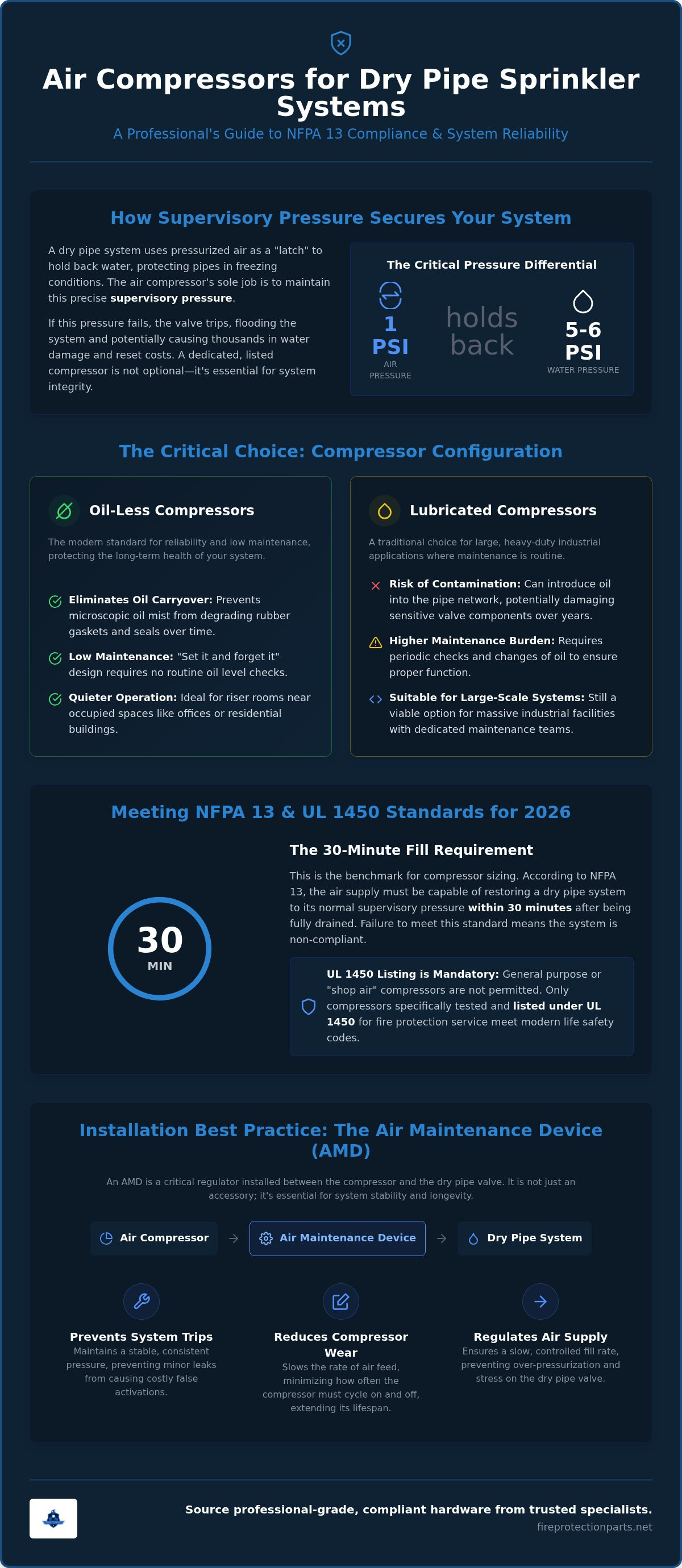
The dry pipe valve operates on a differential pressure principle. Typically, a small amount of air pressure holds back a much larger volume of water pressure. This ratio is often 1:5 or 1:6, meaning one pound of air pressure can hold back five or six pounds of water pressure. Maintaining this specific air-to-water ratio is paramount for system stability. If the air pressure drops too low due to a leak or compressor failure, the valve "trips," allowing water to flood the pipes. Supervisory pressure is the constant air force within the system that prevents the dry pipe valve from tripping until a sprinkler head opens. Keeping this pressure consistent eliminates the risk of false activations.
Pre-Action Systems vs. Dry Pipe Requirements
Air supply needs shift when you move from standard dry pipe systems to pre-action systems. In a single-interlock pre-action system, the air is primarily for supervision and pipe integrity detection. It doesn't hold back the water; an electronic signal from a smoke or heat detector does that. However, in a double-interlock system, both the detection system and a drop in air pressure must occur before water enters the pipes. This adds a layer of protection against accidental discharge. Sourcing professional sprinkler system components online is the best way to ensure your air supply is compatible with these complex configurations. Whether you're protecting a freezer warehouse or a data center, the air compressor must be sized specifically for the volume and interlock type of the system it serves.
Key Configurations: Oil-Less vs. Lubricated Compressors
Selecting the right air compressor for dry pipe system reliability requires a fundamental choice between two motor configurations: oil-less and lubricated. Both designs serve specific operational needs, but their impact on long-term system health differs significantly. You must weigh the initial hardware cost against the potential for long-term component degradation within your piping network.
Oil-less compressors have become the preferred choice for modern fire riser rooms. Their primary advantage is the elimination of oil carryover. In lubricated systems, microscopic oil particles can bypass the piston and enter the piping network. Over several years, this oil mist collects on rubber gaskets and sprinkler seals. The chemical reaction causes these components to soften or swell, eventually leading to system leaks or mechanical failure of the dry pipe valve. By removing oil from the compression chamber entirely, you protect the integrity of every seal in the system.
When to Choose Oil-Less Technology
Oil-less technology is the standard for facilities prioritizing low maintenance and air quality. These units are generally quieter than their lubricated counterparts. This makes them ideal for residential buildings or office complexes where riser rooms are situated near occupied spaces. Most riser-mount oil-less units operate within the 1/6 HP to 2 HP range, providing sufficient power for standard systems without the need for constant oil level checks. If you're designing a new system, you can find compliant air compressors for sprinkler systems that meet these modern standards.
The Case for Lubricated Heavy-Duty Units
Lubricated compressors still hold a place in large-scale industrial applications where system volumes are massive. These units are built for durability and superior heat dissipation. Because the oil film reduces friction on the pistons and rings, the motor can handle more frequent run cycles without overheating. This is a critical factor for systems where the air supply must work harder to maintain supervisory pressure over long distances.
The trade-off for this durability is a more demanding maintenance cycle. Facility managers must strictly monitor oil levels and maintain moisture separators to prevent contamination. If the separation process fails, the resulting damage to system gaskets can be catastrophic. For most 2026 applications, the professional assurance and reduced risk offered by oil-less units make them the safer choice for long-term reliability.
NFPA 13 Compliance: Sizing and the 30-Minute Fill Requirement
NFPA 13 standards aren't suggestions. They're the backbone of fire safety. The 30-minute fill requirement is a primary benchmark for system design. If your air compressor for dry pipe system takes longer than 30 minutes to pressurize the network from zero to its required supervisory level, the installation fails compliance. This rule ensures that your facility doesn't remain vulnerable for extended periods after a system trip, routine maintenance, or a required inspection. It's about restoring protection as quickly as possible.
Calculating system volume is the first step in meeting this mandate. You must account for the internal volume of every linear foot of piping in the network. Performance isn't static, either. High-altitude installations or extremely cold environments require specific performance adjustments. Air is thinner at higher elevations, and cold air is denser; both factors change how an air compressor for dry pipe system reaches its target pressure. Ignoring these environmental variables often leads to systems that fail to meet the 30-minute mark during cold weather testing.
Calculating Compressor Capacity (CFM)
To find the required Cubic Feet per Minute (CFM), you use a standard formula: divide the total system volume in gallons by 7.5 to convert to cubic feet, then divide by 30 minutes. It's a simple calculation, but the stakes are high. Undersizing means you'll never hit the required pressure in time. Conversely, oversizing is just as dangerous. A compressor that's too powerful for the pipe volume will "short-cycle," turning on and off too rapidly. This creates excessive heat and leads to premature equipment failure. Ensuring that air compressors for dry sprinkler systems are matched to the specific dry valve model and system volume is the only way to guarantee operational harmony.
The UL 1450 Standard for 2026
The most significant shift for 2026 is the mandatory UL 1450 listing for dedicated compressors. This standard subjects hardware to rigorous testing for motor durability and pressure switch reliability. Using unlisted "shop air" units as a band-aid solution is no longer acceptable and creates massive liability for contractors and facility owners. In 2026, a UL 1450 listing is the legal and technical baseline for any air compressor used in a life safety application. Choosing listed equipment eliminates the doubt surrounding motor longevity and ensures that your pressure switch won't fail during a critical supervisory event. It's a matter of professional verification over guesswork.
Installation Best Practices and Air Maintenance Devices
Installing an air compressor for dry pipe system reliability requires a methodical approach. A poorly mounted unit or an unregulated air line can lead to premature mechanical failure or catastrophic system trips. You must treat the installation as a precise integration rather than a simple hardware addition. Following a standardized five-step process ensures your system remains compliant and operational for the long term.
Riser-Mount vs. Tank-Mount Layouts
Space constraints often dictate your mounting choice. Riser-mount units are the premier space-saving solution for small mechanical rooms. These compressors attach directly to the system piping, which minimizes the footprint. However, for larger systems with higher air demand, tank-mount units are superior. The tank provides a stable air reserve that reduces the frequency of motor starts. This buffer protects the motor from the wear of frequent cycling. Regardless of the layout, you should always use vibration isolation pads or flexible connectors. This prevents the constant hum of the motor from causing pipe fatigue or loosening fittings over time.
The Role of the Air Maintenance Device (AMD)
The compressor should never be piped directly to the system without an Air Maintenance Device. The AMD acts as the gatekeeper, regulating the flow of air into the dry pipe valve. Without it, the system is prone to "air hammers" where sudden surges of pressure can damage delicate internal components. The AMD ensures a controlled, steady fill after a system trip. For those sourcing critical fire protection parts online, the AMD is a non-negotiable component for any professional installation.
Managing moisture is the next priority. Compressed air naturally generates condensation. If this water enters the piping, it causes internal corrosion and can freeze, potentially blocking the system. Use auto-drains on the compressor tank and consider refrigerated dryers for high-humidity environments. Electrical requirements also demand attention. Always use dedicated circuits to prevent voltage drops. A drop in voltage causes the motor to run hot, significantly shortening its lifespan. Finally, calibrate the pressure switch to match the specific requirements of your dry pipe valve. Precise calibration prevents the air compressor for dry pipe system from running unnecessarily while ensuring the supervisory pressure never dips below the safety threshold. If you need to upgrade your setup, you can find high-quality air compressors for sprinkler systems that simplify this integration process.
Sourcing Reliable Fire Protection Hardware for 2026
Sourcing hardware for a life safety system is a high-stakes task. You can't rely on general retailers for equipment that protects lives and property. They don't carry the specialized inventory needed to meet 2026 NFPA mandates. A dedicated air compressor for dry pipe system installations must come from a partner who prioritizes verification over convenience. Choosing a specialized retailer ensures your components are tested, listed, and ready for service. It's the only way to eliminate doubt before an inspector walks through the door.
Professional sourcing also guarantees full-system compatibility. Your compressor must work in harmony with your piping and valves. For example, integrating your air supply with Viking CPVC fire sprinkler pipe requires an understanding of how air pressure and temperature affect different materials. Expert suppliers provide this technical context, helping you avoid costly procurement errors that lead to system leaks or premature pipe degradation.
The Value of Expert Inventory
Specialized suppliers maintain stock that goes beyond the basic motor. They provide the seismic bracing and mounting hardware required for specific geographic risks. If you're working in a high-risk zone, you must consult a professional guide on seismic bracing for sprinkler systems to ensure your compressor stand meets local codes. These parts aren't just accessories; they're essential for total system reliability. Fire Protection Parts ensures that every component in the catalog aligns with current NFPA standards, giving you the professional assurance that your project is built to last.
Preparing for Your Next Inspection
Inspectors demand proof of compliance. They'll look for UL 1450 certification and a history of consistent upkeep. Keep your documentation organized. A well-maintained log showing regular moisture drainage and pressure switch tests proves you take safety seriously. If you can't produce these records, you risk a failed inspection and potential fines.
Use this checklist for a code-compliant riser room upgrade:
- Confirm the air compressor for dry pipe system has a visible UL 1450 listing.
- Ensure the Air Maintenance Device is properly regulated to the valve's specific ratio.
- Verify all electrical circuits are dedicated and sized correctly to prevent voltage drops.
- Check that seismic bracing is installed if required by your jurisdiction.
Stop guessing and start protecting. Browse our UL-listed air compressors and accessories at Fire Protection Parts.
Securing Your Fire Protection Integrity for 2026
Maintaining a code-compliant riser room requires attention to detail and a commitment to quality. You now understand that the right air compressor for dry pipe system performance is defined by more than just power; it's about verified UL 1450 compliance and meeting the strict 30-minute fill mandate. Choosing oil-less technology helps protect your system seals from long-term degradation, while a properly installed Air Maintenance Device ensures stable, regulated pressure. These technical choices eliminate doubt and provide the professional assurance that your facility is truly protected.
Don't leave your facility's safety to chance with unlisted hardware or inadequate support. Professional-grade equipment is the only way to guarantee system reliability when it matters most. Our team provides the specialized components and technical guidance you need to stay ahead of evolving industry standards. Shop Code-Compliant Air Compressors for Dry Pipe Systems today. We offer UL 1450 Compliant Units, Expert Technical Support, and Fast Shipping for Contractors to keep your projects on schedule and fully protected. Your commitment to excellence starts with the right hardware.
Frequently Asked Questions
Do I need a UL-listed air compressor for a dry pipe system in 2026?
Yes, 2026 standards mandate UL 1450 listing for dedicated fire protection compressors. This ensures the motor and pressure switches can handle the specific demands of life safety systems. Using unlisted units creates significant liability and may lead to inspection failure. Always verify the listing on the nameplate to ensure compliance with NFPA 13 requirements. It's about professional verification rather than taking chances with general-purpose hardware.
What is the 30-minute fill rule for dry pipe sprinkler systems?
NFPA 13 requires the air supply to restore the system to its normal supervisory pressure within 30 minutes. This rule exists to minimize the time a system is out of service after a trip or maintenance. If your air compressor for dry pipe system takes longer than 30 minutes to fill the piping, it's considered undersized. This failure compromises the facility's safety and violates code compliance standards.
Can I use a standard shop compressor for my fire sprinkler system?
No, standard shop compressors lack the required UL listings and specialized pressure switches needed for fire protection. They are built for intermittent use, not the constant supervisory pressure required by a dry pipe system. Additionally, shop compressors often carry oil into the piping, which degrades rubber gaskets and sprinkler seals over time. Investing in a dedicated fire protection unit is the only way to ensure long-term reliability and code adherence.
How do I size an air compressor for a dry pipe system?
Sizing is based on the total internal volume of the piping system. You must calculate the gallons of air the system holds and ensure the compressor can reach the required supervisory pressure within 30 minutes. Factors like altitude and ambient temperature must also be considered, as they affect compressor performance ratings. Oversizing should be avoided as it leads to short-cycling, which causes excessive heat and premature motor failure.
What is the difference between an oil-less and a lubricated compressor for fire protection?
Oil-less compressors use specialized coatings instead of oil to reduce friction, preventing oil mist from entering the pipes. This protects rubber seals and gaskets from chemical degradation. Lubricated compressors use oil for cooling and durability, making them suitable for very large industrial systems with high air demand. For most modern 2026 installations, oil-less units are the preferred choice due to their lower maintenance requirements and superior protection of system components.
How often should a dry pipe system air compressor be maintained?
Routine maintenance should occur at least once a month, focusing on draining moisture and checking for leaks. You must ensure the auto-drain is functional to prevent water from entering the piping. Every six months, inspect the pressure switch calibration and check all electrical connections for signs of overheating. Keeping a detailed maintenance log is essential for passing fire inspections and ensuring the air compressor for dry pipe system remains in peak condition.
What is an Air Maintenance Device and do I need one?
An Air Maintenance Device (AMD) is a pressure regulator that controls the flow of air from the compressor into the sprinkler system. You need one whenever the air supply is capable of providing more air than the system requires to maintain supervisory pressure. The AMD prevents air hammers and ensures a steady, controlled fill. It's a critical safety component that keeps the dry pipe valve stable and prevents accidental system trips.
Are riser-mount compressors better than tank-mount models?
Neither is inherently better; the choice depends on your space and system volume. Riser-mount compressors are compact and attach directly to the piping, making them ideal for small mechanical rooms. Tank-mount models include a storage reservoir that reduces motor starts and provides a more stable air reserve. For systems with large pipe volumes, a tank-mount configuration is usually superior because it prevents the motor from wearing out due to frequent cycling.

