

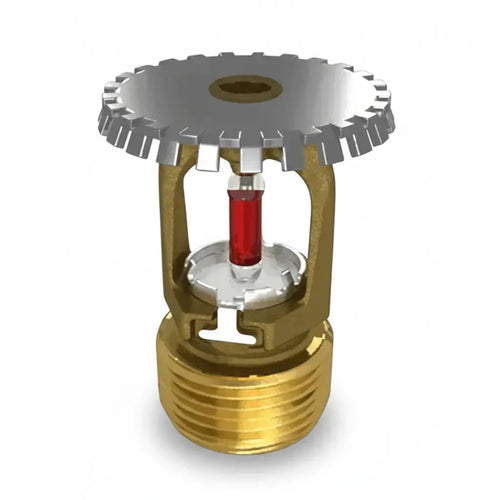


NFPA Compliant Antifreeze: 2026 Safety Guide
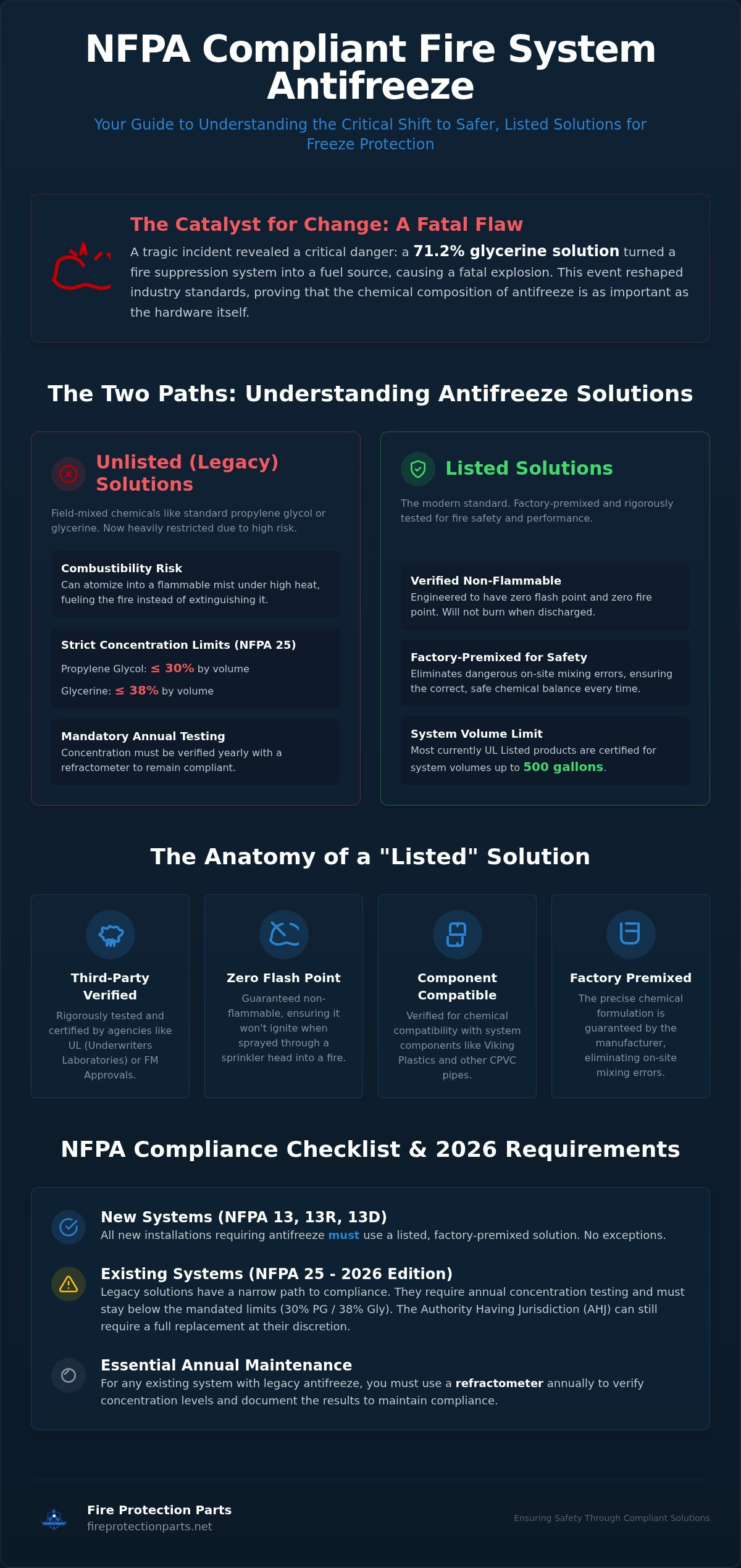
A 71.2% glycerine solution once turned a fire suppression system into a fuel source, leading to a fatal explosion during a kitchen fire. This tragedy shifted the industry forever, making your choice of chemicals just as vital as your choice of hardware. It's understandable if you feel overwhelmed by the shifting deadlines and technical jargon surrounding "listed" versus "unlisted" solutions. You need a system that stays functional in sub-zero temperatures without compromising safety or violating code.
This guide ensures you can secure NFPA compliant antifreeze for fire systems with total confidence. We'll clarify the 2026 requirements for NFPA 13 and 25, helping you maintain full regulatory compliance while avoiding system failures. You'll learn how to identify factory-premixed solutions that are safe for your specific environment; we'll also cover verified compatibility with Viking Plastics and other CPVC components. From understanding the 500-gallon volume limit for UL listed products to managing legacy concentrations, this overview provides the professional assurance you need to eliminate doubt and protect your property through every freeze.
Key Takeaways
- Understand the legal requirements for NFPA compliant antifreeze for fire systems to ensure your installation meets current UL and FM listing standards.
- Learn why traditional field-mixed solutions are restricted and how factory-premixed formulas prevent fire systems from becoming fuel sources during activation.
- Identify the critical 500-gallon volume limit for listed solutions and how it impacts your system design and fluid procurement.
- Verify chemical compatibility between your antifreeze solution and Viking Plastics CPVC pipe to prevent material degradation and long-term system leaks.
- Discover essential annual maintenance protocols, including using a refractometer to verify concentration levels as required by the 2026 edition of NFPA 25.
What is NFPA Compliant Antifreeze for Fire Systems?
NFPA compliant antifreeze for fire systems is a factory-premixed solution specifically engineered and "Listed" for use in fire suppression. Unlike standard industrial chemicals, these fluids undergo rigorous testing by agencies like Underwriters Laboratories (UL) or FM Approvals to ensure they don't ignite when discharged through a sprinkler head. Fire sprinkler systems in freezing environments rely on these solutions to remain operational, but using the wrong mixture can turn a safety tool into a fire accelerant. The 2022 sunset date marked a major shift in the industry, effectively prohibiting unlisted propylene glycol and glycerin in most applications because they can atomize and explode under high heat.
Safety standards including NFPA 13, 13R, 13D, and NFPA 25 now mandate strict adherence to these listed solutions. These regulations exist to prevent the catastrophic failure of wet-pipe systems in cold climates. If a solution isn't listed, it hasn't been verified for fire performance. This makes it a liability for building owners and a danger to occupants. Using NFPA compliant antifreeze for fire systems is the only way to ensure your protection hardware remains an asset during an emergency rather than a fuel source.
The Concept of a 'Listed' Solution
A "Listed" solution has been verified to maintain zero flash point and zero fire point. This means it won't burn even if sprayed directly into a flame. It's also tested for chemical compatibility with specialized hardware like Viking Plastics CPVC pipe. Automotive or food-grade glycols are designed for heat transfer or preservation, not fire protection. They often contain additives that can degrade seals or promote internal corrosion. You can identify a compliant product by looking for the UL or FM certification mark clearly printed on the original manufacturer's packaging. Most currently listed solutions are certified for system volumes up to 500 gallons.
Regulatory Deadlines and 2026 Requirements
As of August 2026, compliance depends on your system type and local requirements. For new installations under NFPA 13, 13R, or 13D, only listed, factory-premixed solutions are permitted. If you manage an existing system, the 2026 edition of NFPA 25 offers a narrow path for legacy fluids. Propylene glycol must remain at or below 30% by volume, while glycerine is capped at 38%. These legacy solutions require annual testing to stay legal. The Authority Having Jurisdiction (AHJ) holds the final power to demand a full system flush and refill with listed antifreeze if they determine the existing mixture poses a risk to life safety.
The Science of Safety: Why Antifreeze Requirements Changed
The transition to NFPA compliant antifreeze for fire systems wasn't just a regulatory update. It was a direct response to a dangerous chemical reality. When standard antifreeze solutions discharge through a sprinkler head, they don't always behave like water. In high concentrations, these fluids can atomize into a fine, flammable mist. This mist doesn't extinguish the fire; it feeds it. This phenomenon, known as the flashpoint problem, turned suppression systems into fuel sources in several documented cases, including a fatal explosion in 2009 caused by a 71.2% glycerine solution.
Modern safety standards prioritize factory-premixed solutions to eliminate the risk of field-mixing errors. When contractors mix chemicals on-site, it's easy to exceed safe concentration levels. Factory-premixed fluids ensure the chemical balance is perfect every time. This eliminates the guesswork and ensures that the fluid remains non-flammable under intense heat. Safety is a chemical calculation that leaves no room for error. It's about providing peace of mind through verified chemistry.
Combustibility Risks in Fire Suppression
The "Truckee Incident" served as a wake-up call for the industry. Investigations revealed that the heat from a fire can turn high-concentration antifreeze into an explosive vapor. Because of this, NFPA 25 mandates strict limits for legacy, non-listed systems. Propylene glycol must not exceed 30% by volume, and glycerine is capped at 38%. Exceeding these levels creates a significant explosion risk. Listed solutions are engineered to have no flash point and no fire point, providing the professional assurance that your system will perform exactly as intended during a crisis.
Hydraulic Performance and Viscosity
Antifreeze has a higher viscosity than plain water, which impacts how it flows through your hardware. This is particularly important when using Viking CPVC fire sprinkler pipe. Thicker fluids create more friction loss, which can lower the pressure at the sprinkler head. To maintain compliance, engineers must adjust K-factors and hydraulic calculations to account for this resistance. Listed solutions provide predictable flow data, allowing for precise system design. If you need to upgrade your fluid to meet these standards, you can find listed antifreeze solutions that match your system's specific requirements.
Choosing the Right Antifreeze: Listed Solution Comparison
Selecting the correct NFPA compliant antifreeze for fire systems requires more than just checking a box for compliance. You have to balance local environmental conditions with the physical limitations of your existing hardware. As of August 2026, the market offers several UL-listed options, but their performance varies significantly based on their chemical base and intended application. It's not a one-size-fits-all market; choosing a fluid that doesn't match your system's volume or pipe material can lead to long-term maintenance nightmares.
The most critical distinction you'll encounter is between the "freeze point" and the "minimum use temperature." The freeze point is simply when the fluid begins to crystallize, but the minimum use temperature is the lowest point at which the fluid can be reliably pumped and discharged. If you use a fluid below its rated minimum use temperature, it won't flow properly during a fire event. Protecting your sprinkler system components online starts with selecting a fluid that includes advanced corrosion inhibitors. These inhibitors are vital for preventing internal scaling and seal degradation, ensuring your valves and heads remain ready for action.
Glycerin-Based vs. Glycol-Based Listed Fluids
Glycerin-based solutions are the industry standard for systems utilizing Viking Plastics CPVC or other orange-pipe materials. They offer excellent compatibility with plastic resins and rubber gaskets, which drastically reduces the risk of environmental stress cracking. While listed propylene glycol options like Lubrizol Freezemaster are available, they're often chosen for specific environmental profiles. Regardless of the chemical base, all antifreeze systems must utilize backflow preventers to isolate the suppression fluid from the local water supply. This isn't just a fire code requirement; it's a fundamental safety measure for potable water systems.
Evaluating Temperature and Volume Constraints
Your local climate dictates whether you need a standard or high-performance fluid. For example, Tyco LFP is rated for -10°F, while LFP+ extends protection down to -25°F. Choosing the standard version in a region that hits -20°F leaves your system vulnerable to expansion damage. Additionally, most UL-listed solutions carry a strict 500-gallon system volume limit. If your system exceeds this capacity, you can't simply add more fluid. You'll likely need to divide the system into smaller, isolated loops. Expansion tanks are also mandatory in these configurations to manage thermal expansion, preventing over-pressurization that could rupture pipes during seasonal temperature swings.
Maintenance, Testing, and Refilling Procedures
The 2022 sunset date is a matter of history; by 2026, the industry's focus has shifted entirely to long-term verification and system integrity. You must test NFPA compliant antifreeze for fire systems every year as mandated by NFPA 25. This isn't just a suggestion. It's a critical safety requirement to ensure the solution hasn't diluted or degraded over time. Environmental factors and seasonal temperature swings can slowly alter the chemical balance, leaving your pipes vulnerable to expansion damage or, worse, creating a combustibility risk.
A digital refractometer is your most reliable tool for this task. It measures how light bends through the fluid to determine the exact concentration of glycerin or glycol. Don't rely on visual checks alone. A clear solution can still be non-compliant if the chemical balance has shifted. Once testing is complete, you must update the tags in the riser room. These tags provide a mandatory paper trail for the Authority Having Jurisdiction (AHJ), proving your system is ready for winter without compromise.
The Annual Inspection Checklist
Start by drawing samples from multiple points in the system. You should take fluid from the riser and the most remote part of the loop to ensure the concentration is consistent throughout the entire building. If your reading falls outside the manufacturer's specified range, usually a variance of more than 3 percent, a full system flush is necessary. Look for signs of trouble during sampling. Cloudy fluid or sediment indicates internal corrosion, while a foul odor often points to microbial growth that can clog sprinkler heads and cause expensive system failures.
Refilling a Wet Pipe System
The "drain and fill" process requires precision to avoid air pockets. If you're upgrading from an old, unlisted mixture, you must flush the system completely with clean water first. Residual chemicals can contaminate your new listed solution and void its safety rating. Ensure all fire protection parts online, especially gaskets and seals, are rated for the specific brand of antifreeze you're installing. Once the system is full, perform a final pressure test and vent all air from the high points. Air trapped in the pipes accelerates corrosion and can lead to false water-flow alarms that disrupt your operations.
Don't leave your compliance to chance or wait for a freeze to find a failure. You can source your next batch of NFPA compliant antifreeze for fire systems directly from our warehouse to ensure you're using factory-premixed, listed solutions that meet the highest safety standards.
Sourcing NFPA Compliant Components and Fluids
Procuring NFPA compliant antifreeze for fire systems isn't as simple as picking up a drum of glycol from a general industrial supplier. Fire suppression is a high-stakes field where "close enough" isn't an option. When you buy from a specialized retailer, you're investing in verified safety. Professional oversight ensures that every solution meets the rigorous UL and FM listing standards required for 2026. This level of scrutiny eliminates the risk of using fluids that could degrade your seals or, in a worst-case scenario, act as a fire accelerant. It's about providing the peace of mind that comes from unwavering reliability.
Always verify the manufacturer dates on every tote or drum you receive. Listed antifreeze has a specific shelf life; using expired fluid can compromise the effectiveness of its corrosion inhibitors. A code-compliant riser room also requires specific supporting hardware to function correctly. You'll need expansion tanks to manage thermal pressure, dedicated test valves for sampling, and digital refractometers for your annual verification. Fire Protection Parts supports contractors with bulk sourcing for these essential components, ensuring your project remains on schedule and fully compliant with all local regulations.
The Advantage of Professional Sourcing
Off-the-shelf glycols often contain chemical additives that are incompatible with specialized fire protection hardware. Mislabeled or counterfeit fluids can lead to environmental stress cracking in Viking Plastics CPVC systems, causing leaks that are expensive to repair. Our technical support team helps you match your antifreeze selection to specific fire sprinkler head temperature ratings. This ensures the fluid's thermal properties align perfectly with the activation points of your hardware. We also manage the logistical complexities of shipping heavy totes, providing the efficient, results-oriented delivery required for large-scale installations.
Final Compliance Check for 2026
Compliance is about more than just the fluid in the pipes. It's about the documentation in your hand. Before the fire marshal arrives, verify that your records reflect the specific listed product used and its current concentration levels. Your spare sprinkler cabinet must also be stocked with the correct head types and a wrench that matches your system's configuration. These small details prove to inspectors that you value excellence and safety above all else. Don't leave your facility's protection to chance with unverified suppliers. You can Shop NFPA Compliant Antifreeze and Fire System Parts through our professional portal to secure the components your system needs to stay code-compliant and operational.
Secure Your Infrastructure Against the 2026 Freeze
Maintaining compliance in 2026 requires a shift from reactive repairs to proactive verification. You've learned that listed solutions aren't just a legal requirement; they're a chemical necessity to prevent fire systems from becoming fuel sources. By prioritizing annual testing with refractometers and strictly adhering to the 500-gallon volume limits, you eliminate the risks of system failure and material degradation. Compatibility with Viking Plastics CPVC and other specialized hardware remains the foundation of a reliable wet-pipe system in cold climates.
Choosing NFPA compliant antifreeze for fire systems doesn't have to be a complex procurement hurdle. We provide the professional assurance you need as an authorized distributor of UL listed fluids. Our team offers expert technical support for NFPA compliance and ensures fast shipping on critical suppression components to keep your project on track. Take the guesswork out of your safety requirements and build a system that stands the test of time and temperature. Secure Your System with NFPA Compliant Antifreeze Solutions today and gain the peace of mind that comes with industry-leading protection.
Frequently Asked Questions
Can I use RV or automotive antifreeze in my fire sprinkler system?
No, you must never use RV or automotive antifreeze in any fire suppression system. These consumer-grade fluids aren't "Listed" for fire protection and often contain flammable additives that act as fuel during a fire. NFPA standards require factory-premixed solutions specifically tested to maintain zero flash point. Using unverified chemicals can lead to system failure, material corrosion, or even dangerous explosions during a discharge event.
What is the 'sunset date' for unlisted fire sprinkler antifreeze?
The sunset date for unlisted antifreeze in new installations was March 21, 2011. For existing systems, the 2023 and 2026 editions of NFPA 25 permit legacy solutions to remain in service under strict concentration limits. While the industry originally planned for a total replacement by September 2022, current regulations allow these older fluids if they pass annual testing. This compromise ensures safety without forcing an immediate, nationwide retrofit.
Is propylene glycol or glycerin better for CPVC fire pipes?
Glycerin-based solutions are typically the superior choice for Viking Plastics CPVC or other orange-piping systems. These formulas are chemically compatible with plastic resins and rubber gaskets, which prevents environmental stress cracking. While some listed propylene glycol options exist, glycerin remains the industry standard for residential and commercial plastic piping. Choosing the wrong chemical base can lead to brittle pipes and expensive leaks, so always verify compatibility before refilling your system.
How often does fire system antifreeze need to be tested?
You must test your NFPA compliant antifreeze for fire systems at least once per year as required by NFPA 25. This annual inspection ensures the concentration levels haven't shifted due to evaporation or water ingress. Testing must be performed at the riser and the most remote point of the system to verify uniformity. If the solution falls outside the manufacturer's specified range, you'll need a full system flush to remain compliant.
What is the maximum system volume for UL Listed antifreeze?
Most UL Listed antifreeze solutions are currently capped at a maximum system volume of 500 gallons. This limit is based on the specific testing parameters used by agencies like Underwriters Laboratories to ensure fire safety. If your facility requires more than 500 gallons of freeze protection, you'll need to partition the system into smaller, independent loops. Each loop must have its own isolation valves and expansion tanks to manage thermal pressure safely.
Can I mix different brands of listed antifreeze?
You shouldn't mix different brands of listed antifreeze, even if they share the same chemical base. Each manufacturer uses a unique blend of corrosion inhibitors and stabilizers that might not be compatible with other formulas. Mixing brands can lead to chemical reactions that result in sediment buildup or reduced freeze protection. To maintain your system's UL listing and warranty, always use a single, consistent product for every refill or top-off procedure.
Do I need a backflow preventer if I use antifreeze?
Yes, a backflow preventer is a mandatory requirement for any fire system containing antifreeze. These devices prevent the chemical solution from siphoning back into the local potable water supply. This is a fundamental safety standard for both residential and commercial buildings. Because antifreeze is a non-potable substance, the Authority Having Jurisdiction (AHJ) will verify that your system is properly isolated to protect the health of occupants and the community.
How do I know if my current antifreeze is NFPA compliant?
To verify if your current NFPA compliant antifreeze for fire systems meets the standard, check the manufacturer's label for a UL or FM certification mark. You should also review the original installation records and the most recent annual test report. If your system was filled before 2011 and hasn't been updated, it's likely a legacy solution that requires strict concentration monitoring. When in doubt, consult with Fire Protection Parts to identify your existing fluid's status.

