



The Ultimate Fire Sprinkler System Components List: A 2026 Professional Guide
A single mismatched valve or an unverified fitting isn't just a procurement error; it's a potential failure point in a life-safety network. You understand that when a system is called to action, there's no margin for compromise. Yet, with the 2025 edition of NFPA 13 introducing more rigorous storage standards and the 2026 updates to NFPA 25 tightening inspection rules, staying compliant feels increasingly complex. You're likely facing the frustration of identifying specific replacement parts for aging hardware or debating whether CPVC or steel is the right choice for a specific hazard classification.
This guide provides the professional assurance you need. By using this definitive fire sprinkler system components list, you'll master the anatomy of professional fire suppression and ensure every part of your system meets current code. We'll break down essential hardware, from Viking Plastics CPVC piping and ASC seismic bracing to specialized dry pendent heads and backflow preventers. You'll gain a clear understanding of the functional differences between wet and dry system parts, giving you the confidence to source code-compliant hardware that protects lives without compromise.
Key Takeaways
- Learn how the riser room acts as the critical bridge between your water supply and the suppression network, ensuring isolation through proper valve management.
- Identify the right materials for your facility by comparing Viking Plastics CPVC with traditional steel and implementing ASC seismic bracing for structural integrity.
- Master the use of a fire sprinkler system components list to source exact replacement heads by utilizing the Sprinkler Identification Number (SIN) for guaranteed compatibility.
- Understand the mechanics of dry pipe and deluge systems, including the role of air compressors and electric deluge valves in protecting cold-weather or high-hazard zones.
- Maintain NFPA 13 compliance by establishing a secure spare parts inventory and head cabinet to ensure your system is ready for immediate restoration after activation.
The Water Supply and Control Infrastructure: The Riser Room
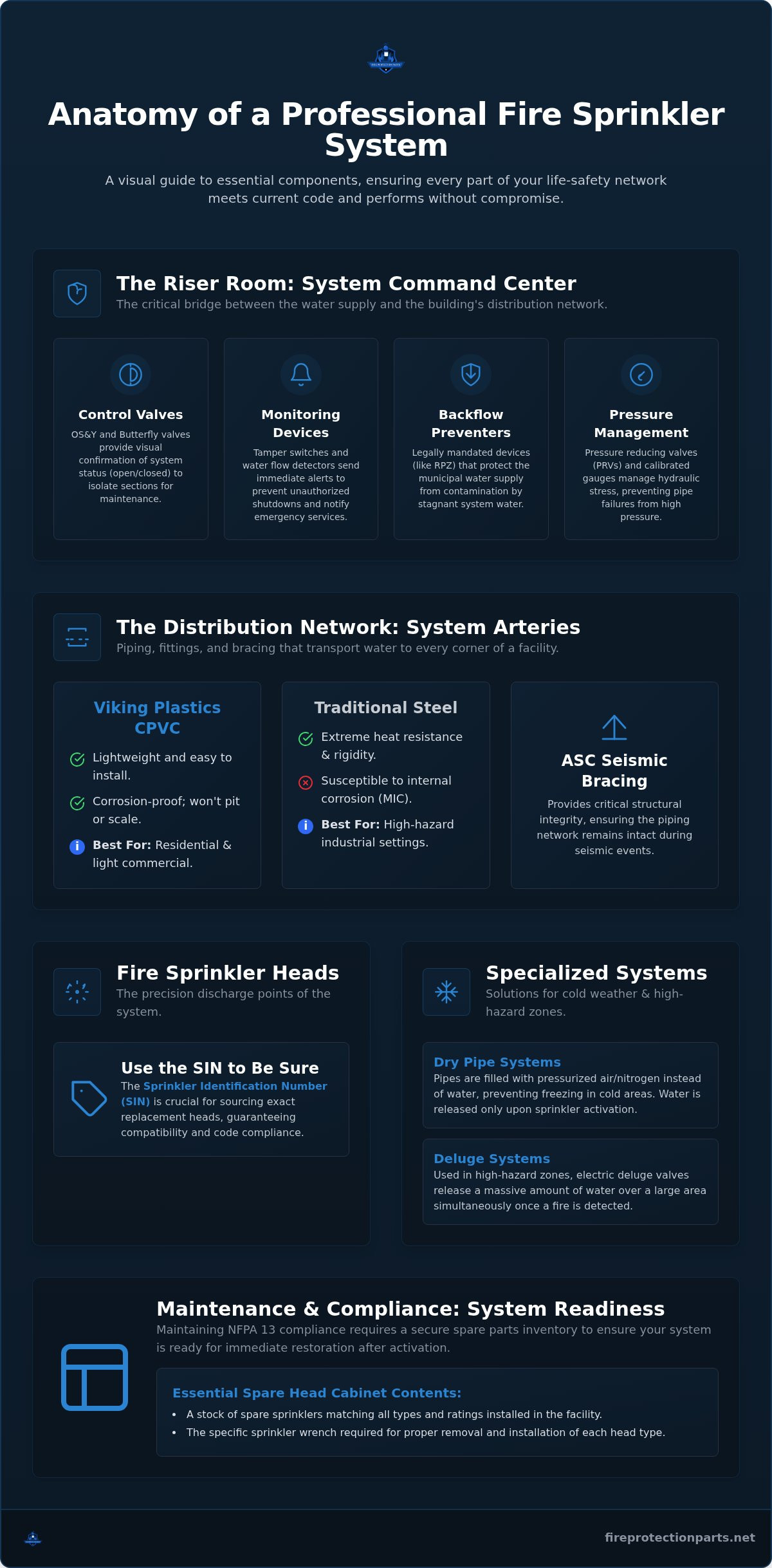
The fire riser is the operational heart of your suppression network. It's the critical bridge between the municipal water supply and the building's internal distribution system. Without a properly configured riser room, the entire network is just a collection of dormant pipes. This section of your fire sprinkler system components list focuses on the hardware that controls, monitors, and protects that water flow. Each part must work in perfect synergy to ensure that water is available the moment a fire is detected.
Primary Control Valves and Monitoring
Control valves are the gatekeepers of your system. OS&Y (Outside Screw and Yoke) valves are industry favorites because they provide immediate visual confirmation of the valve's status. If the stem is visible, the valve is open; if it's retracted, the system is shut down. This design significantly reduces human error during routine inspections. Butterfly valves offer a more compact alternative, using a rotating disc to control flow. Both types are essential for isolating sections of the system during repairs.
To eliminate doubt, tamper switches are integrated into these valves. These sensors alert a monitoring station the moment a valve is turned, preventing unauthorized or accidental shutdowns. For a broader fire sprinkler system overview, it's clear that monitoring is just as vital as the physical water supply. Water flow detectors also play a key role. These devices use a paddle to sense movement within the pipe. When a sprinkler head activates, the resulting flow triggers an alarm, ensuring emergency services respond immediately.
Backflow Prevention and Pressure Management
Protecting the public water supply is a legal mandate. Backflow preventers ensure that stagnant water from within the sprinkler pipes cannot siphon back into the municipal drinking water. For high-hazard systems, Reduced Pressure Zone (RPZ) backflow preventers offer the highest level of protection by discharging water if a pressure drop occurs. Sourcing the right backflow preventers in fire protection is essential for staying compliant with NFPA 13 and local ordinances.
You also need to manage hydraulic stress throughout the building. Pressure reducing valves (PRVs) are installed in zones where high municipal pressure could cause pipe failures or damage sensitive fittings. These components work alongside calibrated gauges to provide real-time data on system health. Maintaining an accurate fire sprinkler system components list ensures that these monitoring tools and valves are regularly checked and replaced when they show signs of wear. This proactive approach eliminates the uncertainty of system performance during a crisis.
The Distribution Network: Piping, Fittings, and Bracing
If the riser room is the heart of suppression, the piping network functions as the veins. These components transport water from the control infrastructure to every corner of a facility. Selecting the right materials for this network is a decision that impacts both installation speed and long-term reliability. A professional fire sprinkler system components list must account for the specific hazard levels and environmental factors of the building to ensure the distribution network remains pressurized and ready.
CPVC vs. Steel Piping Solutions
The debate between steel and CPVC often comes down to occupancy and environment. Steel piping remains the industry standard for high-hazard industrial settings because of its extreme heat resistance and structural rigidity. However, it's susceptible to internal corrosion and microbiologically influenced corrosion (MIC) over time. In contrast, Viking Plastics CPVC Pipe for Fire Protection offers a lightweight, corrosion-proof alternative that won't pit or scale. It's particularly effective in residential and light commercial settings where ease of installation in tight spaces is a priority.
When you're evaluating materials, consult a Viking CPVC fire sprinkler pipe guide to understand the specific temperature and pressure ratings required for your project. Using the wrong material can lead to catastrophic leaks or system failure during a fire event. You need components that are engineered specifically for fire suppression, not standard plumbing. Every length of pipe should be verified for compliance with the NFPA 13 Standard to guarantee it can withstand the hydraulic demands of the system.
Fittings and Seismic Restraints
Fittings are the joints that hold the network together. They must be rated for the same pressures as the piping they connect. For CPVC systems, using chemically compatible fittings and specialized solvent cements is non-negotiable. Using standard PVC fittings in a fire system is a critical safety violation. Beyond the joints, you must consider how the system handles external stress. In many jurisdictions, seismic protection is a mandatory requirement, not an optional upgrade.
ASC Seismic Bracing provides the necessary stability to prevent system failure during earth movement. Without proper bracing, the lateral and longitudinal forces of an earthquake can snap pipes and render the system useless. You can find detailed compliance requirements in our guide to seismic bracing for sprinkler systems. Investing in high-quality distribution hardware ensures your network remains intact when the building is under the greatest stress. This methodical approach to your fire sprinkler system components list eliminates the guesswork and builds a foundation of safety that lasts for decades.
Fire Sprinkler Heads: The Precision Discharge Points
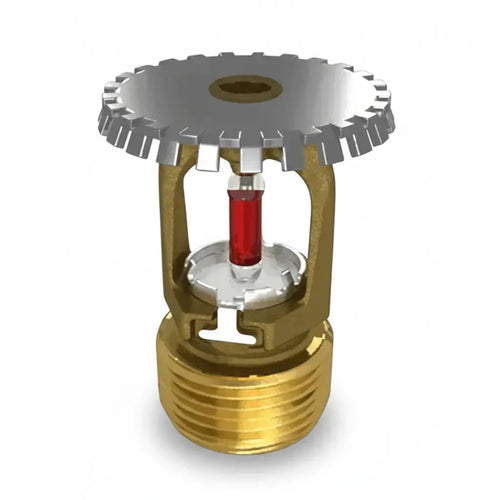
The discharge points are the most recognizable part of any fire sprinkler system components list, yet they're often the most misunderstood. Contrary to popular entertainment tropes, sprinkler heads don't all activate at once. They are precision-engineered, heat-sensitive valves designed to respond individually to the thermal signature of a fire. This localized activation minimizes water damage while delivering high-impact suppression exactly where it's needed most. By only activating the heads closest to the heat source, the system preserves water pressure and limits property damage.
When a head is damaged or activated, finding an exact match is critical for maintaining system hydraulics. Every professional-grade head features a Sprinkler Identification Number (SIN) stamped onto the deflector. This alphanumeric code is the only reliable way to verify the K-factor, response time, and temperature rating. Guessing based on appearance alone can lead to code violations or system failure. We prioritize accuracy by helping you decode these numbers to ensure your replacement hardware matches the original design specifications perfectly.
Orientation and Application Types
The physical orientation of a head is determined by the piping layout and the area's specific hazards. Pendent heads hang below the ceiling and are the standard for finished rooms. Upright heads sit above the piping, making them ideal for mechanical rooms or areas with exposed ceilings where water must be deflected downward from a higher point. Sidewall heads are designed for corridors or small rooms where running pipe across the ceiling isn't feasible. Each type has a specific spray pattern that must remain unobstructed to be effective.
Special environments require specialized hardware. For areas prone to freezing, such as walk-in freezers or unheated loading docks, Dry Pendent Sprinklers are essential. These heads utilize a pressurized seal to keep water out of the cold-exposed pipe until the head activates. Choosing the right orientation ensures that the spray pattern isn't hindered by structural beams or architectural features. This is a core requirement of NFPA standards and a vital part of your fire sprinkler system components list.
Temperature Ratings and Aesthetics
The glass bulb inside a sprinkler head acts as the trigger. These bulbs are filled with a temperature-sensitive liquid that expands and shatters the glass at a specific heat threshold. You can identify these thresholds by color. A red bulb typically indicates an ordinary temperature rating of 155°F, while a green bulb signifies a high temperature rating of 200°F. For a full breakdown of these classifications, consult our fire sprinkler head temperature ratings guide to ensure your inventory is compliant.
While safety is the priority, aesthetics shouldn't be neglected. Concealed heads use cover plates that sit flush against the ceiling, falling away only when heat reaches the activation point. Escutcheons serve a dual purpose by hiding the hole in the ceiling and ensuring the head sits at the correct depth for proper thermal response. Using the correct escutcheon and cover plate is vital; using generic or painted-over parts can delay activation and void your compliance status.
Specialized Components for Dry and Cold-Weather Systems
Standard wet systems fail when temperatures drop below freezing. In unheated warehouses, parking garages, or attics, water-filled pipes will burst, leading to catastrophic property damage and a non-functional suppression system. This is where your fire sprinkler system components list must pivot to specialized hardware designed for harsh environments. These systems rely on mechanical ingenuity to keep water away from the cold until the exact moment of activation. Understanding these parts is essential for any facility manager operating in northern climates or specialized industrial zones.
Air Supply and Dry Pipe Valves
Dry pipe systems replace water with pressurized air or nitrogen within the distribution network. A dry pipe valve acts as a mechanical dam, held closed by this air pressure. When a sprinkler head activates, the air escapes first. The resulting pressure drop allows the dry pipe valve to trip, flooding the pipes with water. This process introduces a slight delay, making reliable air compressors for dry sprinkler systems mandatory to maintain the pressure seal. Without a consistent air supply, the system can trip accidentally, causing unwanted water discharge and immediate pipe freezing.
Air maintenance devices are equally critical. These components regulate the compressor's output to ensure the system remains at the optimal pressure without over-pressurizing the pipes. For professionals, the goal is a balanced system that resists accidental trips while ensuring rapid water delivery. Proper maintenance of these air-side components prevents the internal corrosion often associated with trapped moisture in dry systems.
Deluge and Anti-Freeze Solutions
High-hazard environments, such as chemical processing plants or aircraft hangars, require a different tactical approach. Deluge systems use open sprinkler heads and an electric deluge valve, such as the PTR Electric Deluge VXD, to flood an entire area simultaneously. This all-at-once activation is necessary when fire spread is expected to be too rapid for individual head activation. These valves are often tied to sophisticated detection systems that trigger the flow of water or foam the moment a hazard is detected.
For residential settings or smaller unheated zones where a full dry system is impractical, using Anti-freeze for Fire Protection is a viable alternative. These solutions must be NFPA-compliant and carefully monitored to maintain the correct concentration. Pressure management remains a challenge in these complex setups. Residential Fire Pump Systems are often integrated to ensure that even with the added friction of specialized valves or anti-freeze solutions, the discharge pressure meets code requirements. If you're building out a cold-weather suppression strategy, you can source professional-grade dry and deluge components to ensure your facility remains protected throughout the winter months. Proper selection of these specialized parts eliminates the risk of frozen pipes and ensures reliable activation when it matters most.
Maintenance and Compliance: The Spare Parts Inventory
Compliance isn't a one-time event at installation. It's an ongoing commitment to system readiness. After a fire event or an accidental activation, you must restore the system to full service immediately. NFPA 13 mandates that you keep a specific inventory of spare heads on-site for this exact reason. This ensures that your fire sprinkler system components list remains complete even during maintenance cycles. Leaving a system offline while waiting for parts is a liability you can't afford.
Regular inspection of gauges and valves serves as your first line of defense against mechanical failure. Under the 2026 updates to NFPA 25, the standards for examining large valves and electrical solenoid devices have become more frequent. You need to ensure that every component, from the backflow preventer to the smallest fitting, is performing within its design parameters. A proactive maintenance schedule doesn't just satisfy the fire marshal; it provides the peace of mind that your facility is truly protected.
Building a Code-Compliant Spare Kit
The number of spares you need depends on the scale of your system. For systems with fewer than 300 heads, you must keep at least six spares on hand. Facilities with 300 to 1,000 heads require twelve spares, while large-scale operations with over 1,000 heads must stock twenty-four. These spare heads must match the SIN and temperature ratings of the installed units exactly. Storing them in a dedicated sprinkler head cabinet is required to protect them from dust, moisture, and accidental impact.
You must also include the correct manufacturer-specific wrenches in your cabinet. Using a standard pipe wrench on a sprinkler head is a dangerous shortcut that can damage the frame or the sensitive glass bulb. A specialized wrench allows for safe installation and ensures a secure seal without compromising the head's integrity. Additionally, maintain a log of component ages. The 2026 standards place a higher emphasis on the qualifications of inspectors and the documented history of the hardware they examine.
Sourcing Professional Components Online
Finding specific or rare replacement parts doesn't have to be a bottleneck for your maintenance team. When you buy sprinkler system components online, you gain access to a broader inventory than most local suppliers can offer. This is particularly useful for identifying exact matches for aging systems where the original parts might be discontinued. Always verify that any sourced hardware carries UL/FM approvals to guarantee it meets professional safety standards.
For multi-facility managers, bulk procurement is a strategic way to standardize your fire sprinkler system components list across various properties. Standardizing on reliable brands like Viking or ASC simplifies your spare parts inventory and makes training your maintenance staff more efficient. By keeping a robust stock of compliant hardware, you eliminate the uncertainty of lead times and ensure your suppression network is always ready to perform. This methodical approach to sourcing and maintenance is what separates a compliant facility from a vulnerable one.
Securing Your Facility with Precision Suppression Hardware
Maintaining a code-compliant suppression system requires more than just an annual inspection. It demands a deep understanding of how each valve, pipe, and discharge head works in unison to protect lives and property. By mastering this fire sprinkler system components list, you've moved beyond simple procurement to professional system management. You now recognize that identifying the correct SIN for a replacement head or selecting the right air compressor for a dry system is the difference between a reliable network and a liability. High-quality components from brands like Viking and ASC ensure your distribution network resists corrosion and seismic stress for decades.
Don't leave your facility's safety to chance or unverified hardware. We provide the professional assurance you need to keep your system in peak condition. As an authorized distributor of top brands, we offer expert support for part identification and fast shipping across the United States. Shop Our Full Catalog of NFPA-Compliant Fire Sprinkler Components today and gain the peace of mind that comes with professional-grade protection. Your commitment to excellence is the strongest shield against the unexpected.
Frequently Asked Questions
What are the 4 main components of a fire sprinkler system?
The four primary components include the water supply and riser, the distribution piping network, control valves, and the sprinkler heads themselves. The riser connects the system to the municipal supply, while piping like Viking Plastics CPVC delivers water to specific zones. Control valves allow for system isolation, and the heads act as the heat-sensitive discharge points. This basic fire sprinkler system components list forms the foundation of any code-compliant suppression strategy.
What is the difference between a pendent and an upright sprinkler head?
Orientation is the key difference. Pendent heads hang from the ceiling and spray water downward in a circular pattern, making them the standard for finished ceilings. Upright heads sit on top of the piping and spray water upward against a deflector to distribute it. Uprights are typically used in mechanical rooms or areas with exposed ceilings where the piping must be protected from physical damage. You shouldn't swap these orientations, as it compromises the spray pattern.
Why can't I use standard PVC pipe for my fire sprinkler system?
Standard PVC lacks the heat resistance and pressure ratings required for life-safety applications. It can melt or fail before the sprinkler heads even activate. Instead, you must use fire-rated materials like Viking Plastics CPVC Pipe for Fire Protection. This specialized CPVC is engineered to maintain its structural integrity under extreme heat and is chemically compatible with fire suppression fluids. Using standard plumbing PVC is a critical code violation that voids your insurance and endangers occupants.
How many spare sprinkler heads am I required to keep on site?
NFPA 13 requirements are based on the total number of heads in your system. If you have fewer than 300 heads, you need at least six spares. Systems with 300 to 1,000 heads require twelve, and those with over 1,000 heads must stock twenty-four. These spares must match the temperature ratings and SIN of your installed heads. Keeping them in a dedicated cabinet ensures they stay free from dust and accidental damage.
What is a fire sprinkler escutcheon and is it required?
An escutcheon is a decorative trim piece that fits around a sprinkler head to cover the gap in the ceiling or wall. It's more than just an aesthetic choice; it's often a functional requirement. For recessed or concealed heads, the correct escutcheon ensures the head is positioned at the right depth to sense heat properly. You must use the specific model listed for your head type. Replacing them with generic parts or painting over them can delay activation.
How do I identify a replacement fire sprinkler head?
You identify a replacement head by its Sprinkler Identification Number (SIN), which is a five-to-six-character alphanumeric code stamped on the deflector. This code tells you the manufacturer, K-factor, and response type. Don't rely on the color or shape alone, as many heads look similar but have different hydraulic characteristics. Once you have the SIN, you can find the exact match in our fire sprinkler system components list to ensure your system remains hydraulically balanced.
What does a fire sprinkler riser do?
The fire riser acts as the central hub and interface between the building's suppression network and the municipal water supply. It houses the main control valves, pressure gauges, and water flow alarms. Its primary job is to monitor system pressure and alert emergency services when water begins to move through the pipes. It also provides a connection point for fire department personnel to pump additional water into the system through the FDC.
Do I need a fire pump for my residential sprinkler system?
You only need a pump if your municipal water pressure or flow is insufficient to meet the hydraulic demands of the system design. In many large homes or areas with low city pressure, Residential Fire Pump Systems are necessary to ensure the heads discharge at the correct rate. These pumps boost pressure automatically the moment a head activates. You should have a hydraulic calculation performed during the design phase to determine if a pump is required for your specific property.

