

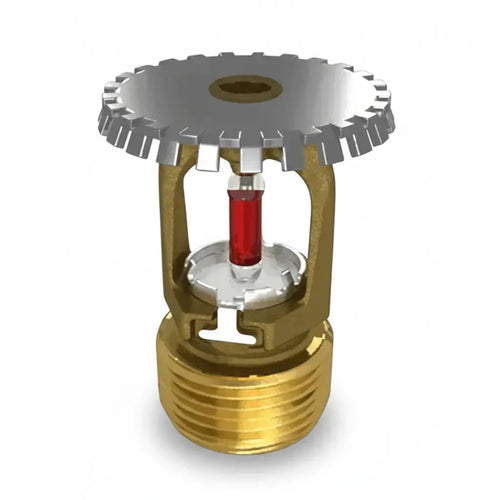


Viking Fire Sprinkler Heads: The Professional Buyer’s Guide for 2026
A single digit error in a Sprinkler Identification Number (SIN) can be the difference between a passed inspection and a total system failure. Sourcing fire protection components isn't just about finding a part that fits. It is about matching a specific hazard profile to a precise engineering standard. The sheer volume of technical data often makes selecting viking fire sprinkler heads feel like a high-stakes guessing game. You shouldn't have to worry about ordering non-compliant parts that fail a critical inspection or clash with your piping architecture.
This guide eliminates that uncertainty. We will help you master the technical specifications and selection criteria needed to ensure your facility remains fully code-compliant under the latest 2025 NFPA 13 standards. We'll break down how to identify the exact replacement heads you need, compare standard versus quick response performance, and ensure compatibility with your existing CPVC or steel piping. You'll gain the expert confidence to source genuine Viking parts that protect both your property and your professional reputation.
Key Takeaways
- Learn how to decode the Sprinkler Identification Number (SIN) and bulb color to identify the exact replacement part needed for any existing system.
- Understand the critical performance differences between Quick Response and Standard Response viking fire sprinkler heads to ensure your choice matches the hazard profile.
- Discover specialized requirements for residential NFPA 13D compliance and high-piled storage solutions utilizing ESFR technology.
- Master the selection criteria for pendent, upright, and sidewall configurations to maintain code-compliant protection across diverse facility layouts.
- Identify the risks of non-genuine components and learn which essential accessories are required for a professional, durable installation.
Why Viking Fire Sprinkler Heads are the Industry Standard for 2026
Viking has earned its place as a global leader through decades of field-proven performance and a refusal to compromise on quality. In an industry where a fraction of a second determines the outcome of a fire, viking fire sprinkler heads are engineered to perform without hesitation. This reputation rests on a foundation of rigorous quality control that few can match. Unlike some manufacturers that rely on batch sampling, Viking subjects every single sprinkler head to 100% factory testing. This protocol eliminates the "dead on arrival" risk that can delay projects and increase labor costs during system commissioning. It ensures that every component arriving at your job site meets the exact pressure and thermal response requirements specified in your design.
The brand's dominance in 2026 isn't just about legacy; it's about a commitment to hardware innovation that anticipates changes in safety regulations. For a comprehensive overview of fire sprinkler systems, it is clear that the integration of components is vital for long-term reliability. Viking provides a complete ecosystem, ensuring that their heads work seamlessly with specialized infrastructure like Viking CPVC fire sprinkler pipe. This total-system compatibility reduces the risk of chemical incompatibility or installation errors that can plague mixed-manufacturer systems. As urbanization drives the construction of taller, more complex buildings, Viking's research and development focus on solutions for high-ceiling and sloped-ceiling applications, directly addressing the technical challenges introduced in the latest NFPA updates.
The Engineering Behind the Viking Brand
Viking utilizes high-grade materials for its thermal sensing elements, including precision-engineered fusible links and durable glass bulbs. These components are essential for the reliable operation of viking fire sprinkler heads across diverse environments. These parts react with pinpoint accuracy to specific temperature thresholds, ensuring water is deployed only when a genuine fire is detected. To combat the degradation found in industrial or coastal environments, Viking offers a range of corrosion-resistant coatings and finishes that extend the service life of the hardware. The Viking Sprinkler Identification Number (SIN) system serves as the universal standard for part tracking, allowing professionals to quickly verify the technical specifications and performance data of every individual head.
Compliance and Certification in 2026
Safety in 2026 requires strict adherence to the newest standards, including the 2025 editions of NFPA 13 and NFPA 13D. Viking hardware is built to meet or exceed these requirements, providing the necessary documentation for UL Listing and FM Approval. These certifications aren't just labels. They represent a rigorous process of third-party verification that guarantees the equipment will function as promised during an emergency. When you specify Viking, you choose hardware that has been independently validated to perform under extreme conditions. This level of oversight provides facility managers and contractors with the professional assurance that their life safety systems will pass inspection and, more importantly, protect lives and property without fail.
Evaluating Response Types and Coverage Patterns
Selecting the correct viking fire sprinkler heads requires a deep understanding of how water interacts with a specific space. The goal is to match the discharge characteristics to the fuel load and ceiling configuration. One of the most vital metrics in this process is the K-factor. This value represents the size of the sprinkler's orifice. A higher K-factor allows for greater water volume at lower pressures; this is critical when designing for high-challenge fires or systems with limited water supplies. If you choose a K-factor that is too low for the hazard, the system may fail to suppress the fire before it overwhelms the structure.
Ceiling height and potential obstructions must also influence your selection. Modern building designs often feature complex architectural elements that can block water distribution. Standard heads may not provide adequate coverage if they are placed too close to a beam or duct. You must ensure that the spray pattern remains unhindered. Even a minor obstruction can create dry spots where a fire could grow unchecked. Matching the head to the specific ceiling height ensures that the heat from a fire reaches the thermal element efficiently, triggering the system exactly when the design intended.
Quick Response vs. Standard Response
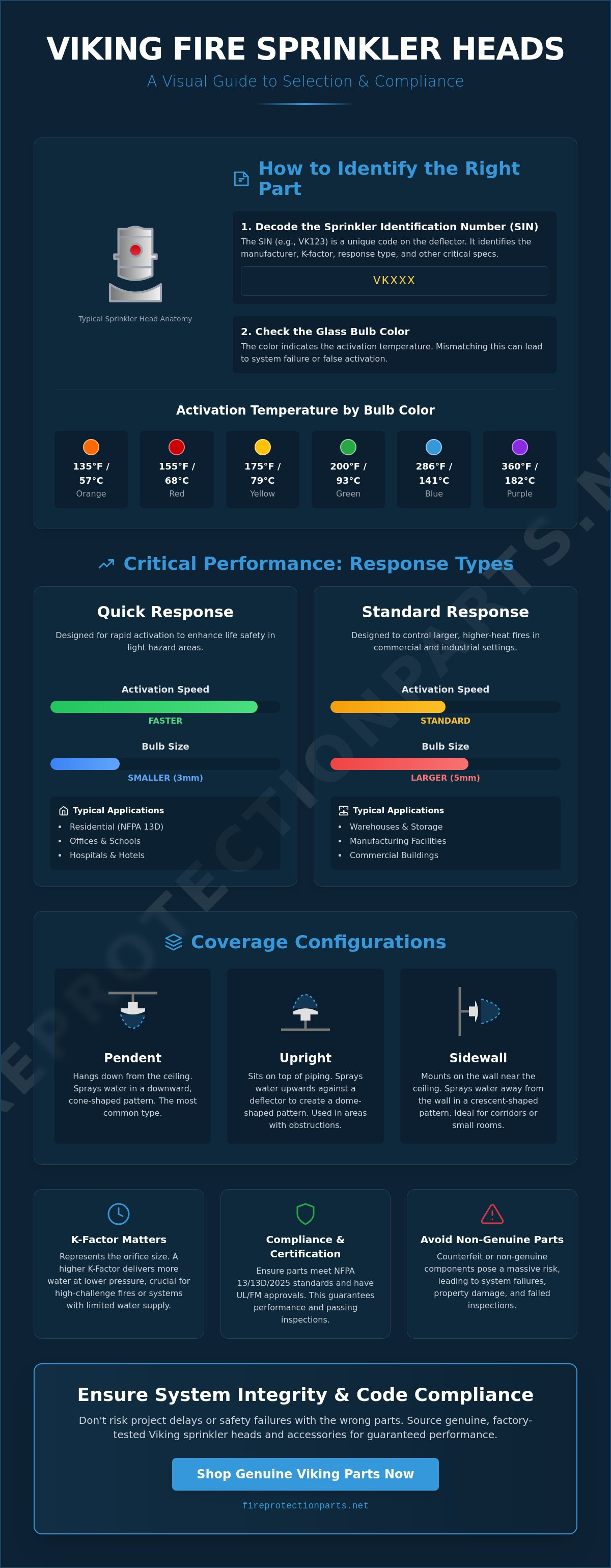
The distinction between Quick Response (QR) and Standard Response (SR) is fundamentally about the speed of thermal activation. QR heads feature a 3mm glass bulb designed to activate earlier in the development of a fire. This rapid deployment is essential for life safety. It's the reason QR models are mandatory in residential settings and light hazard areas like offices or schools. In contrast, SR heads utilize a thicker 5mm bulb. These are typically reserved for property protection in commercial or industrial zones. In these environments, a slightly delayed response prevents accidental activation caused by fluctuating ambient temperatures. Choosing the wrong sensitivity can lead to catastrophic delays or unnecessary water damage.
Orientation and Coverage Options
The physical layout of your facility dictates the orientation of the hardware. Pendent sprinklers remain the standard for finished ceilings. They hang below the piping to provide a wide, circular spray pattern. For mechanical rooms or warehouses with exposed overhead piping, upright sprinklers are installed pointing toward the ceiling to avoid damage from moving equipment. If you're dealing with corridors where ceiling piping is impractical, sidewall heads offer a functional alternative. Extended coverage heads are another innovative option; they protect larger areas with fewer units. This reduces the complexity of your piping and lowers overall material costs. If you're unsure which configuration fits your project, you can browse our full inventory to compare technical data sheets for each model.
Application-Specific Solutions: From Residential to Storage
Effective fire protection is never a one-size-fits-all endeavor. The hazard profile of a high-tech cleanroom differs vastly from a high-piled logistics center. Choosing the right viking fire sprinkler heads involves analyzing the specific fuel loads and environmental conditions of your facility. One critical detail often missed by general contractors is the interaction between the sprinkler head and the piping material. For instance, selecting heads for a CPVC system requires verifying chemical compatibility to prevent structural degradation of the pipe. By matching the hardware to the environment, you ensure the system remains pressurized and ready for decades of service.
Residential Fire Suppression Hardware
Residential systems prioritize life safety above all else. In these environments, Viking heads are designed to meet the strict low-flow requirements of NFPA 13D and 13R. These sprinklers activate quickly to allow occupants time to escape. You also have aesthetic choices to consider. Concealed heads sit flush with the ceiling, hidden by a cover plate that falls away during a fire. Domed concealed models provide a similar low-profile look while maintaining high performance. To build a robust system, these heads must work in synergy with residential fire sprinkler parts like specialized pumps and risers designed for domestic water pressures.
High-Challenge Storage and Industrial Heads
Warehouses with high-piled storage present unique challenges that standard heads cannot handle. This is where Early Suppression Fast Response (ESFR) technology becomes essential. ESFR viking fire sprinkler heads are designed to suppress a fire by delivering a high volume of water directly to the fuel source, rather than just controlling the heat at the ceiling level. For specialized risks, Control Mode Specific Application (CMSA) heads provide targeted protection. In the most dense logistics centers, in-rack sprinkler configurations provide a secondary layer of defense, ensuring that water can reach fires buried deep within storage racks where overhead sprinklers might be blocked.
Specialty environments require even more precision. MRI suites demand non-magnetic components, while institutional settings often require anti-ligature designs to minimize safety risks. For unheated spaces like parking garages or attics, you'll need to integrate dry pendent sprinkler heads. These units feature a pressurized seal that keeps water out of the freezing zone until activation. This prevents pipe bursts while maintaining immediate response capabilities. Whether you are protecting a data center or a cold storage facility, identifying the specific application is the first step toward a compliant and reliable installation.
How to Identify and Replace Viking Sprinkler Heads
Identifying legacy viking fire sprinkler heads for replacement requires a methodical approach. You shouldn't rely on visual approximations when life safety is at stake. The process begins with the deflector plate. This small metal component at the end of the sprinkler frame holds the technical DNA of the unit. By locating the Sprinkler Identification Number (SIN), you unlock the specific discharge characteristics and thermal sensitivity required for that exact location. Replacing a sprinkler head requires a matching SIN to maintain system hydraulic calculations. Even a slight variation in the K-factor or thread size can lead to leaks or insufficient water flow during a fire event.
Beyond the SIN, you must account for the physical dimensions and environmental ratings. Most standard Viking heads utilize a 1/2 inch or 3/4 inch NPT thread. However, specialized models for storage or high-flow applications often differ. You also need to match the escutcheon and finish for aesthetic and functional consistency. If you're replacing a head in a finished ceiling, using a non-matching escutcheon can lead to a failed inspection or interfere with the proper deployment of the head. When you're ready to secure your facility, buy genuine Viking sprinkler heads from a trusted professional source to ensure total compatibility.
The 4-Point Identification Checklist
Use this systematic approach to eliminate errors during procurement. Recording these details before you order will prevent the frustration of receiving non-compliant parts.
- Step 1: Record the SIN (e.g., VK302) and the manufacturer logo stamped clearly on the deflector.
- Step 2: Note the fire sprinkler head temperature rating by identifying the bulb color.
- Step 3: Determine the orientation, specifically whether the head is Pendent, Upright, or Sidewall.
- Step 4: Verify the K-factor and thread size to ensure a leak-free fit with existing piping.
Matching Temperature Ratings
The color of the liquid inside the glass bulb indicates its activation threshold. Ordinary ratings (135°F-170°F) usually feature orange or red bulbs and are standard for most occupied spaces. Intermediate ratings (175°F-225°F) use yellow or green bulbs. These are necessary for areas with higher ambient temperatures, such as mechanical rooms or near skylights. If the head is located near a significant heat source like a boiler or industrial oven, you may require high-temperature ratings identified by blue, mauve, or black bulbs. For a full breakdown of these classifications, refer to our fire sprinkler head temperature ratings guide to ensure your selection meets the specific thermal needs of your hazard zone.
Sourcing Genuine Viking Parts and Accessories Online
Sourcing viking fire sprinkler heads online requires a commitment to authenticity that goes beyond finding the lowest price. In the fire protection industry, there's no room for compromise. Using non-genuine or "knock-off" components introduces a level of risk that no professional should accept. While a counterfeit head might look identical to an original, it hasn't undergone the 100% factory testing protocol that defines the Viking brand. These unauthorized parts can lead to catastrophic system failures, legal liabilities, and immediate rejection by local fire marshals. You must verify that your supplier is an authorized life safety retailer to ensure that every component you install provides the protection your facility requires.
Verification is about more than just the hardware; it's about the peace of mind that comes with professional expertise. Authorized retailers provide the technical data sheets and certification documents needed to prove compliance during the final walkthrough. They also maintain the inventory levels required to meet tight project deadlines. When you buy through a trusted channel, you aren't just purchasing a part. You're securing a verified link in your life safety chain. This eliminates the doubt that often accompanies complex procurement and ensures your system remains fully operational for its intended lifespan.
Critical Installation Accessories
A successful installation depends on having the right tools for the job. You should always use Viking-specific sprinkler wrenches when mounting new viking fire sprinkler heads. These specialized tools are engineered to fit the unique geometry of the sprinkler frame. Using a standard adjustable wrench can easily crush the frame or accidentally shatter the sensitive glass bulb, leading to immediate leaks or future malfunctions. Additionally, NFPA 13 standards require every facility to maintain a spare head cabinet on-site. This cabinet must contain a representative sample of every head type used in the building, along with the appropriate wrenches. For finished spaces, selecting the correct decorative escutcheon is equally important. These plates ensure a clean, professional appearance while allowing the head to deploy correctly in an emergency.
Efficient Procurement for Contractors
Contractors working on large-scale commercial projects need a procurement process that is both fast and reliable. You can streamline your logistics by bundling your sprinkler heads with other essential fire protection parts online. This approach reduces shipping delays and ensures that all components, from seismic bracing to backflow preventors, arrive at the job site simultaneously. Real-time availability tracking allows you to plan your labor schedule with confidence, knowing that your critical hardware is already in transit. Don't let your project stall due to backordered parts or shipping errors. Shop our full collection of Viking Fire Sprinkler Heads today to secure the high-performance components your next project demands.
Securing Your Facility with Engineering Excellence
Professional fire protection leaves no room for guesswork. By mastering the SIN identification process and matching your hardware to the specific hazard profile, you ensure your system operates exactly as designed. Whether you're managing a high-piled warehouse or a residential complex, the unwavering reliability of viking fire sprinkler heads is essential to meet the latest safety standards. You've learned how to decode bulb colors and select the proper K-factors; now it's time to put that expertise into action.
As an authorized retailer of Viking Group Inc. hardware, we provide the code-compliant parts required for NFPA 13, 13R, and 13D systems. Our team offers expert technical support for SIN identification to eliminate any doubt during the procurement process. Browse our extensive inventory of genuine Viking hardware to find the precise components for your next project. Protecting lives and property starts with making the right choice today.
Frequently Asked Questions
How do I find the SIN number on a Viking sprinkler head?
The Sprinkler Identification Number (SIN) is stamped directly onto the deflector plate of every Viking head. This code, usually starting with "VK," identifies the specific engineering characteristics of the unit. You can find it by looking at the small metal plate at the very end of the sprinkler frame. Recording this number is the first step in ensuring you order the correct replacement part for your facility's safety system.
Can I replace a standard response Viking head with a quick response model?
You shouldn't replace a standard response head with a quick response model without a professional hydraulic analysis. Quick response viking fire sprinkler heads activate at a lower heat threshold. Mixing response types in the same compartment can disrupt the intended spray pattern and system timing. This imbalance may lead to cold soldering, where one head prevents another from activating, potentially compromising the entire fire suppression strategy.
What do the different glass bulb colors signify on Viking sprinklers?
Glass bulb colors indicate the specific temperature at which the sprinkler will activate. Orange and red bulbs signify ordinary temperature ratings, which are common for most office and retail spaces. Yellow and green bulbs represent intermediate ratings for areas like mechanical rooms. Blue, mauve, and black bulbs are for high-temperature environments. Matching the color ensures the head doesn't activate accidentally or fail to trigger during a real fire.
Are Viking sprinkler heads compatible with CPVC piping systems?
Yes, Viking heads are compatible with Viking Plastics CPVC Pipe for Fire Protection. However, you must verify that the specific head is listed for use with CPVC and that all lubricants or thread sealants are chemically compatible. Using incompatible materials can lead to environmental stress cracking in the pipe. Always consult the manufacturer's technical data sheets to ensure your hardware combination meets all safety and performance requirements.
How often should Viking fire sprinkler heads be replaced or tested?
NFPA 25 requires standard response sprinklers to be tested or replaced after 50 years of service, followed by 10-year intervals. Quick response heads must be tested after 20 or 25 years depending on the specific application and local code. If a head shows signs of corrosion, loading, or physical damage during an annual inspection, it must be replaced immediately. Maintaining this schedule is vital for long-term system reliability.
What is the difference between a pendent and an upright Viking sprinkler?
The primary difference is the orientation of the frame and the design of the deflector plate. Pendent sprinklers are installed hanging down from the piping, which is ideal for finished ceilings. Upright sprinklers are installed pointing toward the ceiling, making them the standard choice for mechanical rooms or warehouses with exposed piping. Each orientation creates a specific spray pattern designed to maximize water distribution based on the head's position.
Do I need a special wrench to install Viking sprinkler heads?
You must use a Viking-specific sprinkler wrench to ensure a safe and compliant installation. These tools are engineered to grip the sprinkler frame without applying pressure to the sensitive glass bulb or the fusible link. Using a standard pipe wrench or adjustable pliers can easily distort the frame or cause a hairline fracture in the bulb. This damage often results in leaks or a failure to activate when needed.
Can Viking sprinkler heads be painted to match the ceiling?
No, you can never paint a fire sprinkler head. Painting any part of the frame, bulb, or deflector is a major code violation that requires immediate replacement of the head. Paint acts as an insulator, delaying or preventing the thermal element from reaching its activation temperature. It can also bond moving parts together, ensuring the head stays closed even in a fire. Only factory-applied finishes are permitted.

