



Buy Fire Sprinkler Heads Online: The 2026 Professional Procurement Guide
What if a single digit in your Sprinkler Identification Number (SIN) is the difference between a passed inspection and a red-tagged system? When you need to buy fire sprinkler heads online, the process is far more than a simple retail transaction; it's a high-stakes technical verification. You already know that sourcing the wrong component leads to more than just a shipping delay. It results in failed fire marshal inspections, prolonged system downtime, and unacceptable safety risks for your facility.
We understand the pressure to restore protection quickly without compromising on quality or compliance. This guide provides the professional assurance you need to master the latest procurement standards. You'll learn to navigate the 2025 NFPA 13 design requirements and the critical 2026 NFPA 25 updates, including the new 50-year replacement mandate for dwelling units. We will show you exactly how to verify authentic components and secure the manufacturer-specified wrenches now required by law to keep your building safe and compliant.
Key Takeaways
- Identify your Sprinkler Identification Number (SIN) to ensure an exact match for temperature, response time, and flow requirements.
- Match your head orientation, including pendent, upright, or sidewall, to your specific system architecture and piping.
- Use our 2026 checklist to buy fire sprinkler heads online with confidence, verifying listed components and temperature ratings before you purchase.
- Align your procurement with the latest 2025 NFPA 13 and 2026 NFPA 25 standards to pass every fire marshal inspection.
- Source 100% authentic hardware, such as Viking fire sprinkler heads, to eliminate the risk of counterfeit or non-compliant parts.
The Critical Importance of Accurate Fire Sprinkler Head Sourcing
Fire protection is a zero-tolerance industry. In many commercial sectors, "close enough" is a phrase that leads to catastrophic property loss or legal liability. When you decide to buy fire sprinkler heads online, you aren't just purchasing a piece of hardware; you're procuring a precision-engineered safety component. Every head must match the exact hydraulic and thermal requirements of your specific system. Substituting a fast-response head for a standard-response model, or ignoring a minor K-factor variation, can render an entire suppression system ineffective during a crisis.
The fire sprinkler serves as the final link in your life-safety chain. It functions as both a highly sensitive heat detector and an automated water discharge valve. If the head fails to activate at the designated temperature, the fire will grow beyond the system's design capacity. Conversely, a head that activates too early causes massive water damage in the absence of a threat. This is why professional-grade online stores prioritize technical data over simple retail convenience. They provide the traceability and verification that general marketplaces often lack.
The Risks of Incorrect Sprinkler Selection
Choosing the wrong component carries severe consequences. A primary risk is the failure to activate during a thermal event. If the temperature rating is improperly matched to the environment, the glass bulb or fusible link won't break when needed. You also risk accidental discharge. Installing a low-temperature head near a heat source, like a kitchen or a high-intensity light fixture, leads to costly system trips. Beyond physical risks, using non-compliant parts voids your system certifications. Insurance carriers frequently deny claims if they discover the hardware wasn't listed for the specific application or failed to meet 2025 NFPA 13 standards.
Authenticity vs. Counterfeit: A Growing Industry Concern
The rise of global e-commerce has introduced unlisted and counterfeit parts into the supply chain. These parts may look identical to industry leaders like Viking, but they lack the rigorous UL or FM testing required for life safety. When you buy fire sprinkler heads online, you must verify manufacturer markings directly on the deflector and frame. Genuine heads feature crisp, stamped text and high-quality glass bulbs with consistent fluid levels. Authorized distributors provide a paper trail of authenticity that protects your facility. Don't gamble with unverified vendors; ensure every component is a listed, professional-grade part that meets current enforcement codes.
Decoding Sprinkler Specifications: SIN, K-Factor, and Response
Professional buyers don't look for a generic replacement. They look for a specific set of performance data. When you buy fire sprinkler heads online, understanding these technical markers ensures your system performs exactly as the hydraulic engineer intended. Sourcing based on visual similarity alone is a high-risk strategy. Instead, you must decode the engineering data stamped into the hardware itself to maintain the integrity of your life-safety system.
Identifying Your Sprinkler Head SIN
The Sprinkler Identification Number, or SIN, is your most critical piece of data. It's a 4 to 7 digit alphanumeric code. You'll find it stamped directly onto the deflector of the head. This code identifies the manufacturer and the specific model's performance characteristics. Using the SIN is the only foolproof way to ensure a direct replacement. It eliminates the risk of guessing. Once you have the code, cross-reference it with manufacturer data sheets to confirm every detail from thread size to temperature rating. This verification step is non-negotiable for passing professional inspections.
K-Factor and Hydraulic Calculations
K-factor represents the discharge coefficient that relates pressure to flow rate. This number is essential for maintaining the hydraulic balance of your suppression system. Common K-factors include 5.6 for standard residential or light hazard commercial applications and 8.0 for higher density needs. The orifice size directly impacts water distribution density. If you install a head with the wrong K-factor, you disrupt the calculated water flow. This can lead to insufficient suppression or excessive pressure drop. Always verify the K-factor against your original system blueprints before you buy fire sprinkler heads online.
Response Time and Thermal Sensitivity
Response Time Index (RTI) measures how quickly a sprinkler reacts to heat. Quick response (QR) heads feature a thinner glass bulb. They're designed to activate faster to protect life in residential or light hazard areas. Standard response heads are more robust. They're often used in industrial settings where a slightly delayed activation prevents unnecessary water damage from small, localized heat spikes. You can't mix these types within the same compartment without violating safety codes.
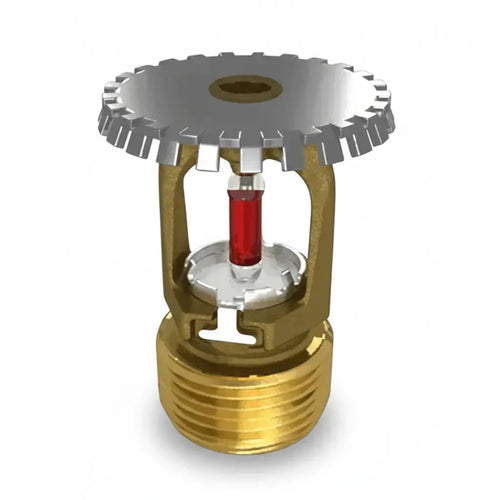
Thermal sensitivity is also indicated by the color of the glass bulb. An orange or red bulb typically signifies a standard temperature rating of 135°F to 155°F. Higher temperature heads use green, blue, or mauve bulbs. Matching these colors is vital for compliance with OSHA automatic sprinkler systems regulations. These standards ensure that every component in your facility works together to provide reliable protection. If you're unsure which specifications your system requires, consult the experts at Fire Protection Parts to verify your hardware before finalizing your order.
Compatibility and Orientation: Matching Your System Architecture
Orientation isn't a suggestion; it's a physical requirement of the deflector design. If you install a pendent head in an upright position, the water spray pattern will fail to reach the intended floor area. This mismatch leaves your property vulnerable and your system non-compliant. When you buy fire sprinkler heads online, you must verify the exact installation position required by your system's architectural layout. Substituting one orientation for another is a major code violation that will fail any professional inspection.
Orientation and Deflector Patterns
Pendent heads are the industry standard for finished ceilings. They hang down from the pipe and spray water in a wide, circular pattern to suppress fires from above. Upright heads are installed on top of the piping. These are essential for unheated warehouses or areas with exposed ceilings where dust and debris might collect on a pendent deflector. Sidewall heads are designed for rooms where ceiling piping isn't feasible. They project water across a space from a wall-mounted position, making them ideal for corridors or hotel suites where aesthetics and pipe concealment are priorities.
Modern Piping Integration
Modern systems frequently utilize high-performance plastics for efficiency and corrosion resistance. Integrating new heads with Viking CPVC fire sprinkler pipe requires specific attention to thread types and sealant compatibility. Most standard heads use National Pipe Thread (NPT) standards, typically in 1/2 inch or 3/4 inch sizes. Ensure your selected head matches the fitting size on your CPVC drop. Using the wrong thread size or an incompatible pipe dope can cause stress fractures in the plastic fittings or lead to slow-leaking joints that damage your facility over time.
Residential vs. Commercial System Requirements
Regulatory standards vary significantly between building types. Commercial systems following NFPA 13 often require larger K-factors and more robust hardware to handle higher water pressures. Residential systems governed by NFPA 13D or 13R prioritize life safety and aesthetics. Concealed heads are popular in these settings. They use a decorative cover plate that drops away during a fire, allowing the head to descend and activate. Always use the specific cover plate listed for that head's SIN to ensure the assembly works as a single, certified unit. For a visual reference on these variations, consult our Replacement Fire Sprinkler Head Identification Guide (2026).
Specialty applications require even more scrutiny. Dry pendent sprinklers are critical for areas subject to freezing, such as walk-in coolers or unheated attics. These units feature a long barrel that keeps the water in a heated area until activation. If you need to buy fire sprinkler heads online for a specialized environment, double-check the barrel length and the seal type to prevent ice plugs from forming in the system. Choosing the right architecture ensures your system remains a reliable protector for decades.

The 2026 Professional Buying Checklist for Online Sourcing
Successful procurement ends with a compliant part in your hands, not just a confirmation email. When you buy fire sprinkler heads online, you must act as your own quality control officer. A single oversight during the ordering process leads to inspection failures or, worse, system malfunction. Use this professional checklist to filter out non-compliant hardware and ensure every component meets the rigorous 2026 safety standards.
Step 1: Verify the SIN and manufacturer specifications. As established, the Sprinkler Identification Number is your primary tool for accuracy. Never purchase a head based on a low price if the SIN does not match your system design exactly. Step 2: Confirm temperature ratings. You must match the hardware to the specific thermal environment of your facility. Step 3: Ensure UL/FM listings are current for 2026. Listings are not permanent. Manufacturers update designs to meet the 2025 NFPA 13 standards, and older stock may no longer be listed for new installations or specific retrofits. Step 4: Audit the seller. Only buy from distributors that provide full technical data sheets and professional support. Step 5: Inspect upon delivery. Physical damage during transit is a silent killer for fire suppression systems.
Verification of Temperature Ratings
Matching the bulb color to your maximum ceiling temperature is a critical safety step. Standard systems typically utilize orange or red bulbs for temperatures between 135°F and 155°F. Environments with higher ambient heat, such as furnace rooms or high-intensity manufacturing floors, require yellow or green bulbs. You should never substitute a higher temperature head for a lower one without a formal engineering approval. Doing so delays activation during a fire, allowing the blaze to grow beyond the system's control. For a detailed breakdown of these requirements, refer to our fire sprinkler head temperature ratings guide or consult the Fire Sprinkler Head Temperature Rating: The Complete 2026 Reference Guide.
Shipping and Handling for Fragile Life-Safety Parts
Glass-bulb sprinklers are precision instruments. They require specialized packaging to prevent micro-fractures that lead to accidental discharge. When your order arrives, inspect the liquid in the bulb immediately. If the fluid level is low or the bulb appears cloudy, the seal is compromised. Identify these "damaged in transit" signs early to facilitate an immediate return. Protect your investment by avoiding "job site" storage in high-traffic areas. Keep your new heads in their original protective packaging until the moment of installation to prevent accidental impact. If you are ready to secure high-quality, professionally handled hardware, browse our inventory of listed fire sprinkler heads to find the exact match for your facility.
Why Fire Protection Parts is Your Trusted Sourcing Partner
Sourcing life-safety equipment requires more than a simple checkout button. It requires a partner who understands the high stakes of fire protection. At Fire Protection Parts, we don't just sell hardware. We provide the verified components necessary to protect lives and property. When you choose to buy fire sprinkler heads online through our platform, you're accessing a supply chain built on professional assurance and technical transparency. We act as a dependable guide for those navigating complex safety requirements.
Our team focuses exclusively on code-compliant solutions. We specialize in viking fire sprinkler heads and industry-leading system components. This specialization allows us to offer more than just a part number. We provide the technical context required to ensure your procurement aligns with 2025 NFPA 13 and 2026 NFPA 25 standards. We understand the nuances of hydraulic calculations and thermal sensitivity. This ensures you receive the exact hardware specified for your project, eliminating the risk of compatibility issues during a fire marshal inspection.
Vetted Inventory and Professional Standards
Every item in our inventory undergoes a rigorous selection process. We prioritize reliability, longevity, and adherence to current safety codes. This includes maintaining a stock of specialized, hard-to-find components like dry pendent sprinkler heads for freeze-prone environments. Our shipping protocols are designed specifically for the fire protection industry. We use secure, impact-resistant packaging to ensure that every glass bulb and fusible link arrives in pristine condition. This methodical approach protects your investment and ensures the physical integrity of your suppression system from our warehouse to your facility.
Ready to Restore Your System?
Efficiency is critical when a system is down or an inspection is looming. We have streamlined our procurement process to support contractors and facility managers who need results without unnecessary fluff. Our technical support team understands NFPA standards on a granular level. We don't just read SKUs; we help you verify that your selection matches your specific system architecture. Whether you need a single replacement head or a bulk order for a new facility, we provide the expert guidance needed to eliminate doubt. We position ourselves not just as a vendor, but as a mission-driven partner in your building's safety.
Shop Code-Compliant Fire Sprinkler Heads Now to secure the authentic hardware your system requires. Browse our categorized selection of heads, escutcheons, and manufacturer-specified wrenches today. For high-volume orders or specialized project quotes, contact our expert team for a professional consultation. We are ready to help you restore your system with absolute confidence.
Future-Proof Your Fire Suppression System
Procuring life-safety hardware is a technical verification process that demands precision. You now have the tools to decode complex Sprinkler Identification Numbers and match orientation requirements to your specific system architecture. By following the 2026 professional checklist, you eliminate the risks of counterfeit parts and ensure your building remains compliant with the latest NFPA standards. Every decision you make in this process strengthens the safety of your facility and the people within it.
When you're ready to buy fire sprinkler heads online, don't settle for unverified marketplaces. Choose a partner that understands the critical nature of fire suppression. Fire Protection Parts is an Authorized Viking Distributor, offering a strictly NFPA code-compliant inventory. Our expert technical support is available to guide you through high-volume orders or specialized requirements, providing the peace of mind that comes from professional expertise.
Buy Professional-Grade Fire Sprinkler Heads Online today. Restore your system with hardware built for strength, longevity, and absolute reliability.
Frequently Asked Questions
Can I replace a fire sprinkler head myself?
Replacing a fire sprinkler head is a task that must be performed by a licensed fire protection contractor. While you can buy fire sprinkler heads online to have the parts ready for your facility, the physical installation involves shutting down the water supply and draining the system. Incorrect installation risks catastrophic leaks or a system that fails to activate during a fire event.
How do I identify the brand of my existing fire sprinkler head?
You can identify the brand by inspecting the deflector or the frame of the head. Most manufacturers stamp their name or logo directly onto the metal components. The most reliable method is to locate the Sprinkler Identification Number (SIN), which is a 4 to 7 digit alphanumeric code that allows you to cross-reference the exact manufacturer and performance specifications.
What is the most common fire sprinkler head for residential use?
The most common sprinkler for residential use is the quick-response (QR) pendent head with a 5.6 K-factor. These heads often feature a 155°F temperature rating, indicated by a red glass bulb. Concealed models are also popular in homes because they use a decorative cover plate to hide the hardware while maintaining full life-safety protection.
Are all fire sprinkler heads the same size?
Fire sprinkler heads are not universal in size. They typically come with either 1/2 inch or 3/4 inch National Pipe Thread (NPT) connections. Additionally, specialty hardware like dry pendents have specific barrel lengths that must match your building's insulation depth and piping location exactly to prevent freezing or installation issues.
How often do fire sprinkler heads need to be replaced?
Under the 2026 edition of NFPA 25, sprinklers in dwelling units must be replaced or tested once they've been in service for 50 years. Fast-response sprinklers often require testing or replacement every 20 years. You must also replace any head immediately if it shows signs of corrosion, heavy loading, physical damage, or if it has been painted.
What does the color of the liquid in a fire sprinkler bulb mean?
The color of the liquid indicates the specific temperature at which the sprinkler will activate. Orange or red bulbs are the most common, signifying a standard temperature range of 135°F to 155°F. Yellow or green bulbs represent intermediate temperatures, while blue or mauve are used for high-temperature environments like commercial kitchens or furnace rooms.
Can I buy fire sprinkler heads without being a licensed contractor?
You can buy fire sprinkler heads online without a professional license. Facility managers and building owners often procure their own hardware to ensure they have authentic, code-compliant components on hand. However, you must hire a licensed professional to install these parts to ensure the system remains certified and fully functional under local fire codes.
Does the K-factor of a replacement head have to match exactly?
The K-factor of your replacement head must match the original specification exactly. The K-factor is the discharge coefficient that relates water pressure to flow rate. If you install a head with a different K-factor, you disrupt the system's hydraulic balance. This leads to insufficient water density during a fire and a guaranteed failure of your fire marshal inspection.

