



Commercial Fire Sprinkler System Parts List: The 2026 Procurement Guide
A single incompatible fitting can compromise an entire multi-million dollar facility. When you're responsible for life safety, there's no room for "close enough" in your commercial fire sprinkler system parts list. You already know that sourcing components from multiple vendors often leads to compatibility headaches and missed deadlines. It's a constant challenge to manage complex NFPA 13 requirements while ensuring every pipe, valve, and brace works in perfect unison.
We understand the pressure of building a code-compliant system that stands the test of time. This guide eliminates the guesswork by providing a comprehensive breakdown of every essential component required for a modern, 2026-standard suppression system. You'll gain a clear path to compliance with the latest NFPA 13 (2025) and NFPA 13E (2026) standards. We'll examine the critical hardware needed for professional protection, ranging from Viking Plastics CPVC pipe and ASC seismic bracing to high-performance backflow preventors and air compressors, ensuring your procurement process is efficient and error-free.
Key Takeaways
- Secure your water supply by selecting high-performance backflow preventers that meet strict municipal safety standards and NFPA 13 requirements.
- Build a complete commercial fire sprinkler system parts list that balances durability and cost-efficiency using advanced materials like Viking CPVC pipe.
- Ensure rapid suppression and life safety by mastering the technical differences between Standard and Quick Response (QR) sprinkler head configurations.
- Minimize structural risk with a deep dive into NFPA 13 hanger spacing and the necessity of ASC seismic bracing in high-risk geographic areas.
- Protect dry-pipe systems from accidental discharge and corrosion by integrating reliable air compressors and specialized anti-freeze solutions into your plan.
Core Infrastructure: Water Supply and Fire Riser Room Components
The fire riser room serves as the operational heart of any suppression strategy. It's where the municipal water supply meets your facility's internal network, making it the most critical part of your commercial fire sprinkler system parts list. Without a properly configured riser, the rest of the system is essentially dormant. This infrastructure must manage high-pressure water flow while preventing contamination of the public water supply. For a foundational fire sprinkler system overview, it's clear that the riser acts as the primary control point for maintenance, testing, and emergency activation.
In multi-story commercial buildings, gravity is a constant adversary. Maintaining adequate system pressure often requires the integration of fire pumps. These pumps ensure that even the most remote sprinkler head receives the necessary PSI to suppress a fire effectively. Alongside the pump, the main drain and test header allow technicians to verify flow rates without flooding the building. These components aren't just accessories; they're vital for NFPA 13 compliance and long-term reliability. A properly maintained drain system prevents water damage during routine testing and ensures the system is ready for real-world deployment.
Backflow Preventers and Control Valves
Protecting the city's potable water is a legal and ethical requirement. High-quality backflow preventer fire protection ensures that stagnant water within the sprinkler pipes never flows back into the drinking supply. When you select control valves, choose between Outside Screw and Yoke (OS&Y) valves or Post Indicator Valves (PIVs). OS&Y valves provide a clear visual cue; if the stem is out, the valve is open. PIVs are typically located outside the building for easy access by emergency responders. To eliminate the risk of accidental closure, these valves must be fitted with tamper switches that alert the fire alarm panel immediately if a valve is moved from its open position.
Deluge and Specialized Check Valves
High-hazard environments, such as aircraft hangars or chemical storage, require specialized equipment like the PTR Electric Deluge VXD. This valve allows for rapid, simultaneous discharge across all open heads when a fire is detected. Check valves play a quieter but equally important role by preventing reverse flow and system contamination. Monitoring these components requires accurate pressure gauges. A sudden drop in riser pressure often indicates a leak or a pump failure, making these small tools indispensable for system health. A complete commercial fire sprinkler system parts list must prioritize these high-performance components to ensure the system remains ready for action at a moment's notice.
The Distribution Network: Piping Materials and Fittings
Choosing the right conduit for water delivery is a decision that impacts installation speed and long-term maintenance. For decades, Schedule 40 steel was the default choice for its ruggedness. However, modern contractors are increasingly turning to Viking CPVC fire sprinkler pipe for light-hazard commercial environments like offices and hotels. This shift is driven by the material's inherent resistance to corrosion and microbiologically influenced corrosion (MIC), which can plague metal systems. Every component in your commercial fire sprinkler system parts list must adhere to the NFPA 13 installation standard to ensure hydraulic performance and code compliance.
Solvent welding has revolutionized the job site. Unlike steel pipe, which requires heavy threading machines or specialized welding equipment, CPVC uses a chemical bonding process. This method eliminates the need for "hot work" permits and significantly reduces labor hours. It creates a joint that's often stronger than the pipe itself. To maintain system integrity, ensure all piping meets ASTM standards for fire suppression. If you're planning a new build, you can source certified piping materials that guarantee both compliance and longevity.
CPVC Fire Protection Fittings
Complex layouts require a diverse array of elbows, tees, and adapters to navigate structural obstructions. When building your commercial fire sprinkler system parts list, remember that CPVC fire protection fittings must be chemically compatible with the pipe brand. Mixing brands can lead to chemical stress cracking or joint failure. Transition fittings are equally vital. These specialized components allow for a secure, leak-proof connection between CPVC branch lines and metallic riser components, bridging the gap between different materials without compromising safety.
Couplings and Mechanical Grooved Fittings
For systems utilizing steel, mechanical grooved fittings offer unmatched speed and reliability. These couplings use a housing, a bolt, and a gasket to create a flexible or rigid joint. Selecting the right gasket is critical; you must match the elastomer material to the specific water temperature and pressure of your system. Additionally, incorporating flanges and unions at strategic points allows for easy component replacement. This foresight simplifies future repairs, ensuring your facility remains protected with minimal downtime and disruption to operations.
Fire Sprinkler Heads and Discharge Hardware
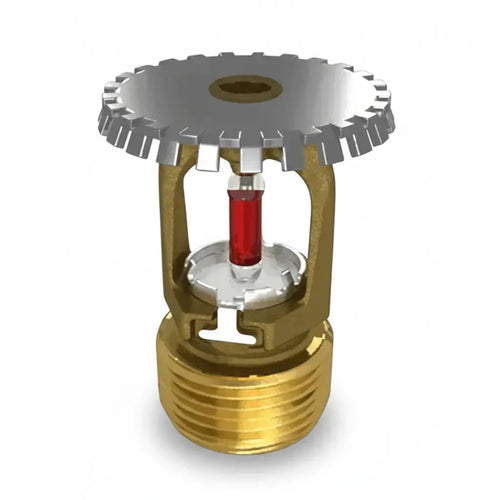
Sprinkler heads are the final sentinels in your fire suppression strategy. While the riser and distribution network provide the water, the head determines exactly when and how that water is deployed. Every item on your commercial fire sprinkler system parts list serves a purpose, but the head is the only component that interacts directly with the heat of a fire. Most commercial heads activate through a heat-sensitive glass bulb or a fusible metal link. When ambient temperatures reach a specific threshold, the bulb bursts or the link melts, releasing the water seal. You should also source compatible escutcheons and guards to ensure the heads are protected from physical damage and positioned correctly for optimal heat collection.
Choosing between Standard Response and Quick Response (QR) heads is a decision rooted in your specific safety objectives. QR heads feature a smaller glass bulb designed to react faster to a rapid rise in temperature. These are the gold standard for life safety in light-hazard commercial spaces like offices and retail stores. Standard Response heads are better suited for high-hazard or storage areas where the goal is to control the fire's spread rather than prioritize immediate evacuation. Temperature ratings are the most critical factor here. You must select a rating that's high enough to avoid accidental discharge from HVAC vents or skylights, yet low enough to activate before a fire becomes uncontrollable. This precision is what separates a professional installation from a liability.
Commercial Head Orientations
The physical layout of your ceiling dictates the orientation of your heads. Pendent sprinklers hang below the piping and are the most common choice for finished ceilings. Upright sprinklers sit above the pipe, making them ideal for mechanical rooms or exposed ceilings where debris might settle on a deflector. Sidewall sprinklers offer a solution for hallways where overhead piping isn't feasible. For high-end interiors, concealed heads use a decorative cover plate that drops away during a fire, balancing safety with professional aesthetics.
Specialized Discharge Devices
Specialized environments require targeted hardware. If you're protecting unheated loading docks or walk-in freezers, you must specify dry pendent sprinkler heads to prevent pipe bursts and ice blockages. For high-pile storage warehouses, ESFR heads provide the high-volume discharge needed to suppress intense heat plumes. Institutional heads offer tamper-resistant features for high-security facilities, ensuring the system remains operational and safe for all occupants without compromise.

Support Hardware: Seismic Bracing and Hangers
A fire suppression system is only as reliable as the structure that holds it in place. While pipes and heads are the visible components, the support hardware prevents catastrophic failure during a fire or seismic event. Your commercial fire sprinkler system parts list must account for the heavy weight of water-filled pipes and the massive force of hydraulic surges. NFPA 13 dictates strict spacing rules for hangers to prevent sagging and undue stress on joints. For most steel systems, hangers are required every 12 to 15 feet, but specific branch line configurations often require even tighter tolerances. Secure overhead mounting typically involves a combination of all-thread rods and beam clamps, ensuring the network remains firmly anchored to the building's structural steel.
In high-risk geographic zones, standard hangers aren't enough to guarantee safety. You need specialized seismic bracing for sprinkler systems to protect against lateral and longitudinal movement. Without these restraints, even a minor tremor could snap pipes and render the entire suppression network useless. This hardware acts as a critical safeguard, ensuring that the system moves in unison with the building rather than swinging independently. Proper bracing doesn't just protect the pipes; it protects the facility's investment by preventing accidental water damage caused by structural swaying.
ASC Seismic Bracing Solutions
Utilizing ASC seismic bracing provides a professional, code-compliant path to safety. These systems consist of swivel attachments, structural connectors, and brace pipes that work together to absorb and redirect energy. Identifying the correct bracing load is a technical necessity that shouldn't be overlooked. You must match the brace capacity to your specific pipe size and the seismic design category of your facility. Swivel attachments are particularly vital because they allow for the necessary angle of the brace pipe while maintaining a rigid, unwavering connection to the building's primary structure.
Hangers and Restraints
Selection often comes down to the specific mounting environment and the environmental conditions of the building. Clevis hangers are the industry standard for adjustable vertical support, while band hangers offer a more compact profile for tight spaces. If your system operates at high pressures, surge restraints are mandatory to prevent the pipe from jumping when the water flow initiates. For facilities near the coast or in industrial zones, prioritize hangers with corrosion-resistant coatings. These specialized finishes prevent rust from weakening the supports over decades of service. You can browse our full selection of support hardware to find the right fit for your specific project requirements.
Auxiliary Systems: Air Compressors and Anti-Freeze
Environmental conditions pose a constant threat to fire suppression reliability. In unheated spaces or regions prone to extreme cold, standard wet systems face the risk of frozen and burst pipes. This is where auxiliary components become essential additions to your commercial fire sprinkler system parts list. Dry-pipe and pre-action systems rely on pressurized air or nitrogen to hold back the water supply until a fire is detected. If air pressure drops too low, the valve may trip prematurely, causing significant water damage and system downtime. High-performance air compressors for dry sprinkler systems are the solution to this risk, providing the steady pressure needed to keep the system in a ready state.
Moisture is the silent enemy within these pressurized networks. Compressed air naturally contains water vapor, which can lead to internal pipe corrosion or ice plugs in cold environments. Integrating air dryers into your setup is a professional necessity to ensure the air remains bone-dry. Maintenance air compressors, distinct from the primary fill compressor, handle small leaks and pressure fluctuations without overworking the main equipment. This dual-layered approach ensures your facility remains protected even when temperatures plummet. It's a proactive strategy that eliminates the doubt associated with winter weather and unconditioned spaces.
Dry Pipe Air Supply Essentials
Choosing the right compressor requires calculating the total system capacity. NFPA 13 (2025) requires the compressor to fill the entire system to its required pressure within 30 minutes. An Air Maintenance Device (AMD) is equally critical; it regulates the flow into the system, preventing a sudden surge that could damage sensitive components. You must also include low-pressure alarms in your commercial fire sprinkler system parts list. These sensors provide an immediate alert if the air supply fails, allowing for intervention before the system trips and accidentally floods the building.
Anti-Freeze Solutions for Commercial Wet Systems
For wet systems in areas where localized freezing is a concern, UL-listed anti-freeze is the industry standard. Modern safety regulations now mandate the use of non-toxic, factory-mixed anti-freeze for fire sprinkler systems. These pre-mixed solutions eliminate the risk of improper concentrations that could actually fuel a fire. If you're managing an older system, regular testing is required to verify the solution's freeze point. Don't forget the expansion tank; as temperatures fluctuate, the anti-freeze solution expands and contracts. Without a properly sized tank to manage this volume change, the system's internal pressure could exceed safe limits and cause a leak.
Securing Your Facility with Precision Procurement
Building a reliable suppression system requires more than just high-quality components; it requires a strategy rooted in compatibility and code compliance. You've seen how every element, from the fire riser room to the auxiliary air compressors, plays a specific role in protecting life and property. A meticulously maintained commercial fire sprinkler system parts list is your best defense against system failure and regulatory hurdles. By prioritizing verified hardware and the latest NFPA standards, you eliminate the risks associated with generic alternatives and sourcing delays.
Fire Protection Parts is your partner in professional safety. We provide a comprehensive range of code-compliant hardware from industry leaders like Viking and ASC. With fast shipping on critical replacement parts and expert support for facility managers and contractors, we help you maintain a system that's always ready for action. Source Your Complete Commercial Fire Sprinkler Parts List at Fire Protection Parts today. Your commitment to quality ensures a safer environment for everyone in your building.
Frequently Asked Questions
What are the most critical components of a commercial fire sprinkler system?
The most critical components include the water supply riser, backflow preventers, distribution piping, and the sprinkler heads themselves. These parts form the backbone of your commercial fire sprinkler system parts list, ensuring water is controlled, directed, and discharged effectively. Without a reliable backflow preventer, you risk contaminating municipal water, while inferior heads may fail to activate during a thermal event.
Does a commercial sprinkler system require a fire pump?
A fire pump is required whenever the municipal water supply cannot provide sufficient pressure or volume to meet the system's hydraulic demands. This is common in high-rise buildings or large-scale warehouses where gravity and friction loss reduce pressure at the most remote sprinkler heads. You'll need to consult a professional hydraulic calculation to determine if a pump is a necessary addition to your infrastructure.
How do I choose between steel and CPVC for a commercial building?
Choose Schedule 40 steel for high-hazard areas or where piping remains exposed to physical damage. For light-hazard applications like offices or hotels, Viking CPVC pipe offers superior corrosion resistance and faster installation via solvent welding. CPVC is often the preferred choice for retrofits because it's lighter and doesn't require "hot work" permits for welding or threading machines on the job site.
What is the difference between a wet pipe and a dry pipe system parts list?
A dry pipe commercial fire sprinkler system parts list includes specialized components like air compressors, dry pipe valves, and air maintenance devices that aren't found in wet systems. Wet systems are simpler and remain filled with water, but they require UL-listed anti-freeze solutions if they're installed in areas subject to freezing. Dry systems use pressurized air to hold back water, making them ideal for unheated loading docks.
Are seismic braces required for all commercial sprinkler systems?
Seismic braces are mandatory for systems installed in regions designated as Seismic Design Categories C through F, or for certain pipe diameters as specified by NFPA 13. Hardware like ASC seismic bracing protects the system from snapping during structural movement. Even in lower-risk zones, local building codes or insurance requirements may dictate the installation of lateral and longitudinal restraints to prevent catastrophic water damage during an event.
Can I buy replacement fire sprinkler heads online for a commercial system?
You can purchase replacement heads online, but you must ensure the new heads match the Sprinkler Identification Number (SIN) of the original components. Replacing a head with an incorrect temperature rating or response type can compromise the building's safety and void your compliance. Always verify that the replacement part is UL-listed and approved for your specific system configuration before completing your procurement.
What tools are needed for fire sprinkler head replacement?
Replacing a sprinkler head requires a manufacturer-specific sprinkler wrench and high-quality thread sealant. Standard pipe wrenches can damage the delicate frame or heat-sensitive bulb of the head, leading to leaks or activation failure. You'll also need tools to safely drain the system and verify that pressure has been fully relieved before attempting any hardware removal to avoid injury or accidental flooding.
How often should commercial sprinkler parts be inspected for ITM compliance?
Inspection intervals are governed by NFPA 25 and vary based on the specific component being evaluated. Gauges and control valves often require weekly or monthly visual checks to ensure they're in the correct position. The entire system typically undergoes a comprehensive annual inspection to verify the integrity of heads and hangers. Staying ahead of these requirements ensures your hardware remains in peak condition and ready for an emergency.

