

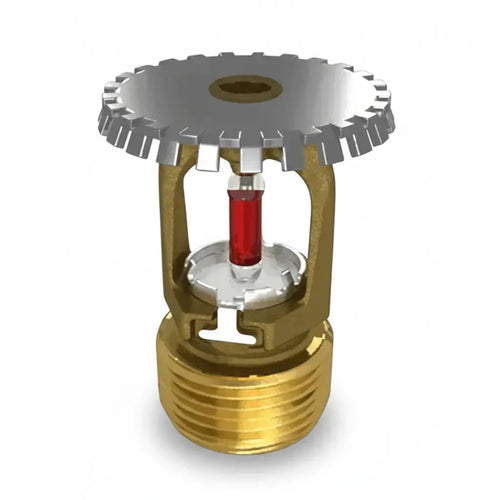


Dry Pipe Valve Parts: The 2026 Professional Sourcing & Repair Guide
A dry pipe system is only as reliable as its air-to-water seal. While the valve body is the heart of the setup, sourcing the correct trim and compressor dry pipe valve parts is actually more critical for long-term performance. You likely already understand the frustration of a system that trips because of a minor air leak or moisture-driven corrosion. These issues aren't just inconveniences. They represent a significant risk to facility safety and your maintenance budget during freezing winter months when reliability is non-negotiable.
We've designed this 2026 professional sourcing guide to eliminate the guesswork from your repair and procurement process. You'll learn how to identify high-priority components that maintain system pressure and prevent accidental discharge in the harshest environments. We will cover everything from selecting code-compliant air compressors to sourcing specialized dry pendent sprinklers. This overview provides a clear path to maintaining a reliable, leak-free fire suppression system that meets the most demanding safety standards and ensures your facility remains protected.
Key Takeaways
- Learn how dry systems use pressurized air to protect unheated environments like attics and parking garages from freezing.
- Identify the essential dry pipe valve parts and trim components, such as gauges and switches, necessary for maintaining a reliable air-to-water seal.
- Discover why dedicated, fire-rated air compressors are required by code to ensure consistent pressure and prevent accidental system trips.
- Understand the design of dry pendent sprinklers and how they keep water safely inside heated zones to prevent pipe bursts.
- Secure your facility by sourcing only UL-listed and FM-approved hardware from specialized retailers to meet strict insurance and safety requirements.
Anatomy of a Dry Pipe Fire Sprinkler System
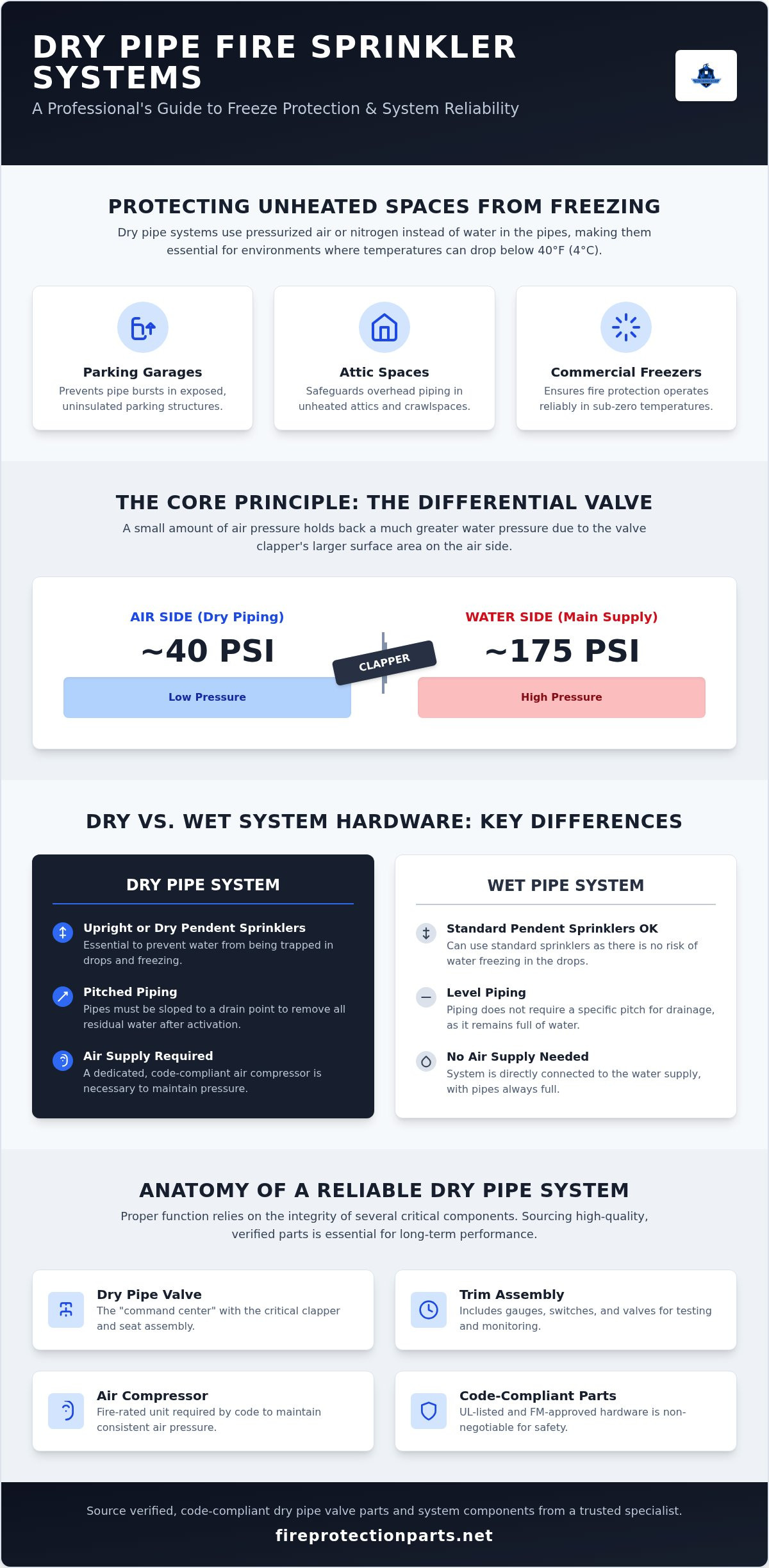
A Dry Pipe Fire Sprinkler System serves as the primary line of defense in environments where temperatures drop below 40°F. Unlike standard wet systems that hold water in the overhead piping at all times, dry systems fill the pipes with pressurized air or nitrogen. This design is essential for unheated parking garages, attic spaces, and commercial freezers. Without this air barrier, water would freeze, expand, and rupture the pipes, rendering the system useless during a fire.
The system relies on a specialized valve to keep water out of the vulnerable zones. This valve uses a clapper mechanism to maintain a strict air-to-water seal. Because of the surface area ratio on the clapper, a relatively small amount of air pressure can hold back a much higher volume of water pressure from the main supply. Sourcing the right dry pipe valve parts ensures this seal remains airtight, preventing nuisance trips and accidental flooding. A complete system consists of the main valve, an air supply, pitched piping, and specialized sprinkler heads designed for freezing conditions.
How Dry Pipe Systems Prevent Freezing
The core of the system is the differential valve. It works through simple physics. The clapper has a larger surface area on the air side than on the water side. This allows a small amount of air to successfully restrain a much higher volume of water pressure. The system establishes a clear freeze line. This is the transition point where the pipe exits a heated riser room and enters the unheated space. Using pressurized air as the medium ensures that no liquid sits in the pipes until the system actually activates, eliminating the risk of ice blockages.
Key Differences Between Dry and Wet Pipe Hardware
You cannot simply swap wet system components into a dry system. The hardware requirements are significantly different to account for the absence of water and the presence of air pressure. These differences include:
- Sprinkler Orientation: In a dry system, you must use upright heads or specialized dry pendent sprinklers. Standard wet pendents would trap water in the drop, leading to a freeze-related burst.
- Pitched Piping: Dry systems require all piping to be pitched toward a drain point. This ensures that after a test or activation, every drop of residual water can be removed to prevent corrosion and ice plugs.
- Material Transitions: While steel is standard, certain transition zones may utilize specialized materials like Viking Plastics CPVC pipe where code allows, provided the installation accounts for thermal expansion.
Maintaining these systems requires a precise inventory of dry pipe valve parts to address wear on gaskets and seals before they fail. Reliability depends on the integrity of every component in the chain.
The Dry Pipe Valve: Critical Parts and Trim Components
The main valve body acts as the command center for the entire system. It's a heavy-duty casting designed to withstand high pressure while maintaining a delicate balance between air and water. Inside, the clapper and seat assembly form the primary barrier. If this seal fails, you face a full system trip. This means water enters the dry piping, creating a massive cleanup task and an immediate freeze risk. Sourcing verified dry pipe valve parts like clapper facings and high-quality gaskets is the only way to ensure this seal holds up under constant pressure. To understand the industrial materials used in high-performance seals, you can learn more about Plastiques Elastomères.
Beyond the valve itself, the trim package includes the gauges, switches, and bypass valves that allow for testing and monitoring. The alarm pressure switch is a standout component here. It detects the surge of water when the system activates and sends an immediate signal to the fire alarm panel. Routine maintenance also requires a steady supply of dry pipe valve parts such as O-rings and gaskets. These wear items must be replaced periodically to prevent slow air leaks that can lead to compressor burnout or accidental discharge.
Understanding the Trim Assembly
Most maintenance calls stem from issues within the trim assembly rather than the valve body itself. This intricate web of piping includes velocity drips to prevent water accumulation in the intermediate chamber and reset knobs for post-trip restoration. If you find a leak in a gauge or a faulty emergency pull station, you can find code-compliant sprinkler system components online to restore your system. Keeping these small parts in top condition prevents larger, more expensive system failures.
Quick Opening Devices (Accelerators)
Large dry systems often have a significant volume of air to exhaust before water reaches the heads. NFPA standards set strict limits on water delivery times, which is why accelerators are vital. These devices sense a drop in air pressure and immediately vent the air to speed up water transit. If an accelerator starts leaking air or fails to trip during a test, it's time for a rebuild kit or a full replacement. You can source professional-grade accelerators and rebuild kits to keep your large-scale systems within code compliance and ensure they perform when every second counts.
Air Supply Infrastructure: Compressors and Maintenance Hardware
Without a constant, reliable air supply, your dry system won't function. The air supply creates the pressure that keeps the clapper closed and the water at bay. While the valve handles the transition, the air supply infrastructure prevents the system from tripping during minor pressure fluctuations. It's a common mistake to assume any compressor will do. In reality, your air supply must be as specialized as your dry pipe valve parts to ensure code compliance and system longevity.
Modern systems in 2026 increasingly utilize nitrogen generators instead of standard air compressors. Oxygen is the primary driver of internal pipe corrosion; by replacing air with 98% pure nitrogen, you can extend the life of your piping by years. If you stick with traditional air, you must include dehydrators or air dryers. These components remove moisture before it enters the system, preventing ice plugs and reducing the risk of corrosion in the cold zones of your facility.
Choosing the Right Air Compressor
Your choice of compressor depends entirely on the total volume of your piping system. Riser-mounted compressors offer a compact solution for smaller systems, while tank-mounted units provide the extra capacity needed for large warehouses. NFPA 13 dictates a strict 30-minute fill-up rule. This means your compressor must be powerful enough to restore full system pressure within half an hour of a test or maintenance event. For technical specifications on sizing and selection, consult our guide on air compressors for dry sprinkler systems. Don't risk a code violation by using an undersized unit.
Air Maintenance Devices and Regulators
An air maintenance device (AMD) is the critical link between your compressor and the dry pipe valve. It acts as a regulator, ensuring that the system receives air at a consistent, safe pressure. It also prevents the system from tripping if a small leak occurs. If your pressure gauges show erratic readings or the relief valve is constantly venting, these are signs that your AMD needs attention. Key maintenance steps include:
- Replacing Pressure Gauges: Accurate monitoring is impossible with damaged or uncalibrated gauges.
- Testing the Relief Valve: This safety feature prevents the compressor from over-pressurizing the system.
- Checking the Bypass Valve: This valve is essential for quickly charging the system during initial setup, but it must be closed during normal operation.
High-quality dry pipe valve parts and a well-maintained air supply work together to eliminate nuisance trips. Investing in the right infrastructure today prevents the headache of an accidental system discharge tomorrow.
Specialized Sprinkler Heads and System Accessories
While the valve and compressor manage the core system pressure, the sprinkler heads are the frontline of your fire defense. In unheated environments, standard wet heads are a liability. You must utilize specialized dry heads that incorporate a barrel assembly. This design keeps the water seal in the heated portion of the building while the air-filled barrel extends into the cold zone. Sourcing these specific components is just as critical as finding the right dry pipe valve parts for the riser room. Without the correct heads, the entire air-to-water balance is compromised.
Beyond pendents, many facilities require dry upright or sidewall variations to accommodate complex architectural layouts or low-clearance areas. These heads operate on the same principle, using a mechanical seal at the inlet to prevent water from entering the barrel until the system trips. Don't overlook the importance of escutcheons and cover plates. These aren't just for aesthetics; they provide a professional finish and help maintain the thermal seal around the head, ensuring the heat-sensitive element reacts quickly during a fire.
Dry Pendent Sprinkler Specifications
Ordering replacement heads for an older system can be difficult without the right data. The most critical measurement is the "A dimension." This represents the length from the face of the fitting to the finished ceiling. If this measurement is off by even an inch, the head won't seat properly against the escutcheon, potentially leaving the pipe exposed to freezing air. You also need to verify fire sprinkler head temperature ratings to ensure the bulb or link activates correctly for your specific hazard level.
Always look for the Sprinkler Identification Number (SIN) stamped on the deflector. This five or six-character code tells you exactly what you're looking at, including the K-factor and response type. Matching the SIN is the only way to guarantee the replacement head performs exactly like the original. If you are unsure about a specific model, reach out to a professional supplier to avoid installing incompatible hardware.
Seismic and Structural Support
Dry pipe systems are particularly vulnerable to structural movement. Because the pipes are filled with air rather than water, they have different weight and harmonic properties during a seismic event. Proper bracing prevents the piping from swinging and breaking at the joints or the valve. Local building codes generally require seismic protection in high-risk zones or for systems over a certain pipe diameter. Essential components for a code-compliant installation include:
- Lateral Braces: These prevent the pipe from moving side-to-side.
- Longitudinal Braces: These stop the pipe from shifting along its length.
- Four-Way Risers: Heavy-duty bracing installed at the top of the main riser to stabilize the entire system.
For a deep dive into compliance, see our seismic bracing for sprinkler systems guide. You can buy code-compliant seismic hardware directly from our inventory to secure your installation. Whether you're replacing a single head or reinforcing an entire floor, using verified parts is the only way to ensure long-term safety and minimize the risk of accidental system discharge.
Sourcing Code-Compliant Parts for System Repairs
Sourcing the right hardware is about more than just finding a fit. It's about ensuring your system remains code-compliant and fully operational. Using non-listed components in a fire suppression system is a massive risk. Insurance providers and local fire marshals require UL-listed and FM-approved hardware for a reason. These certifications prove that the dry pipe valve parts have been tested under extreme conditions and will perform when lives are on the line. If a failure occurs with unverified parts, you could face denied claims and significant legal liability.
Purchasing through a specialized fire protection parts online retailer offers a level of assurance that general hardware stores can't match. You get access to components specifically engineered for industry-standard brands like Viking. Verifying compatibility is straightforward when you work with experts who understand the nuances of various trim packages and valve bodies. Don't guess. Use the manufacturer's technical data sheets to match part numbers exactly before finalizing your order.
Effective facility management requires proactive inventory control. You shouldn't wait for a system trip to order critical spares. Keep a dedicated cabinet near the riser room stocked with specialized head wrenches for every SIN in your building, replacement clapper facings, and spare gauges. Having these dry pipe valve parts on hand can mean the difference between a quick reset and a prolonged system outage.
The Professional Sourcing Advantage
Navigating the procurement of safety hardware is easier with a partner who understands the industry. Specialized retailers provide expert support to help you identify obsolete or hard-to-find components for aging systems. This is especially useful for large-scale facility retrofits where you need to manage multiple sites with varying requirements. If you need temporary safety solutions during these complex upgrades, Colorado Safety Supply Company offers a range of industrial safety equipment rentals to ensure your site remains secure. Fast shipping is another major factor. In 2026, prioritizing efficient logistics for critical items like air compressors is essential. Getting these parts quickly minimizes system downtime and helps you avoid the high costs of a mandatory fire watch.
Before you close the door on your maintenance cycle, run through this final checklist. Reliability is built on the details. Methodical checks prevent emergency calls later.
- Check Air Supply: Verify compressor oil levels and inspect belt tension for signs of wear or fraying.
- Drain the Low Points: Clear all drum drips to remove accumulated condensation before it has a chance to freeze.
- Verify Valve Positions: Ensure all control valves are locked in the open position and tamper switches are functioning.
- Monitor Pressure: Confirm that the air-to-water pressure ratio matches the manufacturer's specification for your specific valve model.
Taking these steps ensures your dry system remains a dependable protector throughout the winter months. Professional sourcing combined with methodical maintenance eliminates doubt and provides true peace of mind for facility managers and contractors alike.
Secure Your System for the 2026 Winter Season
Maintaining a dry pipe system requires more than just reactive repairs. It demands a proactive strategy that prioritizes code-compliant hardware and a thorough understanding of the system's air-to-water balance. You've learned that the right dry pipe valve parts are the foundation of this reliability, but they must be supported by specialized air supply infrastructure and dry pendent heads to truly prevent freezing failures. By sourcing UL-listed and FM-approved components, you eliminate the risk of insurance denials and ensure your facility remains protected under the harshest conditions.
As an authorized distributor of Viking and ASC Engineered Solutions, Fire Protection Parts provides the professional-grade hardware you need to maintain a safe environment. Our US-based technical support team is ready to help you identify the exact components required for your specific system. We maintain an extensive inventory to ensure your facility stays compliant and your maintenance schedule stays on track. Shop code-compliant dry pipe fire sprinkler parts at Fire Protection Parts today to secure your inventory and minimize system downtime. You've got the expertise; we've got the parts to back it up.
Frequently Asked Questions
What is the most common part to fail in a dry pipe fire sprinkler system?
The trim assembly components, specifically the air maintenance device and pressure switches, fail most frequently. These small parts handle constant pressure fluctuations and moisture. Rubber components like clapper facings also degrade over time. Maintaining a stock of these dry pipe valve parts prevents minor leaks from turning into full system trips. Regular inspection of the velocity drip is also essential to prevent water accumulation in the intermediate chamber.
Can I use a standard wet pipe sprinkler head in a dry pipe system?
No, you cannot use standard wet pipe heads in a pendent position on a dry system. Wet heads trap water in the drop pipe, which will freeze and rupture in unheated areas. You must use specialized dry pendent sprinklers with a sealed barrel design. These barrels keep the water seal inside the heated portion of the building while the air-filled extension reaches the cold zone. Upright heads are acceptable if they allow for proper drainage.
How often do dry pipe valve gaskets and seals need to be replaced?
Most manufacturers recommend inspecting gaskets and seals annually and replacing them every five years, or sooner if wear is detected. Rubber components like clapper facings and O-rings lose elasticity due to constant compression and temperature changes. If you notice air pressure dropping without a visible pipe leak, the internal seals are likely failing. Replacing these dry pipe valve parts during scheduled maintenance is much cheaper than an emergency repair after a nuisance trip.
What is a quick opening device and when is it required?
A quick opening device, or accelerator, is a component that speeds up the exhaust of air to allow water to reach the heads faster. NFPA 13 requires these devices when the system volume exceeds 500 gallons, unless the system can deliver water to the most remote inspector's test connection within 60 seconds. Accelerators sense a rapid drop in air pressure and immediately vent the system, ensuring the system meets strict water delivery time standards.
Why does my dry pipe system keep tripping without a fire?
Nuisance trips usually occur because the air pressure has dropped below the trip point of the dry pipe valve. This is often caused by small air leaks in the piping or a malfunctioning air maintenance device. If your compressor can't keep up with the leak, the clapper will eventually open. Another common cause is a surge in water supply pressure that overcomes the air pressure holding the clapper shut. Checking the air-to-water pressure ratio is the first step in troubleshooting.
Do I need a specific type of air compressor for a dry sprinkler system?
Yes, you must use a dedicated air compressor designed for fire protection systems. Standard shop compressors aren't built for the duty cycles or reliability requirements of a fire system. Fire-rated compressors are often oil-less to prevent oil from entering the piping and damaging the sprinkler heads. They must also be sized to meet specific NFPA fill-up times. Using an unlisted compressor can void your insurance coverage and compromise system safety during a freeze event.
What are the NFPA requirements for dry pipe system air supply?
NFPA 13 requires the air supply to be capable of restoring full system pressure within 30 minutes. The air supply must be reliable and available at all times. It also mandates the use of an air maintenance device to regulate pressure and prevent the compressor from over-pressurizing the system. If the system uses nitrogen, the generator must meet similar volume and pressure standards. All air supply components must be properly supported and protected from physical damage.
How do I identify the correct replacement head for an older dry system?
The most reliable way to identify a replacement head is by checking the Sprinkler Identification Number (SIN) stamped on the deflector. This code, usually five or six characters, identifies the manufacturer, K-factor, and orifice size. For dry pendents, you must also measure the "A dimension," which is the length from the fitting to the finished ceiling. Matching these specs exactly ensures the new head fits the existing piping and provides the correct water distribution.

