



Fire Sprinkler Valve Trim Kits: The 2026 Professional Buyer’s Guide
What if your multi-million dollar suppression system fails because of a single mismatched component? It's a risk no facility manager or contractor can afford to take. You understand that fire sprinkler valve trim kits are the operational nerve center of any system, yet matching the right assembly to specific valve architectures remains a constant source of frustration. With the 2025 NFPA 13 standards now in effect and 2026 price shifts across major manufacturers like Viking and AGF, there's no room for error or piecemeal assemblies that risk non-compliance.
This guide will help you master the complexities of fire sprinkler valve trim kits. We provide the expert knowledge you need to select the right components for maximum reliability. You'll learn to identify the exact kit for your specific system type, whether it's dry, deluge, or alarm. We'll also show you how to ensure every gauge and drain meets the latest standards. This approach reduces on-site installation time and eliminates the risk of missing a critical component, giving you total confidence in your fire protection hardware.
Key Takeaways
- Understand why trim kits are vital for facilitating system testing and pressure monitoring without interrupting suppression capabilities.
- Learn to match fire sprinkler valve trim kits to specific architectures, including dry pipe and alarm check systems, to ensure total functional synergy.
- Identify the essential hardware, such as precision gauges and main drains, required to meet the latest 2025 NFPA 13 standards.
- Use a manufacturer-specific selection framework to avoid the regulatory risks and delays associated with piecemeal component assembly.
- Discover how pre-configured, ready-to-install packages can significantly reduce on-site labor and eliminate configuration complexity.
What are Fire Sprinkler Valve Trim Kits and Why are They Essential?
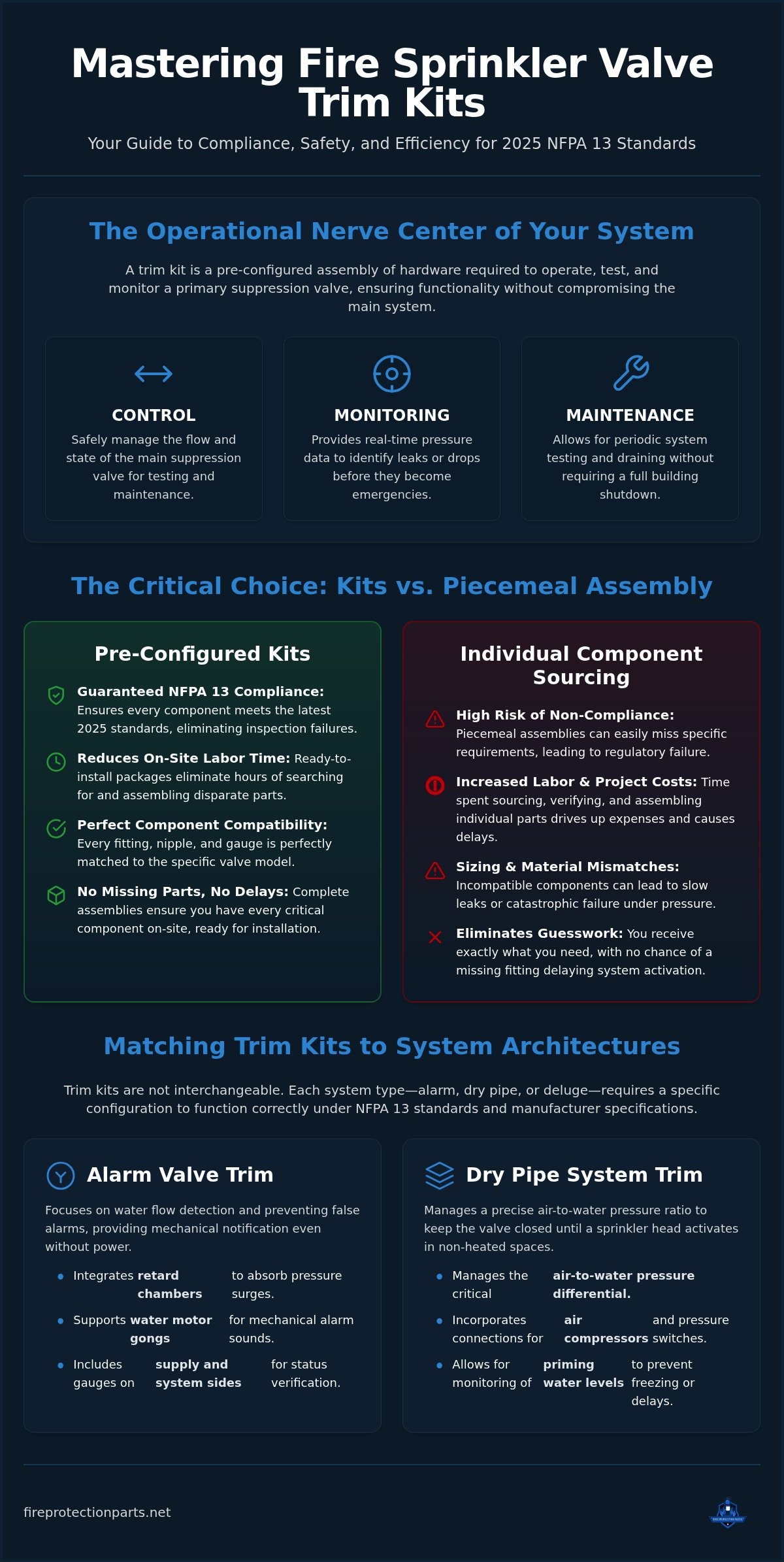
A fire sprinkler valve trim kit is a pre-configured assembly of peripheral hardware required to operate and monitor a primary suppression valve. Think of it as the operational nerve center. While the main valve handles the heavy lifting of water suppression, the trim facilitates the critical day-to-day functions. This includes testing, draining, and monitoring system pressure without compromising the integrity of the main valve. For a broader fire sprinkler system overview, these assemblies represent the critical interface between the water supply and active protection.
Professional kits ensure every fitting, nipple, and gauge is perfectly compatible with the specific valve model. This isn't just about convenience; it's about life safety. Code compliance depends on it. Trim sets are vital for meeting NFPA requirements for system maintenance and accessibility. Without the correct trim, your system might technically be installed but remain functionally unmanageable or non-compliant during a fire marshal inspection. Sourcing a complete kit eliminates the guesswork that leads to failed inspections.
The Functional Hierarchy of Valve Trim
The hierarchy begins with control. Trim allows operators to manage the flow and state of the main suppression valve safely. Monitoring follows, providing real-time data via precision pressure gauges and switches. This data allows for immediate identification of system leaks or pressure drops before they become emergencies. Finally, maintenance is the long-term benefit. Proper trim allows for periodic testing and system drainage without a full building shutdown. It keeps the system ready for any eventuality while protecting the longevity of the hardware.
Kits vs. Individual Component Sourcing
Sourcing individual components creates a high risk of piecemeal assembly errors. Sizing mismatches or material incompatibilities can lead to slow leaks or catastrophic failure under pressure. Pre-configured fire sprinkler valve trim kits eliminate this on-site configuration complexity entirely. For contractors, these kits reduce installation labor costs significantly. Instead of hunting for dozens of disparate parts, you get a ready-to-install solution. Sourcing from a professional collection of 90+ trim packages ensures consistency in durability and performance across every single component in the assembly. It's a method that prioritizes safety and professional efficiency over the risks of improvised hardware solutions.
Matching Trim Kits to Specific System Architectures
Trim kits are not interchangeable components. Each system type requires a specific configuration to function correctly under the NFPA 13 standard. Using a generic assembly on a specialized valve leads to operational failure and regulatory non-compliance. Selecting fire sprinkler valve trim kits that match the manufacturer's exact specifications, such as Viking or Reliable architectures, is the only way to ensure the system responds as designed during a fire. These pre-configured packages eliminate the risk of missing a critical fitting that could delay system activation.
Alarm Valve Trim Essentials
Alarm check valve trim focuses on two primary goals: water flow detection and the prevention of false alarms. These kits integrate retard chambers to absorb pressure surges from the water supply. This prevents the alarm from triggering during minor pressure fluctuations. The trim also supports the water motor gong, providing a mechanical local alarm notification that works even if building power fails. Precision pressure gauge placement on both the supply and system sides allows for immediate verification of the valve's status. Finding the right fit for these components is easier when you browse a specialized collection of trim packages.
Dry Pipe and Deluge System Requirements
Dry pipe systems introduce a new layer of complexity. The trim must manage the air-to-water pressure ratio to keep the valve closed until a sprinkler head activates. These layouts often incorporate air compressors for dry sprinkler systems to maintain constant supervisory pressure. Monitoring the priming water level is equally critical. If the water level is too low, the valve may not seal. If it is too high, it might freeze or delay water delivery to the fire. A professional kit ensures every nipple and orifice is sized to maintain this delicate balance.
Deluge and pre-action systems use even more complex configurations. These kits often involve electric or pneumatic release components designed for high-hazard environments. Modern hardware like the PTR Electric Deluge VXD simplifies these modern deluge trim configurations by consolidating release controls into a streamlined package. This reduction in complexity minimizes the risk of on-site wiring errors. It ensures the system meets the rigorous timing requirements for rapid suppression. Sourcing a vetted, pre-configured kit allows you to transition from high-level safety concepts to granular hardware installation without the typical procurement delays.
Essential Components of a High-Performance Trim Package
A suppression system is only as strong as its weakest fitting. High-performance fire sprinkler valve trim kits rely on the synergy of specialized parts to maintain constant system readiness. Every component, from the smallest nipple to the primary drain, must withstand persistent pressure and environmental stressors. Using high-quality galvanized or brass fittings is essential for long-term reliability. These materials prevent the internal corrosion that often plagues inferior, piecemeal assemblies, ensuring that water or air flow remains unobstructed when it matters most.
Beyond the primary piping, several specialized valves provide vital functionality for system management. These include:
- Alarm Test Valves: These allow technicians to verify the alarm's response without the logistical nightmare of activating the entire sprinkler system.
- Drip Cups and Automatic Drains: These components prevent water accumulation in sensitive areas of a dry system, protecting against accidental trips or freezing.
- Main Drain Valves: These are essential for full system testing and facilitating seasonal maintenance tasks.
Gauges and Monitoring Hardware
Precision pressure gauges are your first line of defense in monitoring system health. In commercial environments, UL/FM approved gauges are non-negotiable. They provide the verified accuracy required for safety inspections and regulatory compliance. You must understand the specific range requirements for your setup; supply-side monitoring often requires a different scale than system-side monitoring to capture nuanced pressure fluctuations. Flow switches round out the monitoring hardware. They provide the electronic notification needed to alert emergency services the moment water begins to move through the system, bridging the gap between mechanical action and digital alerting.
Drainage and Testing Components
Drainage hardware is about more than just clearing water; it's about system preservation. Sizing the main drain correctly for your system capacity is a requirement for effective testing. If the drain is undersized, you risk incomplete flushing or dangerous high-pressure blowbacks. In deluge and dry systems, the ball drip valve is an unsung hero. It ensures the intermediate chamber remains dry between activations, preventing false trips and internal rust. Every high-performance kit prioritizes easy access to these test ports. This design choice ensures that annual inspections are fast, accurate, and free of unnecessary labor costs. Sourcing a professional kit means these components are already vetted for durability and standard adherence.
How to Choose the Right Kit: A Professional Selection Framework
Selecting the correct hardware is a methodical process. You cannot treat fire sprinkler valve trim kits as universal accessories. Every primary suppression valve has a proprietary architecture. If you attempt to force a generic trim package onto a specific manufacturer's valve, you risk mechanical failure or a system that won't reset. Start by identifying the exact make and model of your valve. This ensures that every nipple, orifice, and gauge aligns perfectly with the factory-drilled ports.
Your system type dictates the complexity of the trim. Wet systems require basic monitoring and drainage, while dry or deluge systems involve sophisticated air maintenance and release components. Verification of local Authority Having Jurisdiction (AHJ) requirements is equally vital. Ensure your kit includes every component mandated by NFPA 13 standards to avoid costly delays during the final inspection. To find a solution that matches your specific system requirements, you can browse our specialized collection of 90+ trim packages.
Environmental and Material Considerations
Corrosive environments demand specialized material finishes to prevent premature system decay. In high-moisture areas, opting for galvanized piping over standard black steel in your trim set is a proactive safety choice. This decision should align with your broader system design, including fire sprinkler head temperature ratings and occupancy hazards. If your facility faces freezing risks, the trim must accommodate the injection of anti-freeze for fire sprinkler systems. These environmental adjustments ensure the operational nerve center remains functional regardless of external conditions.
Common Pitfalls in Trim Selection
Errors often occur when technical details are overlooked during procurement. A frequent mistake is mismatching pipe sizes between the main valve and the trim kit. Even a minor discrepancy can cause pressure monitoring inaccuracies. Don't forget to account for seismic bracing for sprinkler systems when planning your riser room layout. If the trim assembly is too bulky or improperly oriented, it may interfere with required bracing components. Finally, ensure you have the specialized wrenches or installation tools needed for the specific manufacturer's fittings. Addressing these granular details during selection prevents the on-site configuration complexity that stalls project timelines.
Why Professionals Source Trim Packages from Fire Protection Parts
Sourcing the right hardware shouldn't be a gamble. Professionals choose Fire Protection Parts because we eliminate the uncertainty of on-site configuration. With a specialized collection of over 90 fire sprinkler valve trim kits, we provide the exact match for your specific valve architecture. These aren't generic assemblies; they're ready-to-install solutions designed to get your system operational in hours. Every component is vetted for compliance, ensuring it meets or exceeds the latest NFPA 13 standards and local AHJ requirements. Our no-nonsense approach to hardware ensures you never have to worry about missing a critical gauge or drain during a high-stakes installation.
Our team brings a deep understanding of the technical nuances involved in selecting sprinkler system components online. We don't just sell parts; we provide a mission-driven partnership for contractors and facility managers who value quality above all else. By offering pre-configured kits, we remove the risk of piecemeal assembly errors. This results-oriented flow moves your project from procurement to completion with expert confidence.
Simplifying the Procurement Process
Efficiency is the foundation of a successful project. We offer single-source reliability for all your fire protection parts online, allowing you to bypass the delays of managing multiple vendors. Every kit in our inventory features detailed product descriptions and technical specifications. This transparency eliminates guesswork and ensures the hardware you receive is exactly what the job requires. We prioritize fast shipping to keep your project on schedule. When a suppression system is down, every hour counts. We respect your time by moving quickly from the identification of a need to the delivery of a functional remedy.
Long-Term Performance and Durability
Reliability extends far beyond the initial installation. Our kits utilize high-quality materials, such as brass and galvanized steel, that resist the wear and tear of routine testing. These durable components are built for longevity, ensuring your operational nerve center remains functional for years. Pre-configured assemblies also simplify future maintenance and inspections. Because the layout is standardized, technicians can easily access test ports and drainage valves without navigating a maze of improvised piping. This methodical approach reduces long-term labor costs and enhances system safety. Don't compromise on the protection of your facility. Secure your system with professional Fire Sprinkler Valve Trim Kits today.
Streamline Your Suppression System Readiness
Precision in hardware selection is the difference between a compliant suppression system and a catastrophic failure. You've seen how matching the right architecture to your specific valve ensures every component functions as a cohesive unit. By prioritizing high-quality materials and manufacturer-specific designs, you eliminate the risks associated with piecemeal assembly. These fire sprinkler valve trim kits represent the operational nerve center of your protection strategy, making it vital to choose hardware that leaves no room for doubt.
Ready-to-install solutions provide the fastest path to a fully operational system. These packages consolidate everything from precision gauges to main drains into a single, vetted assembly. This approach doesn't just save time on-site; it provides the professional assurance that comes from knowing your hardware meets the latest 2025 NFPA 13 standards. Trusted by contractors nationwide, our code-compliant hardware is pre-configured for fast installation and long-term durability.
Don't let configuration complexity stall your project or compromise your safety standards. Shop our collection of 90+ ready-to-install fire sprinkler valve trim kits today to ensure your facility is protected by industry-leading hardware. Your commitment to excellence deserves a partner that values reliability as much as you do.
Frequently Asked Questions
What is included in a standard fire sprinkler valve trim kit?
A standard kit includes pressure gauges, main drain valves, alarm test valves, and the specific nipples and fittings required for a complete assembly. Depending on the system type, it may also feature drip cups or automatic ball drips to manage intermediate chamber drainage. High-quality kits prioritize galvanized or brass components to resist internal corrosion over the life of the suppression system.
Can I use a trim kit from one manufacturer on a different brand’s valve?
You shouldn't attempt to mix brands. Valve trim is designed for proprietary port layouts and specific pressure requirements. Sourcing manufacturer-specific fire sprinkler valve trim kits is the only way to guarantee a leak-free, compliant installation. Using mismatched parts can lead to slow leaks or a failure to reset the valve after a test, compromising building safety and regulatory standing.
How often should the components in a valve trim kit be inspected?
Inspections must occur quarterly under NFPA 25 guidelines to verify component integrity and clear any debris. Gauges specifically require replacement or laboratory testing every five years to maintain the accuracy levels required by local fire marshals. Regular testing of the alarm and drain valves ensures the hardware hasn't seized due to mineral buildup or persistent corrosion within the piping.
Does a valve trim kit come pre-assembled or in individual parts?
These kits typically arrive as a complete package of individual components. This allows the installer to orient the hardware correctly within the specific constraints of the riser room while ensuring every necessary nipple and fitting is present. Pre-configured kits eliminate the need for the contractor to source dozens of small parts separately, reducing the risk of missing a critical fitting during the setup process.
What is the difference between wet pipe trim and dry pipe trim?
Wet pipe trim is streamlined for water flow monitoring and system drainage. Dry pipe trim includes additional hardware for managing air pressure and priming water levels, often integrating with air compressors to maintain supervisory pressure. The dry system trim is significantly more complex because it must manage the delicate balance between air and water pressure to prevent accidental trips or system delays.
Are these trim kits compliant with NFPA 13 and NFPA 25 standards?
Professional fire sprinkler valve trim kits are engineered for full compliance with NFPA 13 and NFPA 25. Using a pre-configured kit ensures that every required testing port and monitoring device is included to satisfy these rigorous safety standards. This adherence to code provides peace of mind for facility managers and ensures the system passes local authority inspections without the need for expensive hardware retrofits.
What tools are required to install a professional valve trim package?
You'll need standard pipe wrenches, a level, and high-quality thread sealant or tape. While the kits are comprehensive, some proprietary valves require specialized manufacturer wrenches to secure fittings without damaging the finish or internal seals. Having the right tools on hand prevents installation errors that could lead to persistent leaks or stripped threads on the primary suppression valve ports.
Why are pressure gauges in trim kits often liquid-filled?
Liquid-filled gauges use glycerin or silicone to dampen the effects of vibration and pressure surges. This protection prevents internal mechanical wear and ensures the needle remains steady, providing an accurate reading during system testing or supply fluctuations. The liquid also prevents condensation from forming inside the gauge, which could obscure the dial or lead to internal corrosion in damp riser rooms.

